See what your savings earn and how much tax you might pay on the interest.
Assumes interest is added once a year and left in the account, and that this is your only savings interest. Tax rates for 2026/27.
This savings interest calculator shows how much interest your money will earn, how much of it could be taxed and what you actually keep. It follows the 2026/27 rules for tax on savings interest set out on GOV.UK, so you can enter your balance, the AER and the term, pick your tax band and see your gross interest, estimated tax, net interest and final balance.
What Is a Savings Interest Calculator?
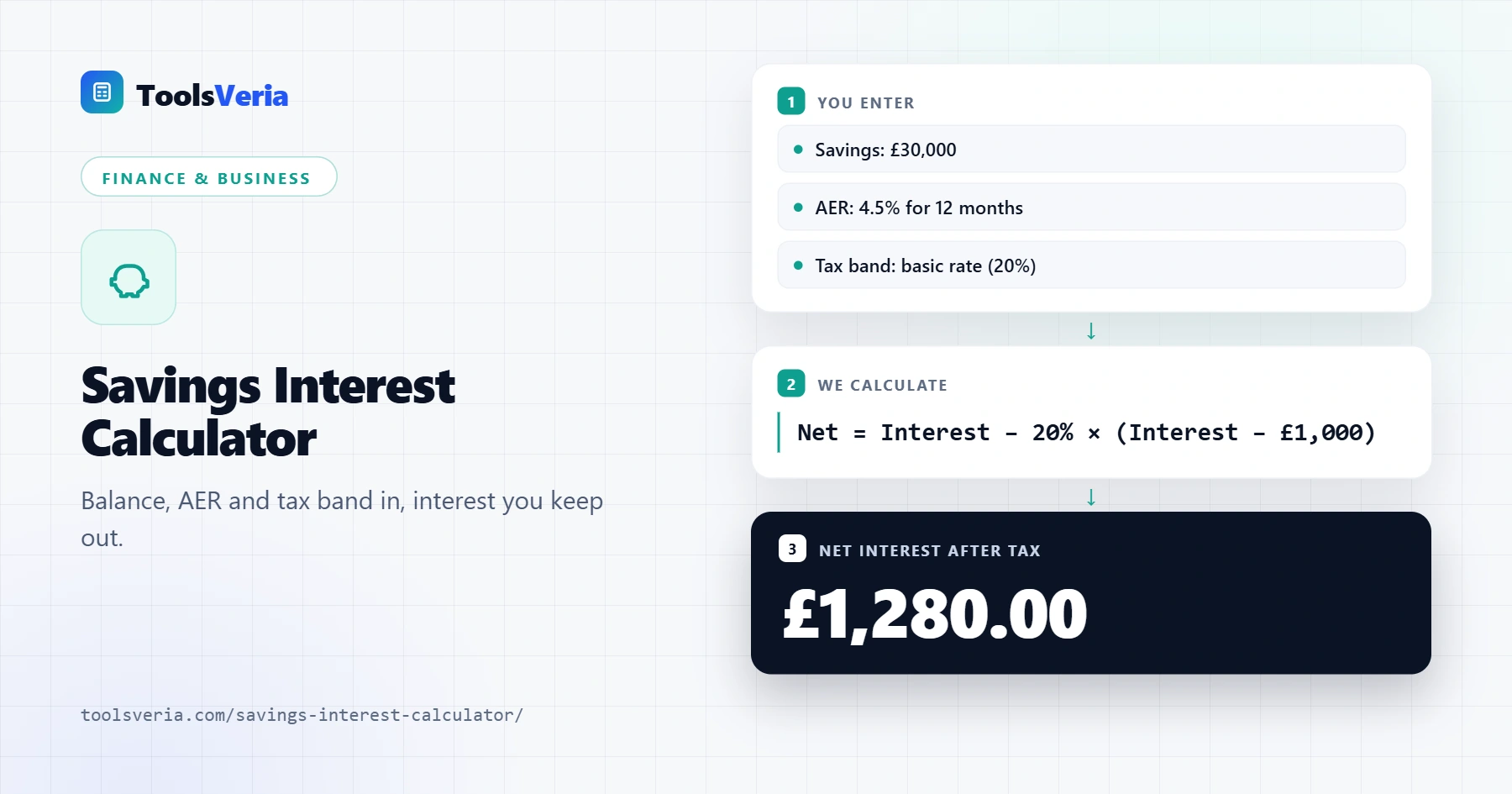
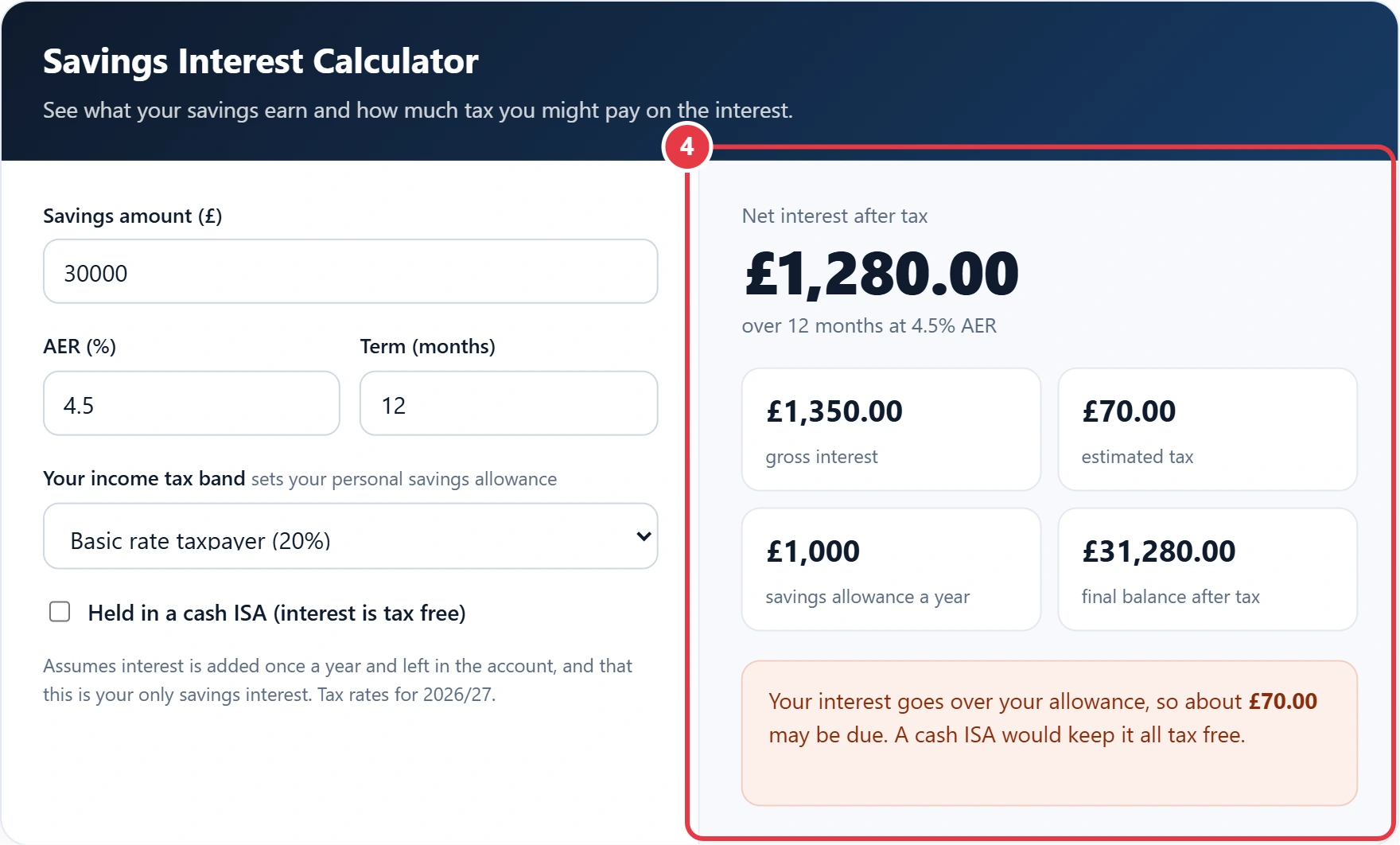
It is a quick way to turn an advertised rate into pounds. UK banks quote the AER (annual equivalent rate), which already includes the effect of compounding over a year. So £30,000 at 4.5% AER earns £1,350 in 12 months, whether the bank pays interest monthly or annually.
The formula is interest = balance × ((1 + AER)^(months ÷ 12) − 1). The calculator then takes off your personal savings allowance (£1,000 for basic rate, £500 for higher rate, £0 for additional rate taxpayers) and taxes the rest at 20%, 40% or 45%. In the example above a basic rate taxpayer pays 20% on £350, which is £70, and keeps £1,280.
How to Use the Savings Interest Calculator
Step 1: Enter Your Savings Amount
Type the balance you plan to deposit or already hold. For a fixed rate bond this is the lump sum you lock away at the start.
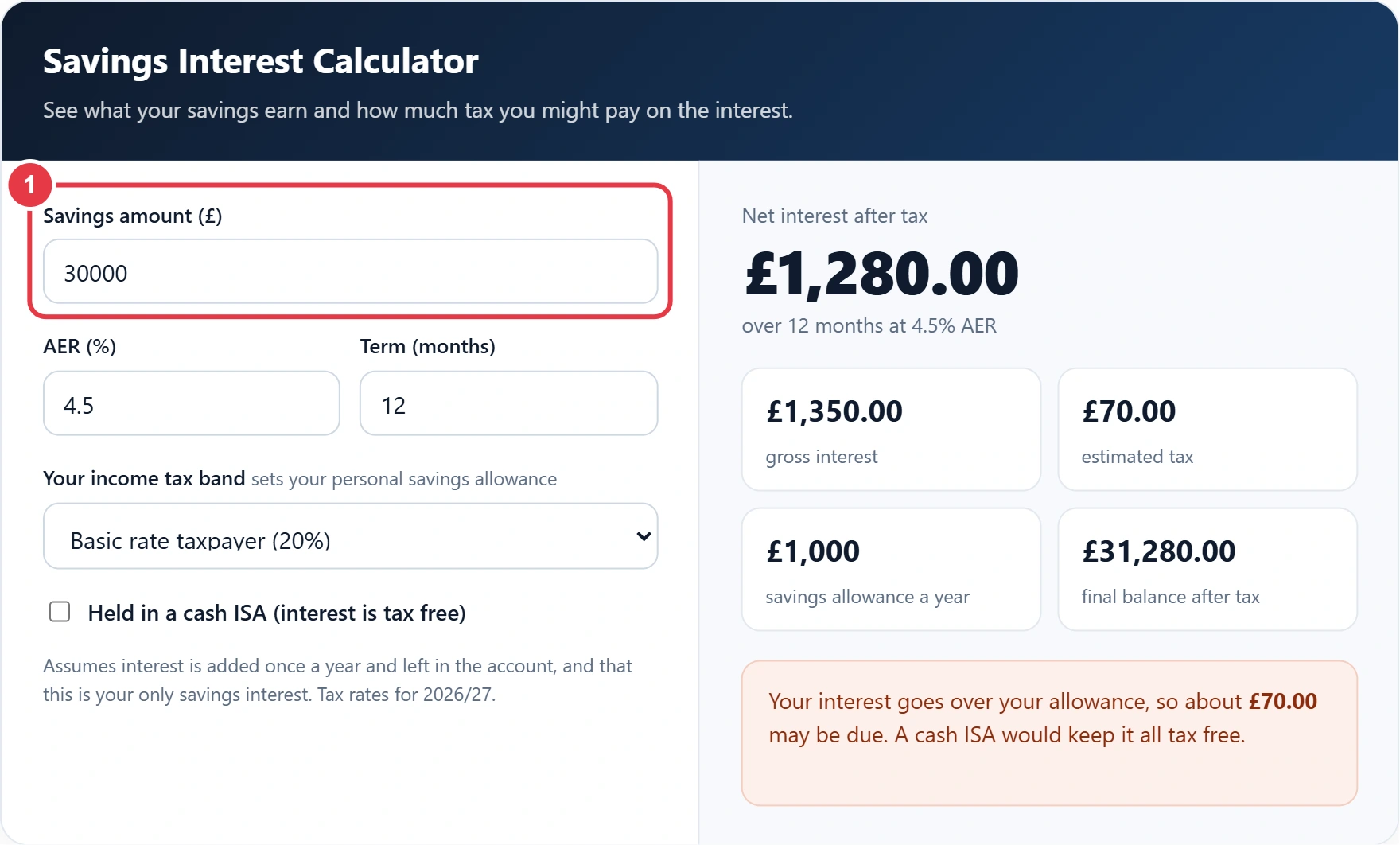
Step 2: Add the AER and Term
Enter the AER from the account's summary box and how many months you will save for. For regular monthly deposits over several years, the compound interest calculator shows how your balance grows. Use 12 for a one year bond, or 6 to see what half a year in an easy access account earns.
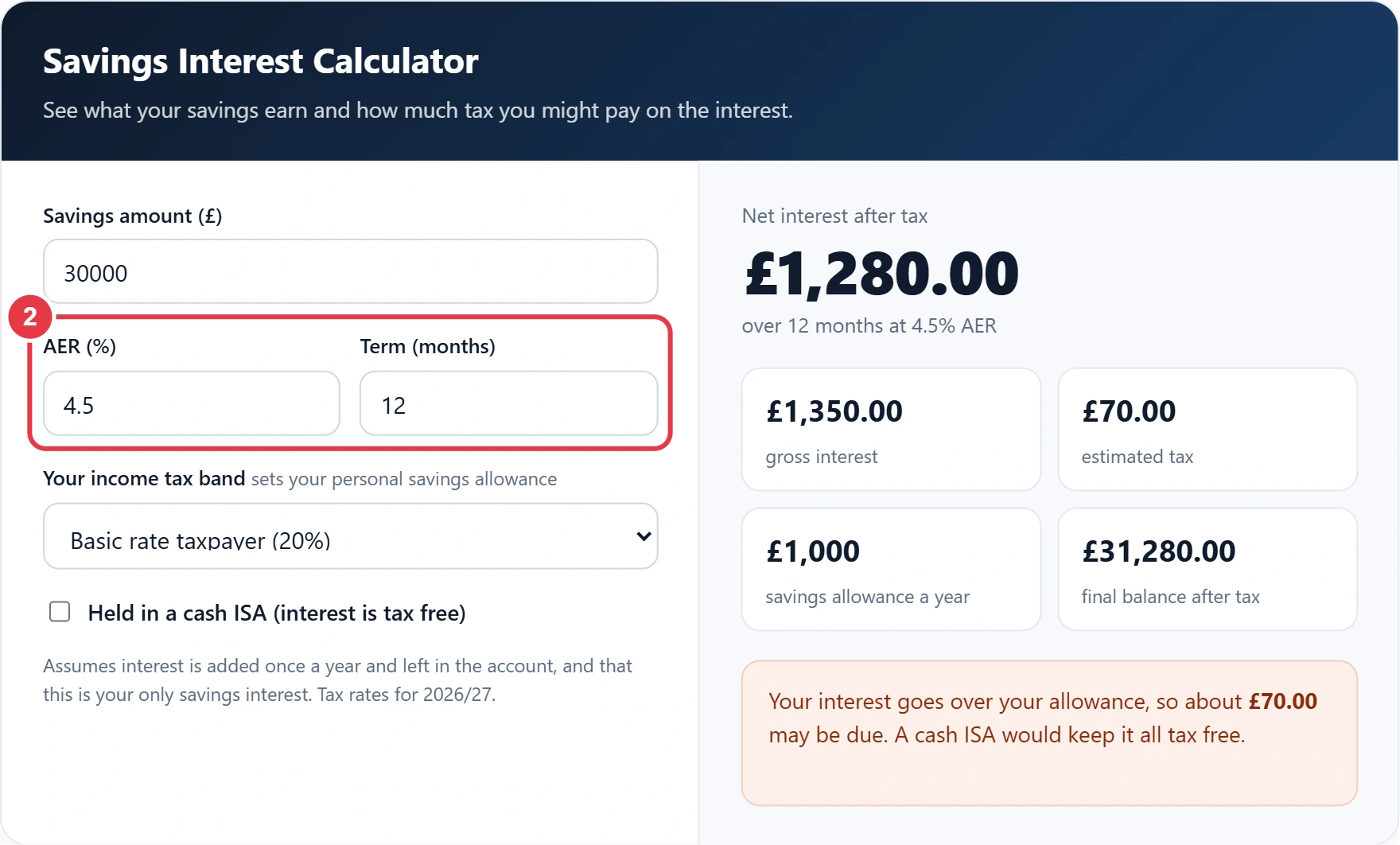
Step 3: Choose Your Tax Band
Pick the band that matches your income. If you also receive dividends, the dividend tax calculator covers that separate £500 allowance. Tick the ISA box if the money sits in a cash ISA, because ISA interest never counts towards your allowance and is never taxed.
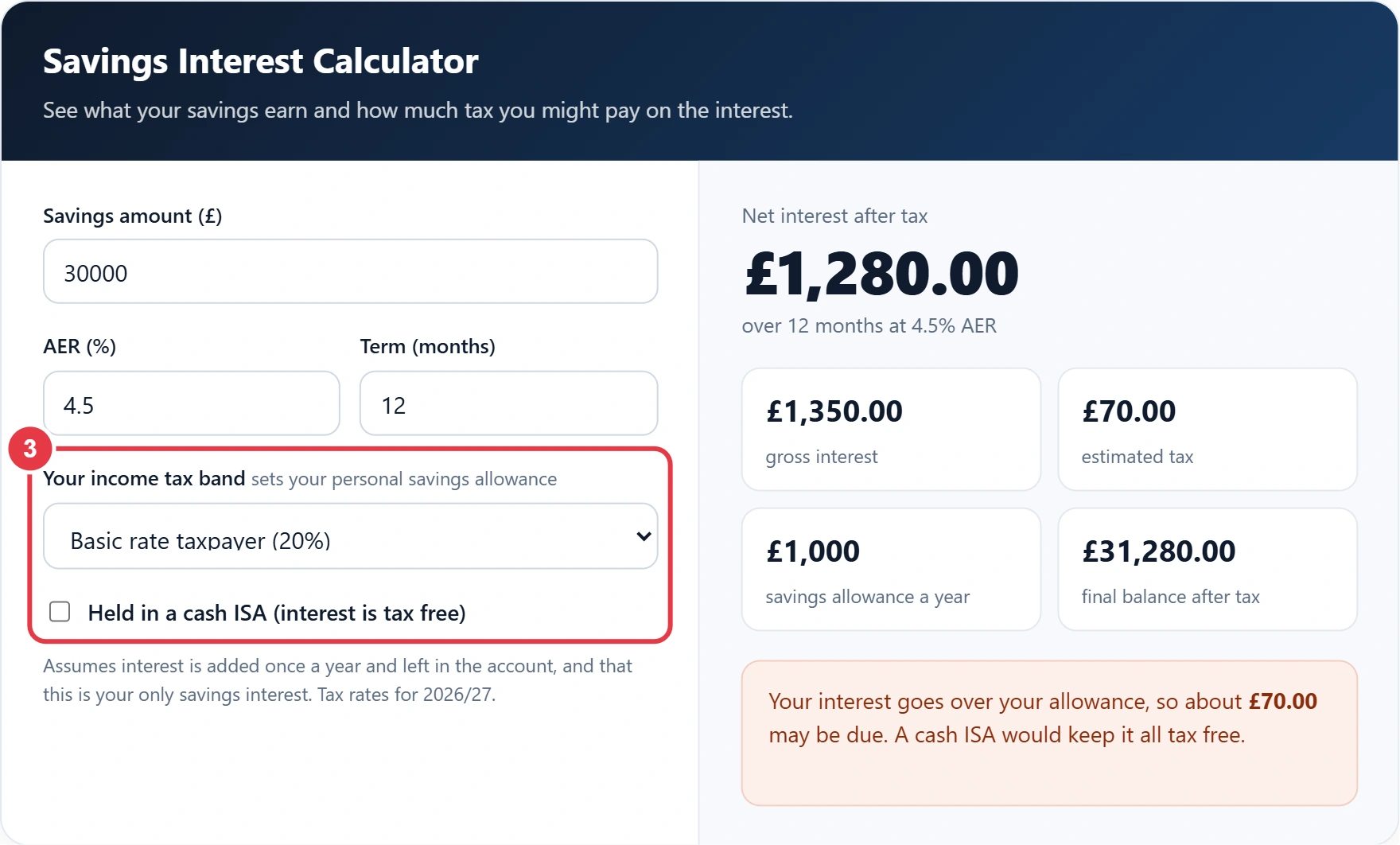
Step 4: Read Your Results
You will see gross interest, estimated tax, net interest and your final balance after tax. The message box tells you if your interest goes over your allowance and how much an ISA could save.
Personal Savings Allowance 2026/27
| Tax band | Tax free interest | Rate on interest above it |
|---|---|---|
| Basic rate | £1,000 | 20% |
| Higher rate | £500 | 40% |
| Additional rate | £0 | 45% |
| Cash ISA | All of it | 0% |
People on lower incomes may also get the starting rate for savings, a 0% band of up to £5,000 that shrinks by £1 for every £1 of other income above the personal allowance. Banks pay interest without taking tax off, so HMRC usually collects anything owed through your tax code or Self Assessment. To compare current easy access and fixed rates, the Bank of England base rate is a useful benchmark, since savings rates tend to follow it.
Frequently Asked Questions
How much interest will I earn on £10,000?
At 4% AER you earn £400 over 12 months. Multiply your balance by the AER to get a full year's interest before tax.
Do I pay tax on savings interest in the UK?
Only on interest above your personal savings allowance: £1,000 for basic rate, £500 for higher rate and £0 for additional rate taxpayers. ISA interest is always tax free.
Does my bank take tax off my interest?
No. UK banks pay interest gross. If tax is due, HMRC normally collects it by changing your tax code or through Self Assessment.
What does AER mean?
AER stands for annual equivalent rate. It shows the interest you would earn in a year once compounding is included, so you can compare accounts fairly.
Is it better to save in a cash ISA?
If your interest could go over your personal savings allowance, a cash ISA usually makes sense because all interest is tax free. Compare rates, as some ordinary accounts pay more.
Do non taxpayers pay tax on savings interest?
Usually not. With the personal allowance, the £5,000 starting rate for savings and the £1,000 allowance, most people can earn up to £18,570 in total before tax.