Convert oven temperatures between gas mark, Celsius, fan and Fahrenheit.
| Gas | °C | Fan °C | °F | Heat |
|---|
Oven dials and recipes round temperatures, so small differences of 5 to 10 degrees are normal.
Older British cookbooks and many family recipes give oven temperatures as gas marks, while modern electric ovens show degrees. This gas mark to Celsius converter works in both directions, so you can find the right gas mark for a recipe written in °C or °F, and it also gives the conventional and fan oven temperature in °C plus the Fahrenheit figure used in American recipes.
What Is a Gas Mark?
Gas mark is a temperature scale used on gas ovens in the UK and Ireland. It runs from gas mark 1/4 for very low heat up to gas mark 9 for very hot cooking. Each full mark from 1 upwards is roughly 25°F, or about 14°C, hotter than the one before.
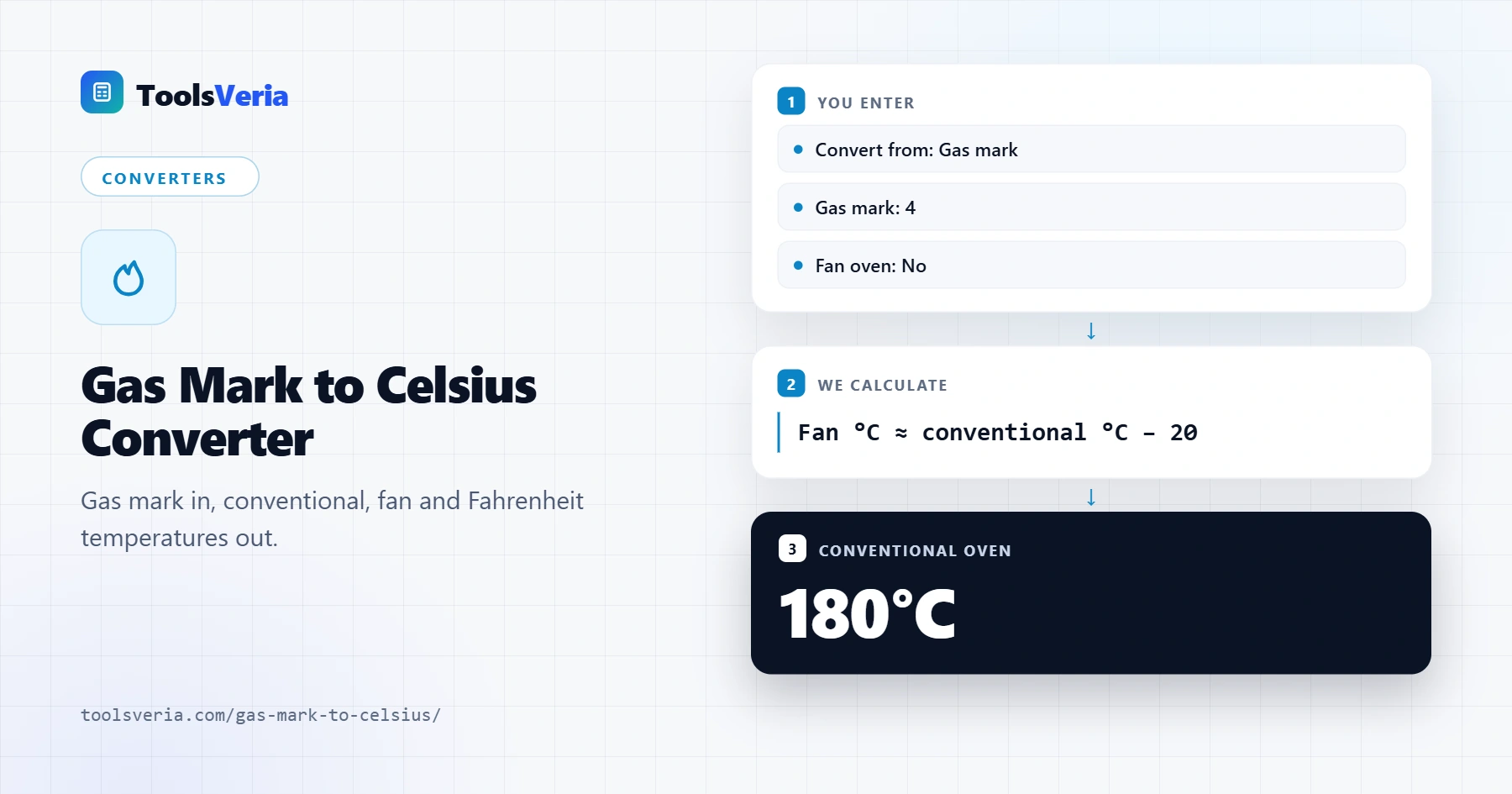
Because the scale is not a direct formula, the converter uses the standard UK chart. Gas mark 4 is 180°C or 350°F, gas mark 6 is 200°C or 400°F. For a fan oven, take about 20°C off the conventional figure, so gas mark 4 becomes 160°C fan.
How to Use the Gas Mark to Celsius Converter
Step 1: Choose What to Convert From
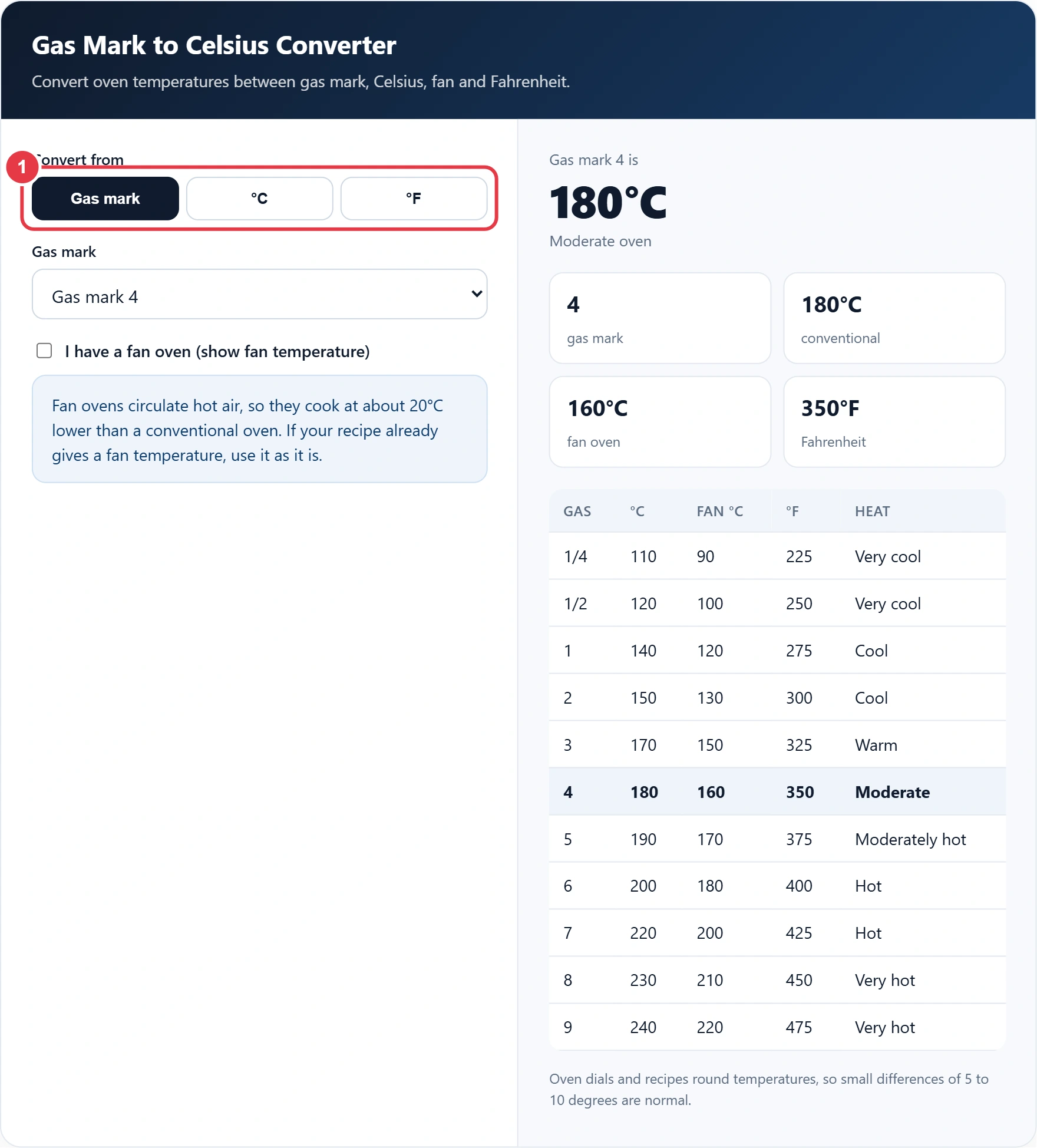
Select Gas mark if your recipe uses gas marks, or choose °C or °F if you need to find the matching gas mark for a gas oven.
Step 2: Enter the Temperature
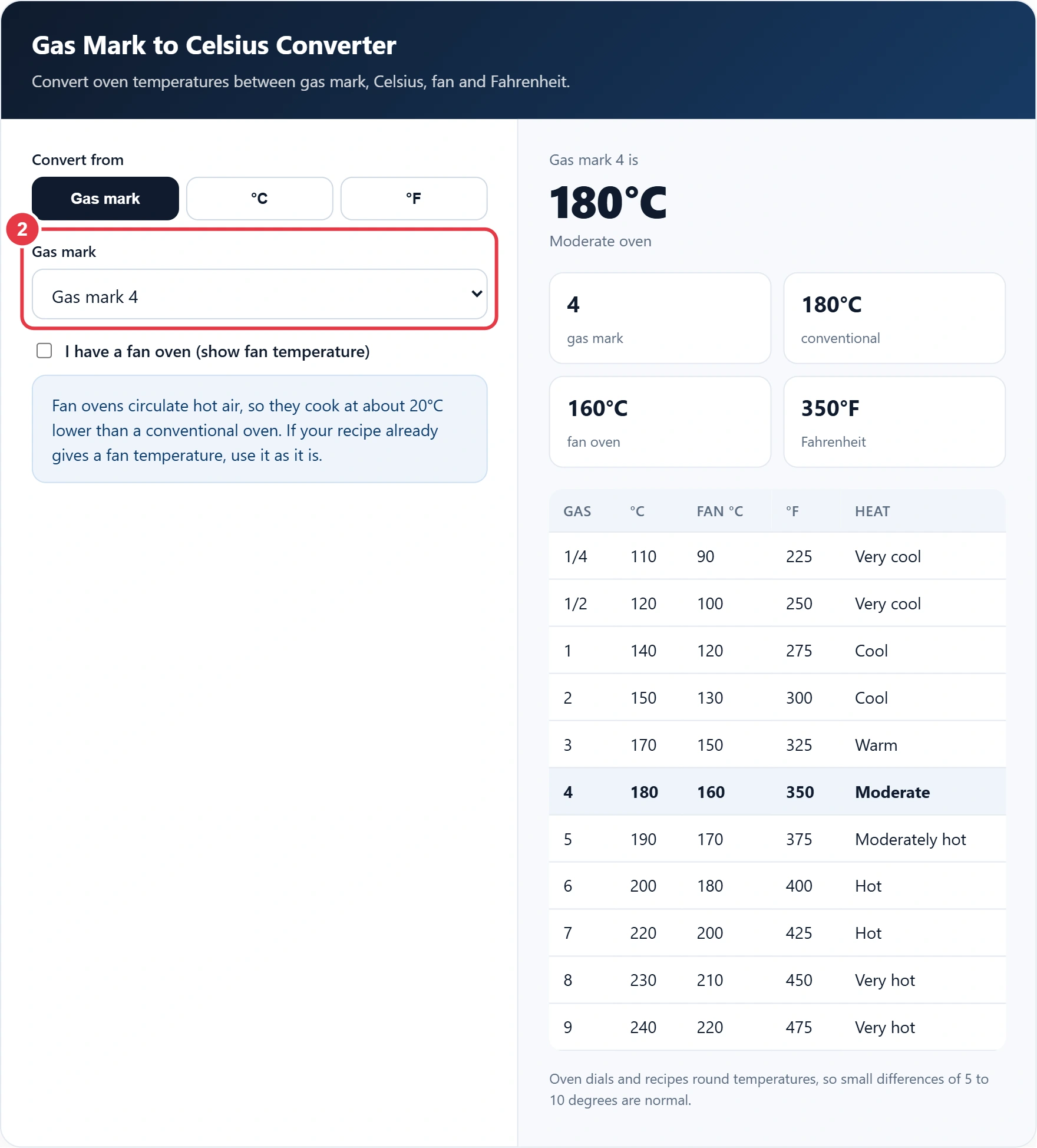
Pick a gas mark from the list, or type a temperature in degrees. Results update straight away as you change the value.
Step 3: Tick Fan Oven if Needed
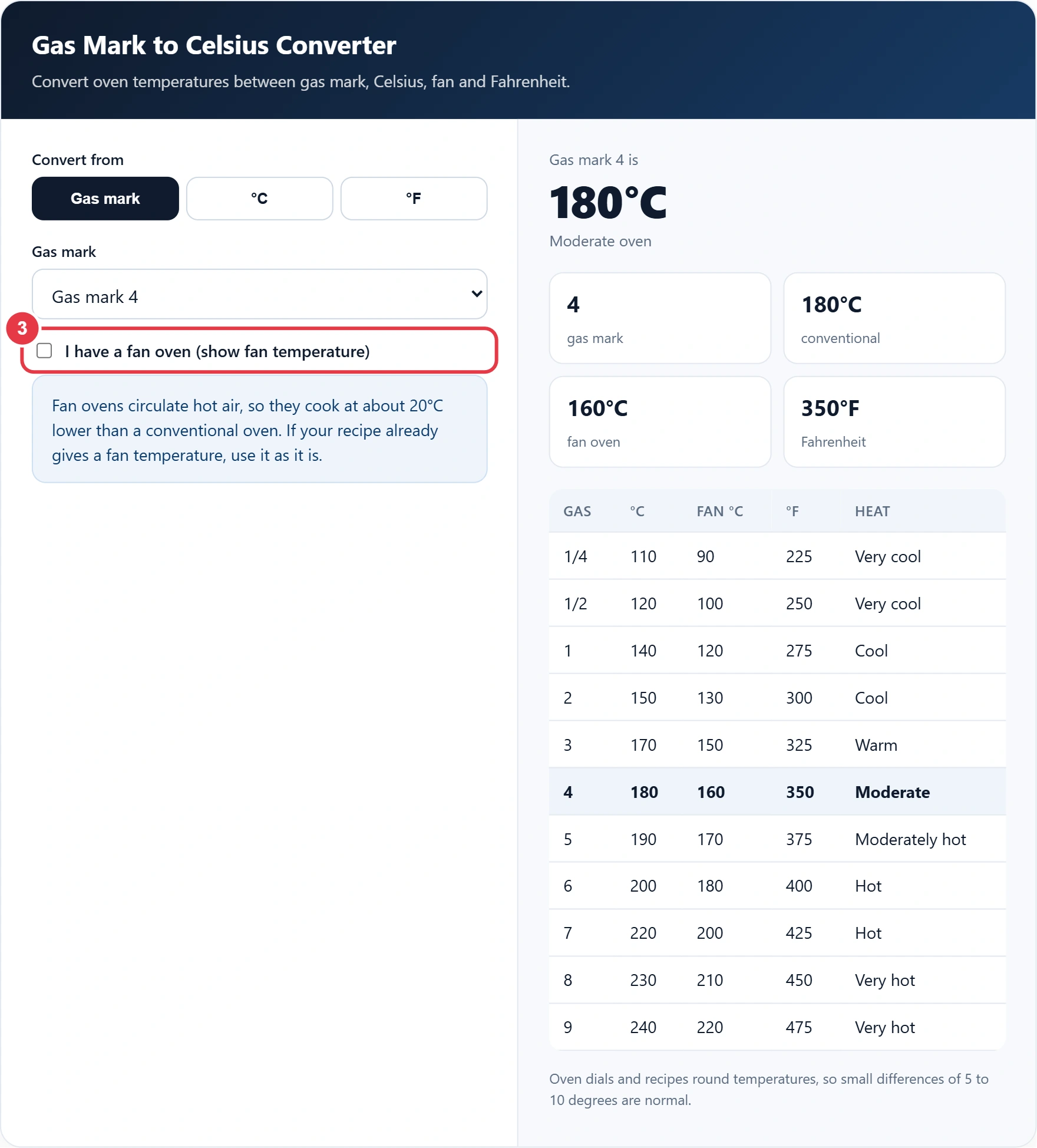
If you cook in a fan assisted oven, tick the fan option. The main result then shows the lower fan temperature so your food does not overcook. If your oven is electric, the electricity cost calculator shows what an hour of baking costs at today's prices.
Step 4: Read Your Oven Temperatures
You will see the gas mark, conventional °C, fan °C and °F, along with a description of the heat. The full chart highlights your row so you can compare nearby settings, and the time duration calculator is handy for working out how long a slow roast has been in.
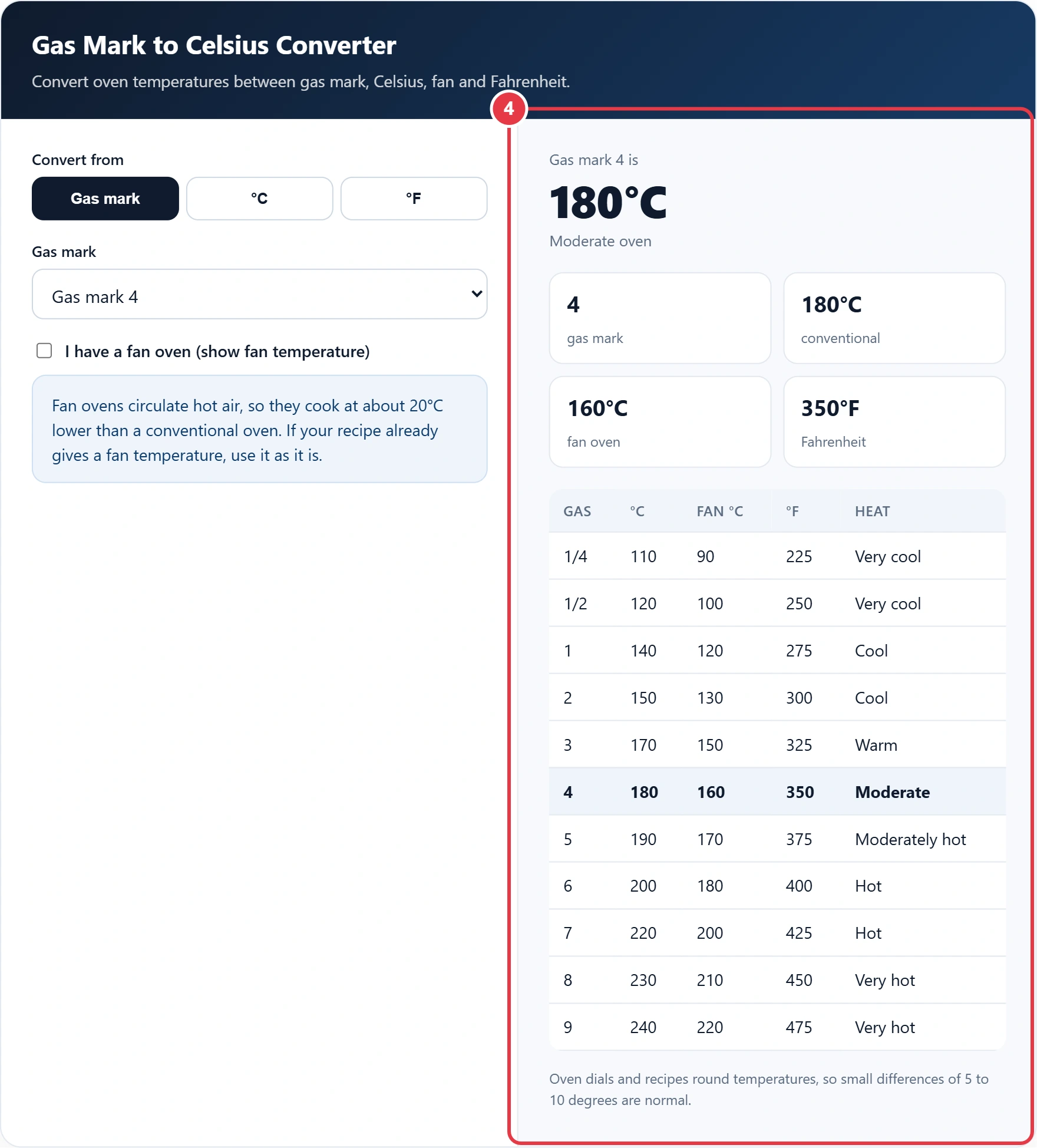
Gas Mark Conversion Chart
| Gas mark | °C | Fan °C | °F | Description |
|---|---|---|---|---|
| 1/4 | 110 | 90 | 225 | Very cool |
| 1/2 | 120 | 100 | 250 | Very cool |
| 1 | 140 | 120 | 275 | Cool |
| 2 | 150 | 130 | 300 | Cool |
| 3 | 170 | 150 | 325 | Warm |
| 4 | 180 | 160 | 350 | Moderate |
| 5 | 190 | 170 | 375 | Moderately hot |
| 6 | 200 | 180 | 400 | Hot |
| 7 | 220 | 200 | 425 | Hot |
| 8 | 230 | 210 | 450 | Very hot |
| 9 | 240 | 220 | 475 | Very hot |
Every oven runs slightly hot or cold, so an inexpensive oven thermometer is worth having if bakes regularly come out under or over done. Fan ovens cook faster because moving air transfers heat more efficiently, a principle explained in this guide to convection ovens. Many fan oven owners also shorten cooking times slightly.
Frequently Asked Questions
What is gas mark 4 in Celsius?
Gas mark 4 is 180°C in a conventional oven, 160°C in a fan oven and 350°F.
What is gas mark 6 in a fan oven?
Gas mark 6 is 200°C conventional, which is about 180°C in a fan oven.
What gas mark is 180°C?
180°C is gas mark 4, a moderate oven used for most cakes and bakes.
How much lower should a fan oven be?
Set a fan oven about 20°C lower than the conventional temperature given in the recipe.
What is gas mark 7 in Fahrenheit?
Gas mark 7 is 425°F, which is 220°C conventional or 200°C fan.
What is the lowest gas mark?
Most gas ovens start at gas mark 1/4, about 110°C, which is used for drying meringues and very slow cooking.