Aisha wants £10,000 to replace a tired kitchen, and two lenders have quoted her. One offers a smaller monthly payment, the other a shorter term. Working out how much does a personal loan cost in full means looking past the monthly figure to the total she will hand back, and that total moves a lot with each choice she makes.
Quick answer: How much does a personal loan cost? Borrowing £10,000 at 6.9% APR over five years costs £197.54 a month and £1,852.43 in interest. A seven year term lowers the payment to £150.44 but lifts interest to £2,636.83, while a 14.9% APR raises five year interest to £4,242.48.
To answer how much does a personal loan cost, the sections below use the same £10,000 throughout and show how the APR and the length of the loan change both the monthly bill and the interest paid over its life. All figures assume a fixed rate, equal monthly payments and no fees beyond those included in the APR.
In This Guide
How Much Does a Personal Loan Cost?
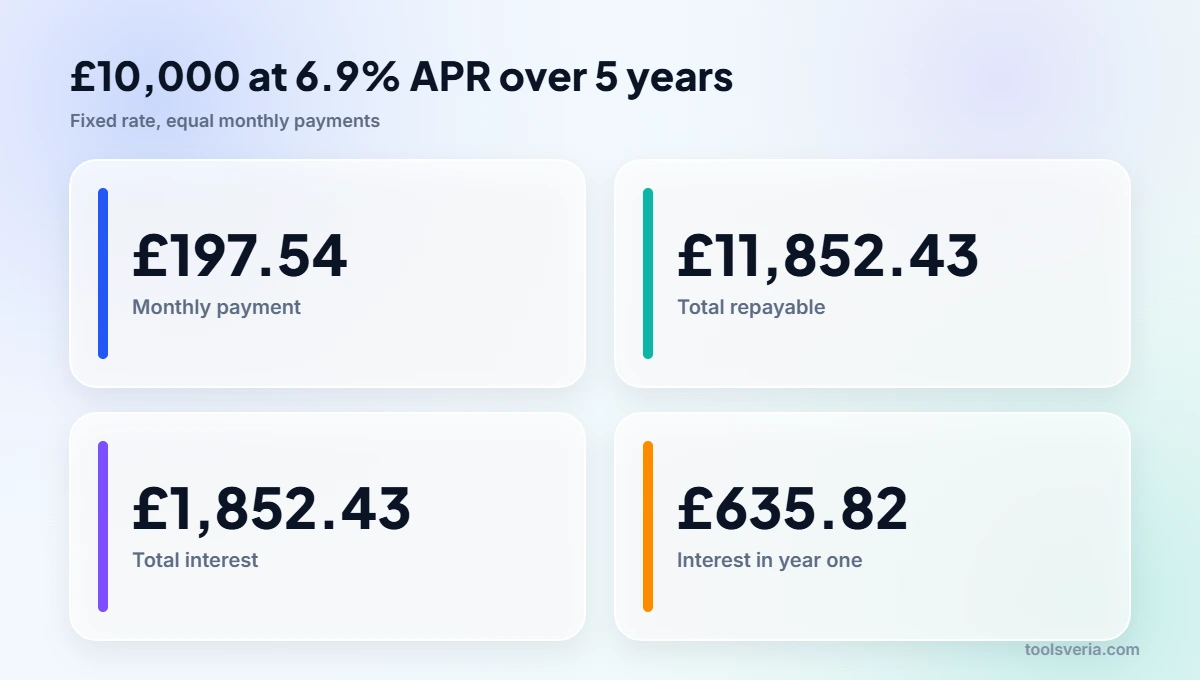
A £10,000 loan at 6.9% APR over 60 months costs £197.54 a month and £1,852.43 in total interest. With a 6.9% APR over 60 months, Aisha would pay £197.54 a month. Across the full term that adds up to £11,852.43, meaning the kitchen costs her £1,852.43 in interest on top of the price she pays the fitters.
Our calculator gets there by dividing the APR by 12 to find a monthly rate, then using the standard repayment formula that keeps every instalment identical. That shortcut is a close approximation. A lender’s own quote may differ by a few pence a month, because the legal APR also reflects the timing of payments and any compulsory fees, as the background on how APR is defined explains.
One practical tip: keep the quote letter beside you when you use the calculator. If the lender’s total repayable differs from our figure by more than a few pounds, ask what fees or payment holidays are built into the deal.
Where Does Each Loan Payment Go?
Every monthly payment is the same, but early on a large slice covers interest on the full balance, and later more of it reduces what you owe. Every monthly payment is the same, but its contents shift over time. Early on, a large slice covers interest on the full balance. Later, as the debt shrinks, more of each £197.54 chips away at what Aisha owes.
| Year | Paid in the year | Interest | Capital repaid | Balance at year end |
|---|---|---|---|---|
| 1 | £2,370.48 | £635.82 | £1,734.66 | £8,265.34 |
| 2 | £2,370.48 | £512.27 | £1,858.21 | £6,407.12 |
| 3 | £2,370.48 | £379.92 | £1,990.56 | £4,416.56 |
| 4 | £2,370.48 | £238.14 | £2,132.34 | £2,284.22 |
| 5 | £2,370.48 | £86.27 | £2,284.22 | £0.00 |
Over a third of all the interest, £635.82, lands in the first twelve months. That pattern matters if Aisha later considers settling early: clearing the loan at the end of year three would avoid only the £324.41 of interest due in years four and five, minus any early settlement charge her lender is allowed to apply.
How Does the Loan Term Change the Total Interest?
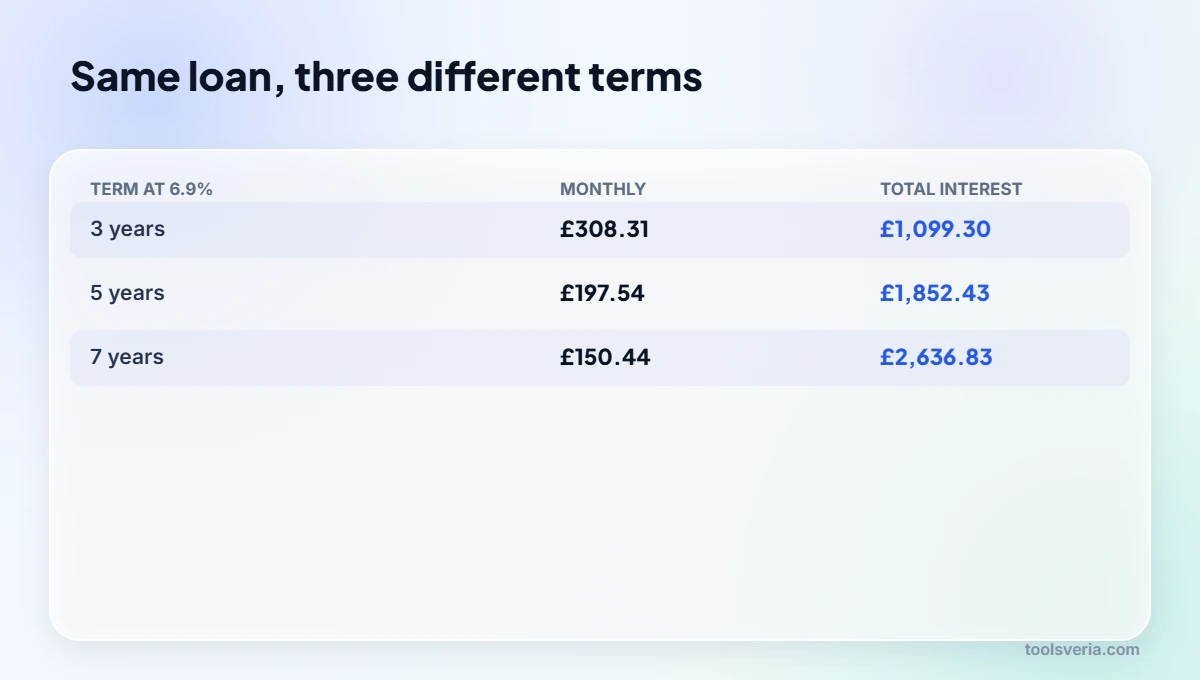
At 6.9%, a three year loan costs £308.31 a month with £1,099.30 interest, while seven years cuts the payment to £150.44 but raises interest to £2,636.83. Keeping the rate at 6.9%, Aisha tries three lengths. A three year loan costs £308.31 a month with total interest of £1,099.30. Five years brings the payment down to £197.54 but lifts interest to £1,852.43. Seven years cuts the monthly bill to £150.44, while interest climbs to £2,636.83.
So moving from three years to seven saves her £157.87 a month and costs her £1,537.53 more overall. A longer term is not wrong if the lower payment keeps the household budget safe, but it should be a deliberate trade rather than the default. A good compromise is to choose the shortest term whose payment still leaves a comfortable buffer each month.
Aisha also checks the middle option. Four years at 6.9% works out at £239.00 a month with £1,471.94 of interest, which saves her £380.49 compared with five years while adding about £41 to each payment. Small steps like this are often where the best balance between comfort and cost sits.
Car buyers face the same trade, with an extra twist: a balloon payment at the end. If you are weighing a loan against dealer finance, our PCP calculator sets out what that kind of agreement costs, so the two can be compared on total amount payable.
How much the APR changes the bill
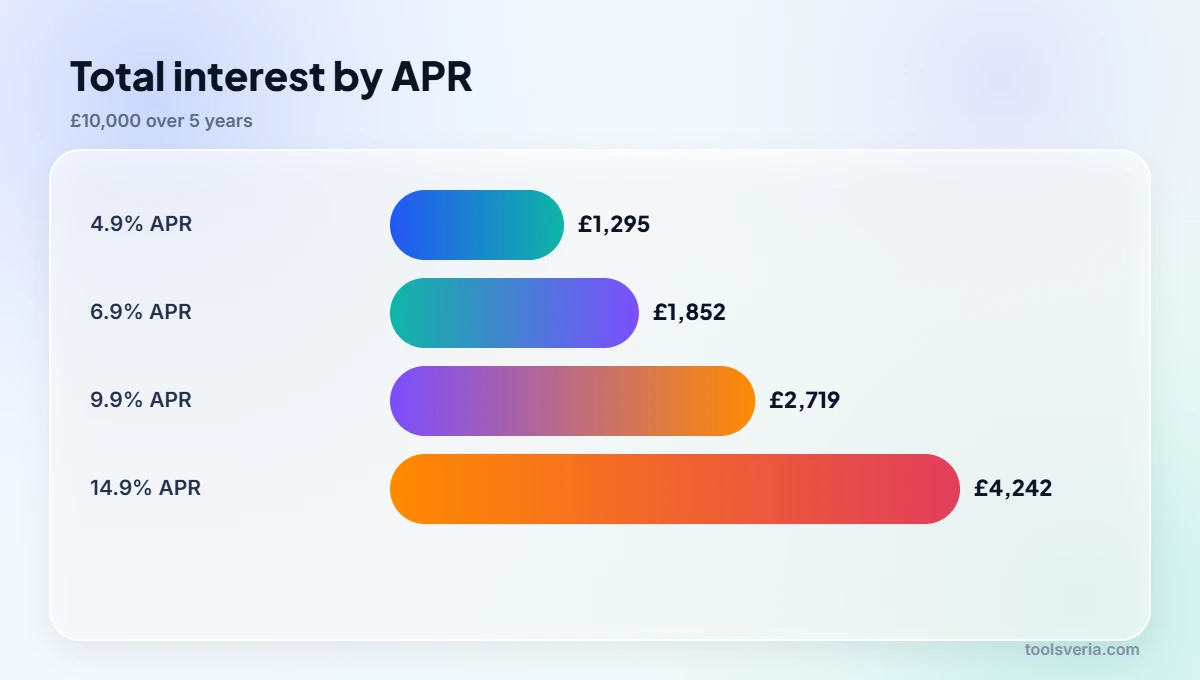
Now hold the term at five years and vary the rate. Credit history drives which APR a borrower is offered, and the gaps are wider than many expect.
- 4.9% APR: £188.25 a month, £1,295.27 interest.
- 6.9% APR: £197.54 a month, £1,852.43 interest.
- 9.9% APR: £211.98 a month, £2,718.72 interest.
- 14.9% APR: £237.37 a month, £4,242.48 interest.
Going from 4.9% to 14.9% more than triples the interest on the same £10,000. Ben, a friend of Aisha’s, discovered this on a smaller scale. He applied for £5,000 over three years after seeing a 9.9% advert, which would have meant £161.10 a month and £799.65 in interest. The lender instead offered him 14.9%, raising the payment to £173.08 and the interest to £1,230.95.
Ben’s experience is common. An advertised rate is a representative one, and lenders only need to give it to a majority of successful applicants. The MoneyHelper guide to personal loans suggests using eligibility checkers, which use a soft search, to see the rate you are likely to get before applying.
Borrowing versus saving up
Aisha could also wait. If she saved £197.54 a month instead of repaying a loan, she would reach £10,000 in a little over four years before any interest, and slightly sooner with it. Our savings interest calculator shows how quickly regular deposits grow at today’s account rates.
Homeowners sometimes consider adding the cost to their mortgage. The rate may look lower, but spreading £10,000 over twenty or more years usually means far more interest overall. If you already have a mortgage and spare cash, our mortgage overpayment calculator can show what the alternative of reducing that debt would save.
Before signing anything, Aisha checks how much does a personal loan cost in full by writing down three numbers from each quote: the APR, the total amount repayable and any charge for paying off early. Comparing the totals side by side, rather than the monthly figures, makes the cheaper deal obvious within seconds and stops a long term from looking like a bargain.
Key points
- £10,000 at 6.9% over five years costs £197.54 a month and £1,852.43 in interest.
- A longer term lowers the payment but raises total interest sharply.
- Rising from 4.9% to 14.9% APR more than triples the interest on the same loan.
- Most interest falls in the early years, which limits the saving from settling late in the term.
Frequently Asked Questions
I can afford £300 a month. Should I pick three years over five on a £10,000 loan?
At 6.9%, three years costs £308.31 a month, slightly over your limit, but saves £753.13 in interest compared with five years. A four year term may suit your budget better.
The advert said 9.9% but I was offered 14.9%. Is that allowed?
Yes. Advertised rates are representative, so some borrowers receive a higher one. On £5,000 over three years, the difference is £431.30 in extra interest.
Why is the first year so expensive on my statement?
Interest is charged on the outstanding balance, which is highest at the start. On £10,000 at 6.9%, year one carries £635.82 of interest against £86.27 in year five.
Will your calculator match my lender’s quote to the penny?
Not always. It divides the APR by 12, which is a close approximation. Fees and payment timing can move a lender’s figure by a small amount.
Aisha chose four years in the end, a middle path between payment and total cost. Run your own amount through two or three terms and rates before you sign, and judge any loan on the total repayable rather than the monthly figure alone.