Convert between hourly pay and yearly salary, both ways.
Gross figures before Income Tax, National Insurance and pension. Monthly pay is the annual figure divided by 12.
Job adverts quote pay in different ways, which makes them hard to compare. This hourly to annual salary calculator turns an hourly rate into a yearly salary, or a salary back into an hourly rate, and shows your monthly, weekly and daily pay as well. Before you accept a rate, check it against the current National Minimum Wage and National Living Wage rates for your age, then use the figures here to compare offers on equal terms.
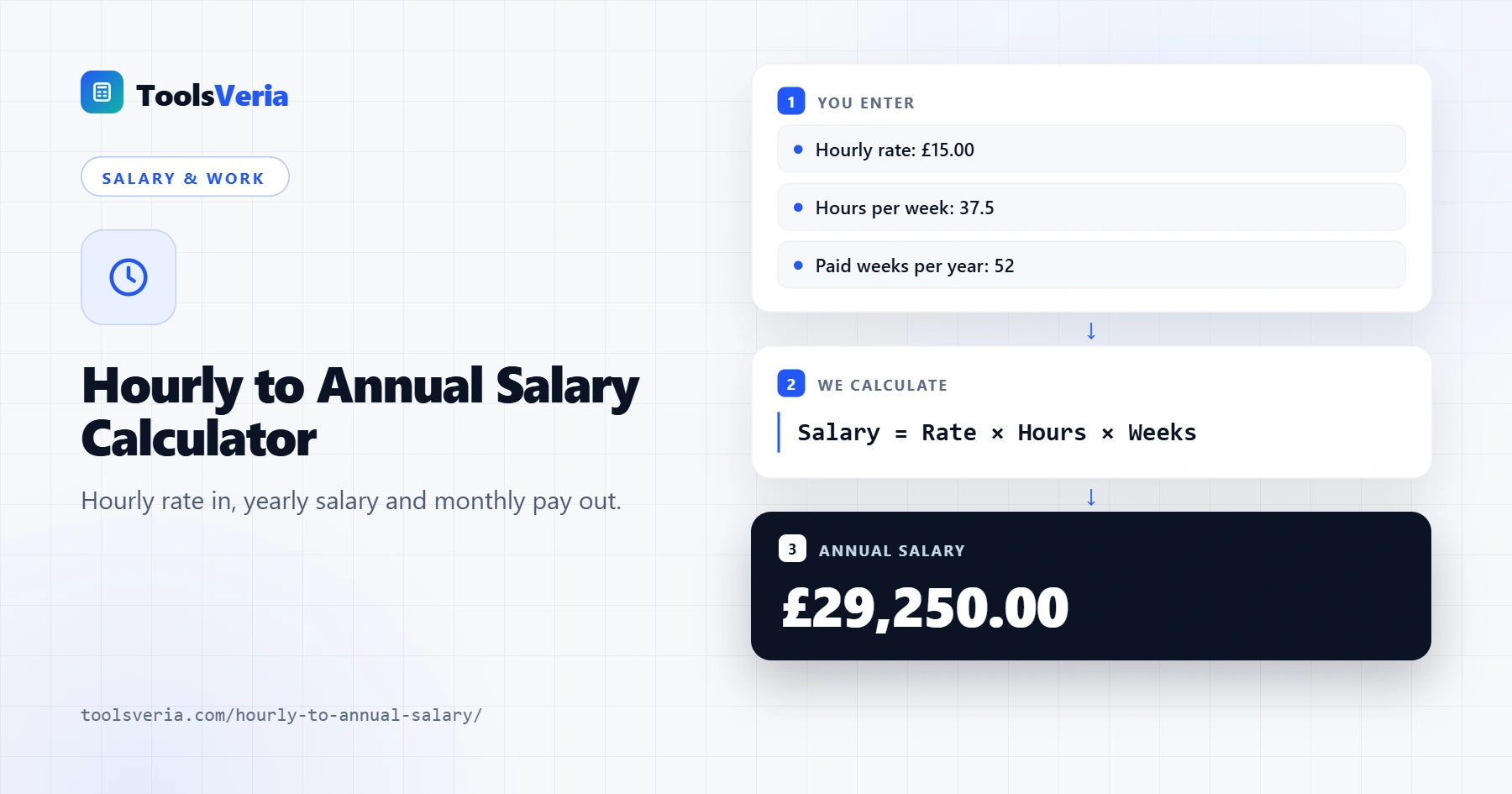
How Do You Convert Hourly Pay to an Annual Salary?
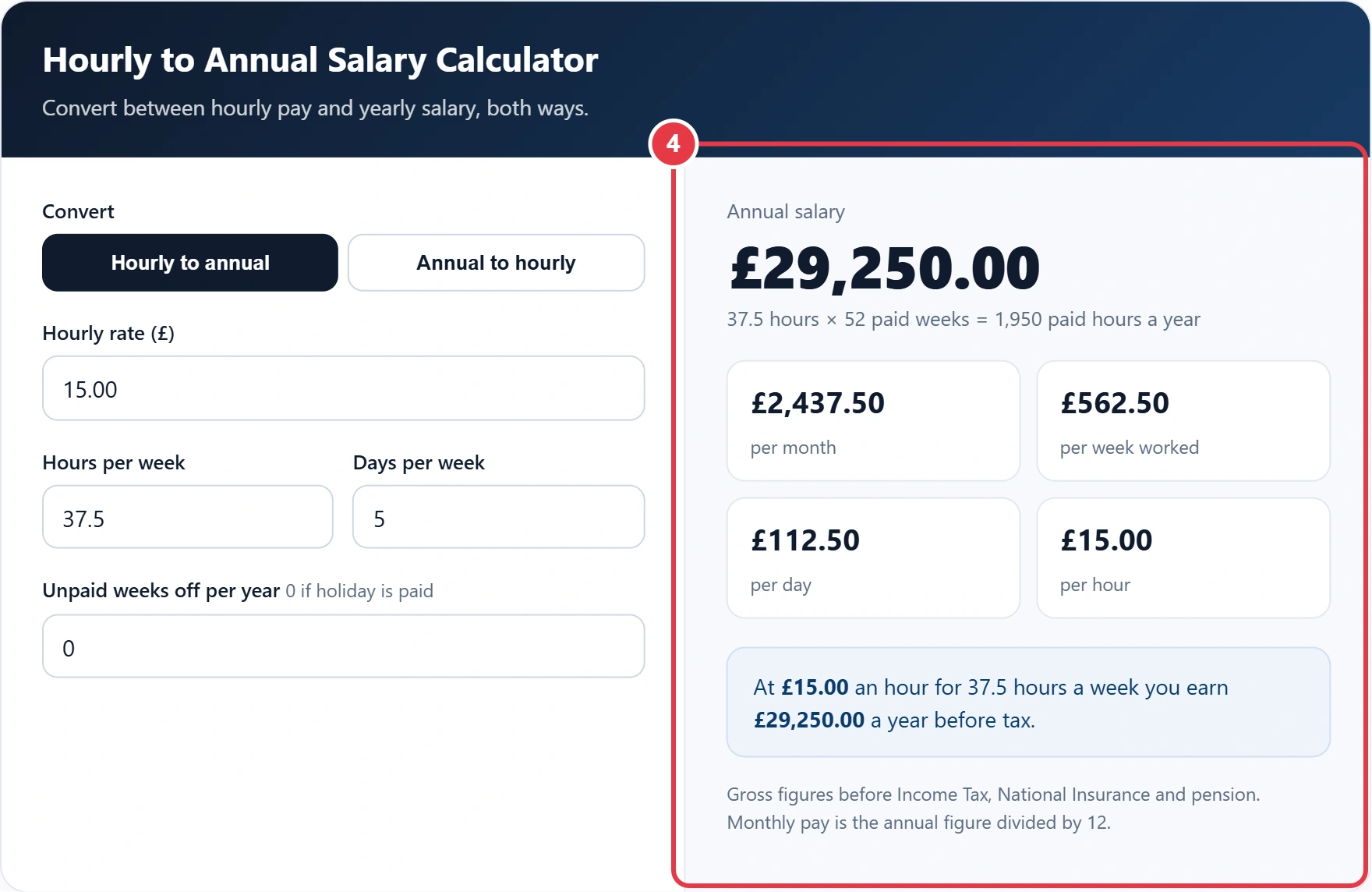
The formula is hourly rate × hours per week × paid weeks per year. Most UK employees are paid for all 52 weeks, because statutory holiday is paid leave. So £15 an hour for 37.5 hours a week is £15 × 37.5 × 52 = £29,250 a year, or £2,437.50 a month.
To go the other way, divide the salary by the number of paid hours in a year. A £30,000 salary on 37.5 hours a week is £30,000 ÷ 1,950 hours = £15.38 an hour. If you take unpaid weeks off, such as some agency or term time work, fewer weeks are paid, so your annual total falls.
How to Use the Hourly to Annual Salary Calculator
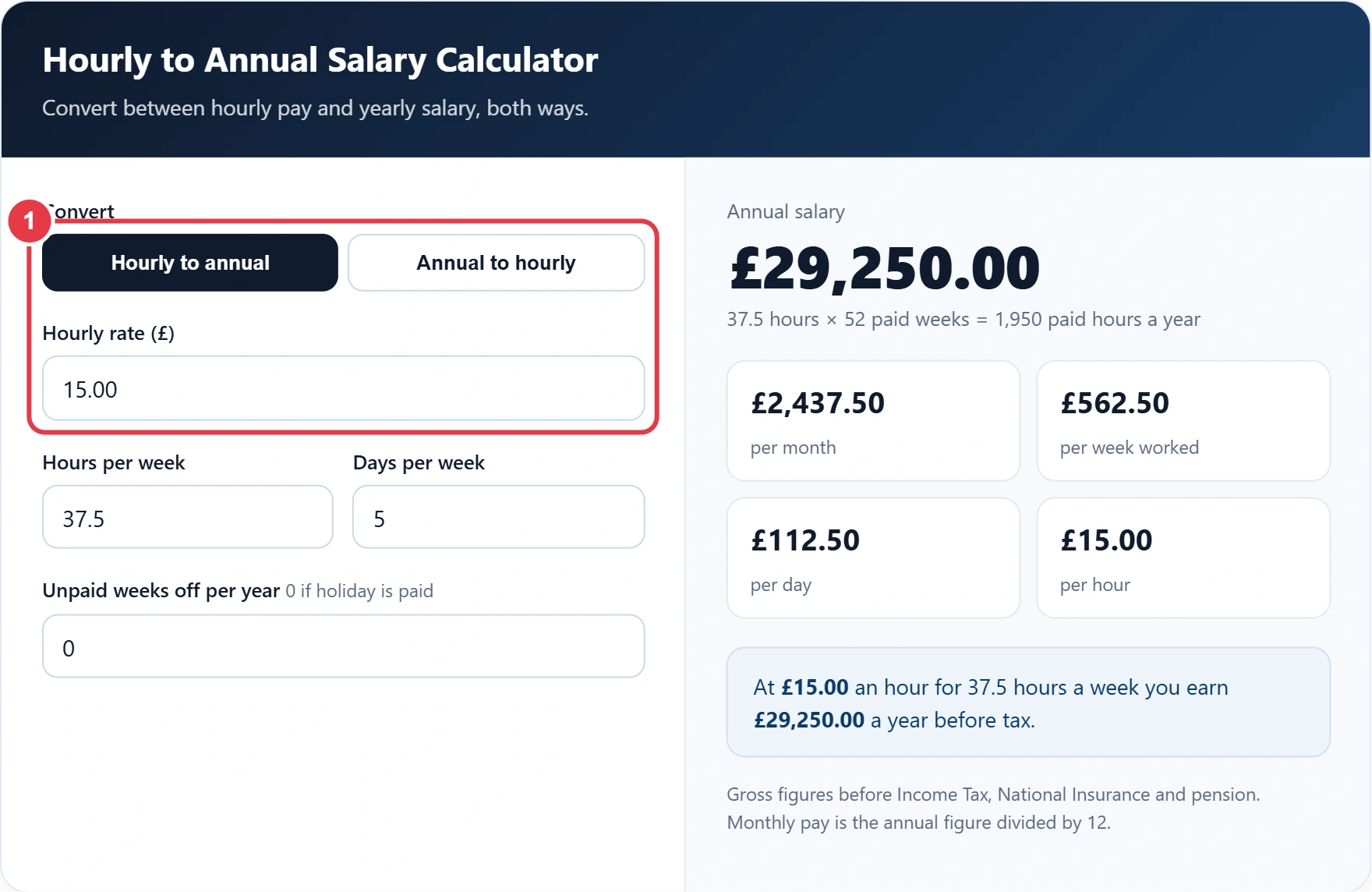
Step 1: Choose a Direction and Enter Your Pay
Pick Hourly to annual and type your hourly rate, or pick Annual to hourly and type the yearly salary from the job advert or your contract.
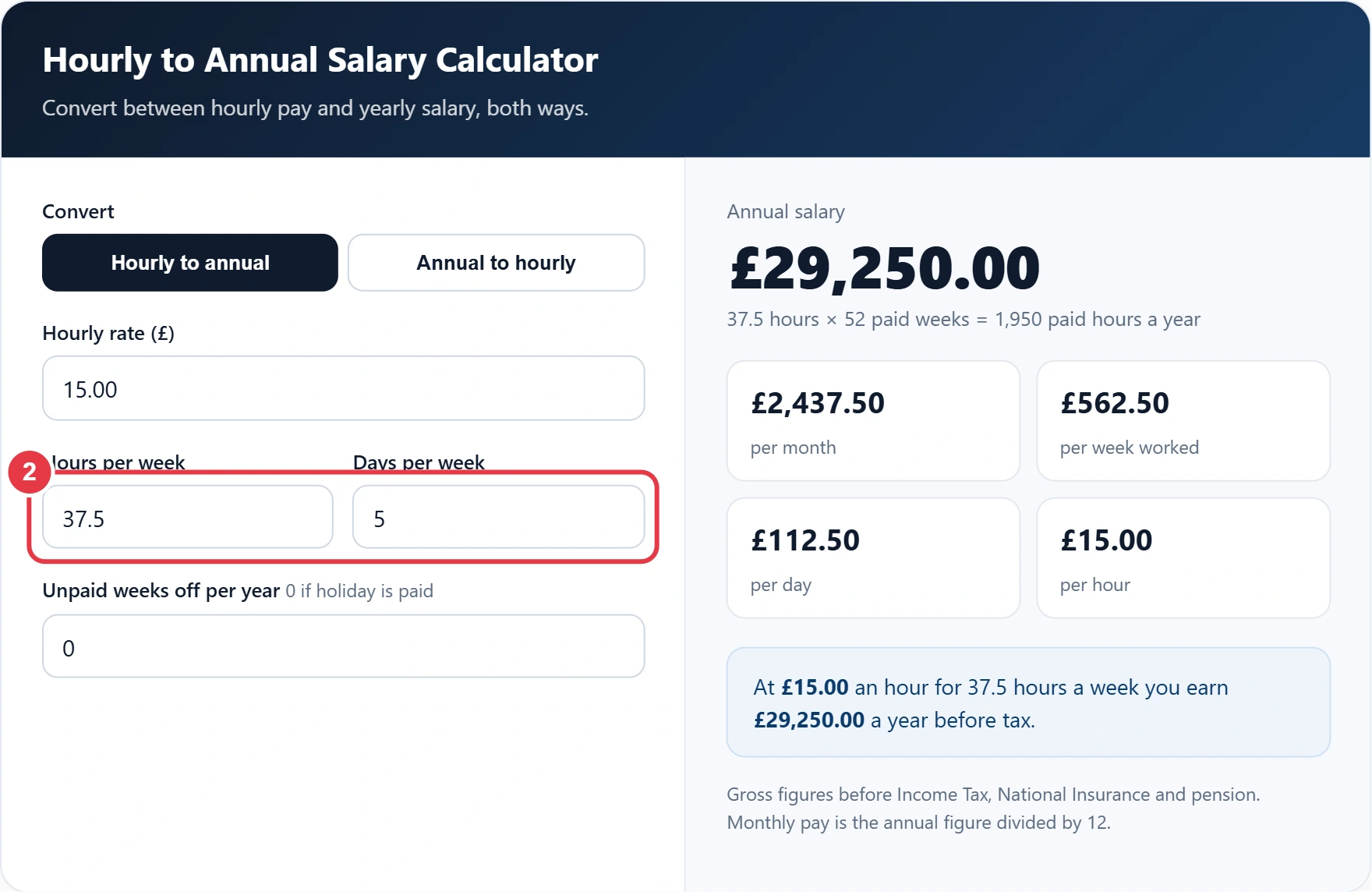
Step 2: Enter Your Hours and Days
Add your contracted hours per week and the number of days you work. Days are used only to work out your daily pay.
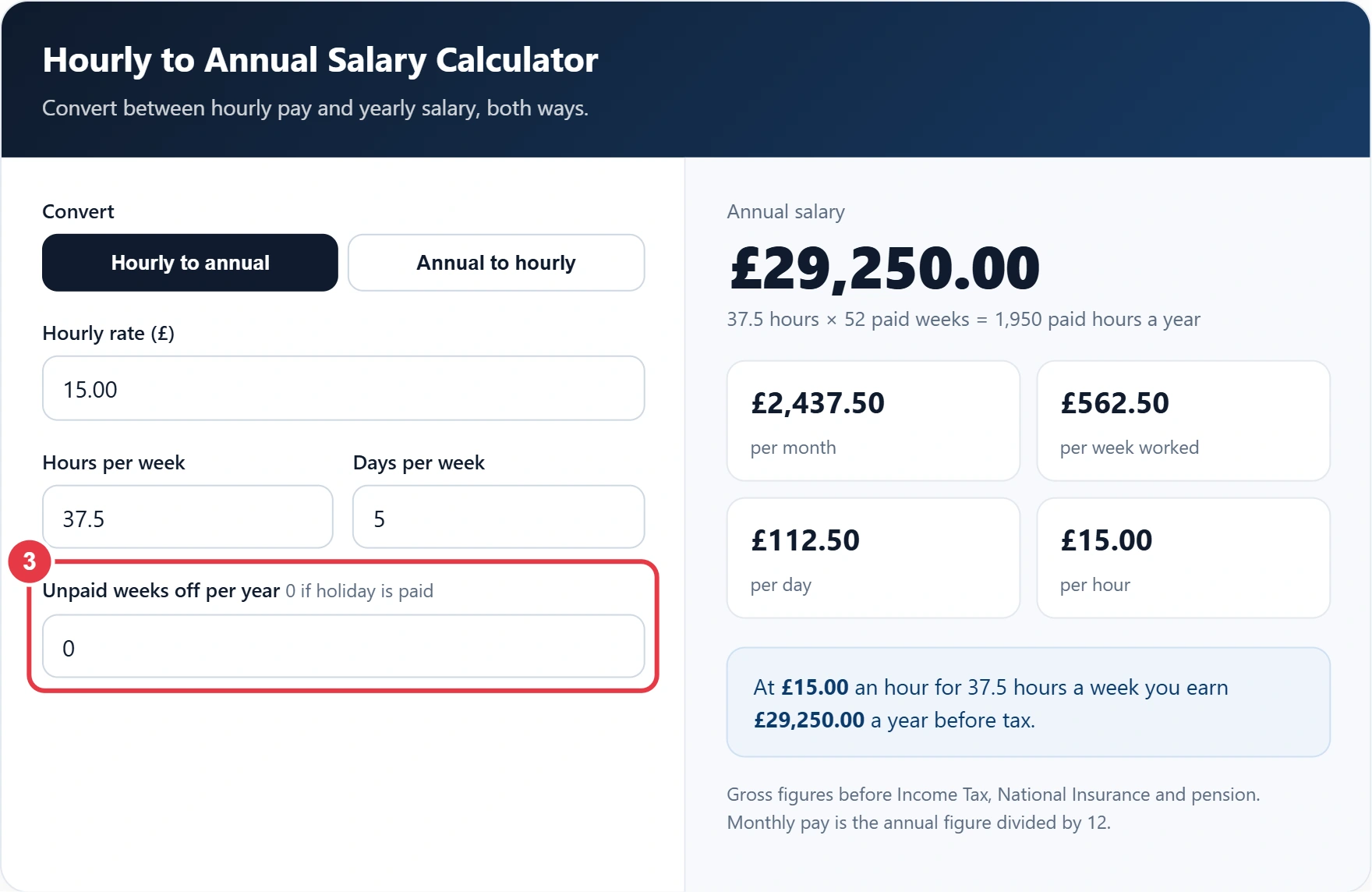
Step 3: Add Any Unpaid Weeks
Leave this at 0 for a normal permanent job with paid holiday. If you take weeks off without pay, enter them here and the calculator uses only the paid weeks. For part time roles advertised with a full time salary, the pro rata salary calculator scales the figure to your hours before you compare it here.
Step 4: Read Your Results
You will see your annual salary or hourly rate, plus pay per month, per week worked and per day. If you also work extra hours, the overtime calculator adds them at time and a half or double time. All figures are gross, before tax and National Insurance.
Hourly Rate to Annual Salary Table
| Hourly rate | 37.5 hours, 52 weeks | 40 hours, 52 weeks |
|---|---|---|
| £13.00 | £25,350 | £27,040 |
| £15.00 | £29,250 | £31,200 |
| £18.00 | £35,100 | £37,440 |
| £20.00 | £39,000 | £41,600 |
| £25.00 | £48,750 | £52,000 |
A quick rule of thumb: on a 37.5 hour week, multiply your hourly rate by 1,950 to get the annual salary. To see what you take home after deductions, the GOV.UK guide to understanding your pay explains each deduction on your payslip.
Frequently Asked Questions
How do I convert hourly pay to annual salary?
Multiply your hourly rate by your weekly hours, then by 52. For example, £15 × 37.5 × 52 = £29,250.
How many working hours are there in a year?
A 37.5 hour week over 52 weeks is 1,950 paid hours. A 40 hour week is 2,080 hours.
How do I work out my hourly rate from a salary?
Divide your annual salary by 52, then by your weekly hours. £30,000 on 37.5 hours a week is £15.38 an hour.
Should I use 52 weeks if I get paid holiday?
Yes. Paid holiday counts as paid weeks, so use 52. Only reduce the weeks if you take time off without pay.
Is the annual salary before or after tax?
The figures are gross, before Income Tax, National Insurance, pension and student loan deductions.
What is the minimum hourly rate in the UK?
It depends on your age. Check the official National Minimum Wage and National Living Wage rates on GOV.UK, which change each April.