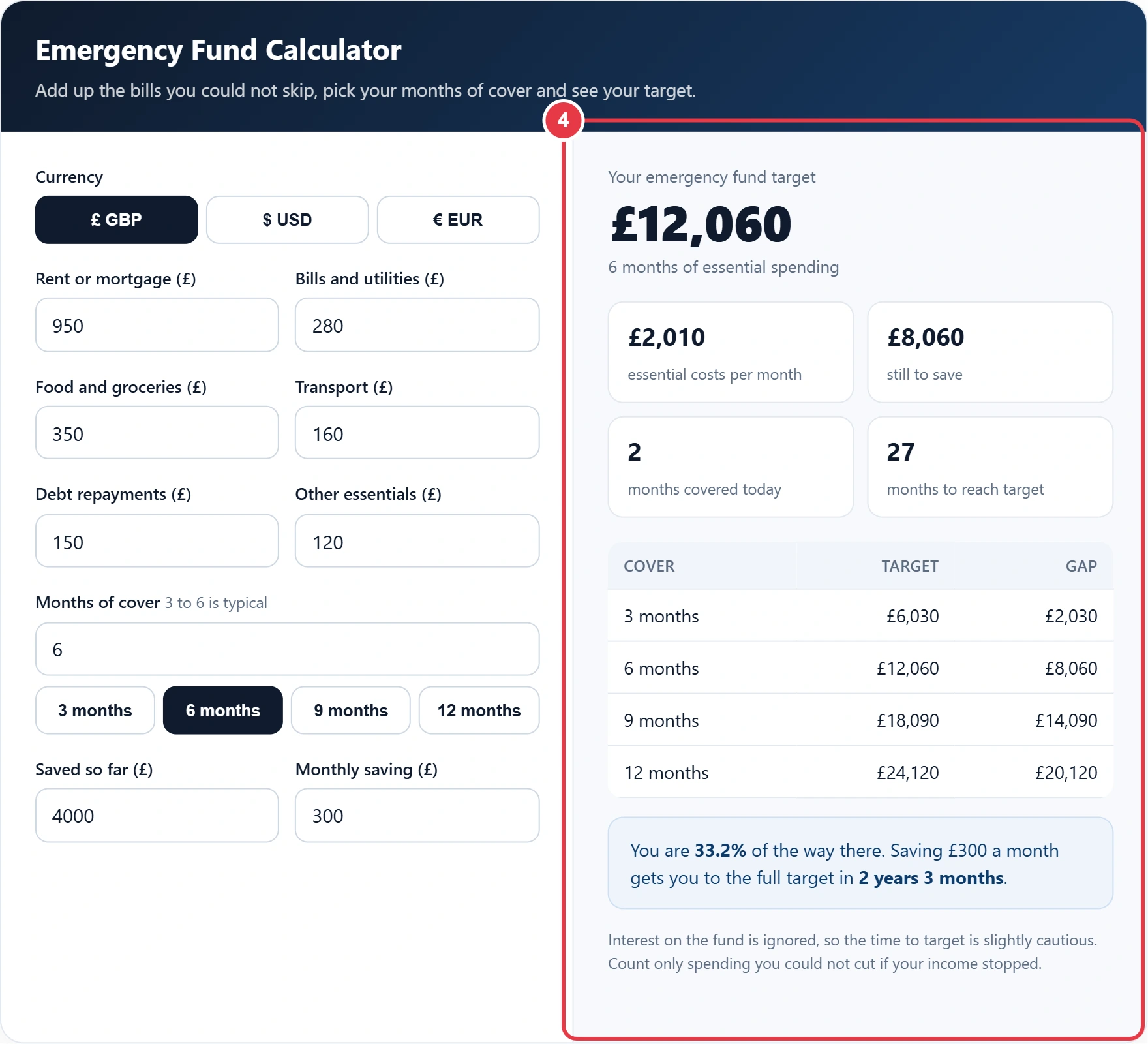
Add up the bills you could not skip, pick your months of cover and see your target.
| Cover | Target | Gap |
|---|
Interest on the fund is ignored, so the time to target is slightly cautious. Count only spending you could not cut if your income stopped.
A boiler that dies in January or a contract that ends early is far easier to handle with cash set aside. This emergency fund calculator builds your target from the costs you genuinely cannot avoid, and the MoneyHelper guides on saving are a useful companion if you are starting from zero. You see the target, the gap and a realistic date for closing it.
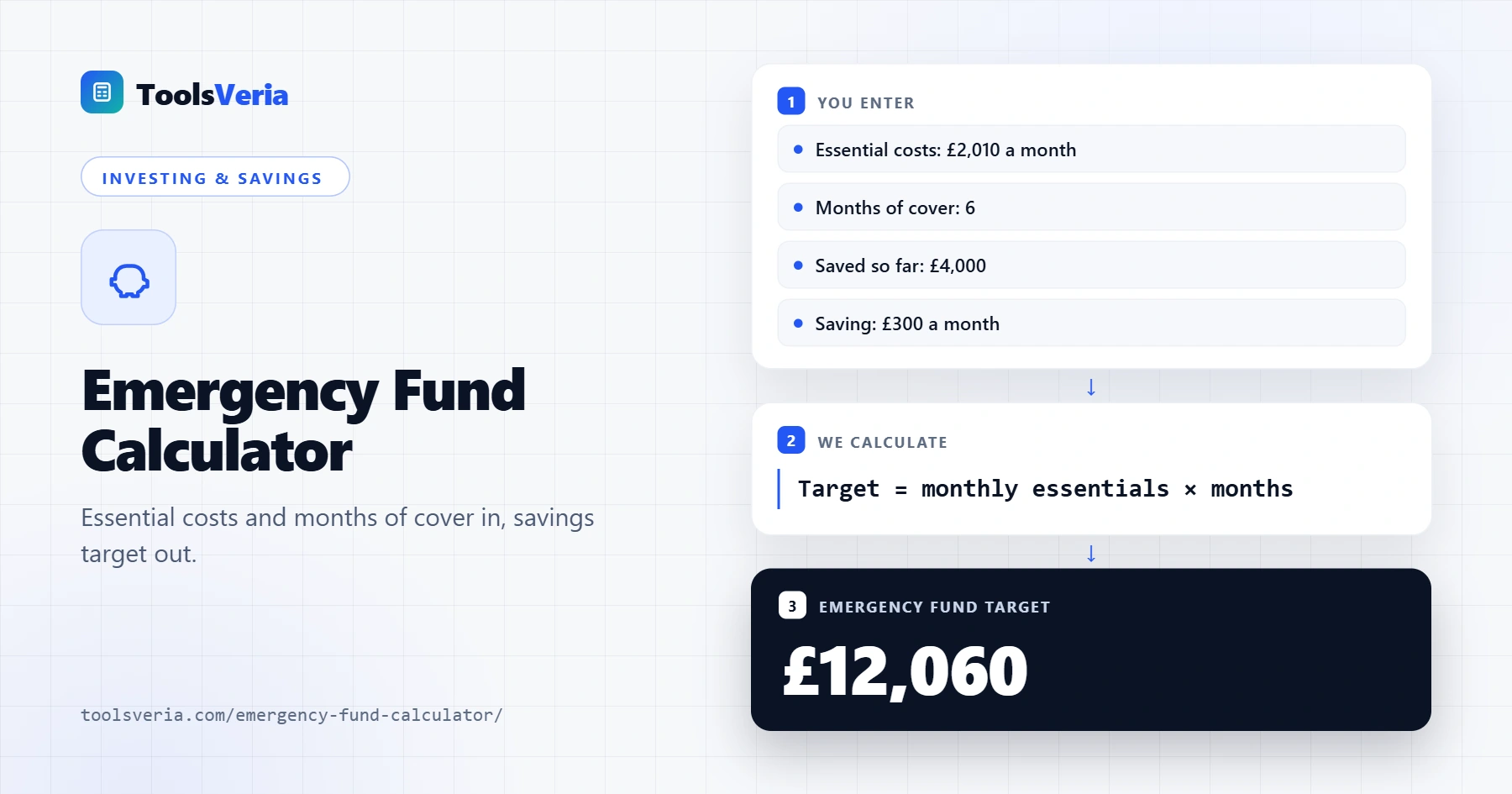
Quick answer: An emergency fund calculator multiplies your essential monthly costs by your months of cover. Essentials of £2,010 a month with six months of cover give a target of £12,060. Three months suits a dual income household with secure jobs, while freelancers and sole earners often aim for nine to twelve months.
In This Guide
What Is an Emergency Fund?
It is a pot of easy access money kept for one job: paying the essentials if your income stops or a large unplanned bill lands. It is not a holiday fund and it is not an investment. The point is that you never need to sell shares in a falling market or reach for a credit card at 25% interest when something goes wrong.
The sum is simple: essential monthly costs × months of cover. Take Priya, who rents a flat in Leeds. Her rent, bills, food, bus pass, loan payment and phone add up to £2,010 a month. Six months of cover gives a target of £12,060. She has £4,000 already, so her gap is £8,060, and at £300 a month she closes it in 27 months.
How to Use the Emergency Fund Calculator
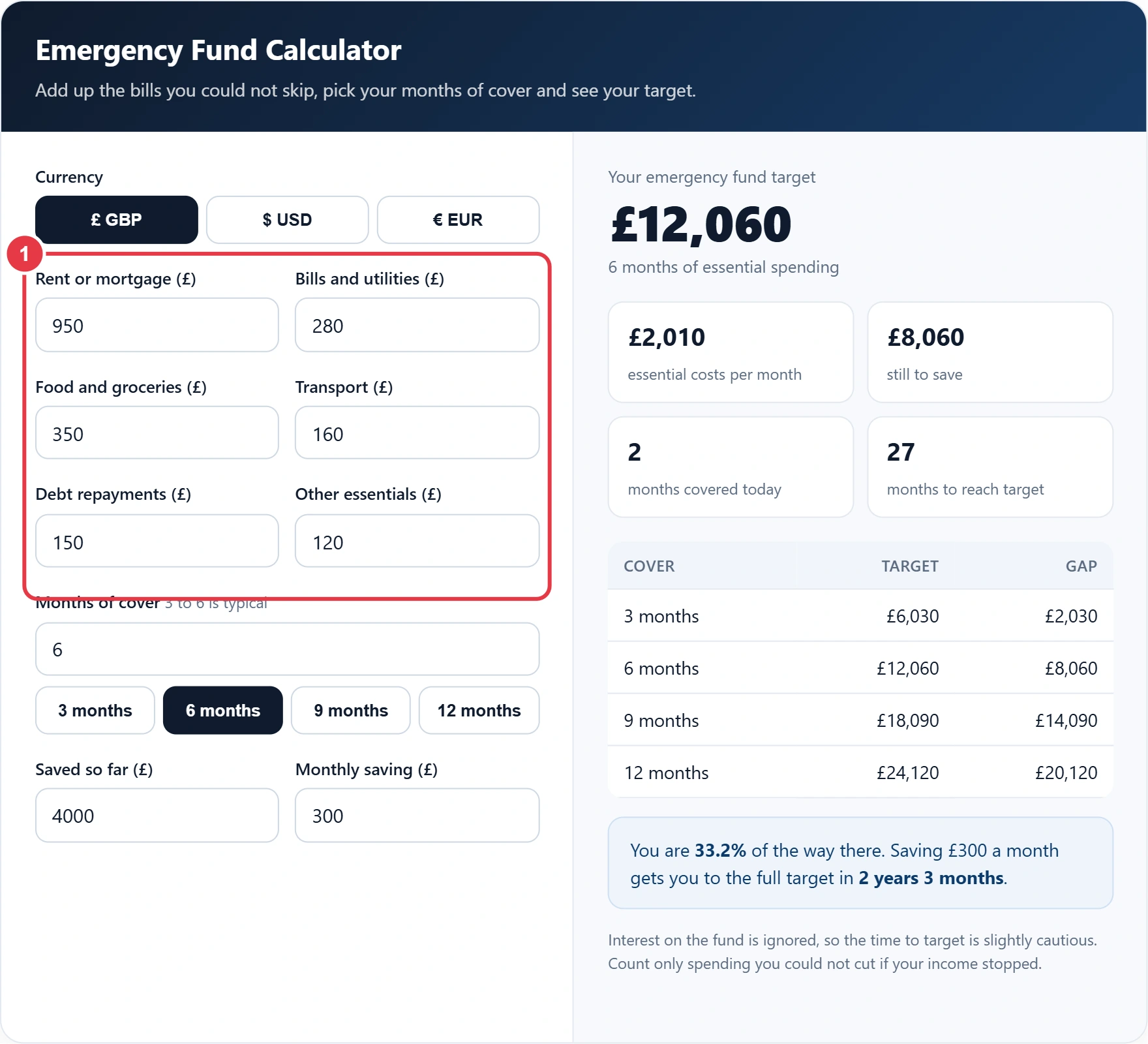
Step 1: List Your Essential Costs
Pick your currency, then fill in the six cost boxes using your bank statements rather than guesses. Leave out takeaways, streaming and gym fees you would cancel in a crisis, but keep minimum debt payments because missing them causes lasting damage.
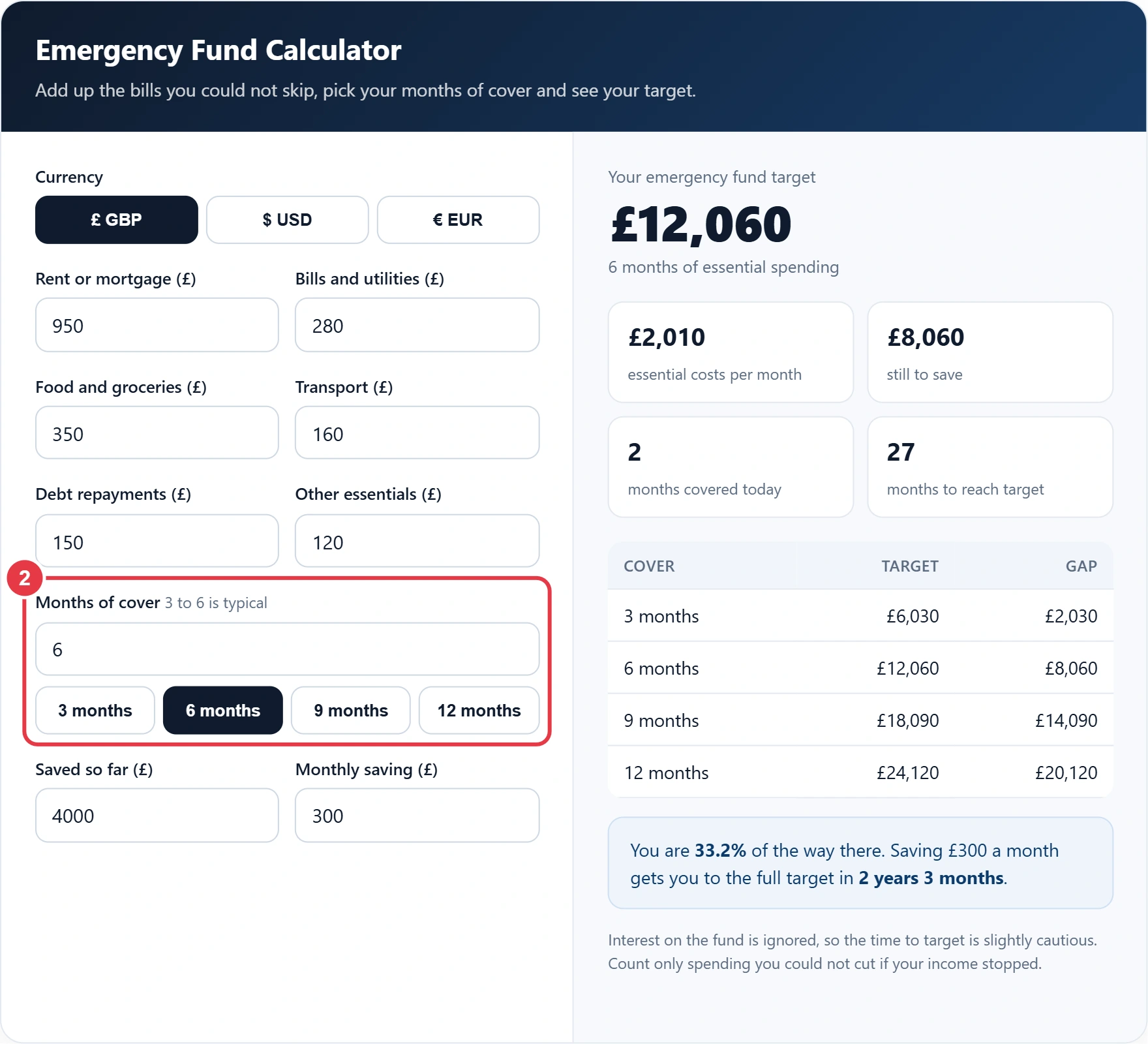
Step 2: Choose Your Months of Cover
Three months suits a dual income household with secure jobs. Six is a sensible middle ground. Freelancers, sole earners and anyone in a sector with long hiring cycles often aim for nine to twelve months.
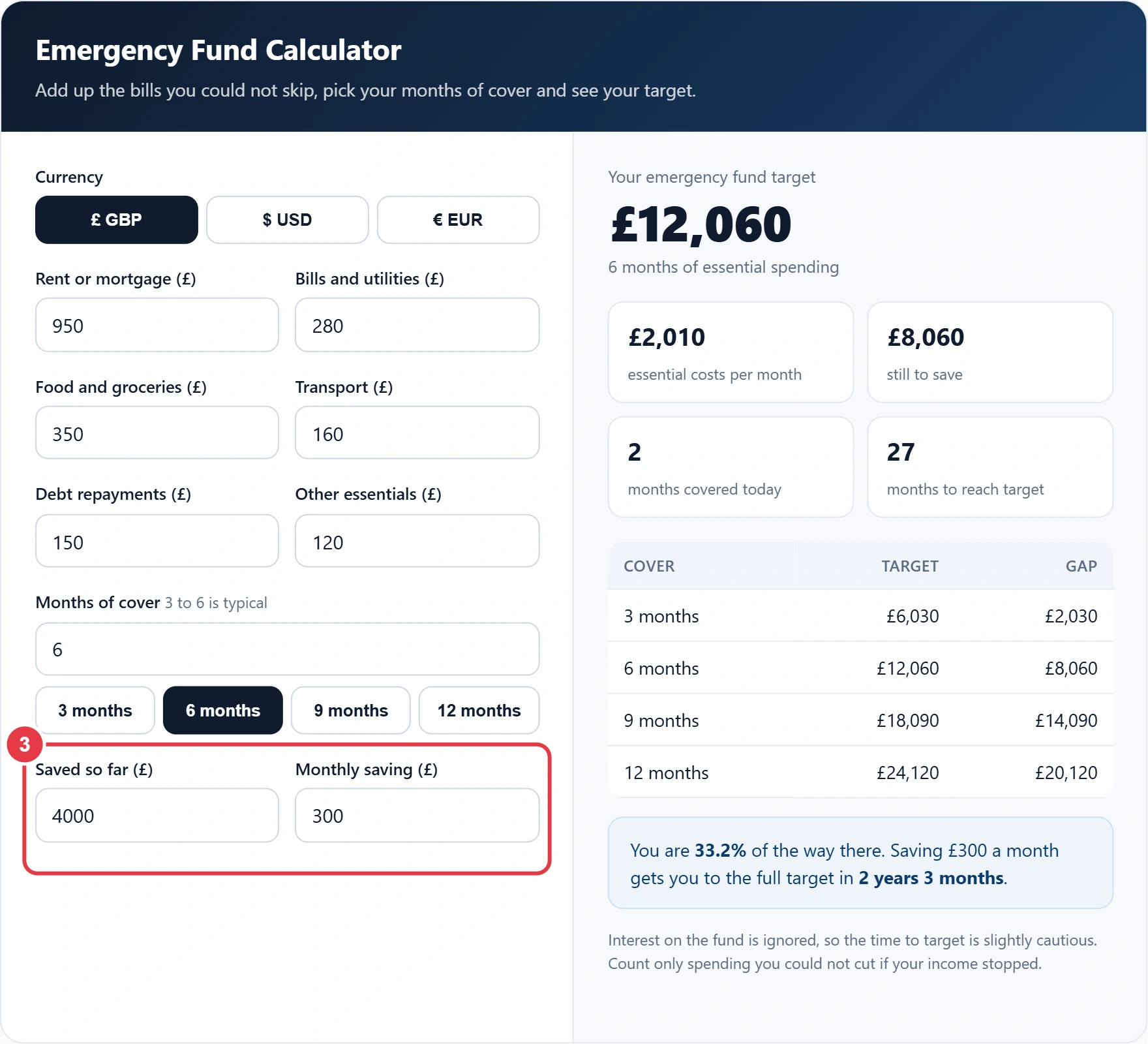
Step 3: Add What You Have Saved
Enter the cash you could reach within a few days, plus the amount you can set aside each month. If you want to see how interest would speed things up, the savings interest calculator shows the growth on an easy access rate before you settle on a monthly figure.
Step 4: Read Your Target and Timeline
The results show your target, the shortfall, how many months your current savings would last and how long the gap takes to close. The table compares 3, 6, 9 and 12 months side by side so you can choose a first milestone.
Where to Keep Your Emergency Fund
- Use an easy access savings account or easy access cash ISA, not a fixed bond you cannot touch for a year.
- Keep it in a separate account from your spending money so it does not quietly drift into everyday use.
- Clear expensive card debt alongside saving, because card interest usually beats any savings rate.
- Refill the pot first after you use it, before restarting other goals.
A fund this size is real money, so think about protection too. In the UK, cash held with an authorised bank is covered by the Financial Services Compensation Scheme up to £120,000 per person per banking group, so a larger fund is safest spread across separate brands. Once the pot is full, the compound interest calculator helps you plan what to do with the money you no longer need to hold back.
</>Embed this calculator on your website
Add the free Emergency Fund Calculator to your own site or blog. Copy the code below and paste it into an HTML block. It resizes itself and works on phones.
How we checked this tool: the Tools Veria Editorial Team built this tool by hand, checked it against the official rules or published standards where they apply, and tested it against worked examples. Results are estimates for planning, not personal financial or tax advice. Read our editorial policy and disclaimer, or report an error.
Frequently Asked Questions
How many months should a self employed person keep in an emergency fund?
Most freelancers aim for six to twelve months because income can dry up with little notice. Keep any money set aside for your tax bill separate, as it is not part of the emergency pot.
Should I pay off my credit card before building an emergency fund?
Build a small starter pot of around one month of costs first, then attack the card. After that, split spare cash between the card and the full fund.
Does my emergency fund need to cover my full salary?
No. It only needs to cover essential spending, which is usually well below take home pay because savings, holidays and treats stop in a crisis.
Can I keep my emergency fund in a stocks and shares ISA?
It is not ideal. Share prices can fall just when you need the money, so cash in an easy access account is the safer home for this pot.
Does the calculator include interest on my savings?
No. It assumes no interest, so the months to target figure is a slightly cautious estimate. Interest will usually get you there a little sooner.
What counts as an emergency?
Job loss, urgent home or car repairs, a sudden medical or vet bill, or emergency travel. A sale or a planned purchase is not an emergency.