Salary, self employed profit, pension and rental income for England, Wales, Northern Ireland or Scotland.
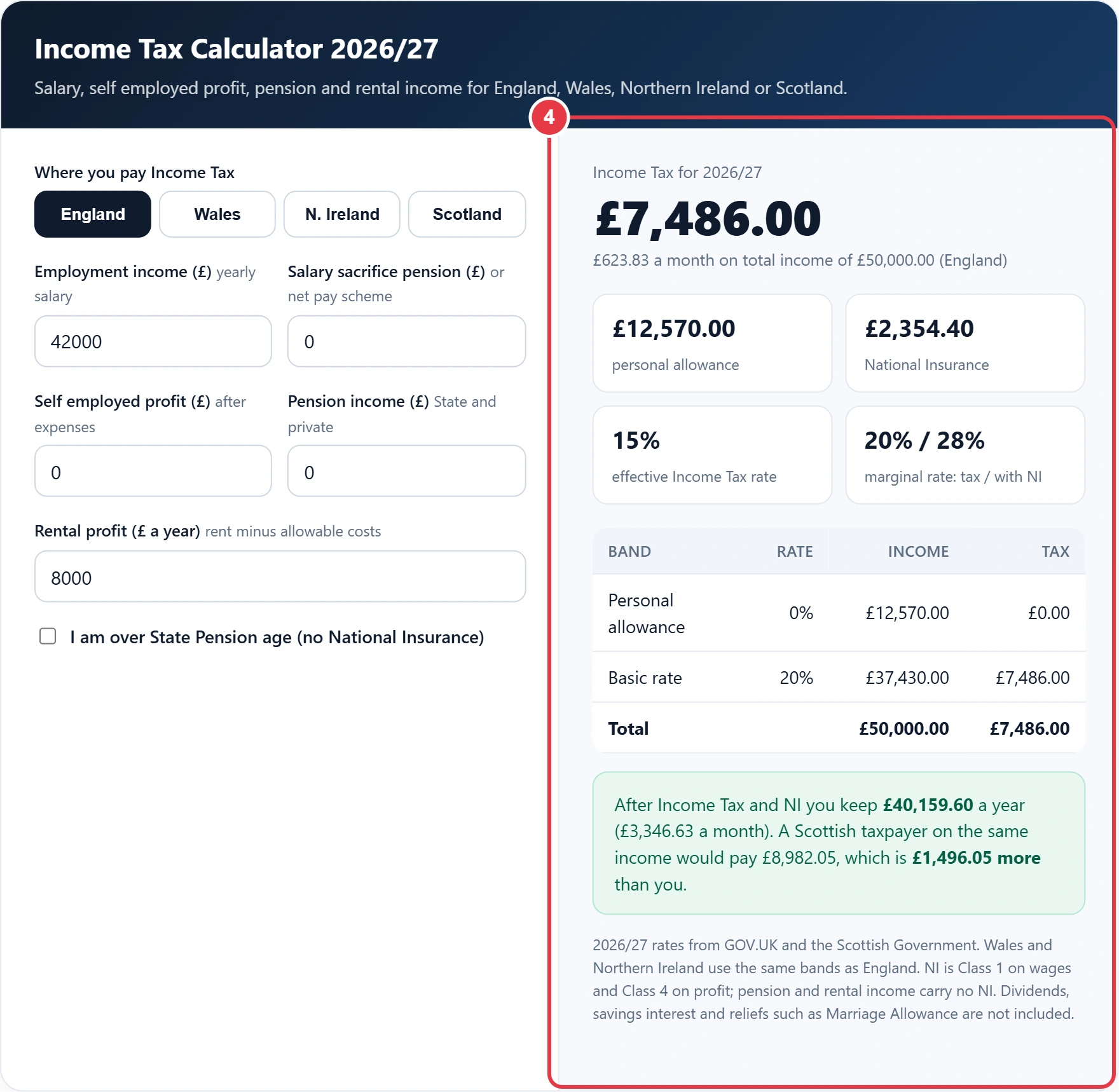
| Band | Rate | Income | Tax |
|---|
2026/27 rates from GOV.UK and the Scottish Government. Wales and Northern Ireland use the same bands as England. NI is Class 1 on wages and Class 4 on profit; pension and rental income carry no NI. Dividends, savings interest and reliefs such as Marriage Allowance are not included.
This income tax calculator works out the Income Tax you owe for the 2026/27 tax year in England, Wales, Northern Ireland or Scotland, whether your money comes from a job, self employment, a pension or a rental property. It applies the GOV.UK Income Tax rates for 2026/27 to your combined income and shows every band, your National Insurance and your marginal rate, so you can see exactly where each pound of tax comes from.
Quick answer: An income tax calculator adds up all your taxable income, takes off the £12,570 Personal Allowance and charges 20% up to £50,270, 40% up to £125,140 and 45% above in England, Wales and Northern Ireland. A £50,000 income pays £7,486 a year. Scotland uses six rates from 19% to 48%.
In This Guide
What Is an Income Tax Calculator?
An income tax calculator is a tool that applies HMRC's bands and rates to your total yearly income to estimate the Income Tax you will pay. It treats salary, self employed profit, pension income and rental profit as one pot, because HMRC taxes them together.
The formula in plain words: taxable income = total income minus Personal Allowance, then each slice of taxable income is multiplied by the rate for its band and the slices are added up. Above £100,000 the Personal Allowance falls by £1 for every £2 of income, and it reaches zero at £125,140.
How to Use the Income Tax Calculator
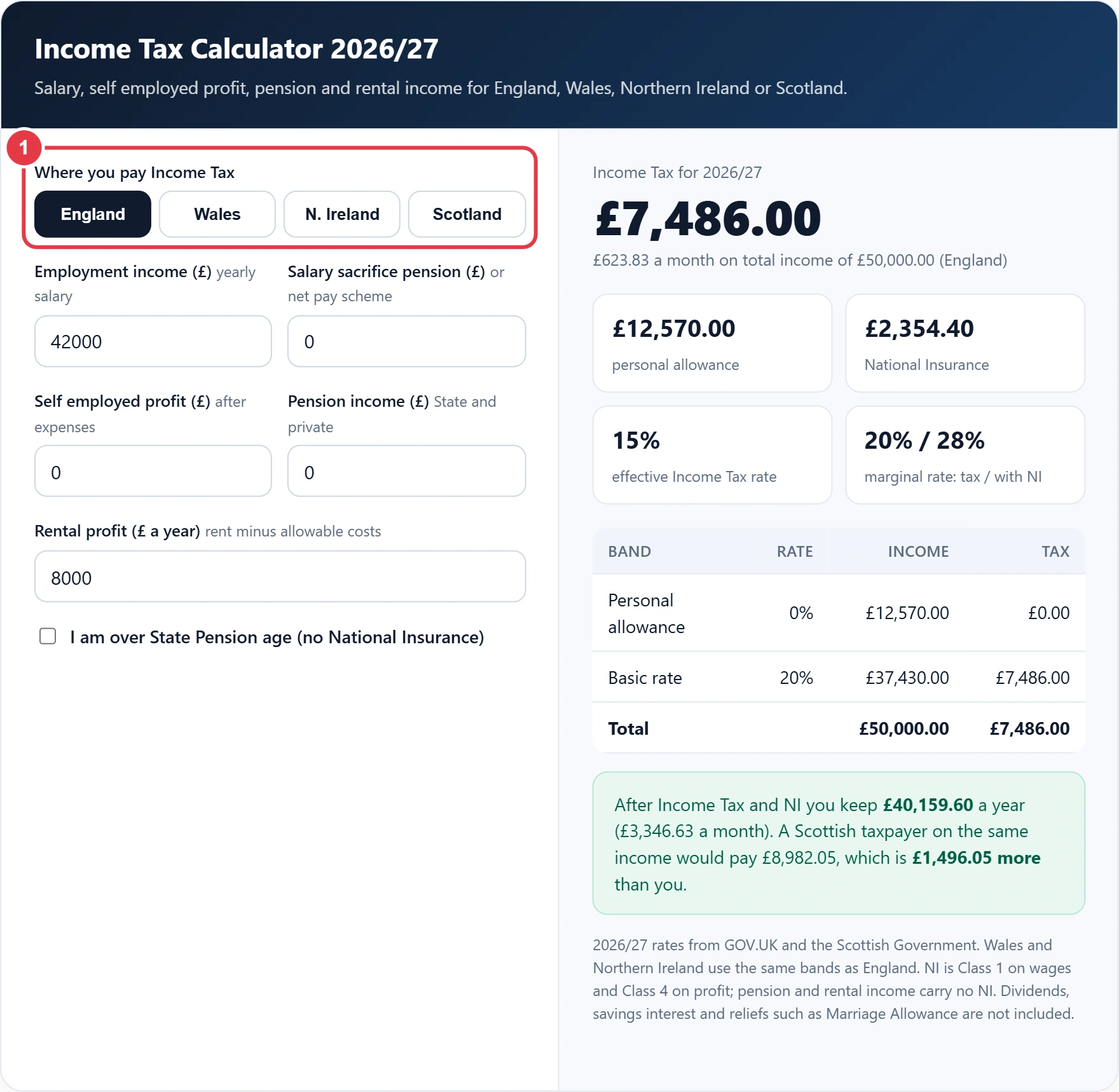
Step 1: Choose Where You Pay Tax
Pick England, Wales, Northern Ireland or Scotland. Your tax region depends on where you mainly live, not where your employer is based. Scottish taxpayers have a tax code starting with S.
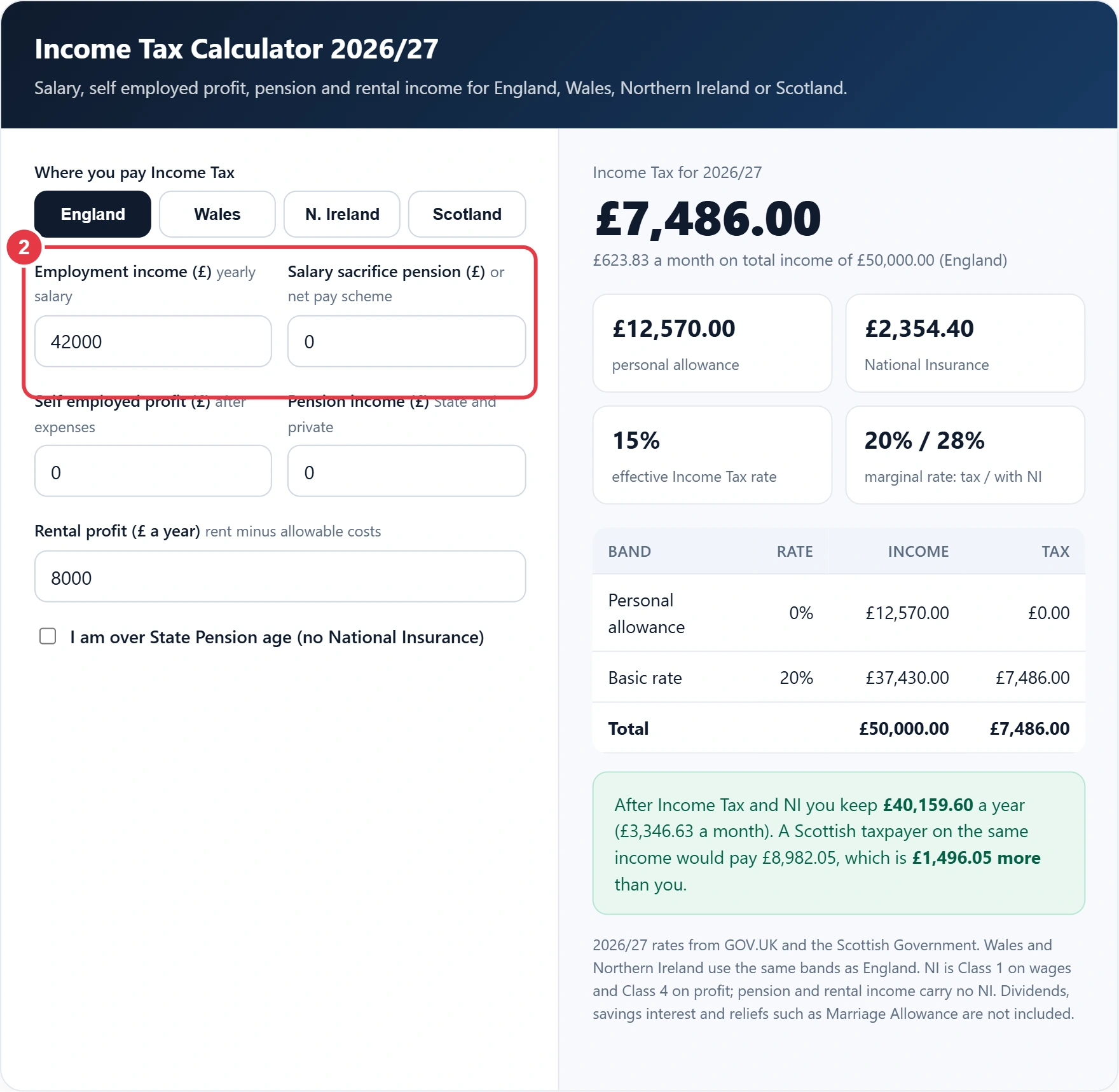
Step 2: Enter Your Employment Income
Type your yearly salary, including bonuses and overtime. If you pay into a workplace pension through salary sacrifice or a net pay scheme, enter that amount too, because it comes off your pay before tax. For your monthly payslip figure with student loan, our salary calculator UK shows take home pay in full, so use it alongside this page.
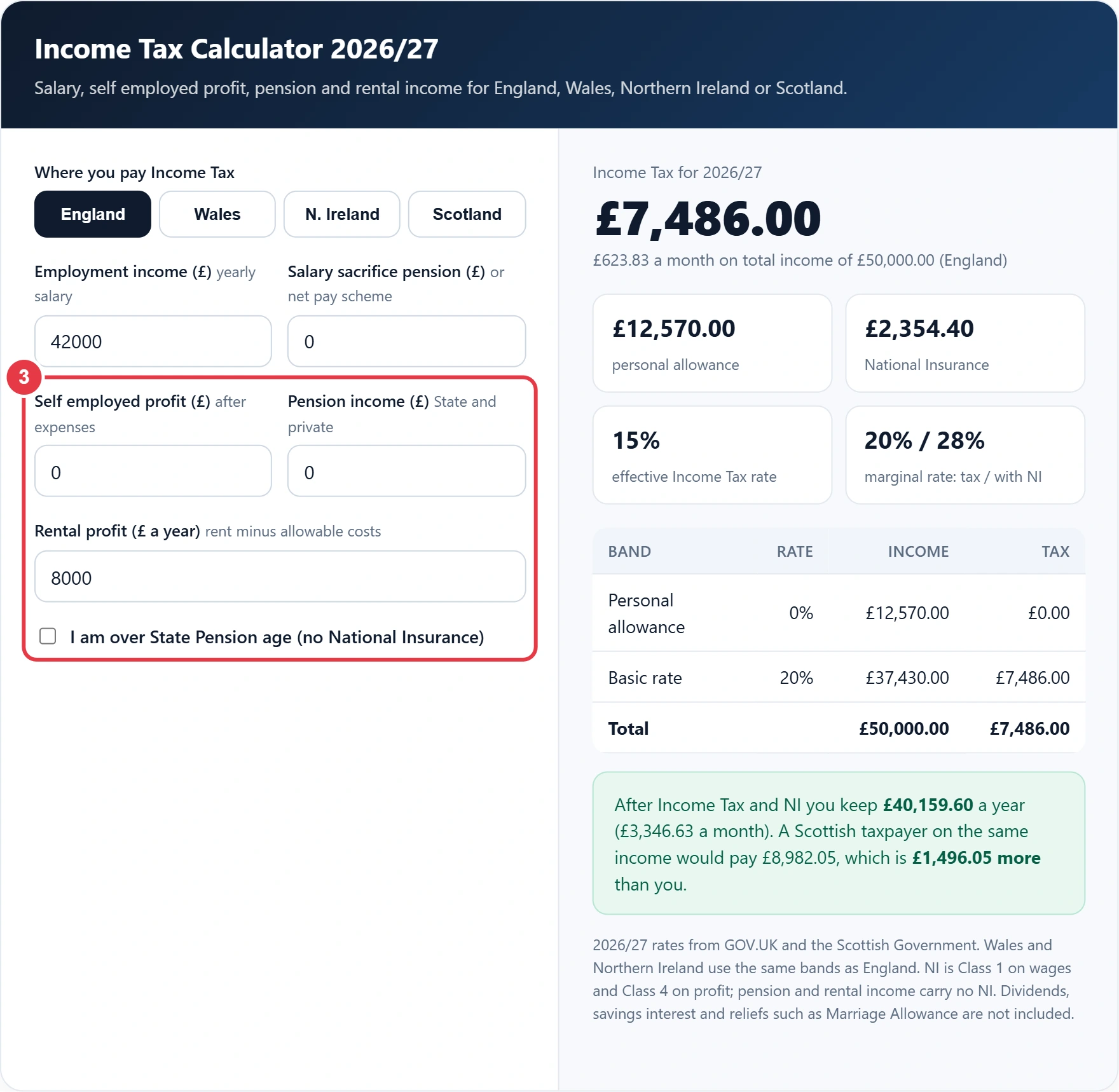
Step 3: Add Your Other Income
Add self employed profit after allowable expenses, pension income (State Pension plus any private or workplace pension) and rental profit after costs. Tick the State Pension age box if you no longer pay National Insurance. Letting a room in your own home? The rent a room relief calculator checks whether the £7,500 tax free limit covers it before you add anything here.
Step 4: Read Your Results
You will see your Income Tax for the year and per month, your Personal Allowance, National Insurance, effective rate and the marginal rate on your next £100. The band table shows how much income falls in each band and the tax on it, and the box compares your bill with the other UK tax system.
How Much Income Tax Will I Pay in 2026/27?
In England, Wales and Northern Ireland you pay nothing on the first £12,570, 20% on income up to £50,270, 40% up to £125,140 and 45% above that. These thresholds are frozen, so a pay rise pulls more of your income into the higher bands each year. The table compares both systems at common incomes.
| Total income | England, Wales, NI | Scotland | Difference |
|---|---|---|---|
| £20,000 | £1,486.00 | £1,446.33 | Scotland £39.67 less |
| £30,000 | £3,486.00 | £3,451.07 | Scotland £34.93 less |
| £40,000 | £5,486.00 | £5,551.07 | Scotland £65.07 more |
| £50,000 | £7,486.00 | £8,982.05 | Scotland £1,496.05 more |
| £75,000 | £17,432.00 | £19,482.05 | Scotland £2,050.05 more |
| £110,000 | £33,432.00 | £37,482.05 | Scotland £4,050.05 more |
| £150,000 | £53,703.00 | £59,634.35 | Scotland £5,931.35 more |
Figures are Income Tax only with a standard Personal Allowance, checked October 2026. National Insurance is extra on wages and self employed profit: 8% for employees and 6% for the self employed between £12,570 and £50,270, then 2% above.
How Is Income Tax Worked Out on More Than One Income?
All your taxable income is added together first, and the Personal Allowance and bands are applied once to the total, not separately to each source. That is why a side income can push part of your salary into a higher band.
Worked example: Priya lives in Leeds, earns a £42,000 salary and makes £8,000 profit from a flat she lets. Her total income is £50,000. After the £12,570 Personal Allowance, £37,430 is taxable, all inside the basic rate band, so her Income Tax is £37,430 × 20% = £7,486. She pays £2,354.40 National Insurance on her salary only, because rental profit carries no NI, and keeps £40,159.60. If her income rose by £1,000, the last £730 would be taxed at 40%.
Landlords should plan ahead: the government has confirmed that separate property income rates of 22%, 42% and 47% start in April 2027 in England, Wales and Northern Ireland. On those rates Priya's £8,000 rental profit would cost about £160 more a year.
Do Scottish Taxpayers Pay More Income Tax?
Scottish taxpayers pay slightly less than the rest of the UK on incomes up to about £33,500 and more above that point. The 2026/27 Scottish Income Tax bands on GOV.UK are 19% starter rate to £16,537, 20% basic to £29,526, 21% intermediate to £43,662, 42% higher to £75,000, 45% advanced to £125,140 and 48% top rate above.
The gap is widest for higher earners. At £50,000 a Scottish taxpayer pays £1,496.05 more, because the 42% rate starts at £43,663 rather than £50,271. Wales sets its own Welsh rates, but in 2026/27 they match England exactly.
What Is the 60% Tax Trap?
The 60% tax trap is the effective rate on income between £100,000 and £125,140, caused by losing £1 of Personal Allowance for every £2 earned. At £110,000 your allowance is £7,570 and your Income Tax is £33,432, which is £2,000 more than the bands alone suggest.
Employees in this range lose 62p of every extra pound to tax and NI, and Scottish taxpayers lose 69.5p. Pension contributions lower the income used for the taper, and the pension tax relief calculator shows how much tax a contribution saves, so check it before a bonus is paid.
Figures on this page were checked October 2026 against GOV.UK. If your payslip tax looks different from the result, run your PAYE code through the tax code calculator to see what allowance HMRC has given your employer, as company benefits or underpaid tax from earlier years change it.
</>Embed this calculator on your website
Add the free Income Tax Calculator to your own site or blog. Copy the code below and paste it into an HTML block. It resizes itself and works on phones.
How we checked this tool: the Tools Veria Editorial Team built this tool by hand, checked it against the official rules or published standards where they apply, and tested it against worked examples. Results are estimates for planning, not personal financial or tax advice. Read our editorial policy and disclaimer, or report an error.
Frequently Asked Questions
How much income tax do I pay on £30,000?
On a £30,000 income you pay £3,486 Income Tax in 2026/27 in England, Wales and Northern Ireland: 20% of the £17,430 above the £12,570 Personal Allowance. A Scottish taxpayer pays £3,451.07, which is £34.93 less.
What is the Personal Allowance for 2026/27?
The Personal Allowance for 2026/27 is £12,570, the amount of income you can receive each year before any Income Tax is due. It falls by £1 for every £2 of adjusted net income above £100,000 and disappears completely at £125,140.
Do I pay National Insurance on pension or rental income?
No. National Insurance is not charged on pension income or rental profit, only on employment earnings and self employed profit. Income Tax still applies to both, using the same bands as your salary, and people over State Pension age pay no NI at all.
Does Wales have different income tax rates?
Wales can set its own Welsh rates of Income Tax, but for 2026/27 they are identical to England and Northern Ireland: 20% basic, 40% higher and 45% additional. A Welsh taxpayer earning £50,000 pays the same £7,486 as someone in England.
What is the difference between marginal and effective tax rate?
Your marginal rate is the tax on your next £1 of income, while your effective rate is total Income Tax divided by total income. A £60,000 earner in England has a 40% marginal rate but an effective rate of 19.1%, because lower bands are taxed less.
When do I pay income tax on self employed or rental income?
You pay it through Self Assessment. The online return and balancing payment for 2026/27 are due by 31 January 2028, and if your bill is over £1,000 you usually also make two payments on account, on 31 January and 31 July.