Compare the Rent a Room Scheme with claiming expenses for the 2026/27 tax year.
| Method | Taxable | Tax |
|---|
Estimate only, check with HMRC. Uses 2026/27 Income Tax bands for England, Wales and Northern Ireland (personal allowance £12,570, basic rate to £50,270, higher rate to £125,140). Scottish taxpayers pay different rates. Figures checked October 2026.
This rent a room relief calculator shows UK homeowners and tenants who take in a lodger how much Income Tax they will pay on that income in the 2026/27 tax year, comparing the £7,500 Rent a Room Scheme with claiming actual expenses. It works out your tax band from your other income, applies the £3,750 limit when the income is shared and tells you which method to choose and by when. Figures checked October 2026.
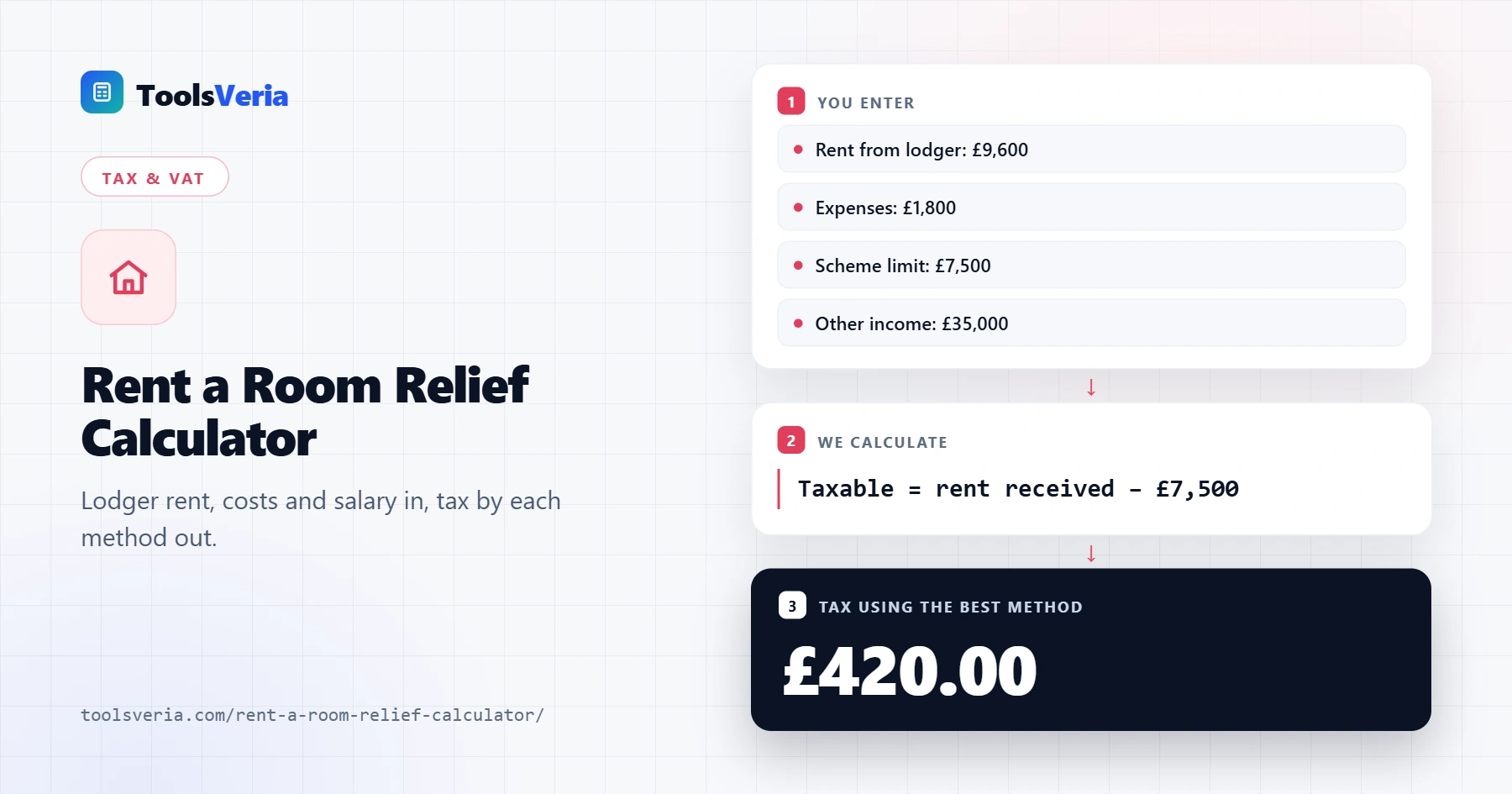
Quick answer: You can earn £7,500 a year tax free from a lodger in your main home, or £3,750 each if the income is shared. Above that you pay tax either on receipts minus £7,500 or on receipts minus actual expenses. In this rent a room relief calculator, £9,600 at basic rate costs £420.
In This Guide
What Is Rent a Room Relief?
Rent a room relief is an HMRC scheme that lets you receive up to £7,500 a year tax free for letting furnished accommodation in your only or main home, whether you own it or rent it. The limit halves to £3,750 for each person if someone else, such as a joint owner, also receives income from letting in the same property.
The formula in plain words: add up everything the lodger pays you, including charges for meals, cleaning or laundry. If that total is £7,500 or less, the relief is automatic. If it is more, you choose between Method A, where you pay tax on receipts minus actual expenses, and Method B, where you pay tax on receipts minus £7,500 and claim no expenses at all. The tax is then charged at your normal Income Tax rate, which depends on your other income.
How to Use the Rent a Room Relief Calculator
Step 1: Enter What Your Lodger Paid
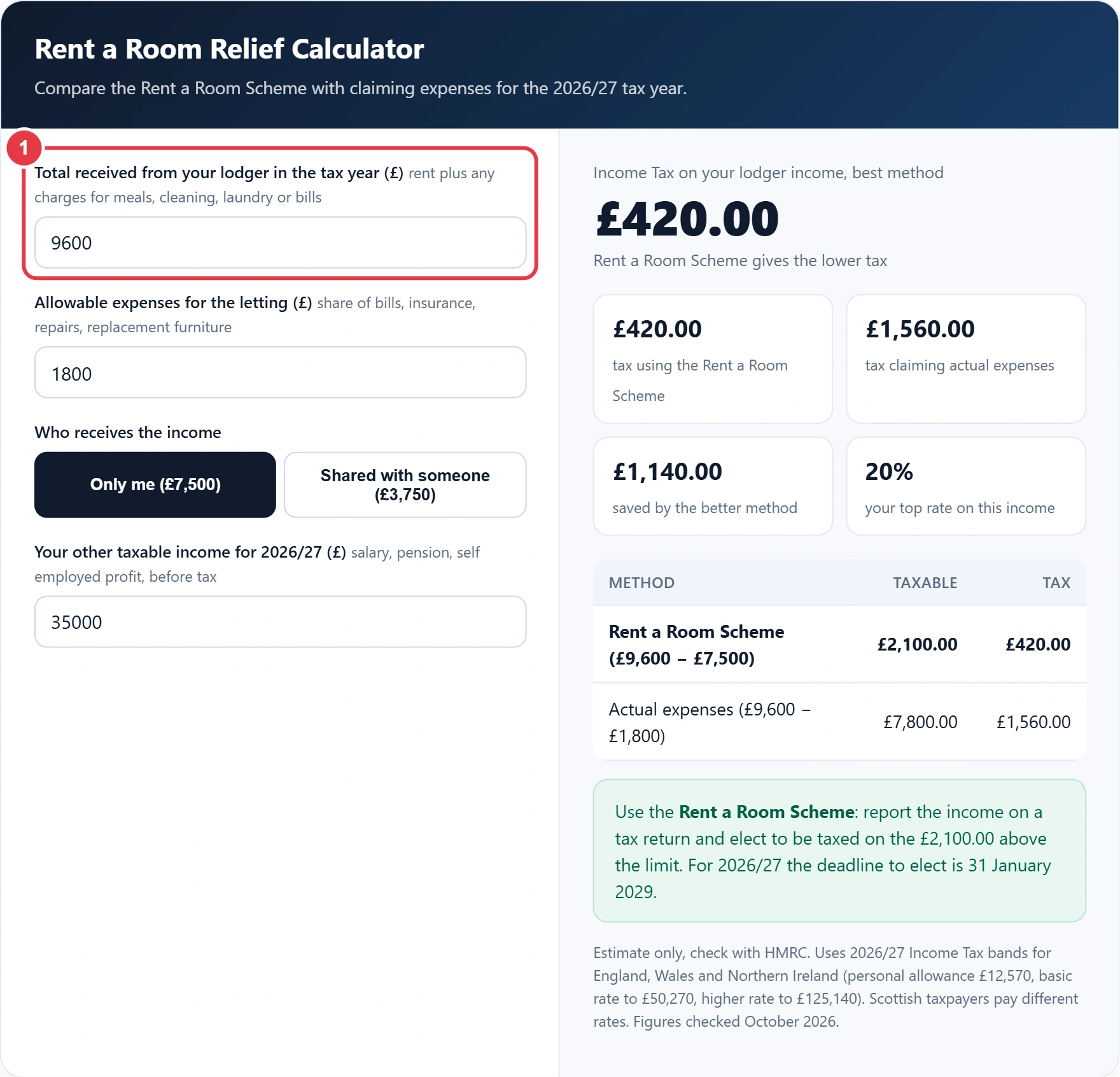
Add up the rent for the tax year from 6 April 2026 to 5 April 2027, plus anything extra you charge for food, cleaning, laundry or a share of bills. HMRC counts all of these as gross receipts, so leaving out the bills element is a common reason people go over the limit without realising.
Step 2: Enter Your Expenses
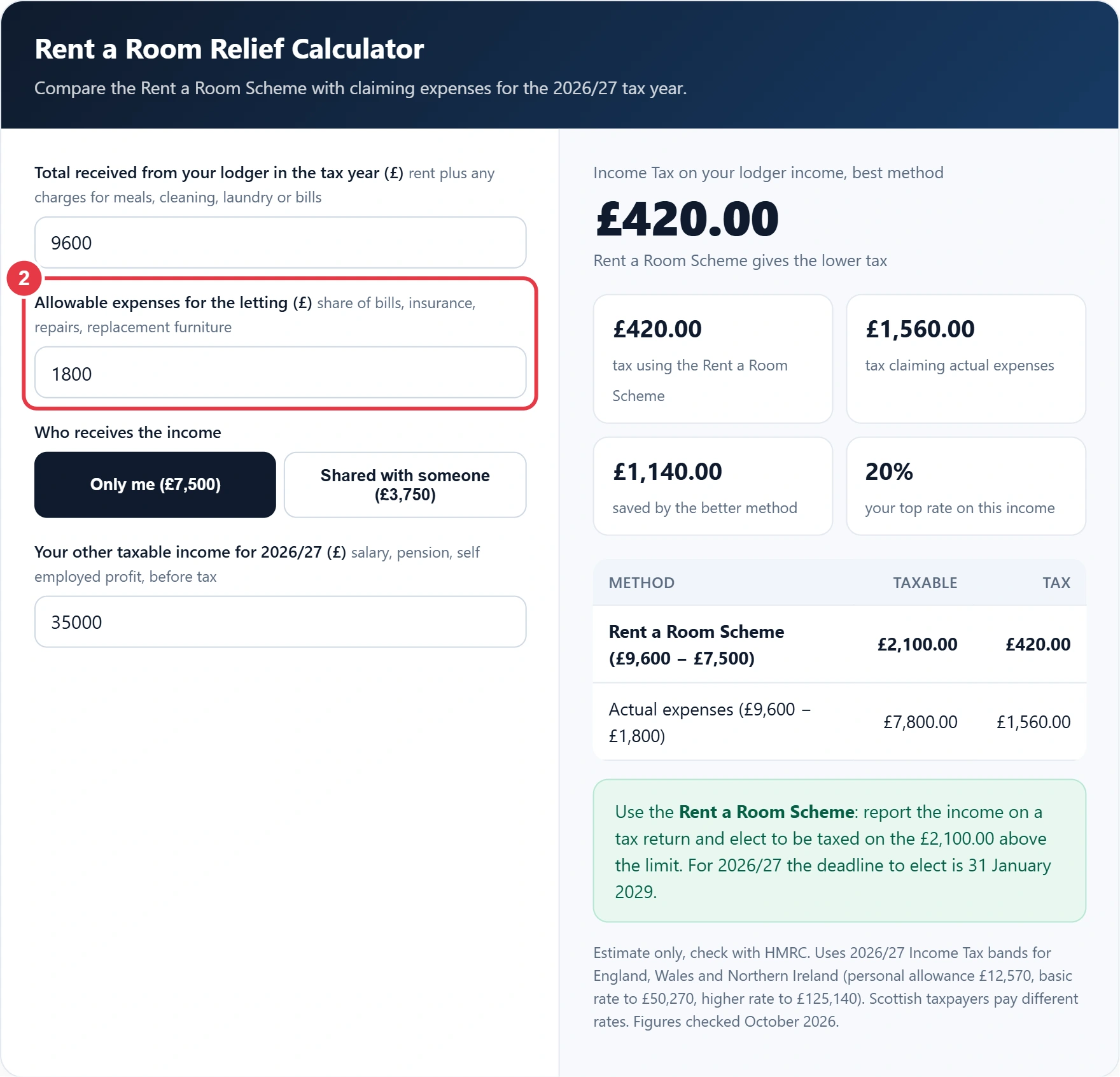
Enter the costs of the letting: the lodger's fair share of gas, electricity, broadband and water, extra insurance, repairs to the room and replacement of furniture you provide. You only need these figures to test Method A, because Method B ignores expenses completely.
Step 3: Choose the Limit and Add Other Income
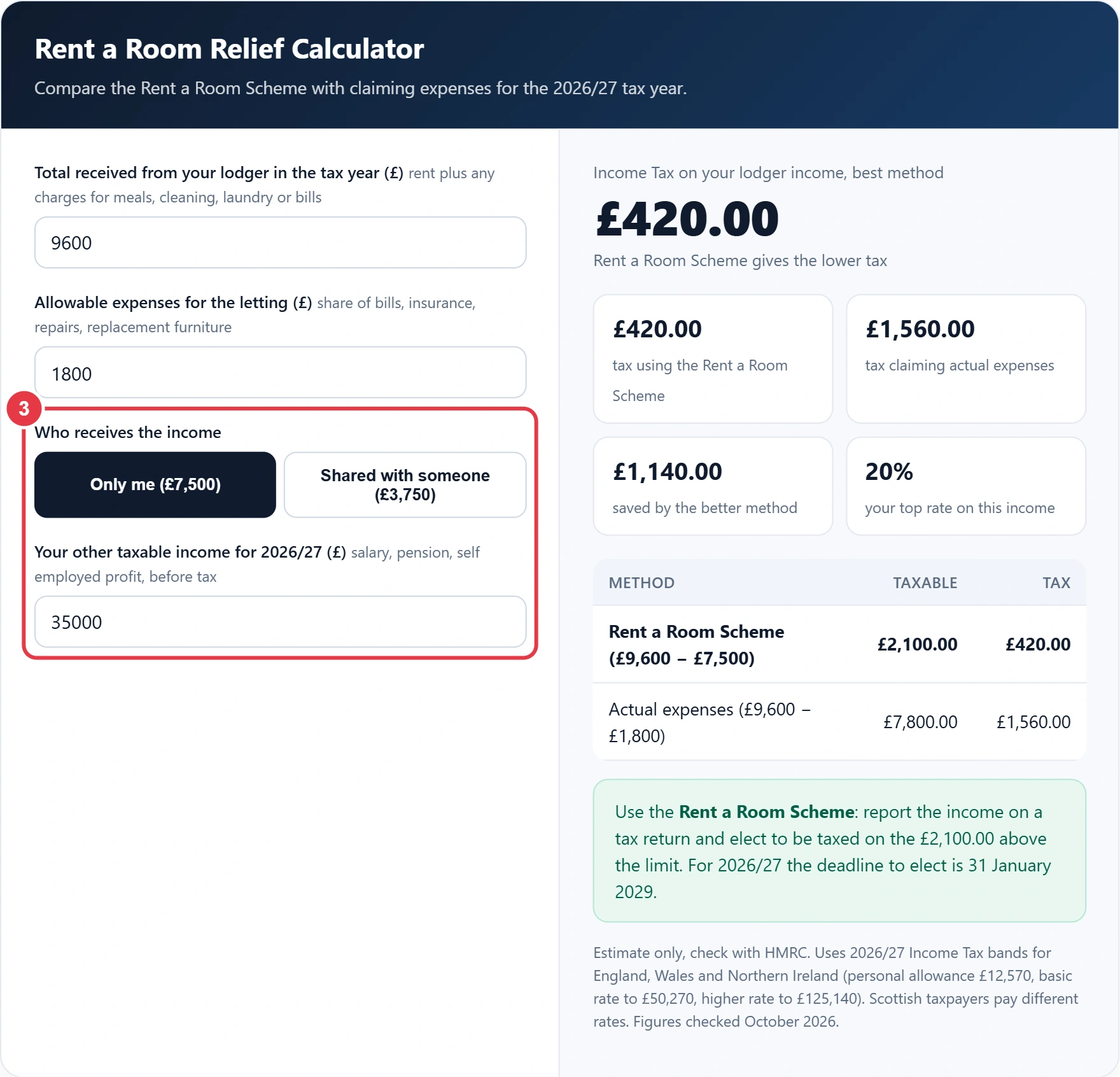
Choose £3,750 if a partner or joint owner also receives part of the rent. Then enter your salary, pension or self employed profit for the year, because that decides whether the lodger income is taxed at 20%, 40% or more. The self employed tax calculator gives your trading profit if you need that figure first.
Step 4: Read Your Result
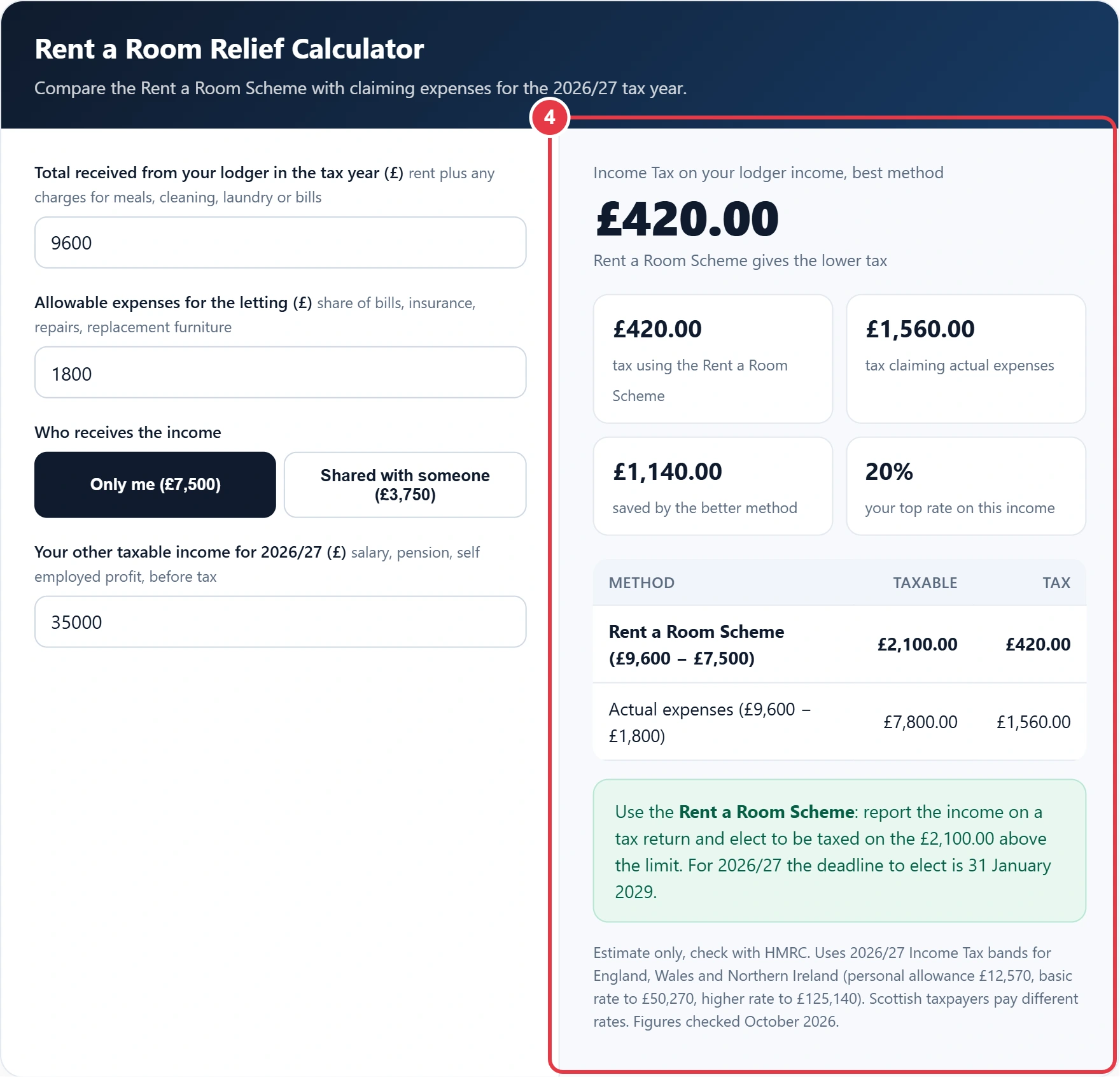
The headline shows the tax under the better method. The stats give the tax under each method, the saving and your top rate, and the box tells you what to do next, including the deadline to elect into or out of the scheme.
How Much Can You Earn Tax Free Renting a Room?
You can earn up to £7,500 a year tax free, which is £625 a month, from a lodger in your own home. If you share the income with a joint owner, each of you has £3,750. The limit has been £7,500 since April 2016 and stays the same for 2026/27.
Worked example: Priya, a nurse in Bristol earning £35,000, lets her spare room to a student for £800 a month including bills, so she receives £9,600 in 2026/27. Her expenses for the letting come to £1,800. Under Method A her profit is £9,600 minus £1,800, which is £7,800, and tax at 20% is £1,560. Under Method B she is taxed on £9,600 minus £7,500, which is £2,100, so tax is £420. Method B saves her £1,140, and she must elect for it on her tax return.
| Receipts | Expenses | Method A taxable | Method B taxable | Better method (basic rate tax) |
|---|---|---|---|---|
| £6,000 | £900 | £5,100 | £0 (automatic) | Scheme, £0 |
| £9,600 | £1,800 | £7,800 | £2,100 | Scheme, £420 |
| £9,000 | £8,000 | £1,000 | £1,500 | Expenses, £200 |
| £4,800 each, shared | £900 each | £3,900 | £1,050 | Scheme, £210 each |
Is the Rent a Room Scheme or Claiming Expenses Better?
The scheme is better whenever your expenses are below £7,500, or £3,750 if shared, which is true for almost every lodger arrangement. Claiming actual expenses only wins when your costs are higher than the limit, or when expenses exceed your receipts and you want to record a loss to carry forward.
You cannot combine the two, and you cannot use the £1,000 property allowance on the same lodger income either. The GOV.UK guidance on tax free allowances on property and trading income says the property allowance is not available for income from a room in your own home, so the rent a room relief calculator only compares the two methods that apply.
Do I Need to Tell HMRC About a Lodger?
Not if your receipts are £7,500 or less: the exemption is automatic and you do nothing. If you receive more, you must complete a Self Assessment tax return and can then opt into the scheme. The official GOV.UK Rent a Room page confirms the scheme covers furnished accommodation in your home but not a home converted into separate flats, so a self contained annexe needs checking.
Your choice of method must be made within one year of 31 January following the end of the tax year. For 2026/27, which ends on 5 April 2027, that deadline is 31 January 2029. The same deadline applies if you want to opt out of the automatic relief to claim a loss. Once made, an election to use Method B carries on until you withdraw it or your receipts drop below the limit.
What Changes for Rental Income From April 2027?
From the 2027/28 tax year, property income will have its own rates of 22%, 42% and 47%, two points above the normal rates. The £7,500 Rent a Room limit is not changing, so lodger income inside the limit stays tax free, but any taxable excess will cost more from 6 April 2027. If you also receive dividends, the dividend tax calculator shows how that income stacks on top of your salary and lodger profit for the same tax year.
</>Embed this calculator on your website
Add the free Rent a Room Relief Calculator to your own site or blog. Copy the code below and paste it into an HTML block. It resizes itself and works on phones.
How we checked this tool: the Tools Veria Editorial Team built this tool by hand, checked it against the official rules or published standards where they apply, and tested it against worked examples. Results are estimates for planning, not personal financial or tax advice. Read our editorial policy and disclaimer, or report an error.
Frequently Asked Questions
How much can I earn from a lodger tax free?
You can earn up to £7,500 a year tax free under the Rent a Room Scheme, which is £625 a month. If the income is shared with a joint owner or partner, each person's limit is £3,750 for the 2026/27 tax year.
Do bills paid by the lodger count towards the £7,500?
Yes. HMRC counts everything the lodger pays you as gross receipts, including amounts for bills, meals, cleaning and laundry. A lodger paying £550 rent plus £100 for bills each month gives you £7,800, which is over the limit.
What happens if I earn over £7,500 from a lodger?
You must complete a Self Assessment tax return. You can then pay tax on receipts above £7,500 with no expenses, or on receipts minus actual expenses. At £9,600 with £1,800 of costs, the scheme leaves £2,100 taxable instead of £7,800.
Can I use rent a room relief if I rent my home?
Yes. The scheme applies to furnished accommodation in your only or main home whether you own it or rent it, as long as your tenancy allows a lodger. Check your tenancy agreement or ask your landlord's permission first.
Can I claim expenses under the rent a room scheme?
No. If you use the scheme on receipts above £7,500, you cannot deduct any expenses or capital allowances. If your costs are higher than £7,500, claiming actual expenses instead usually leaves less profit to tax.
Does rent a room relief apply to Airbnb?
It can apply to short lets of furnished rooms in your main home, including Airbnb guests, and the same £7,500 limit covers all such income together. It does not apply to letting a separate self contained flat or a home you do not live in.