HMRC approved mileage rates for business travel in 2026/27.
HMRC approved rates from 6 April 2026: cars and vans 55p a mile for the first 10,000 business miles and 25p after, motorcycles 24p, bicycles 20p, passengers 5p. Commuting to a permanent workplace does not count as business travel.
Using your own car for work? This mileage allowance calculator works out the tax free amount HMRC allows for your business miles in 2026/27, including passenger payments. The rates come from HMRC's approved mileage allowance payment rules, and the results show whether you can claim tax relief because your employer pays less, or owe tax because they pay more.
What Is the HMRC Mileage Allowance?
Approved Mileage Allowance Payments (AMAPs) are the most an employer can pay you per business mile without it counting as taxable income. From 6 April 2026 the car and van rate rose from 45p to 55p a mile for the first 10,000 business miles in a tax year, with 25p a mile after that. Motorcycles are 24p and bicycles 20p.
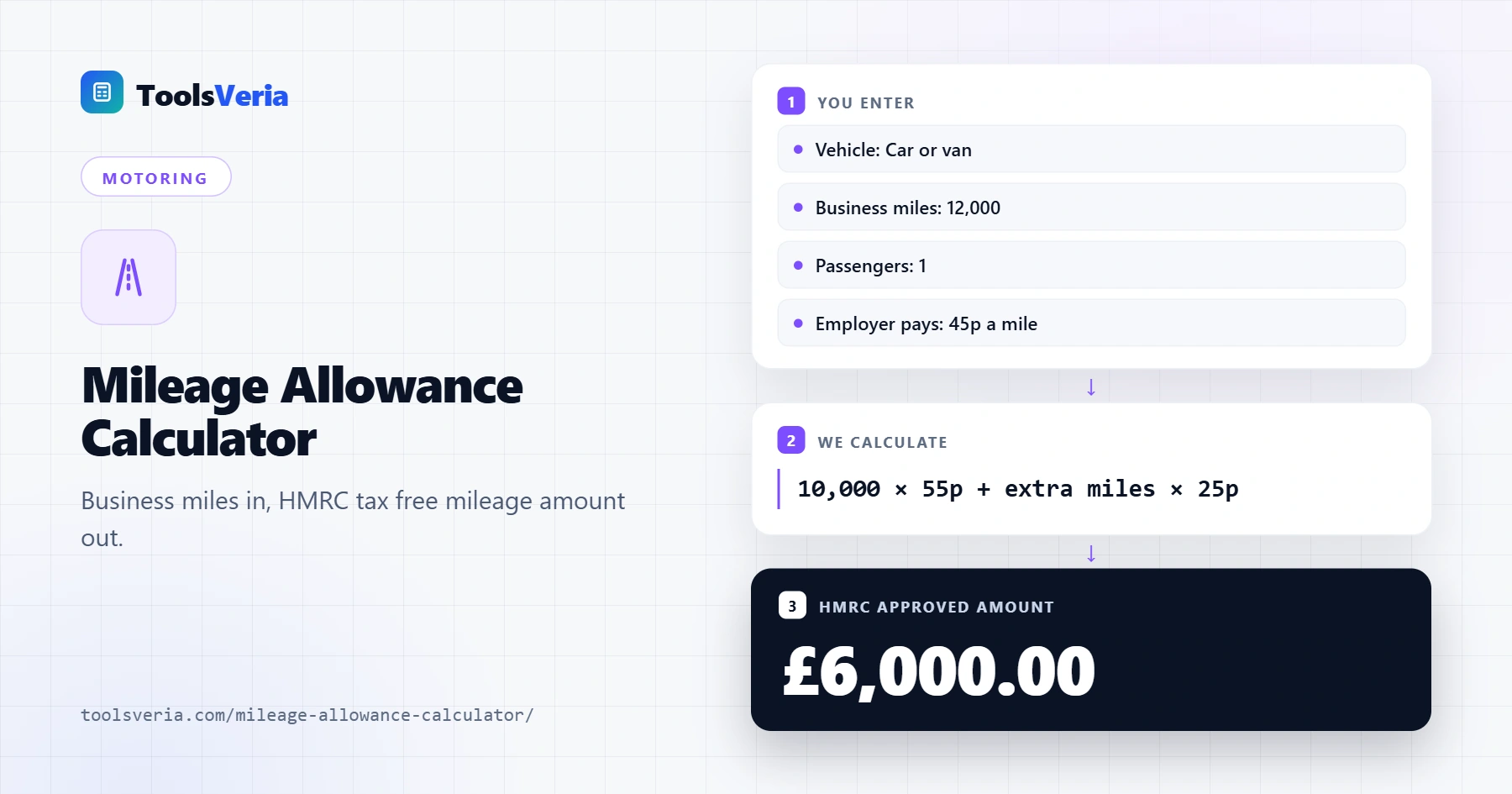
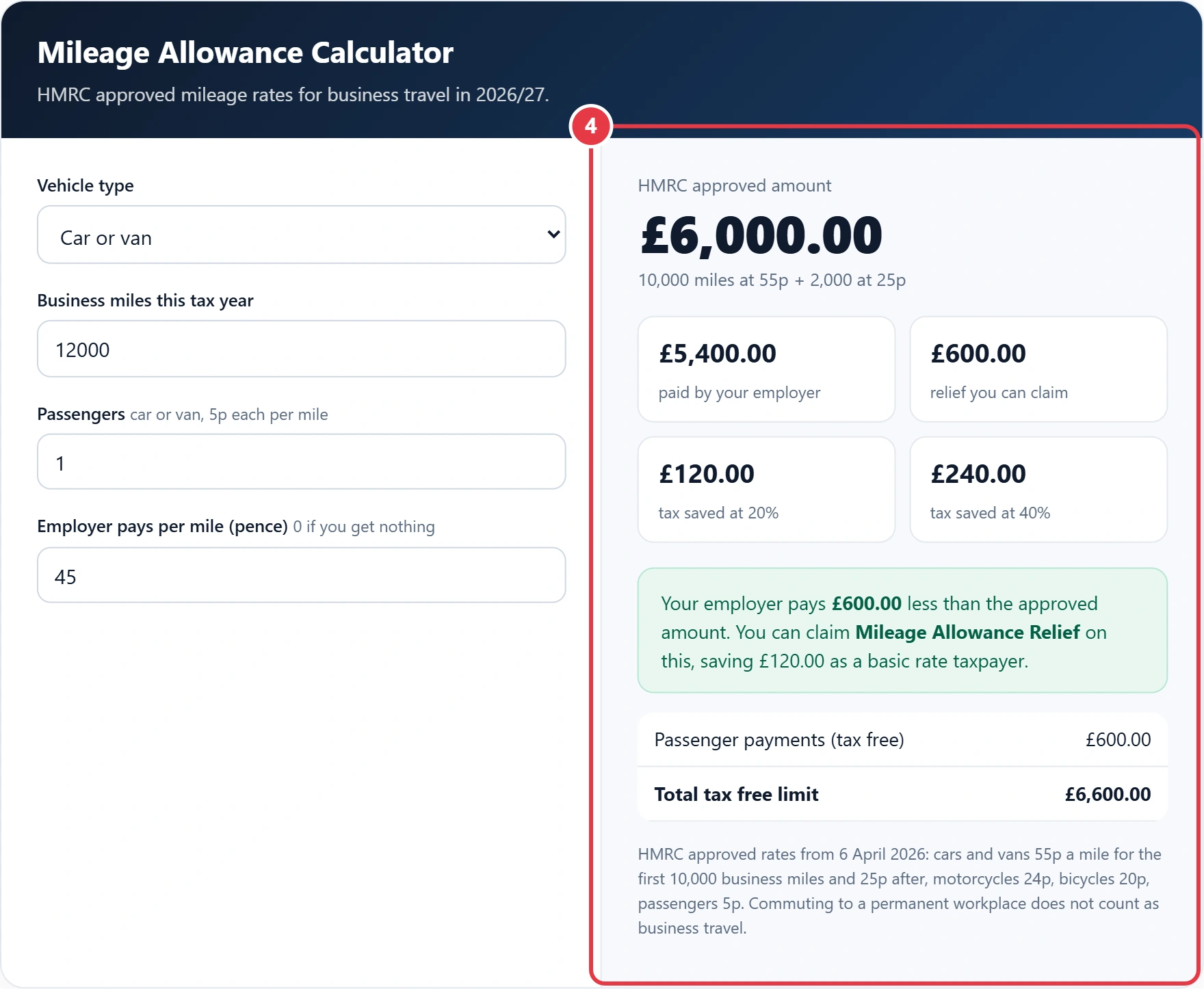
For a car, the formula is (first 10,000 miles × 55p) + (remaining miles × 25p). So 12,000 miles gives £5,500 + £500 = £6,000. If your employer pays only 45p, you receive £5,400 and can claim Mileage Allowance Relief on the £600 gap. That saves £120 at 20% tax.
How to Use the Mileage Allowance Calculator
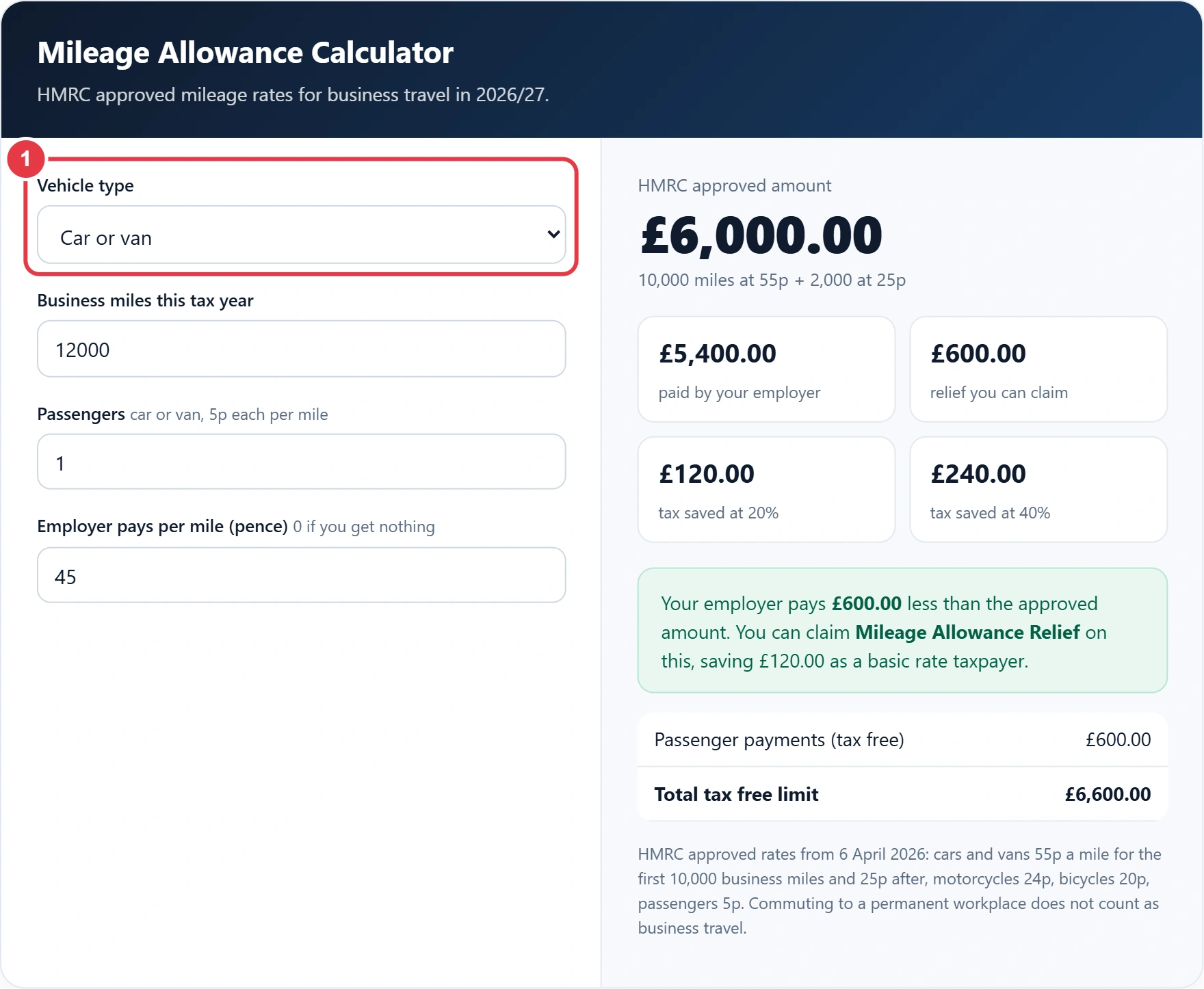
Step 1: Choose Your Vehicle
Select car or van, motorcycle or bicycle. To compare the rate with your real running costs, the MPG calculator works out your actual fuel economy and cost per mile. Cars and vans share the same approved rate, and the type of fuel makes no difference, including electric.
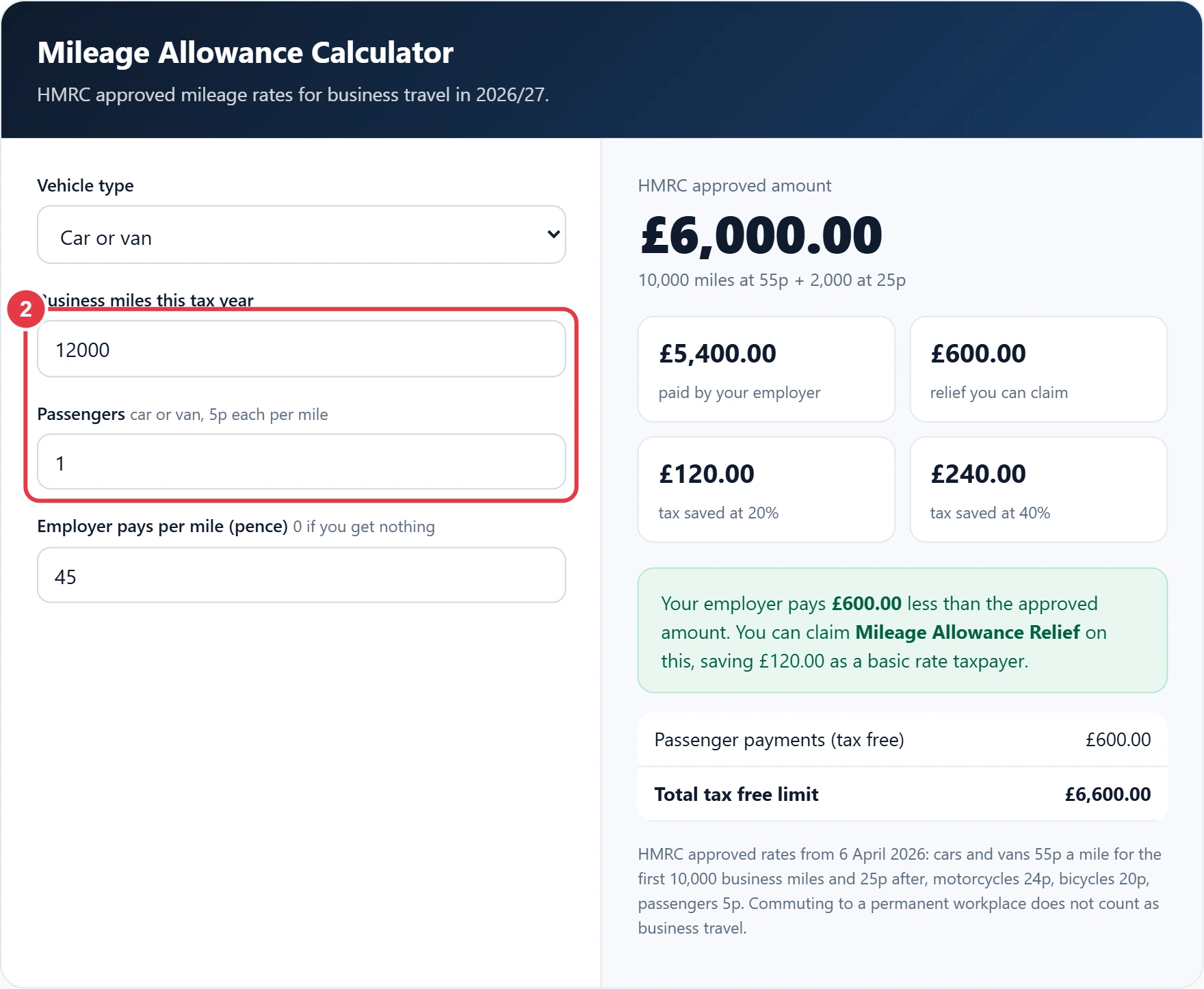
Step 2: Enter Your Miles and Passengers
Add your total business miles for the tax year. For a car or van, enter how many colleagues travel with you on business trips. The calculator assumes they come on every business mile.
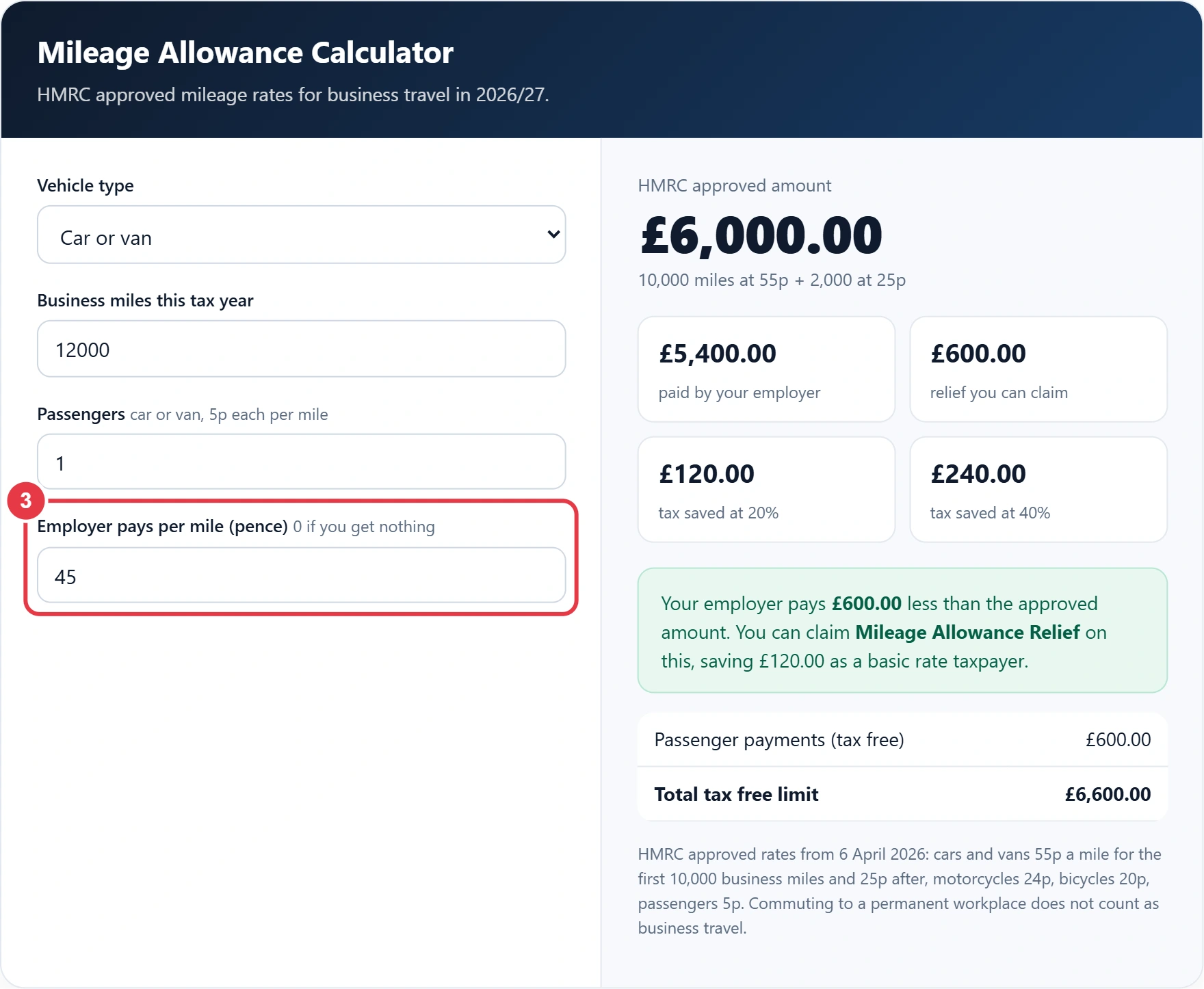
Step 3: Enter What Your Employer Pays
Type the pence per mile your employer pays you. If you get no mileage payments, enter 0 and you can claim relief on the full approved amount.
Step 4: Read Your Results
You will see the approved amount, what your employer paid, any relief to claim or taxable excess, and the tax saving at 20% and 40%. Sole traders can use the same rates as a simplified expense, and the self employed tax calculator shows how business expenses like these reduce your Income Tax and National Insurance.
HMRC Mileage Rates 2026/27
| Vehicle | First 10,000 miles | Over 10,000 miles |
|---|---|---|
| Cars and vans | 55p (was 45p) | 25p |
| Motorcycles | 24p | 24p |
| Bicycles | 20p | 20p |
| Each passenger | 5p | 5p |
Passenger payments are tax free up to 5p a mile, but you cannot claim relief if your employer does not pay them. To claim Mileage Allowance Relief, keep a log of dates, journeys and miles, then claim tax relief for vehicles you use for work online or through Self Assessment.
Frequently Asked Questions
What is the HMRC mileage rate for 2026/27?
Cars and vans get 55p a mile for the first 10,000 business miles and 25p after that. Motorcycles get 24p and bicycles 20p.
When did the mileage rate go up from 45p to 55p?
The approved rate for cars and vans rose from 45p to 55p a mile from the start of the 2026/27 tax year on 6 April 2026.
What is Mileage Allowance Relief?
It is tax relief on the gap between the HMRC approved amount and what your employer pays. You get relief at your highest rate of income tax.
Can I claim mileage for driving to work?
No. Travel between home and your permanent workplace is commuting and does not count. Trips to temporary workplaces or clients usually do.
Does the 55p rate apply to electric cars?
Yes. The approved mileage rate is the same for petrol, diesel, hybrid and electric cars.
Is the 10,000 mile limit per job or per year?
It is per tax year, across all business miles you drive for the same employment.