SDLT for England and Northern Ireland, LBTT for Scotland and LTT for Wales, with every relief and surcharge.
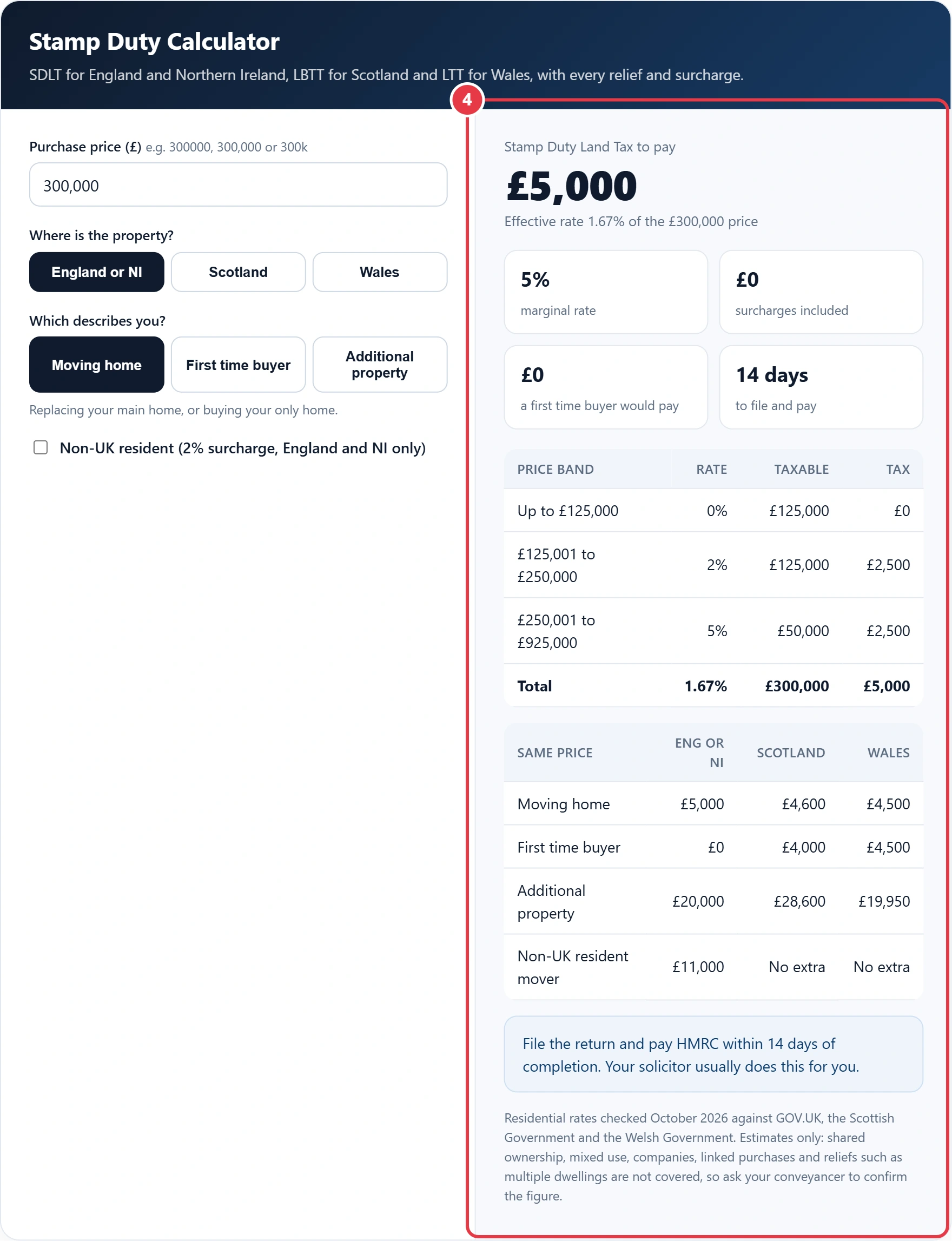
| Price band | Rate | Taxable | Tax |
|---|
| Same price | Eng or NI | Scotland | Wales |
|---|
Residential rates checked October 2026 against GOV.UK, the Scottish Government and the Welsh Government. Estimates only: shared ownership, mixed use, companies, linked purchases and reliefs such as multiple dwellings are not covered, so ask your conveyancer to confirm the figure.
This stamp duty calculator works out the property tax a buyer pays on a home anywhere in the UK for 2026/27, covering Stamp Duty Land Tax in England and Northern Ireland, Land and Buildings Transaction Tax in Scotland and Land Transaction Tax in Wales. It applies first time buyer relief, second home surcharges and the non-UK resident surcharge, then shows every band, so you can see exactly where each pound of tax comes from.
Quick answer: In England and Northern Ireland the stamp duty calculator charges 0% up to £125,000, 2% to £250,000, 5% to £925,000, 10% to £1.5 million and 12% above. A home mover pays £5,000 on a £300,000 house, a first time buyer pays £0 and a second home buyer pays £20,000.
In This Guide
What Is Stamp Duty?
Stamp duty is a tax paid by the buyer when a property or piece of land is bought in the UK, charged on the price in slices rather than as one flat rate. England and Northern Ireland use Stamp Duty Land Tax (SDLT), Scotland uses LBTT and Wales uses LTT, each with its own bands and surcharges.
The formula works like income tax: split the price into bands, multiply each slice by its band rate, then add the slices together. Only the part of the price inside a band is taxed at that band's rate, so going a pound over a threshold never makes the whole price more expensive. The one exception is first time buyer relief in England and Northern Ireland, which disappears completely once the price goes over £500,000.
How to Use the Stamp Duty Calculator
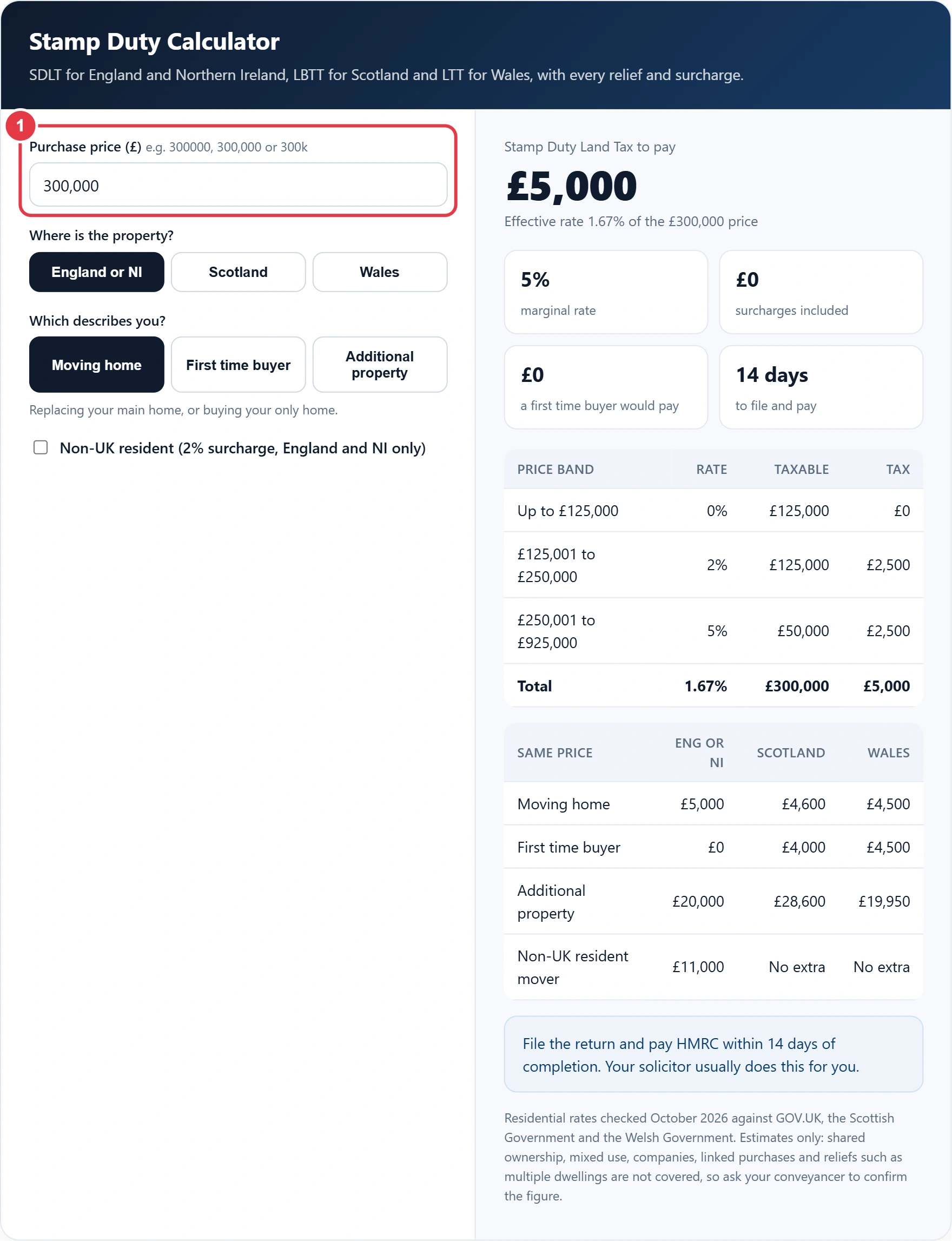
Step 1: Enter the Purchase Price
Type the agreed price. You can write 300000, 300,000 or 300k and the calculator reads them all the same way. Use the full price even if you have a mortgage, because tax is charged on what you pay, not on what you borrow.
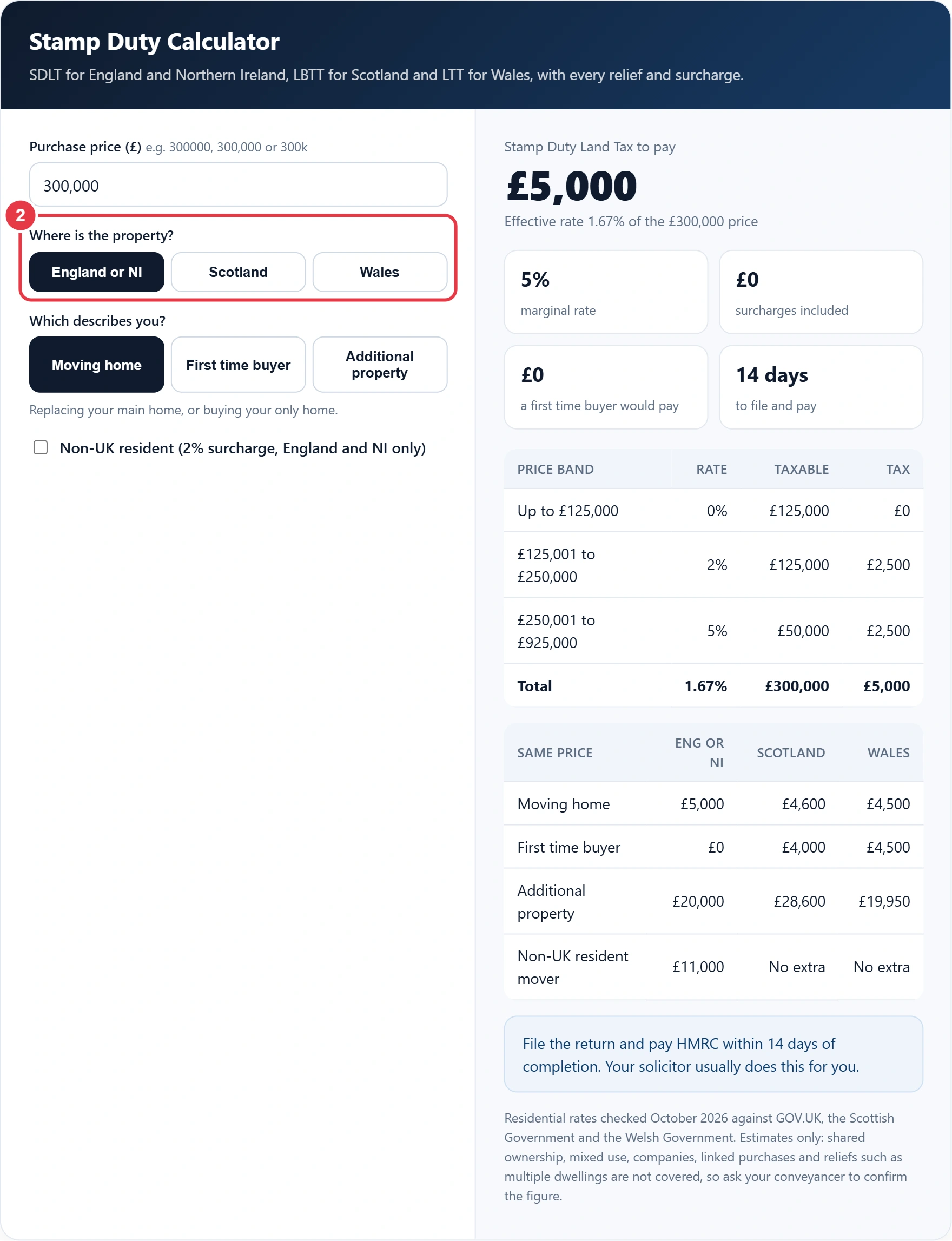
Step 2: Choose the Nation
Pick where the property is, not where you live. England and Northern Ireland share the same SDLT rules, while Scotland and Wales set their own taxes and collect them through Revenue Scotland and the Welsh Revenue Authority.
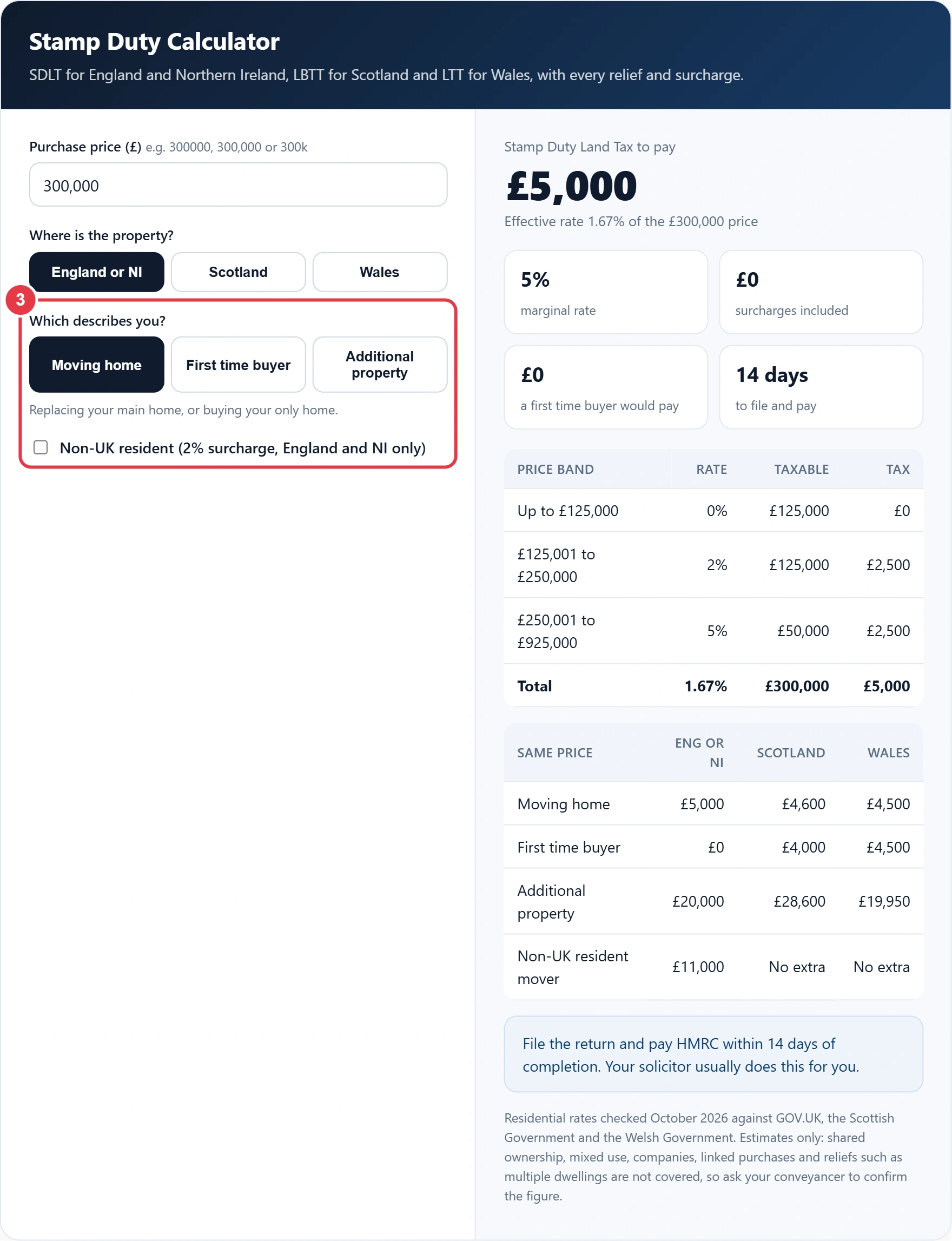
Step 3: Choose Your Buyer Type
Select moving home if you are replacing your main home or buying your only home. Choose first time buyer only if every buyer has never owned a home anywhere in the world, and additional property for second homes and buy to let. Tick the non-UK resident box if you spent fewer than 183 days in the UK in the 12 months before buying in England or Northern Ireland.
Step 4: Read Your Results
You see the total tax, the effective and marginal rates, the surcharges included and the filing deadline. The band table shows the taxable slice and tax for each band, and the comparison table prices the same home for every buyer type in all three nations. To budget the monthly cost of the home as well, the mortgage calculator shows your repayments, so you can plan the deposit and the tax together.
Stamp Duty Rates 2026/27 in England, Scotland and Wales
The table compares the residential rates for a buyer of a main home, checked October 2026. The SDLT bands have applied since 1 April 2025, and neither the Autumn Budget 2025 nor the Spring Statement 2026 changed them.
| Rate | England and NI (SDLT) | Scotland (LBTT) | Wales (LTT) |
|---|---|---|---|
| 0% | Up to £125,000 | Up to £145,000 | Up to £225,000 |
| 2% | £125,001 to £250,000 | £145,001 to £250,000 | None |
| 5% | £250,001 to £925,000 | £250,001 to £325,000 | None |
| 6% | None | None | £225,001 to £400,000 |
| 7.5% | None | None | £400,001 to £750,000 |
| 10% | £925,001 to £1.5m | £325,001 to £750,000 | £750,001 to £1.5m |
| 12% | Over £1.5m | Over £750,000 | Over £1.5m |
| First time buyers | 0% to £300,000, 5% to £500,000 | Nil band raised to £175,000 | No relief |
| Additional homes | Plus 5% on every band | Plus 8% of the whole price | Higher rates, 5% to 17% |
| Non-UK residents | Plus 2% on every band | No surcharge | No surcharge |
How Much Is Stamp Duty on a £300,000 House?
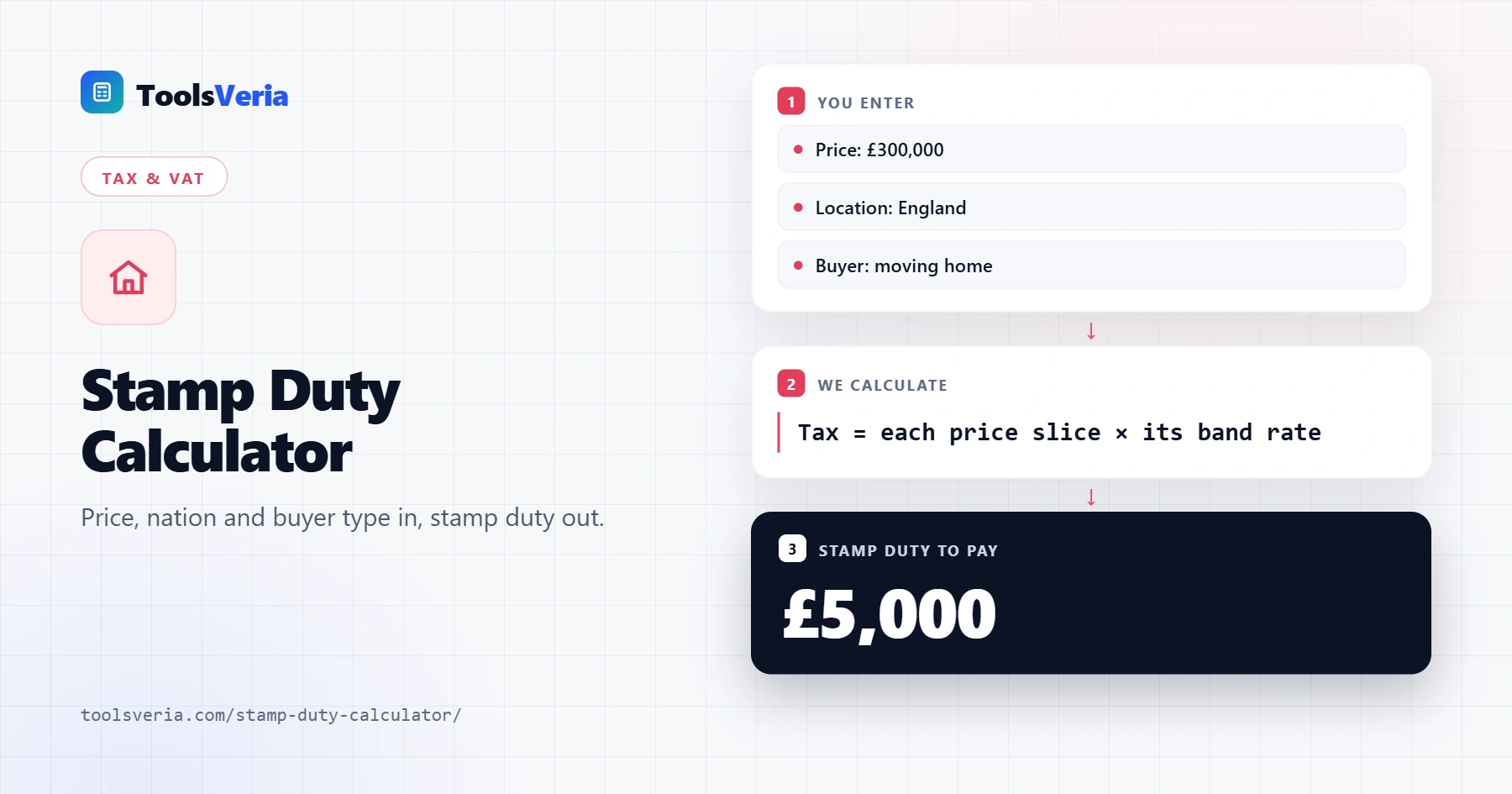
Stamp duty on a £300,000 house is £5,000 for a home mover in England or Northern Ireland, £4,600 in Scotland and £4,500 in Wales. In England the first £125,000 is tax free, the next £125,000 costs 2% (£2,500) and the final £50,000 costs 5% (£2,500).
Worked example: Priya is a first time buyer purchasing a £450,000 flat in Leeds. With relief she pays nothing on the first £300,000 and 5% on the remaining £150,000, so her bill is £7,500. A home mover would pay £12,500 on the same flat, which means relief saves her £5,000. If the price rose to £505,000, she would lose relief entirely and pay £15,250 at standard rates. Callum, buying his first home in Edinburgh for £300,000, pays £4,000 of LBTT because his nil band rises to £175,000.
Do First Time Buyers Pay Stamp Duty?
First time buyers in England and Northern Ireland pay no stamp duty on homes up to £300,000 and 5% on the part between £300,001 and £500,000. Above £500,000 the relief is lost and normal rates apply to the full price. To qualify under the GOV.UK residential rates rules, every buyer must be buying their first home and plan to live in it, so a parent buying jointly can remove the relief.
Scotland gives first time buyers a £175,000 nil rate band, worth up to £600. Wales has no first time buyer relief, although its £225,000 starting threshold means most first homes there still pay little or nothing.
How Much Stamp Duty Do You Pay on a Second Home?
A second home in England or Northern Ireland costs an extra 5% on every band, so a £300,000 buy to let costs £20,000 instead of £5,000. The HMRC guidance on additional properties says the higher rates apply when you will own more than one home worth £40,000 or more, and married couples are treated as one buyer.
In Scotland the Additional Dwelling Supplement adds 8% of the whole price, so a £300,000 second home costs £28,600, while in Wales the higher residential rates replace the main rates and give £19,950. Landlords can check whether owning beats renting with the rent vs buy calculator before making an offer. If you buy a new main home before selling the old one, you can usually reclaim the English surcharge when the previous home is sold within 3 years.
When Do You Have to Pay Stamp Duty?
You must file a return and pay SDLT to HMRC within 14 days of completion in England and Northern Ireland. In Scotland and Wales the deadline is 30 days, paid to Revenue Scotland or the Welsh Revenue Authority. Most buyers let their conveyancer file and pay on completion day, using money sent before the sale.
Late returns attract penalties and interest, so keep the tax in your moving budget alongside legal fees and surveys. Some lenders allow stamp duty to be added to the mortgage, but you then pay interest on it for the full term. Buyers in council homes using the Right to Buy discount calculator should note that stamp duty is based on the discounted price paid. Figures on this page were checked October 2026.
</>Embed this calculator on your website
Add the free Stamp Duty Calculator to your own site or blog. Copy the code below and paste it into an HTML block. It resizes itself and works on phones.
How we checked this tool: the Tools Veria Editorial Team built this tool by hand, checked it against the official rules or published standards where they apply, and tested it against worked examples. Results are estimates for planning, not personal financial or tax advice. Read our editorial policy and disclaimer, or report an error.
Frequently Asked Questions
How much stamp duty will I pay on a £250,000 house?
A home mover in England or Northern Ireland pays £2,500 on a £250,000 house: 0% on the first £125,000 and 2% on the next £125,000. A first time buyer pays nothing, a Scottish buyer pays £2,100 LBTT and a Welsh buyer pays £1,500 LTT.
What is the stamp duty threshold in 2026?
The SDLT threshold in England and Northern Ireland is £125,000 for home movers and £300,000 for first time buyers in 2026. Scotland's LBTT starts at £145,000, or £175,000 for first time buyers, and Wales's LTT starts at £225,000.
Do I pay stamp duty if I am not a UK resident?
Yes, non-UK residents pay stamp duty, and those buying a home in England or Northern Ireland pay an extra 2% on every band, on top of any 5% second home surcharge. You count as non-resident if you spent fewer than 183 days in the UK in the 12 months before buying.
Can I add stamp duty to my mortgage?
Some lenders let you borrow extra to cover stamp duty, but only if the loan still fits their affordability and loan to value limits. You then pay interest on the tax for the whole mortgage term, so paying it from savings is usually cheaper.
Is stamp duty charged on the whole price?
No. Stamp duty is charged in slices, so each rate applies only to the part of the price inside that band. The exceptions are Scotland's 8% Additional Dwelling Supplement, which is charged on the whole price, and English first time buyer relief, which is lost above £500,000.
Can I get the second home stamp duty back?
You can usually reclaim the 5% surcharge if you paid the 5% higher rates in England or Northern Ireland because you bought a new main home before selling the old one and sell the old one within 3 years. Claim from HMRC within 12 months of the sale or of the filing date, whichever is later.