Hannah is a project manager with two children and a salary that crept up to £68,500 after her last pay review. Her partner earns far less, so the Child Benefit paid into his account felt like his money. HMRC disagrees: the high income child benefit charge falls on whichever partner has the higher income, and for 2026/27 Hannah owes back almost £982 of the £2,337 the family receives.
The Child Benefit high income charge rules changed in April 2024, and many older articles still quote the wrong band. Below, real households work through the 2026/27 numbers, including the hidden marginal rate inside the taper and the pension move that wipes the charge out for some families.
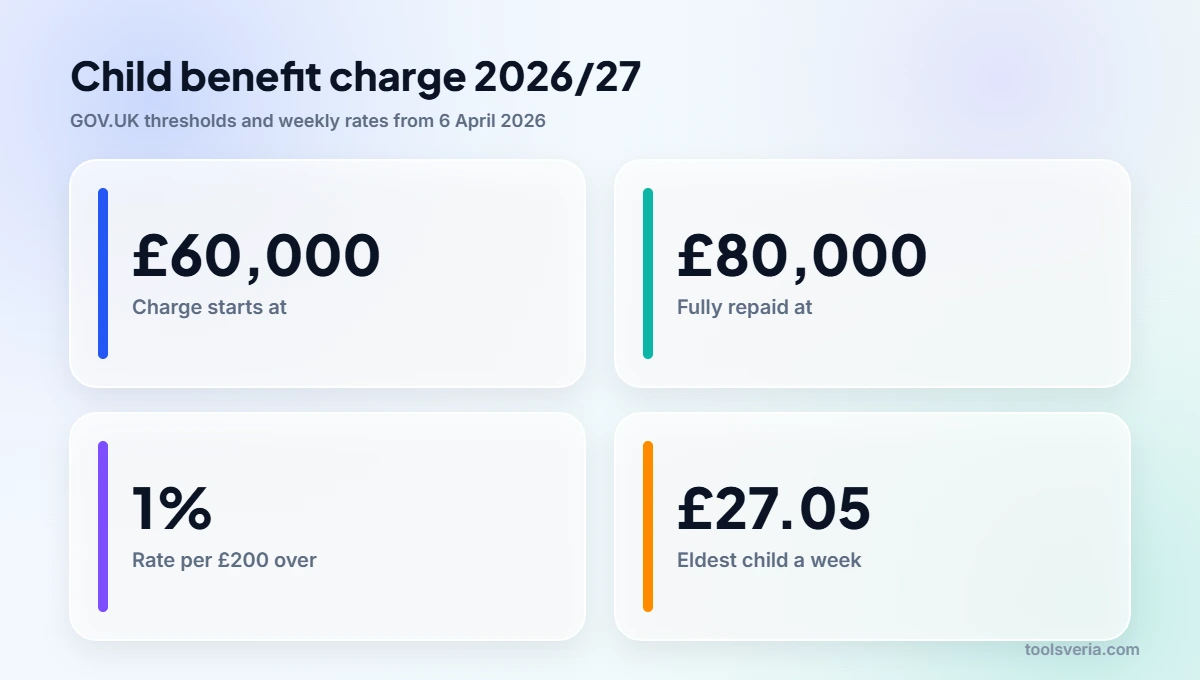
Quick answer: For 2026/27, HMRC applies the High Income Child Benefit Charge once the higher earning partner’s adjusted net income passes £60,000. The charge is 1% of the family’s Child Benefit for every full £200 above £60,000, so it reaches 100% at £80,000. GOV.UK sets Child Benefit at £27.05 a week for the eldest child.
In This Guide
How much Child Benefit is at stake in 2026/27?
From 6 April 2026, Child Benefit pays £27.05 a week for the eldest or only child and £17.90 a week for each younger child, so a two child family receives about £2,337 over a 52 week year. Those weekly figures come from the GOV.UK Child Benefit rates table for 2026 to 2027, and every charge calculation starts from the annual total your family actually received.
| Children claimed for | Weekly Child Benefit | Annual total (52 weeks) |
|---|---|---|
| 1 | £27.05 | £1,406.60 |
| 2 | £44.95 | £2,337.40 |
| 3 | £62.85 | £3,268.20 |
| 4 | £80.75 | £4,199.00 |
A baby born partway through the year only adds weeks from the date the claim starts, and new claims can be backdated by up to three months. Use the weeks you were actually paid, not a full year, when a child arrived or turned too old during 2026/27.
How is the High Income Child Benefit Charge worked out?
The High Income Child Benefit Charge is worked out by taking the amount of adjusted net income above £60,000, dividing it by £200, ignoring any part step, and charging that many percent of the Child Benefit received. The HMRC guidance on the charge confirms the £60,000 starting point and the £80,000 point at which everything is repaid.
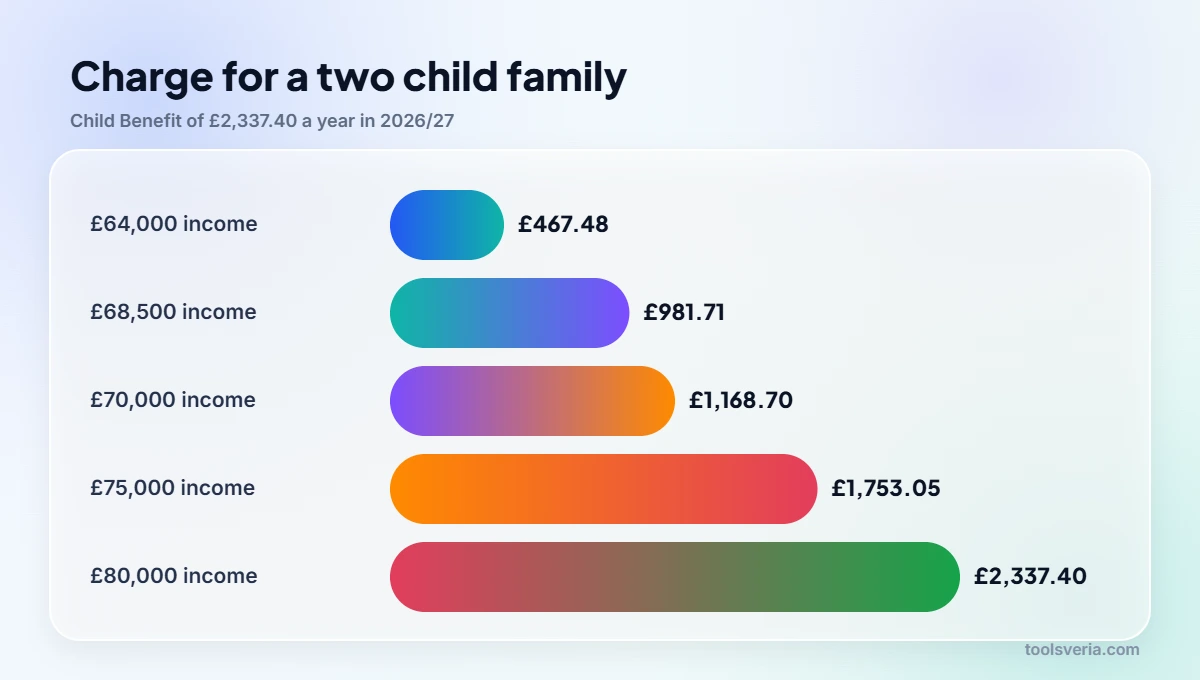
Hannah’s figures run like this. Her adjusted net income of £68,500 is £8,500 over the threshold. Dividing by £200 gives 42.5, and the half step is dropped, so her rate is 42%. Applied to £2,337.40, that is a charge of £981.71. Had her income been £68,600, she would have crossed into a 43% charge, which shows why a precise income figure matters.
| Adjusted net income | Charge rate | Charge for 2 children | Family keeps |
|---|---|---|---|
| £60,000 | 0% | £0.00 | £2,337.40 |
| £64,000 | 20% | £467.48 | £1,869.92 |
| £68,500 | 42% | £981.71 | £1,355.69 |
| £70,000 | 50% | £1,168.70 | £1,168.70 |
| £75,000 | 75% | £1,753.05 | £584.35 |
| £80,000 or more | 100% | £2,337.40 | £0.00 |
Before 6 April 2024 the band ran from £50,000 to £60,000 at 1% for every £100. Any guide still quoting those numbers will overstate your bill, so check the tax year on the page before relying on it.
Which partner pays the charge?
The partner with the higher adjusted net income pays the charge, even when the other partner makes the claim and receives the money. Partner here means a spouse, a civil partner or someone you live with as if you were married, and only individual incomes count, never the household total.
That individual test produces sharp contrasts. Amira and Joe each earn £58,000, a combined £116,000, and keep their full £2,337.40 for two children because neither crosses £60,000. Leon earns £85,000 while his wife stays at home with their two children, and his household income is far lower, yet he repays every penny of the same £2,337.40.
New couples get caught out too. If you move in with someone who already claims for their children and your income is the higher one, the charge becomes yours from the date you started living together, even though the children are not yours.
Why does income between £60,000 and £80,000 feel so heavily taxed?
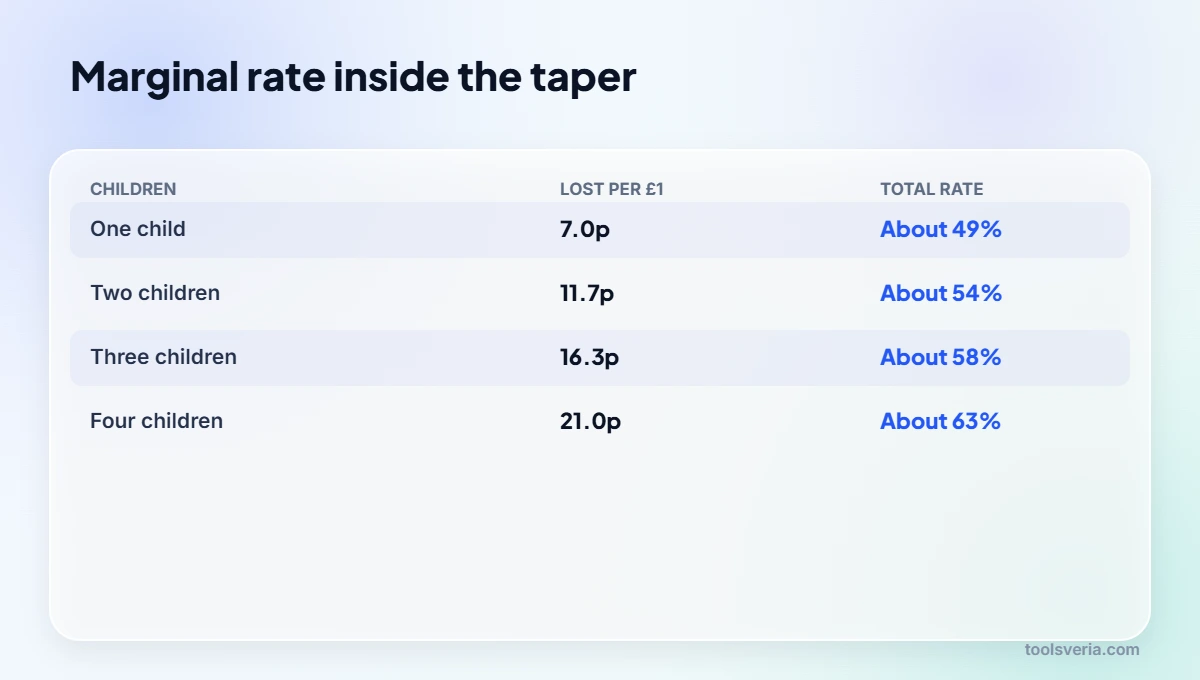
Income between £60,000 and £80,000 is heavily taxed because each extra pound attracts 40% Income Tax, 2% employee National Insurance and a slice of Child Benefit clawback at the same time. With two children, the clawback alone adds about 11.7p for every extra pound, because £2,337.40 disappears across a £20,000 band.
| Children | Clawback per £1 earned | Effective marginal rate for an employee |
|---|---|---|
| 1 | 7.0p | About 49% |
| 2 | 11.7p | About 54% |
| 3 | 16.3p | About 58% |
| 4 | 21.0p | About 63% |
These rates assume an employee in England, Wales or Northern Ireland paying the 2% National Insurance rate above £50,270. A £2,000 pay rise for someone with three children inside the band leaves them roughly £833 better off, not the £1,160 a quick 42% estimate suggests. Running your salary through our National Insurance calculator alongside the charge shows the true gain before you negotiate.
Can a pension contribution reduce the charge?
Yes, a personal pension contribution reduces adjusted net income by its gross amount, so it lowers the High Income Child Benefit Charge as well as your Income Tax. Gift Aid donations work the same way: an £800 donation counts as £1,000 once grossed up.
Daniel earns £72,000 and claims for three children, so his charge is 60% of £3,268.20, which is £1,960.92. He pays £9,600 into a personal pension, the provider adds £2,400 of basic rate relief, and the £12,000 gross contribution takes his adjusted net income down to exactly £60,000. His charge falls to zero, and he can reclaim another £2,400 of higher rate relief through Self Assessment. The pension tax relief calculator shows that £12,000 lands in his pension for a net cost of £7,200, and the charge he avoids brings the real cost down to about £5,239.
Salary sacrifice cuts the salary itself, so it reduces adjusted net income and saves National Insurance too. If your employer offers it, our salary sacrifice pension calculator shows how far a monthly sacrifice moves you down the taper. Pension money is locked away until your minimum pension age, so only commit what you will not need for the household budget.
How do you pay or opt out of the charge for 2026/27?
You pay the 2026/27 charge either through a Self Assessment tax return or, if you have no other reason to file, through your PAYE tax code, and higher earners can avoid it entirely by opting out of Child Benefit payments. Both payment routes are free, and the choice mainly affects when the money leaves your account.
- Self Assessment: register by 5 October 2027 if you have not filed before, then pay by 31 January 2028.
- PAYE: available when you do not otherwise need a tax return, provided you sign up by 31 January 2028 for the 2026/27 year, as the GOV.UK PAYE route explains.
PAYE collection lowers your tax code, so the charge comes out of each payslip rather than as one lump sum. If your code changes and the numbers look odd, our tax code calculator decodes what the new code means for your monthly pay.
Should you stop Child Benefit if you earn over £80,000?
If you earn over £80,000, opting out of Child Benefit payments usually makes sense, but you should keep the claim itself in place. Stopping payments avoids paying everything back, while the live claim protects valuable rights.
Leon’s wife is at home with a toddler. Because the claim stays open in her name, she receives National Insurance credits towards her State Pension until their youngest child turns 12, and each child is issued a National Insurance number automatically before age 16. Cancelling the claim outright would throw away those credits. If Leon’s income later falls below £60,000, the family can ask HMRC to restart payments.
Key points
- The High Income Child Benefit Charge starts at £60,000 of adjusted net income and recovers all Child Benefit at £80,000.
- The charge is 1% for every full £200 above £60,000, and part steps are ignored.
- For 2026/27, Child Benefit is £27.05 a week for the eldest child and £17.90 for each other child.
- Only the higher earning partner pays, and household income is never added together.
- Gross pension contributions and Gift Aid reduce adjusted net income and therefore the charge.
- Opting out of payments while keeping the claim preserves National Insurance credits for a parent at home.
High Income Child Benefit Charge 2026/27 Terms
These terms explain how the high income child benefit charge 2026/27 is applied, helping households see who repays, how much, and which choices reduce it.
- Taper band
- The £20,000 stretch of adjusted net income between £60,000 and £80,000 across which the charge rises step by step. Within it, each additional full £200 of income increases the share of Child Benefit repaid by one percentage point.
- Effective marginal tax rate
- The combined share of an extra pound of income lost to tax, National Insurance and withdrawn benefits. Inside the taper band the charge stacks on top of higher rate tax, so the true rate on extra earnings is well above the headline rate.
- Higher earning partner
- The member of a couple with the larger individual adjusted net income, who is legally liable for the charge. Liability depends on each person’s own income, not combined household income or which partner receives the payments.
- Relief at source pension contribution
- A personal pension payment made from taxed income, to which the provider adds basic rate tax relief. Its grossed up value is deducted when calculating adjusted net income, so it can pull earnings back below the charge threshold.
- Salary sacrifice
- An agreement to give up part of contractual pay in exchange for an employer benefit, most often extra pension contributions. Because the sacrificed salary is never paid, it lowers taxable pay and therefore adjusted net income directly.
- Backdating
- Paying a benefit from a date earlier than the claim was made. Child Benefit claims can be backdated by up to three months, which matters when counting the weeks received in a tax year for the charge.
Frequently Asked Questions
My salary is £59,000 but I got a £3,000 bonus. Does the bonus count?
Yes, bonuses count towards adjusted net income, so your total becomes £62,000 and you are £2,000 over the threshold. That is ten full £200 steps, giving a 10% charge, which is £233.74 for a family with two children in 2026/27.
We are not married. Can my partner still be charged on my Child Benefit?
Yes, unmarried couples who live together as if married are treated as partners. If your partner’s adjusted net income is above £60,000 and higher than yours, the charge is theirs, starting from the date you began living together.
I earn £82,000. Is there any point claiming at all?
Yes, make the claim and then opt out of the payments. You repay 100% above £80,000, so the cash brings no gain, but the claim gives a parent at home National Insurance credits until the youngest child is 12.
Does my partner’s salary sacrifice change who pays the charge?
It can, because salary sacrifice reduces adjusted net income directly. If it pushes your partner’s income below yours, the charge moves to you, and if both incomes fall to £60,000 or less, nobody pays it for 2026/27.
Hannah now knows her £981.71 bill is a 42% slice, Daniel has turned a £1,960.92 charge into a bigger pension, and Leon has kept his wife’s credits without repaying a penny. Put your own income, pension plans and children into the calculator before 5 April 2027 to see where you land. Figures checked October 2026.