Employee and employer Class 1 National Insurance for the 2026/27 tax year.
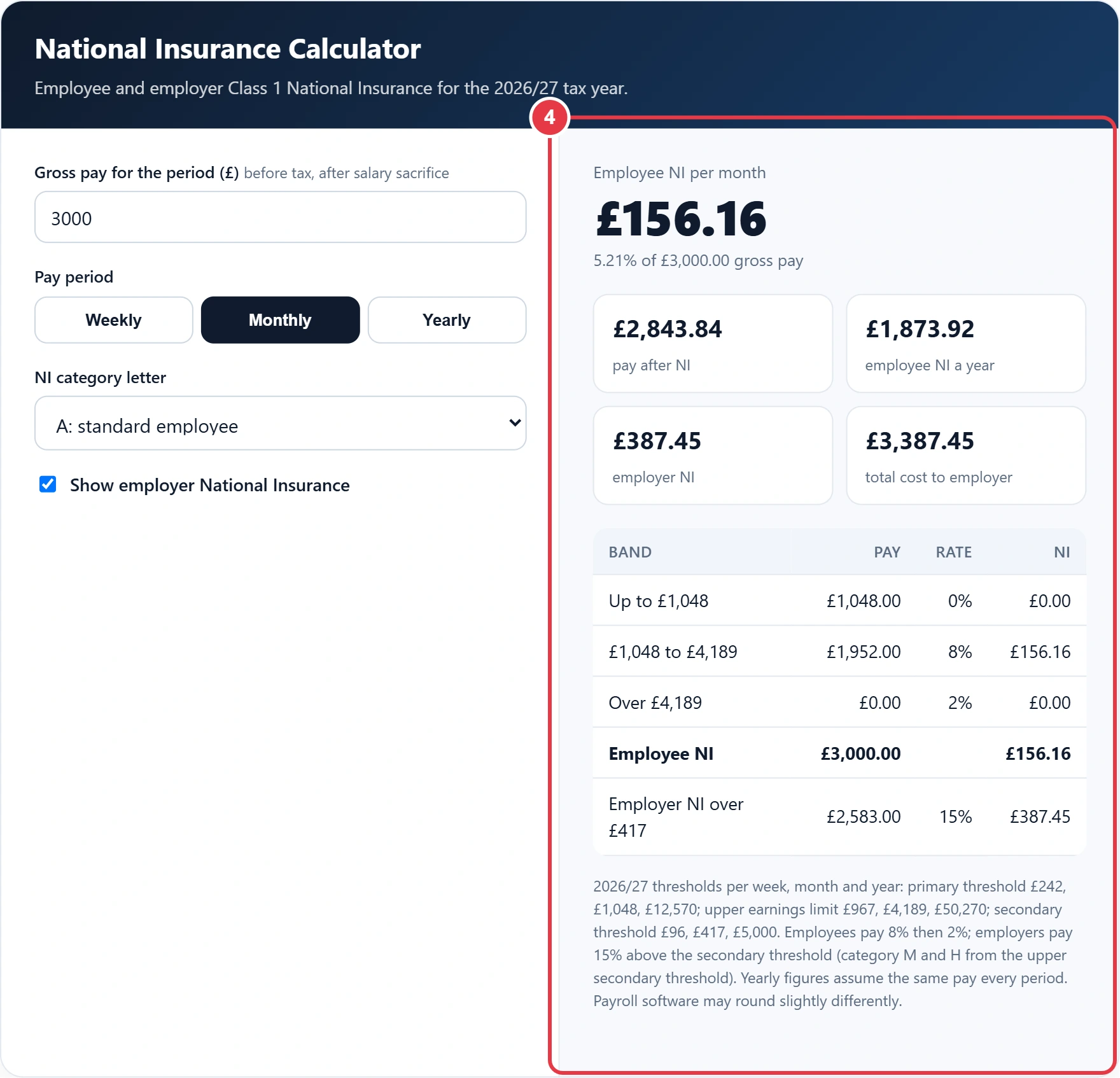
| Band | Pay | Rate | NI |
|---|
2026/27 thresholds per week, month and year: primary threshold £242, £1,048, £12,570; upper earnings limit £967, £4,189, £50,270; secondary threshold £96, £417, £5,000. Employees pay 8% then 2%; employers pay 15% above the secondary threshold (category M and H from the upper secondary threshold). Yearly figures assume the same pay every period. Payroll software may round slightly differently.
National Insurance is taken from every payslip, yet few people know how the figure is worked out. This National Insurance calculator shows the employee Class 1 NI on any weekly, monthly or yearly pay for 2026/27, using the GOV.UK National Insurance rates of 8% and 2%. Employers can also see the 15% employer contribution and the total cost of each employee.
Quick answer: A National Insurance calculator for 2026/27 charges employee Class 1 NI at 8% on pay between £12,570 and £50,270 a year, plus 2% on pay above £50,270. Weekly, those thresholds are £242 and £967, and monthly they are £1,048 and £4,189. Employers pay 15% on pay above £5,000 a year.
In This Guide
What Is National Insurance?
National Insurance contributions pay towards your State Pension and some benefits. Employees pay Class 1 NI on earnings above the primary threshold of £242 a week, £1,048 a month or £12,570 a year. Earnings at or above the lower earnings limit of £6,708 a year still build your State Pension record, even if no NI is taken.
The formula is: 8% of pay between the primary threshold and the upper earnings limit, plus 2% of pay above it. The upper earnings limit is £967 a week, £4,189 a month or £50,270 a year. Employers pay 15% on pay above the secondary threshold of £96 a week, £417 a month or £5,000 a year, with relief for staff under 21 and apprentices under 25.
How Do You Use the National Insurance Calculator?
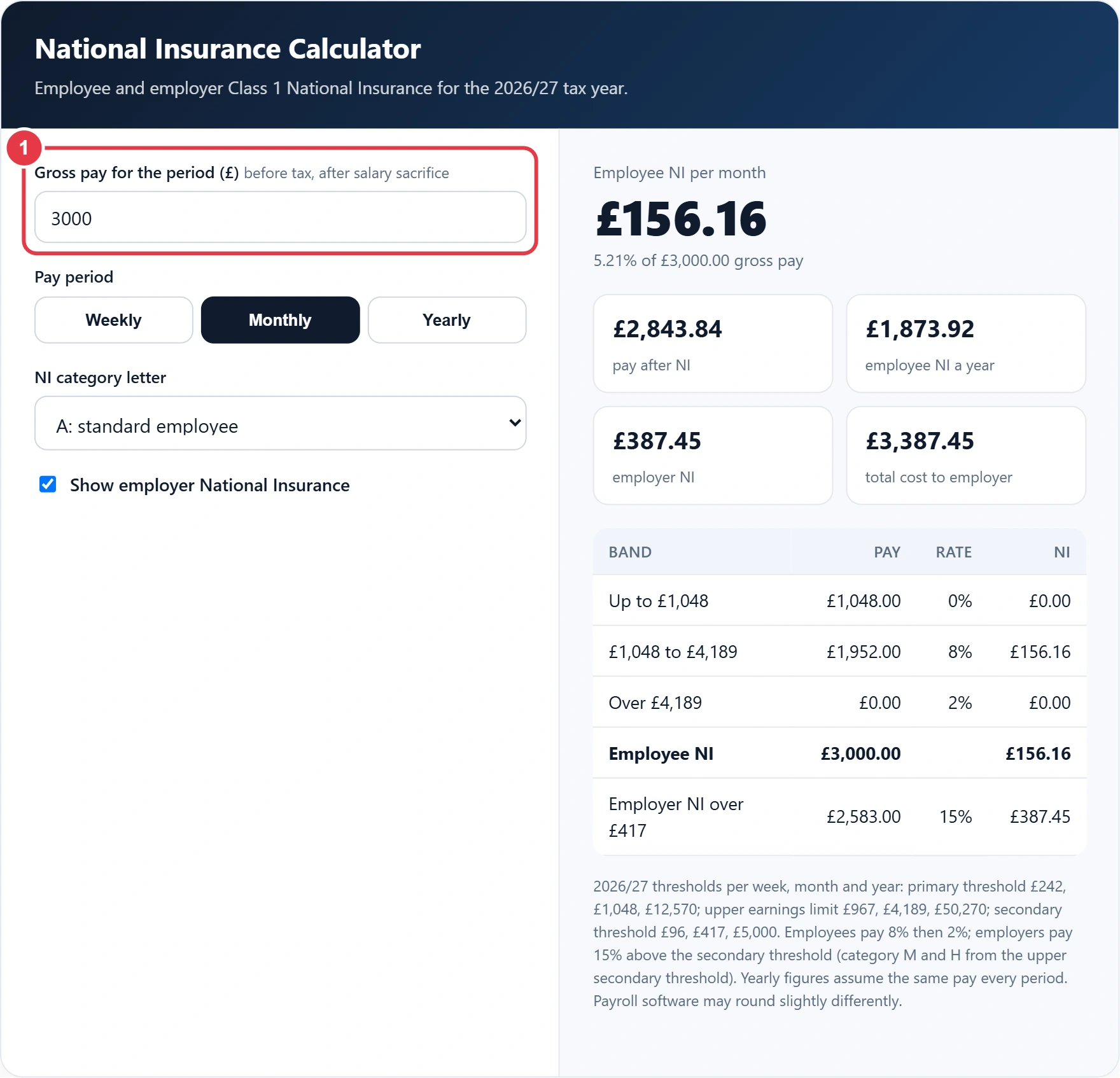
Step 1: Enter Your Gross Pay
Type your pay before tax for one pay period, after any salary sacrifice, and if you only know an hourly rate, convert it to a yearly figure first. Type your pay before tax for one pay period, after any salary sacrifice. If you only know an hourly rate, the hourly to annual salary calculator turns it into a yearly figure, which you can then enter here.
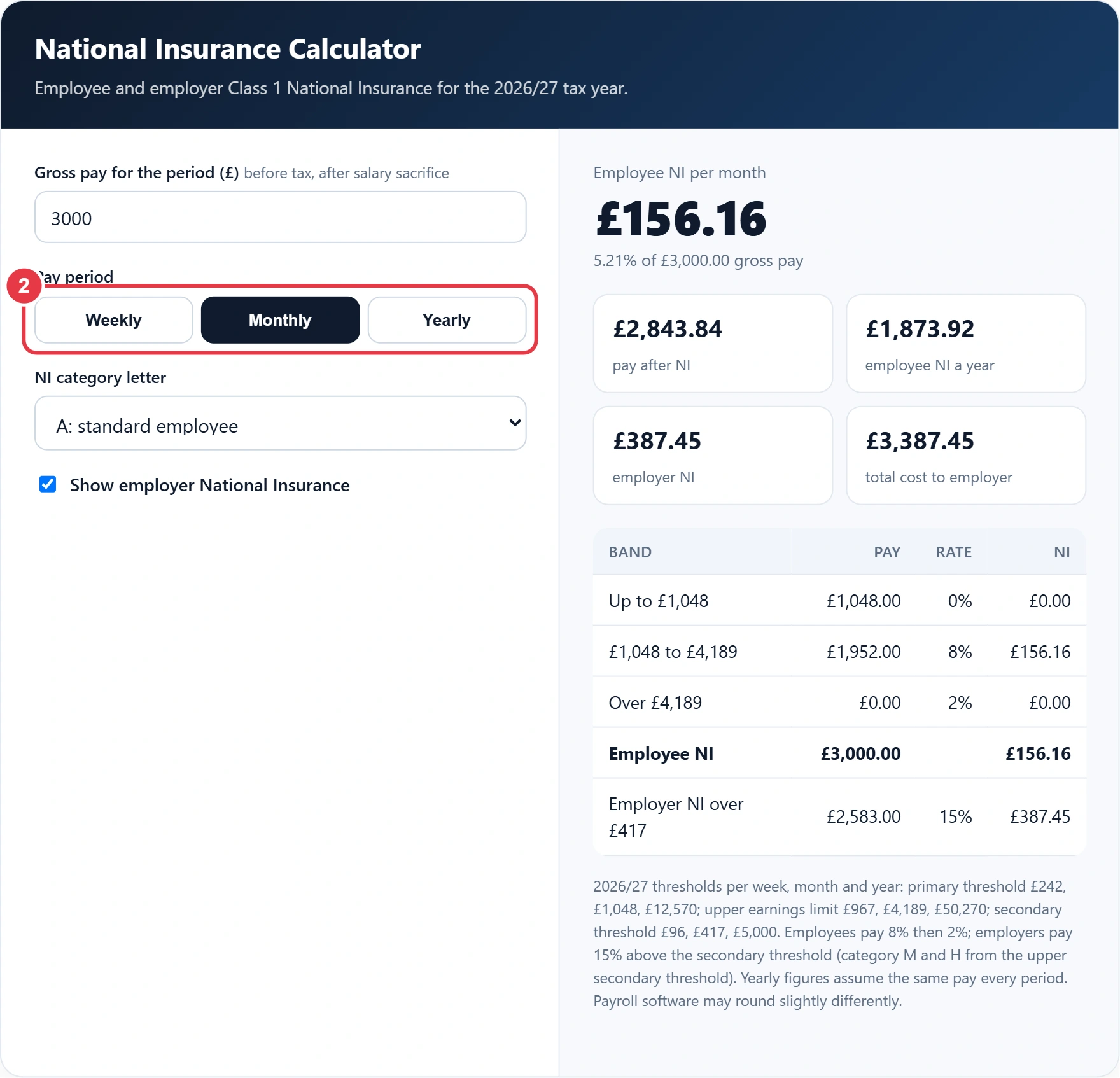
Step 2: Choose the Pay Period
Pick weekly, monthly or yearly. NI is worked out separately for each pay period, so a month with overtime or a bonus can mean more NI that month. The overtime calculator shows what that extra pay adds before you check the NI on it here.
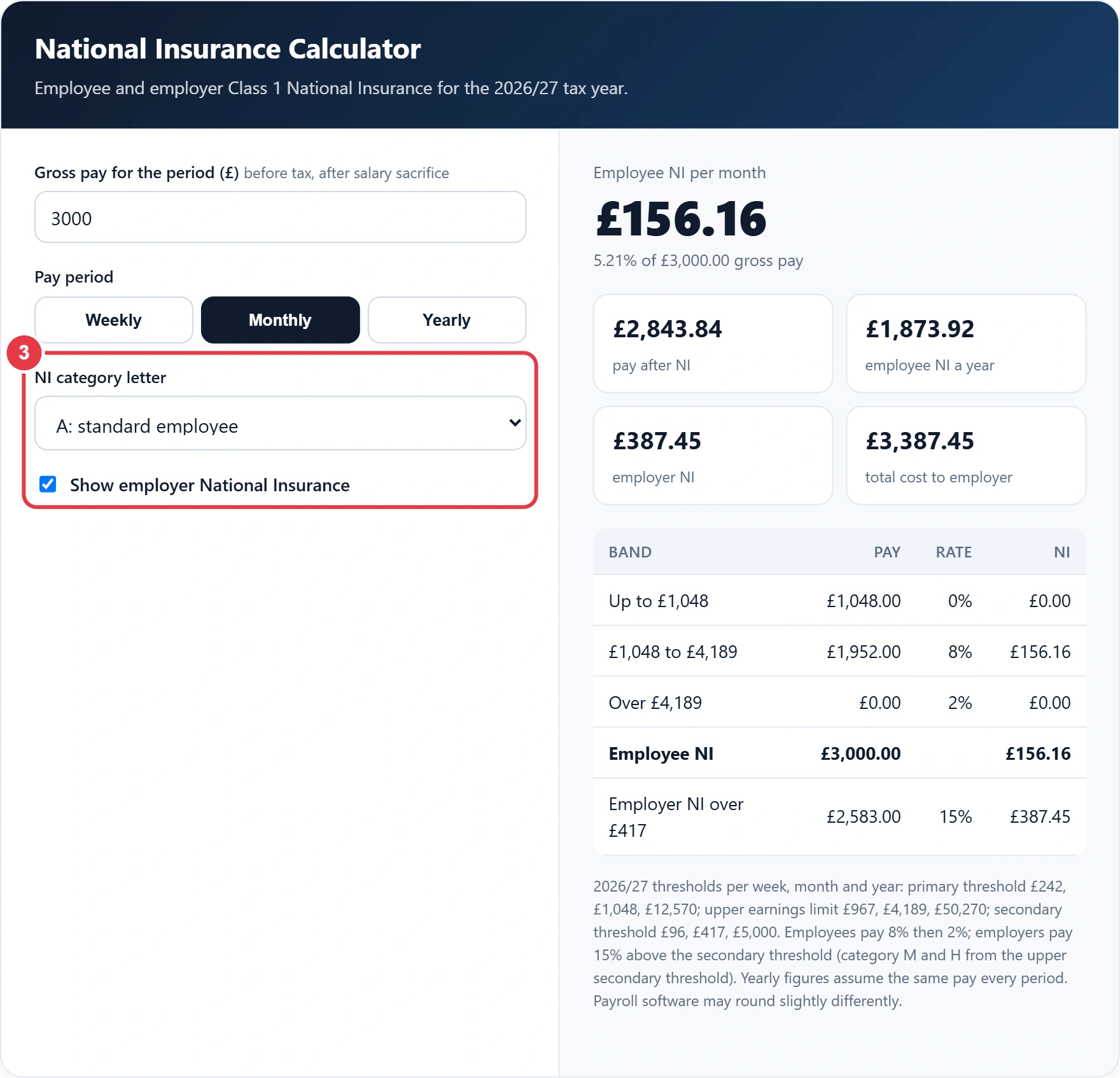
Step 3: Pick Your Category Letter
Your category letter is on your payslip. Most people are category A. Over State Pension age you pay no employee NI, though your employer still does.
Step 4: Read Your Results
You will see your NI for the period, your pay after NI, the yearly total and, if selected, the employer NI and total cost of employment.
What Are the Class 1 National Insurance Rates for 2026/27?
| Threshold | Weekly | Monthly | Yearly | Rate |
|---|---|---|---|---|
| Secondary threshold (employer) | £96 | £417 | £5,000 | Employer 15% above |
| Lower earnings limit | £129 | £559 | £6,708 | 0%, counts for State Pension |
| Primary threshold | £242 | £1,048 | £12,570 | Employee 8% above |
| Upper earnings limit | £967 | £4,189 | £50,270 | Employee 2% above |
For 2026/27, employees pay 8% on earnings above the £12,570 primary threshold and 2% above £50,270, while employers pay 15% above the £5,000 secondary threshold. Company directors are assessed on an annual earnings period, so their NI is based on the yearly figures rather than each month. The HMRC rates and thresholds for employers list every category letter, so check it if you run payroll for veterans, Freeport or Investment Zone staff.
</>Embed this calculator on your website
Add the free National Insurance Calculator to your own site or blog. Copy the code below and paste it into an HTML block. It resizes itself and works on phones.
How we checked this tool: the Tools Veria Editorial Team built this tool by hand, checked it against the official rules or published standards where they apply, and tested it against worked examples. Results are estimates for planning, not personal financial or tax advice. Read our editorial policy and disclaimer, or report an error.
Frequently Asked Questions
How much National Insurance do I pay in 2026/27?
Employees pay 8% on earnings between £12,570 and £50,270 a year, and 2% on anything above. That is £242 to £967 a week, or £1,048 to £4,189 a month.
What is the employer National Insurance rate for 2026/27?
Employers pay 15% on earnings above the secondary threshold of £5,000 a year, which is £96 a week or £417 a month.
Do I pay National Insurance after State Pension age?
No employee NI is due once you reach State Pension age, even if you keep working. Your employer still pays employer NI.
Why does my NI change from month to month?
Employee NI is worked out on each pay period separately, not over the year, so a higher month with overtime or a bonus can mean more NI.
Is there employer NI for under 21s and apprentices?
Employers pay 0% for staff under 21 and apprentices under 25 on earnings up to £50,270 a year, and 15% above that.
Do the self employed pay Class 1 NI?
No. Self employed people pay Class 4 NI at 6% on profits between £12,570 and £50,270 and 2% above, through Self Assessment.