See how regular overpayments or a lump sum shorten your mortgage and cut your interest.
Assumes a capital repayment mortgage with interest charged monthly and the same rate for the whole term. The lump sum is optional and paid today. Real deals change rate when a fixed or tracker period ends.
Estimates only. Check your mortgage terms for overpayment limits and early repayment charges before you pay extra.
Paying a little extra into your mortgage each month can save you thousands of pounds. This mortgage overpayment calculator shows how much interest you save and how much sooner you become mortgage free, whether you overpay monthly, pay a one off lump sum, or both. Reading the MoneyHelper guidance on mortgages before you commit spare cash is worthwhile, especially if you are weighing overpaying against saving.
Quick answer: A mortgage overpayment calculator works out your normal payment, then reruns the loan month by month with your extra payments to show the interest saved and the shorter term. Every extra pound cuts the balance that interest is charged on. Many lenders allow overpayments of up to 10% of the balance each year without early repayment charges.
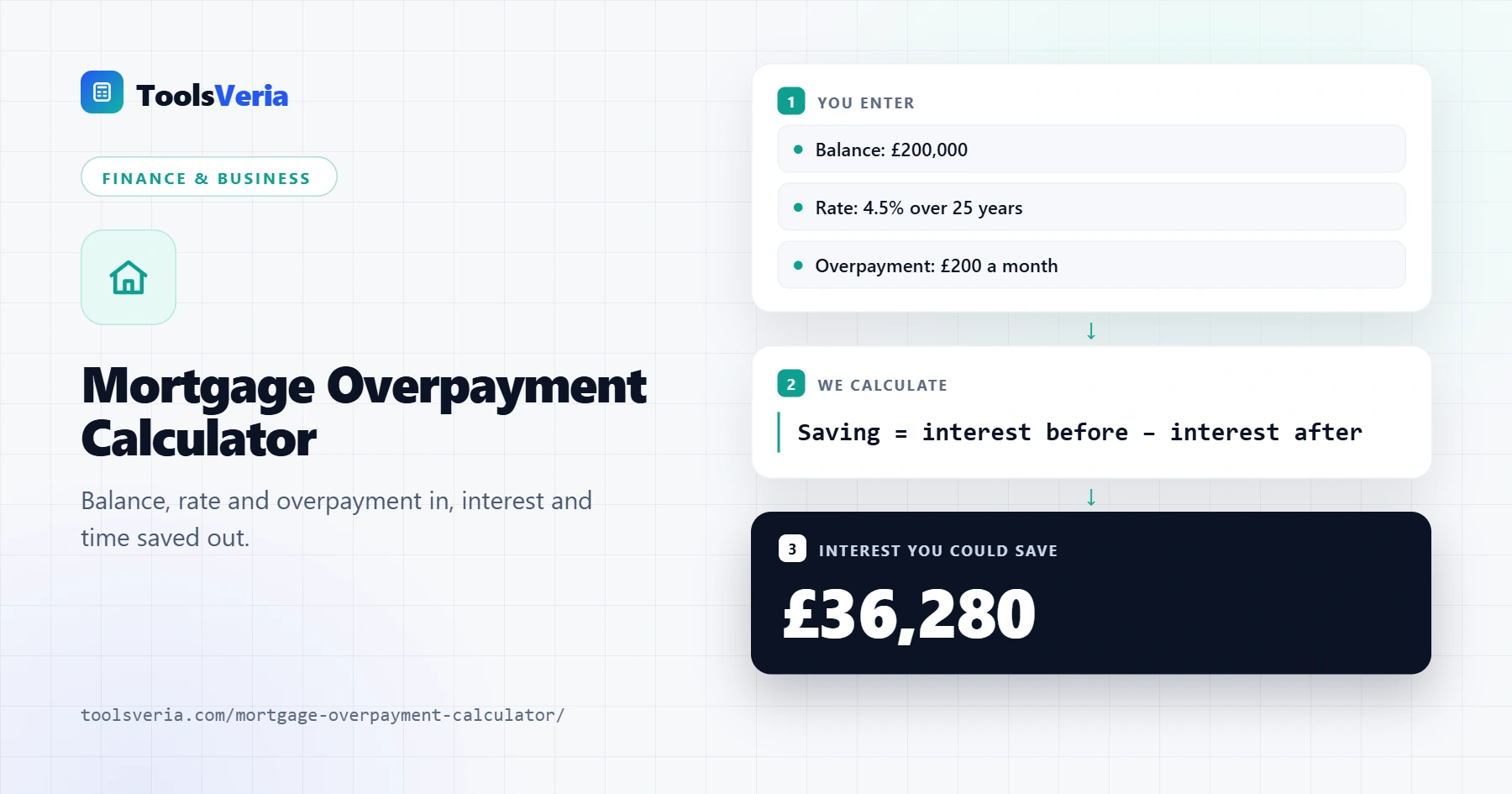
In This Guide
What Is a Mortgage Overpayment?
A mortgage overpayment is any money you pay on top of your normal monthly payment. On a repayment mortgage, interest is charged on the balance you still owe, so every extra pound reduces the balance and the interest charged in every month that follows. Your normal payment stays the same, which means the loan is cleared earlier.
The calculator first works out your normal payment with the standard formula: balance × r ÷ (1 − (1 + r) to the power of −n), where r is the monthly rate and n is the number of months left. It then runs the mortgage month by month with your overpayment added and compares the total interest in both cases.
How Do You Use the Mortgage Overpayment Calculator?
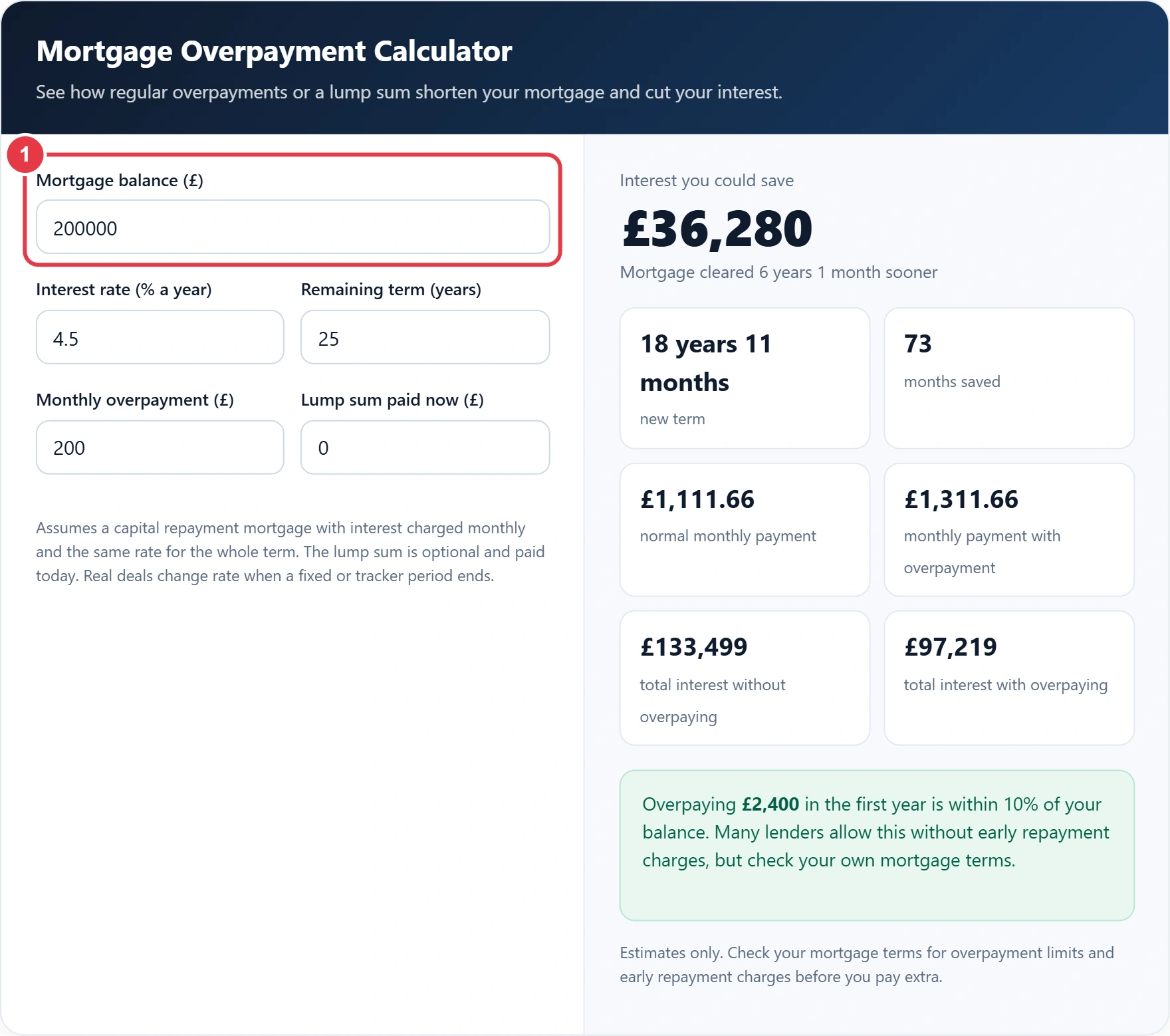
Step 1: Enter Your Mortgage Balance
Type the amount you still owe, not the original loan, which you can find on your annual mortgage statement or in your lender's app. Type the amount you still owe, not the original loan. You can find it on your annual mortgage statement or in your lender's app.
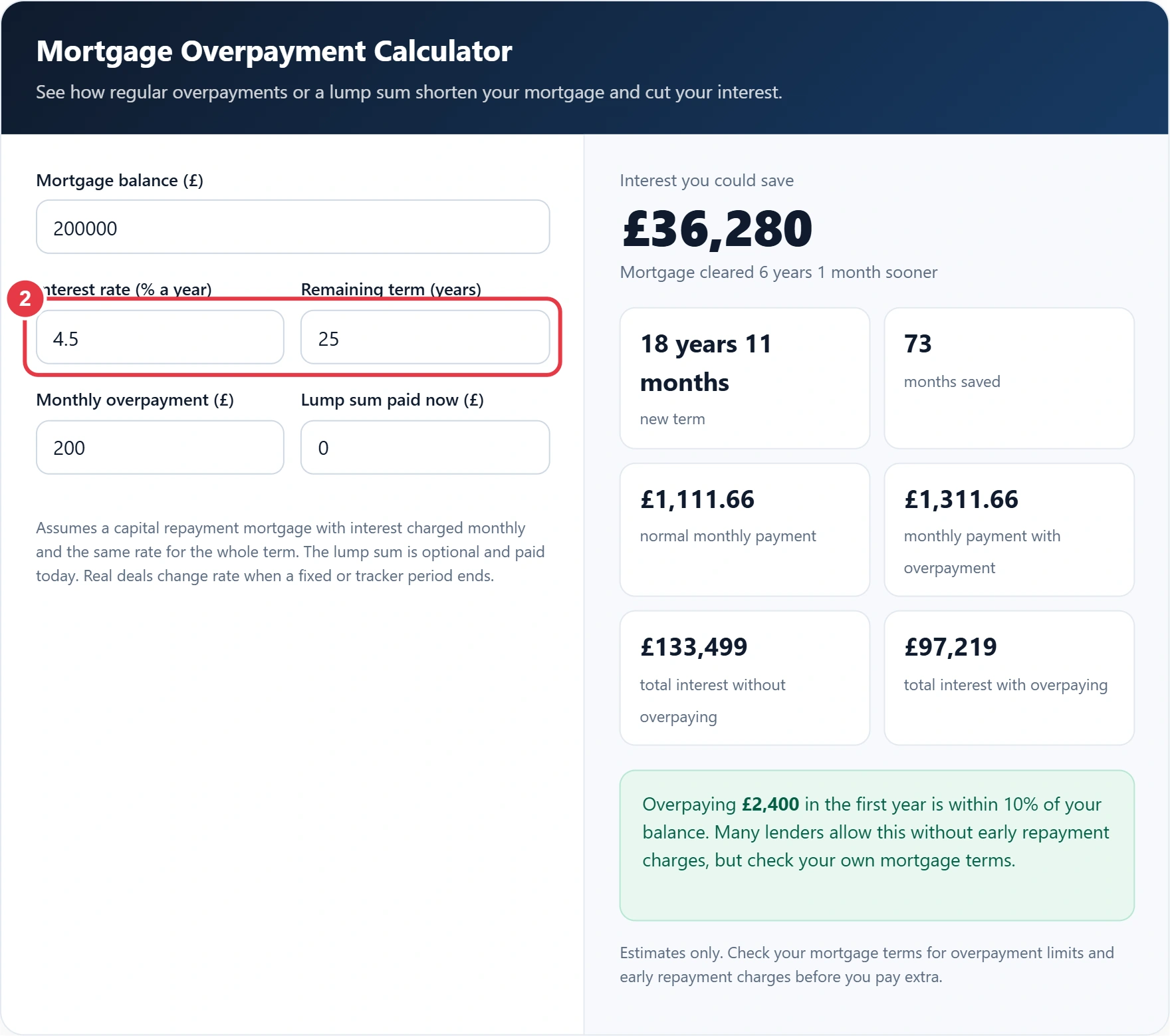
Step 2: Add Your Rate and Remaining Term
Enter your current interest rate and how many years are left on the mortgage. If your fixed rate ends soon, try the rate you expect to move onto as well.
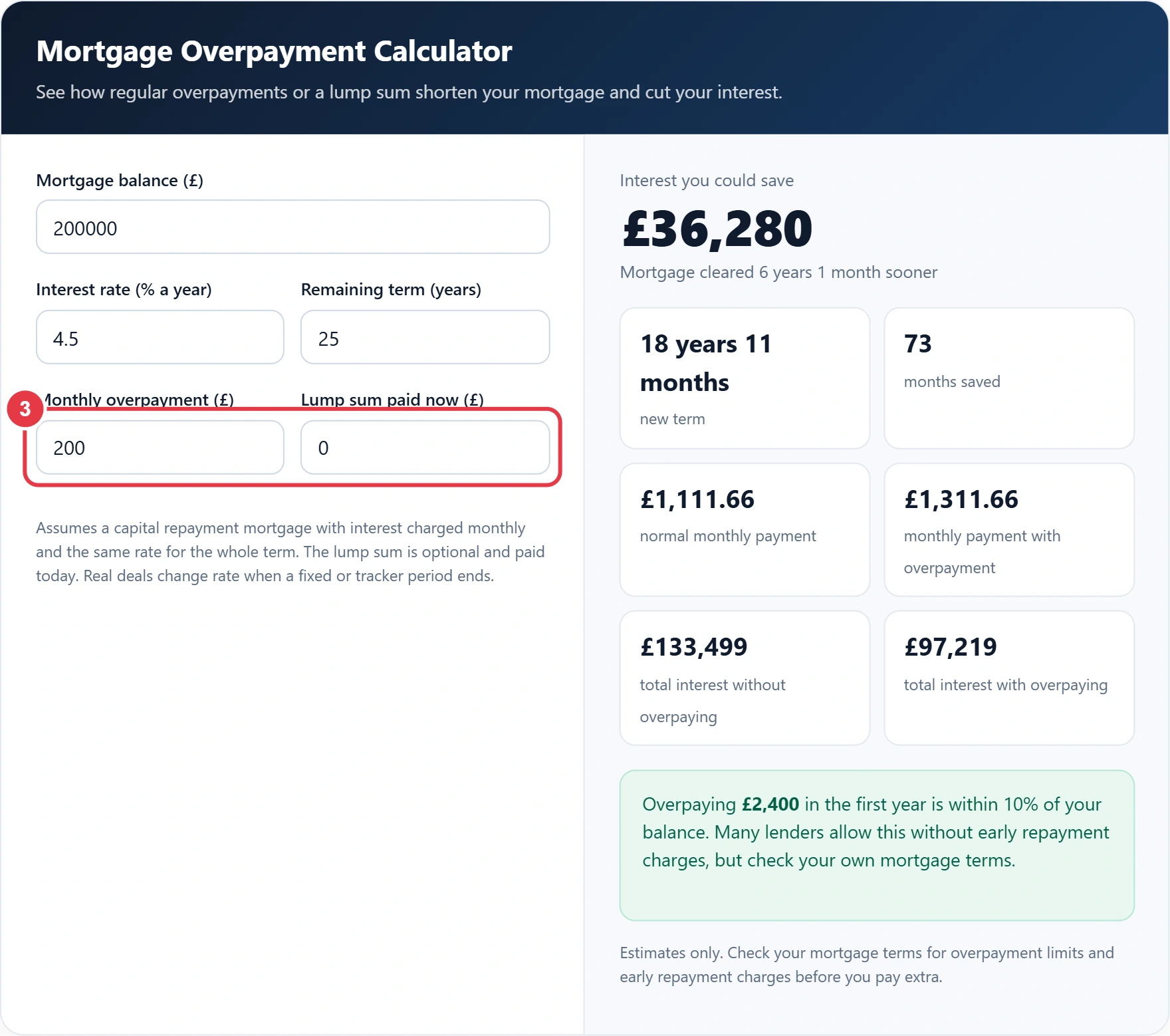
Step 3: Enter Your Overpayments
Add a regular monthly overpayment, a one off lump sum paid today, or both. If you are unsure whether to overpay or invest a lump sum, the compound interest calculator shows what the same money could grow to instead. The calculator warns you if the first year's total is more than 10% of your balance.
Step 4: Read Your Results
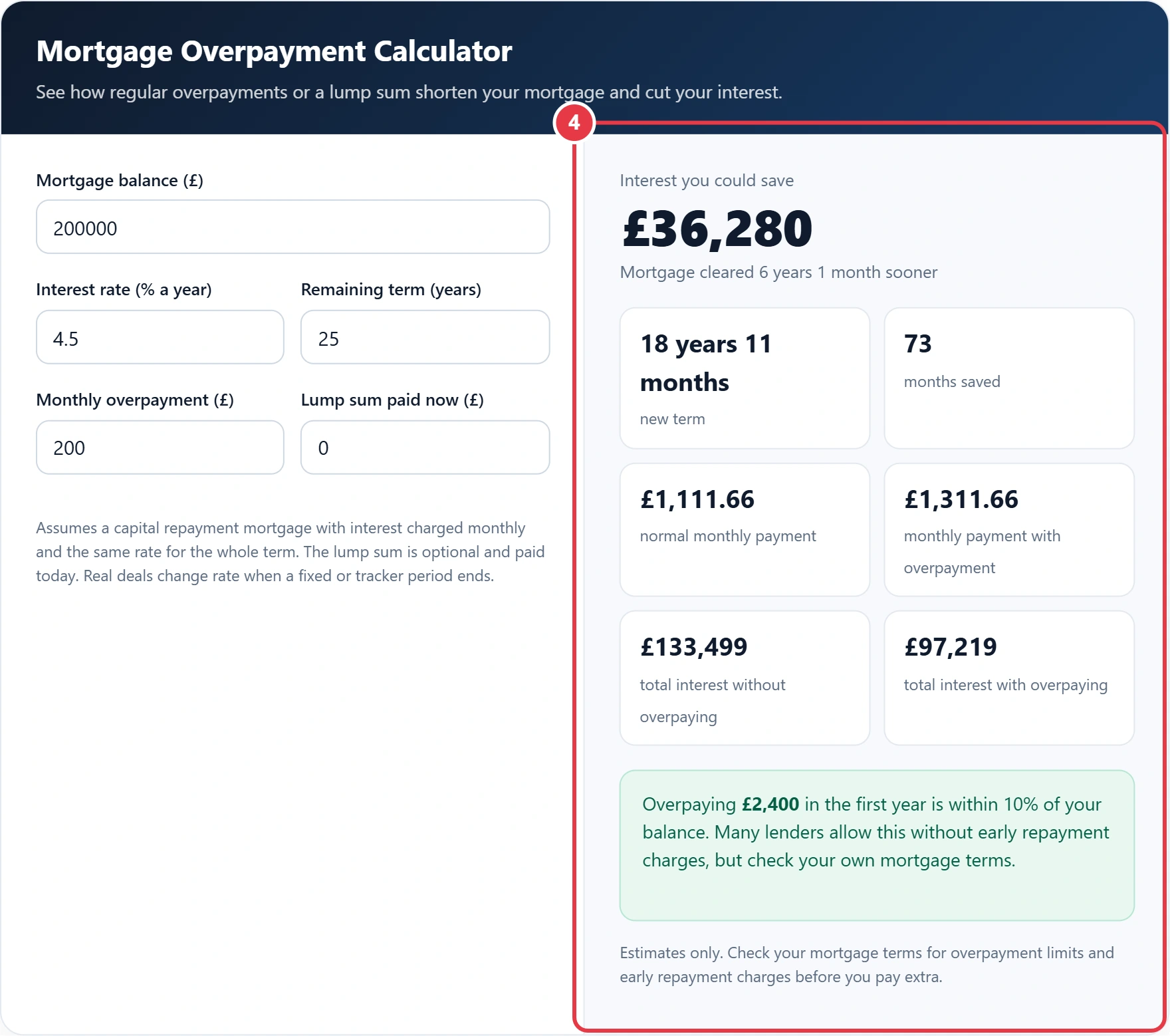
You will see the interest saved, your new term in years and months, the months saved, your normal payment and the total interest with and without overpaying.
How Much Can Mortgage Overpayments Save?
| Mortgage | Overpayment | Time saved | Interest saved |
|---|---|---|---|
| £200,000, 4.5%, 25 years | £100 a month | 3 years 6 months | about £21,100 |
| £200,000, 4.5%, 25 years | £200 a month | 6 years 1 month | about £36,300 |
| £200,000, 4.5%, 25 years | £10,000 lump sum | 2 years 2 months | about £19,300 |
On a £200,000 mortgage at 4.5% over 25 years, overpaying £100 a month saves 3 years 6 months and about £21,100 in interest. Many lenders let you overpay up to 10% of your balance each year without early repayment charges, but limits vary, so check your mortgage offer first. Overpaying makes most sense when your mortgage rate is higher than the interest you could earn on savings after tax, which the savings interest calculator can show you, and the current Bank of England base rate gives a useful benchmark for both. Keep an emergency fund before you overpay, as money paid in is hard to get back.
Mortgage Overpayment Terms You Should Know
These terms explain how extra payments interact with your lender's rules, so you can use the mortgage overpayment calculator to plan savings without unexpected charges.
- Outstanding balance
- The capital still owed on a mortgage at a given date, shown on annual statements and in lender apps. Interest each month is charged on this figure, so reducing it early has a knock on effect on every later payment.
- Overpayment allowance
- The amount a lender lets borrowers pay off each year, beyond normal payments, without triggering a penalty. It is commonly a percentage of the balance, and it resets on a date set out in the mortgage offer.
- Early repayment charge
- A penalty on capital repaid beyond the permitted allowance during a fixed, tracker or discounted deal period. It is usually a percentage of the excess paid, so checking the offer document first can stop an overpayment costing more than it saves.
- Reduced term versus reduced payment
- The two ways a lender can apply an overpayment. Keeping payments the same shortens the mortgage and saves the most interest, while recalculating lowers the monthly payment but leaves the end date unchanged.
- Remaining term
- The number of years and months left until a mortgage is due to be fully repaid. Overpaying while keeping the usual payment shortens it, and it is the figure most borrowers mean by becoming mortgage free sooner.
- Opportunity cost
- The return given up by using money one way instead of the best alternative. For overpayments, it means comparing the mortgage rate saved with the after tax interest the same cash could earn in savings or investments.
</>Embed this calculator on your website
Add the free Mortgage Overpayment Calculator to your own site or blog. Copy the code below and paste it into an HTML block. It resizes itself and works on phones.
How we checked this tool: the Tools Veria Editorial Team built this tool by hand, checked it against the official rules or published standards where they apply, and tested it against worked examples. Results are estimates for planning, not personal financial or tax advice. Read our editorial policy and disclaimer, or report an error.
Frequently Asked Questions
Is it worth overpaying my mortgage?
It usually is if your mortgage rate is higher than the after tax interest you would earn on savings. Keep an emergency fund first, as overpaid money is hard to access.
How much can I overpay without a penalty?
Many lenders allow up to 10% of the balance each year without early repayment charges. Limits vary, so check your mortgage terms or ask your lender.
Is it better to reduce my term or my monthly payment?
Reducing the term saves more interest overall. Reducing the payment gives you more breathing room each month. Many lenders let you choose.
Does a lump sum or monthly overpayment save more?
Money paid earlier saves more interest, so a lump sum paid now beats the same total spread over several years. Regular overpayments are easier for most budgets.
Do overpayments work on an interest only mortgage?
Yes, they reduce the capital you owe and the interest charged, but your monthly payment may fall rather than the term getting shorter. This calculator assumes a repayment mortgage.
Can I get overpaid money back?
Some flexible mortgages let you borrow back overpayments, but most standard deals do not. Ask your lender before you overpay.