
Ellie, a dental nurse on £30,000, and Sam, a self employed plumber making £30,000 profit, earn the same amount but hand over noticeably different sums in National Insurance. Their employers, their payslips and even the month a bonus lands all change the result. The national insurance rates 2026/27 below cover each group, with the thresholds that decide where every pound falls.
For the tax year running from 6 April 2026 to 5 April 2027, the main percentages and the £12,570 and £50,270 thresholds match 2025/26, while the lower earnings limit and the voluntary Class 2 and Class 3 rates rose slightly. Most people will notice pay rises and frozen thresholds more than any new percentage. The worked examples use real salaries so you can find one close to your own.
Quick answer: For 2026/27, HMRC charges employees 8% National Insurance on earnings between £12,570 and £50,270 a year and 2% above that. Employers pay 15% on earnings above £5,000. Self employed people pay Class 4 at 6% on profits between £12,570 and £50,270, then 2%. Voluntary Class 3 costs £18.40 a week.
In This Guide
National Insurance rates 2026/27: what does each class pay?
The National Insurance rates 2026/27 are 8% and 2% for employees, 15% for employers, 6% and 2% for the self employed under Class 4, £3.65 a week for voluntary Class 2 and £18.40 a week for voluntary Class 3. HMRC publishes every figure in its National Insurance rates and allowances for 2026 to 2027, which is the page payroll software and accountants work from.
| Class | Who pays | 2026/27 rate | Applies to |
|---|---|---|---|
| Class 1 primary | Employees | 8% | Earnings £12,570 to £50,270 |
| Class 1 primary | Employees | 2% | Earnings above £50,270 |
| Class 1 secondary | Employers | 15% | Earnings above £5,000 |
| Class 1A and 1B | Employers | 15% | Taxable benefits and PAYE settlements |
| Class 2 | Self employed, voluntary | £3.65 a week | Profits under £7,105 |
| Class 3 | Anyone filling gaps | £18.40 a week | Voluntary top ups |
| Class 4 | Self employed | 6% | Profits £12,570 to £50,270 |
| Class 4 | Self employed | 2% | Profits above £50,270 |
Employees are charged per pay period, so the weekly and monthly thresholds matter more than the annual ones. HMRC’s 2026 to 2027 rates and thresholds for employers set them out in full, and the four you are most likely to meet are below.
| Threshold | Weekly | Monthly | Yearly |
|---|---|---|---|
| Lower earnings limit | £129 | £559 | £6,708 |
| Primary threshold (employee NI starts) | £242 | £1,048 | £12,570 |
| Secondary threshold (employer NI starts) | £96 | £417 | £5,000 |
| Upper earnings limit (employee rate drops to 2%) | £967 | £4,189 | £50,270 |

How much National Insurance does an employee pay in 2026/27?
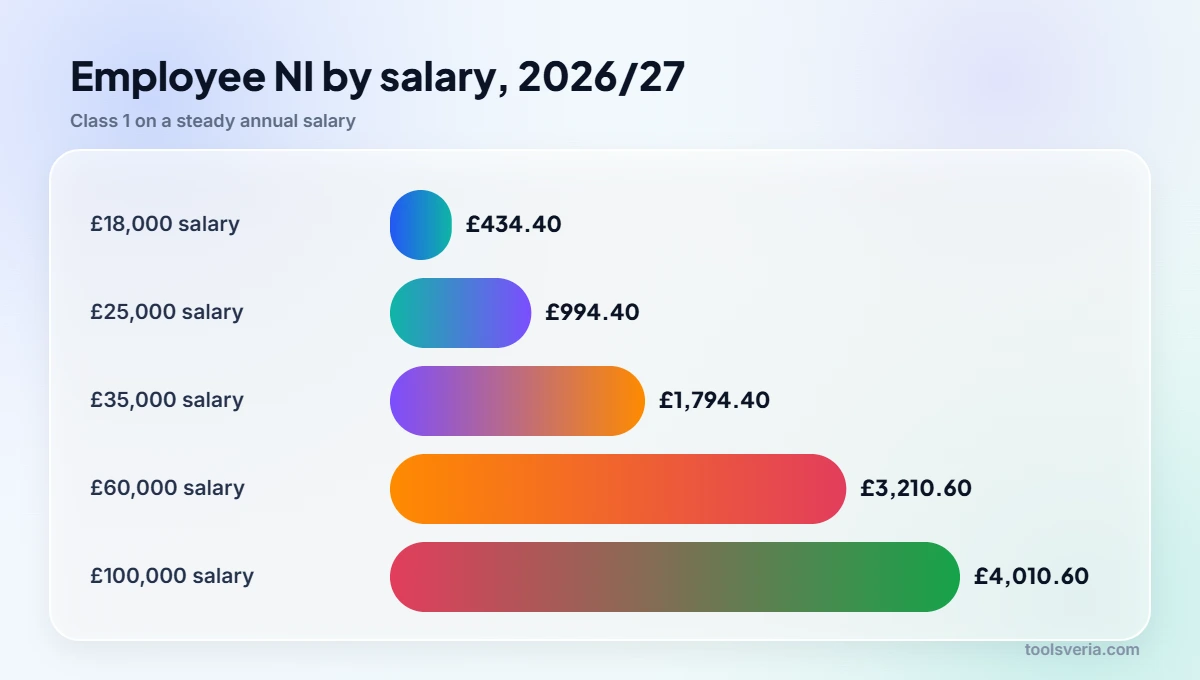
An employee in 2026/27 pays nothing on the first £12,570 of yearly earnings, 8% on earnings from £12,570 to £50,270 and 2% on anything above £50,270. On a steady salary, that gives the annual figures in the table below, which assume the same pay every month.
| Annual salary | At 8% | At 2% | Employee NI for 2026/27 | Per month |
|---|---|---|---|---|
| £18,000 | £434.40 | £0.00 | £434.40 | £36.20 |
| £25,000 | £994.40 | £0.00 | £994.40 | £82.87 |
| £35,000 | £1,794.40 | £0.00 | £1,794.40 | £149.53 |
| £60,000 | £3,016.00 | £194.60 | £3,210.60 | £267.55 |
| £100,000 | £3,016.00 | £994.60 | £4,010.60 | £334.22 |
Payroll rounds the monthly threshold to £1,048, so twelve real payslips can differ from these annual figures by a few pence. Ellie, on £30,000, earns £2,500 a month and pays 8% on the £1,452 above £1,048, which is £116.16 each month.
The bonus month that costs less than expected
In December, Ellie receives a £3,000 bonus, so that month’s pay is £5,500. She pays 8% on £3,141 up to the £4,189 monthly limit, which is £251.28, and only 2% on the £1,311 above it, which is £26.22. Her December deduction is £277.50.
Across the year she pays £1,555.26, about £79 less than the £1,634.40 an annual calculation on £33,000 would suggest. Because employee National Insurance never looks back over the whole year, part of a lump sum that pushes one month over £4,189 is charged at 2% instead of 8%. Company directors are the exception, as they are assessed on an annual earnings period.
Two jobs, two separate thresholds
Each job with an unconnected employer is assessed on its own. Marcus works two part time jobs paying £11,000 a year each, so neither crosses £12,570 and he pays no employee National Insurance at all, despite total earnings of £22,000. One job at £22,000 would cost him £754.40. Our UK salary calculator shows how Income Tax and National Insurance combine on a single job, which is the fairer comparison when you weigh up an offer.
What do employers pay in National Insurance for 2026/27?
Employers pay 15% Class 1 National Insurance in 2026/27 on each employee’s earnings above the £5,000 secondary threshold, with no upper limit and no reduced rate for high earners. That cost sits on top of the salary and never appears as a deduction on the employee’s payslip.
A café owner hiring a supervisor on £35,000 pays 15% of £30,000, so £4,500 of employer National Insurance a year. A £25,000 barista costs a further £3,000. Small firms can claim the Employment Allowance of £10,500 a year, which comes straight off the employer bill: a business owing £14,000 would pay only £3,500. Companies where a director is the only employee paid above the secondary threshold cannot claim it.
Category letters on the payslip change the employer’s share for some workers. The ones that matter most in practice:
| Category letter | Who it covers | Employer rate up to £50,270 | Employee rate |
|---|---|---|---|
| A | Most employees | 15% above £5,000 | 8% then 2% |
| M | Employees under 21 | 0% | 8% then 2% |
| H | Apprentices under 25 | 0% | 8% then 2% |
| V | Veterans in their first civilian year | 0% | 8% then 2% |
| C | Over State Pension age | 15% above £5,000 | 0% |
Hiring a 20 year old on £22,000 under category M saves the employer the £2,550 it would pay for an older colleague on the same wage. Directors weighing up how to pay themselves face different sums again, and the salary vs dividend calculator compares a director’s salary against dividends once employer National Insurance is included.

How much National Insurance do the self employed pay in 2026/27?
Self employed people pay Class 4 National Insurance in 2026/27 at 6% on profits between £12,570 and £50,270 and 2% on profits above £50,270, collected through Self Assessment by 31 January 2028. Class 2 is no longer charged on profits of £7,105 or more; those years count towards the State Pension automatically.
Sam’s £30,000 profit gives Class 4 of 6% on £17,430, which is £1,045.80. Ellie, on the same income as an employee, pays £1,394.40 on an annual basis. The table compares both at two income levels.
| Income or profit | Employee Class 1 | Self employed Class 4 | Difference |
|---|---|---|---|
| £30,000 | £1,394.40 | £1,045.80 | £348.60 |
| £35,000 | £1,794.40 | £1,345.80 | £448.60 |
| £60,000 | £3,210.60 | £2,456.60 | £754.00 |
The lower bill is not a free gift. The self employed have no employer paying 15% on their behalf and no access to Statutory Sick Pay, so the saving often goes towards their own cover. Running your figures through the self employed tax calculator adds Income Tax and payments on account, which is the number to save for each month.
Profits under £7,105 leave no Class 2 to pay, but also no automatic State Pension credit. Paying voluntary Class 2 at £3.65 a week costs £189.80 for the year and secures a qualifying year, which is far cheaper than the Class 3 alternative.
Why do the thresholds matter for your State Pension?
The thresholds matter for your State Pension because earning at least the lower earnings limit of £129 a week from one job gives you a qualifying year, even though you pay no National Insurance until earnings reach £242 a week. The GOV.UK new State Pension guide explains that you usually need 35 qualifying years for the full amount and at least 10 to get anything.
Priya works 15 hours a week at a library for £190 a week. She pays no employee National Insurance, yet every year still counts towards her pension because £190 is above £129. Her friend Jo earns £110 a week in a single job, so she falls below the limit and builds nothing unless she receives credits, for example through Child Benefit for a child under 12.
Gaps can be filled with voluntary Class 3 at £18.40 a week, which is £956.80 for a full year. Before paying, check your National Insurance record on GOV.UK, because some years may already be covered by credits and buying them again wastes money. Salary sacrifice schemes reduce pay for National Insurance purposes too, and our salary sacrifice pension calculator shows the saving, though you should keep pay above £129 a week to protect the qualifying year.
Key points
- Employees pay 8% National Insurance on earnings from £12,570 to £50,270 in 2026/27 and 2% above £50,270.
- Employers pay 15% on earnings above £5,000, with 0% up to £50,270 for under 21s, apprentices under 25 and eligible veterans.
- Self employed Class 4 is 6% on profits from £12,570 to £50,270 and 2% above, paid through Self Assessment.
- Employee National Insurance is worked out per pay period, so bonuses and second jobs change the total.
- Voluntary Class 2 costs £3.65 a week and Class 3 costs £18.40 a week in 2026/27.
- Earnings of at least £129 a week from one job give a State Pension qualifying year.
National Insurance Rates 2026/27 Terms You Should Know
These terms explain the classes and rules behind the National Insurance rates 2026/27, helping employees, employers and the self employed read their own figures accurately.
- Class 4 National Insurance
- Contributions paid by self employed people on taxable business profits, collected through the Self Assessment tax return rather than payroll. They are worked out on the profit for the whole tax year, not period by period like employee contributions.
- Voluntary Class 2 contributions
- A flat weekly contribution that self employed people with low profits can choose to pay. It protects entitlement to the State Pension and some benefits at a much lower cost than other voluntary options.
- Class 3 contributions
- Voluntary payments anyone can make to fill gaps in their National Insurance record, for example after time abroad or out of work. Each full year paid can add a qualifying year towards the State Pension.
- Class 1A contributions
- An employer only charge on most taxable benefits in kind provided to staff, such as company cars or private medical cover. It is calculated once a year from the values reported to HMRC, rather than through each payslip.
- Annual earnings period
- The method used for company directors, where contributions are worked out on total earnings for the tax year instead of each pay period. It stops directors reducing their bill by taking pay in irregular lump sums.
- Frozen thresholds
- Thresholds held at the same cash level from one year to the next instead of rising with prices or wages. As pay increases, more income falls into the charged bands, an effect often called fiscal drag.
Frequently Asked Questions
I reach State Pension age in November. When does my National Insurance stop?
Employee National Insurance stops from the first payday after you reach State Pension age. Show your employer proof of age so payroll switches you to category C, while your employer keeps paying its 15% share on earnings above £5,000.
My salary is £50,000. Do I pay the 2% rate at all?
No, not on a steady salary, because £50,000 sits below the £50,270 upper earnings limit. You pay 8% on £37,430, which is £2,994.40 for 2026/27, although a bonus month above £4,189 would put part of that month’s pay at 2%.
I am 19 and just started work. Do I pay less than older colleagues?
No, you pay the same 8% and 2% as everyone else on category M. The saving goes to your employer, who pays 0% instead of 15% on your earnings up to £50,270 until you turn 21.
My side business made £5,000 profit. Should I pay Class 2?
Only if you need the qualifying year. If your main job already pays at least £129 a week, the year is covered and voluntary Class 2 adds nothing. If not, £189.80 for 2026/27 is the cheapest way to secure it.
Ellie now knows why her bonus month was cheaper than she feared, Sam can see what he saves against an employee, and the café owner has budgeted £4,500 for a £35,000 hire. Enter your own salary or profit into the calculator to apply the National Insurance rates 2026/27 to your weekly, monthly and yearly pay. Figures checked October 2026.