Capital Gains Tax for individuals in the 2026/27 tax year, using your income to find the rate.
| Item | Amount | Rate | Tax |
|---|
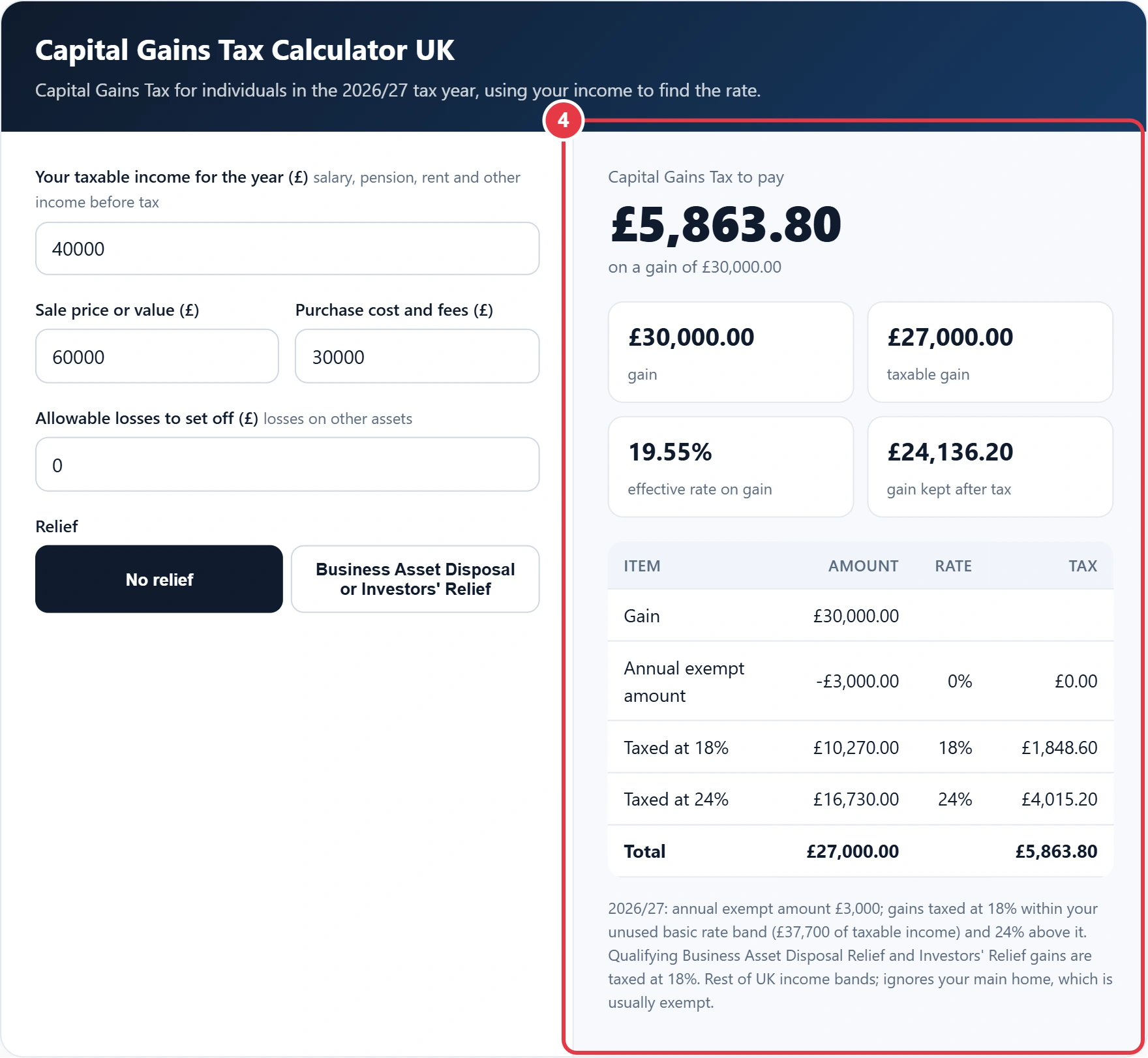
2026/27: annual exempt amount £3,000; gains taxed at 18% within your unused basic rate band (£37,700 of taxable income) and 24% above it. Qualifying Business Asset Disposal Relief and Investors' Relief gains are taxed at 18%. Rest of UK income bands; ignores your main home, which is usually exempt.
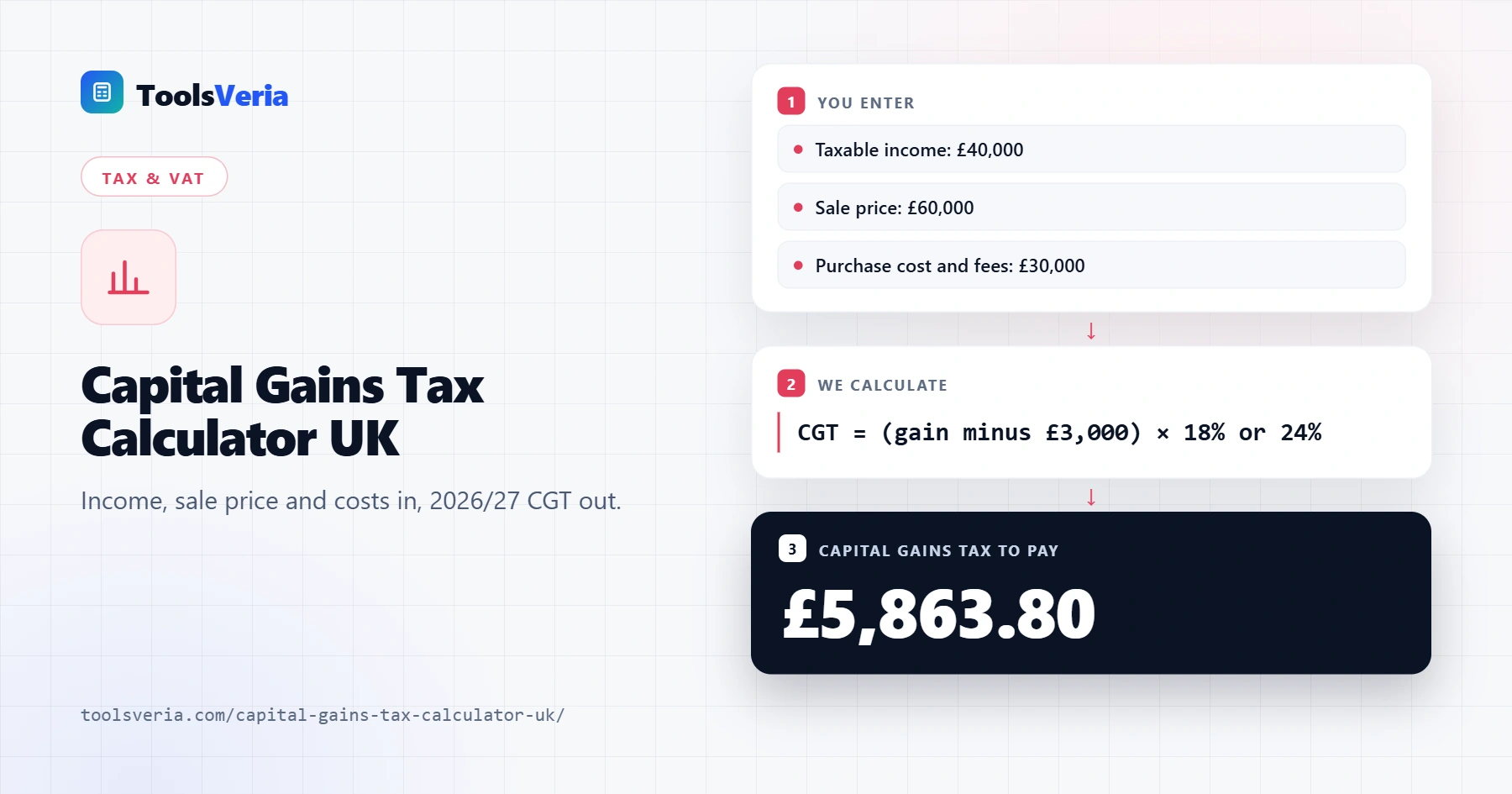
Sold shares, a buy to let flat or a valuable item for more than you paid? This capital gains tax calculator UK works out what you owe for 2026/27, after the £3,000 annual exempt amount, at the rates set out in the GOV.UK Capital Gains Tax rates guide, using your income to decide how much of the gain falls at 18% and how much at 24%.
Quick answer: A capital gains tax calculator UK works out the taxable gain as sale price minus purchase cost, fees and losses, minus the £3,000 annual exempt amount for 2026/27. Any part of the gain that fits within your unused basic rate band is taxed at 18%, and the rest at 24%. A £10,000 gain on £40,000 income costs £1,260.
In This Guide
What Is Capital Gains Tax?
Capital Gains Tax (CGT) is a tax on the profit when you sell or give away an asset that has gone up in value. It is the gain that is taxed, not the full sale price. Common examples are shares held outside an ISA, second homes, rental property, business assets and personal possessions worth over £6,000. Your main home is usually exempt under Private Residence Relief.
The formula is: taxable gain = sale price minus purchase cost and fees minus losses minus £3,000. The taxable gain is added on top of your taxable income. Any part that fits within your unused basic rate band is taxed at 18%, and the rest at 24%. Residential property and other assets are now taxed at the same rates.
How to Use the Capital Gains Tax Calculator UK
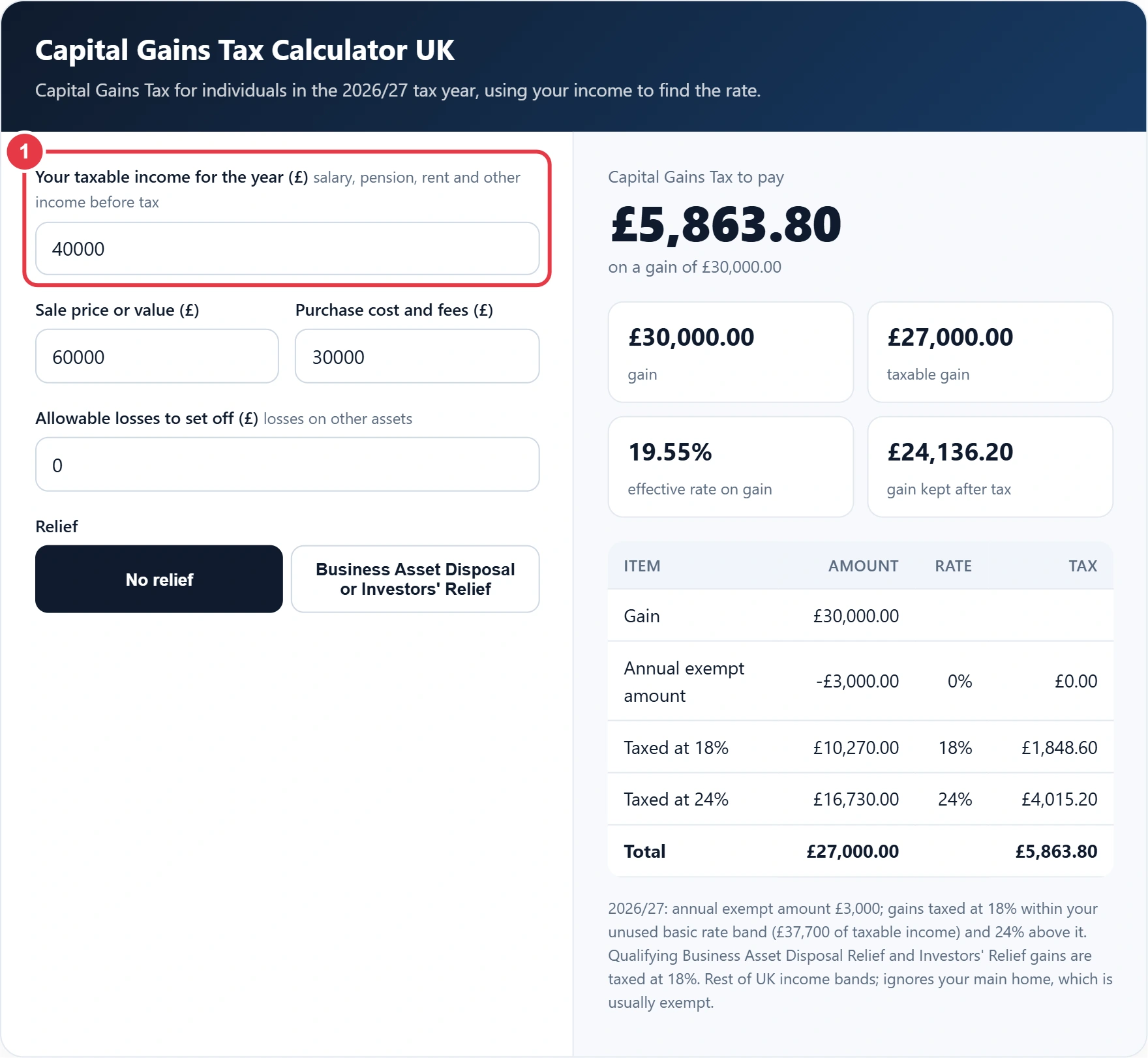
Step 1: Enter Your Taxable Income
Type your total income for the tax year before tax, such as salary, pension and rental profit. If you work for yourself, our self employed tax calculator gives you the profit figure to use. The calculator deducts your personal allowance to find how much basic rate band is left.
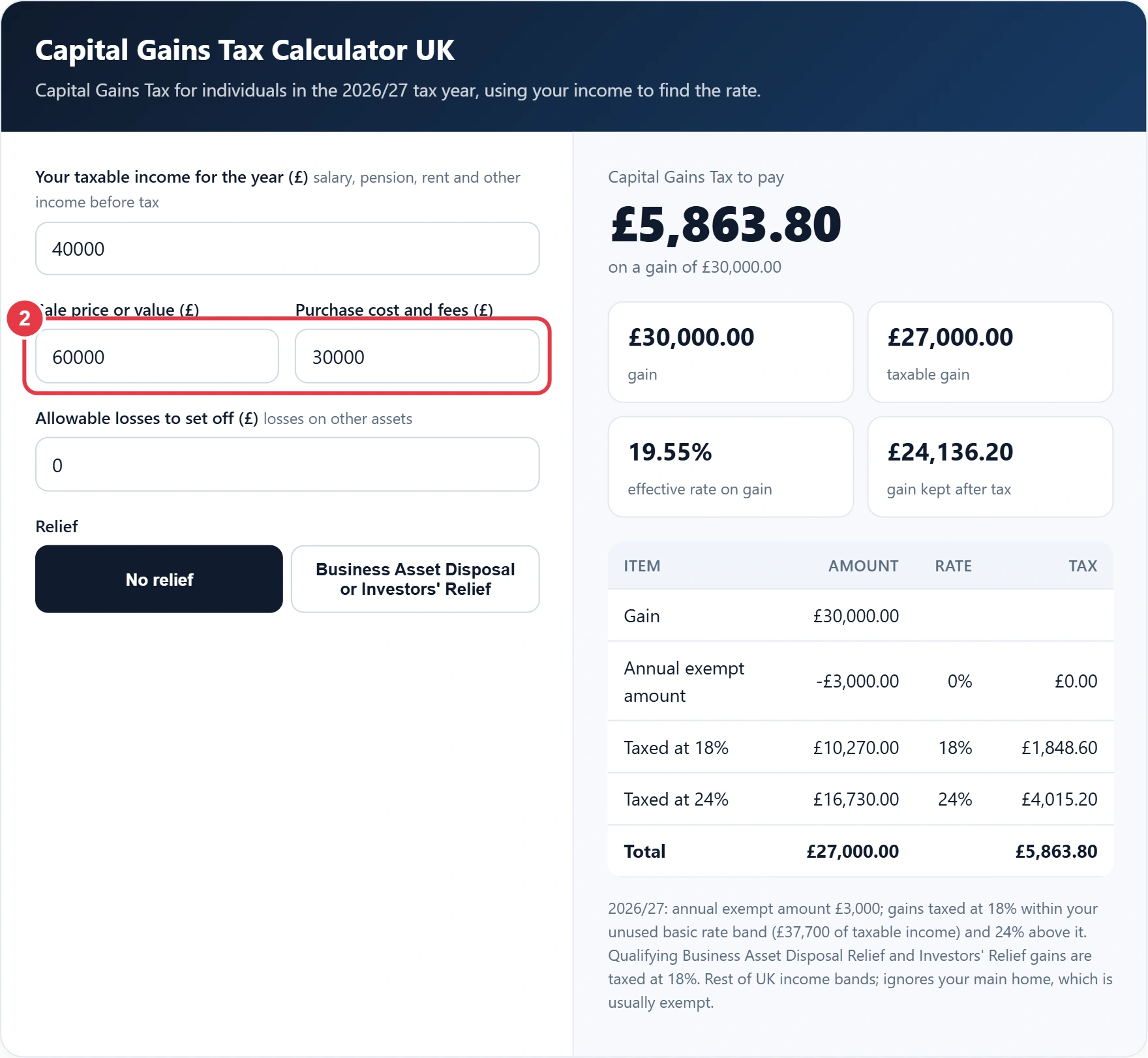
Step 2: Enter the Sale Price and Costs
Enter what you sold the asset for, or its market value if you gave it away. Then add the purchase price plus allowable costs such as stamp duty, legal fees, broker fees and the cost of improvements.
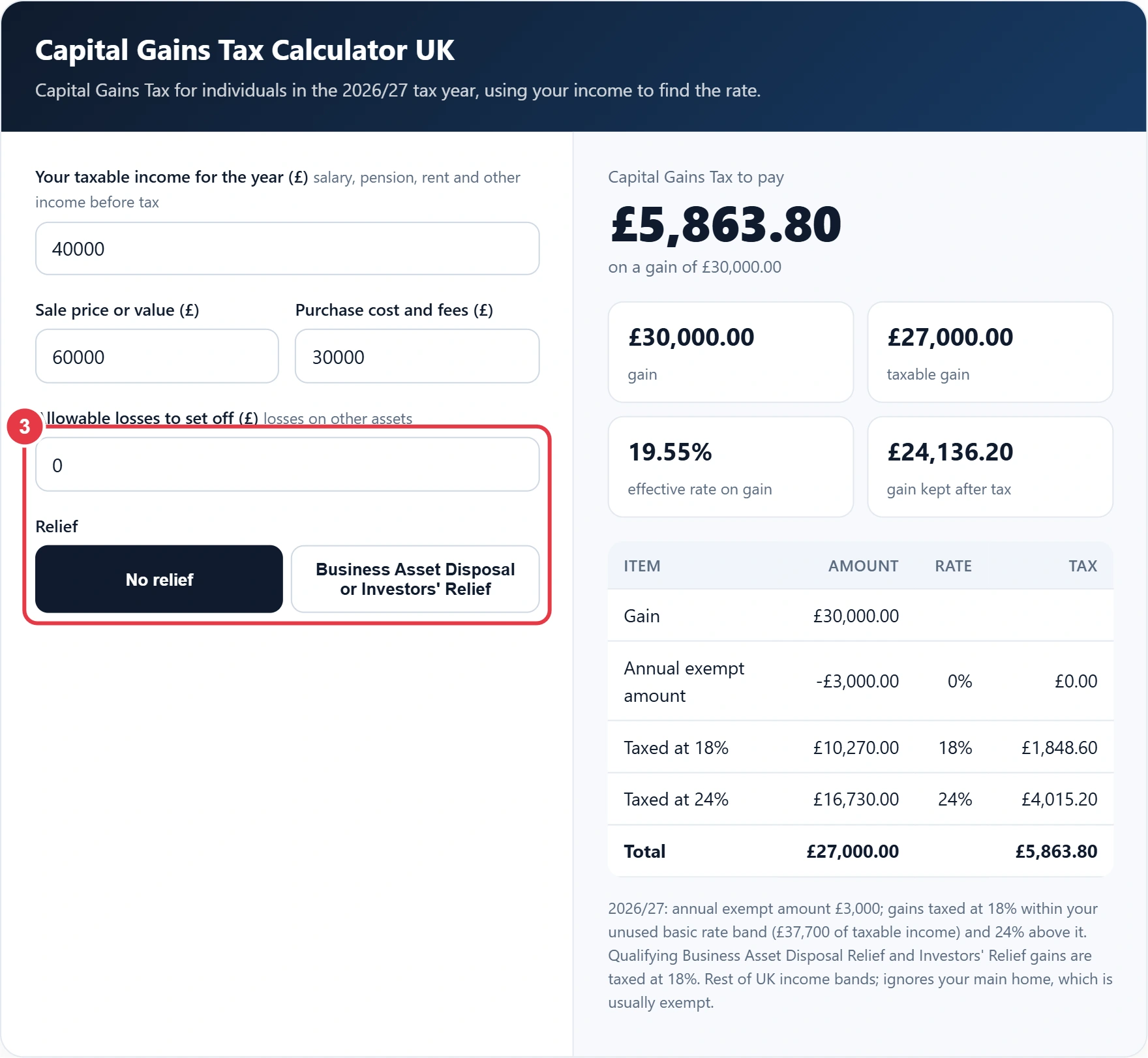
Step 3: Add Losses and Choose Any Relief
Add losses on other assets that you can set against this gain. Select Business Asset Disposal Relief or Investors' Relief only if your gain qualifies, as both are taxed at 18% in 2026/27.
Step 4: Read Your Results
You will see the tax to pay, your taxable gain and the effective rate, with each slice of the gain shown in the table. To see how the money could grow after tax, try the compound interest calculator with the amount you keep.
Capital Gains Tax Examples for 2026/27
| Taxable income | Gain | CGT to pay |
|---|---|---|
| £40,000 | £10,000 | £1,260.00 |
| £40,000 | £30,000 | £5,863.80 |
| £40,000 | £50,000 | £10,663.80 |
| £60,000 | £30,000 | £6,480.00 |
If you sell UK residential property and owe tax, you must report and pay within 60 days of completion. For shares and other assets, the HMRC rates and allowances page confirms the figures used here, and you normally report the gain through Self Assessment by 31 January after the tax year ends.
</>Embed this calculator on your website
Add the free Capital Gains Tax Calculator UK to your own site or blog. Copy the code below and paste it into an HTML block. It resizes itself and works on phones.
How we checked this tool: the Tools Veria Editorial Team built this tool by hand, checked it against the official rules or published standards where they apply, and tested it against worked examples. Results are estimates for planning, not personal financial or tax advice. Read our editorial policy and disclaimer, or report an error.
Frequently Asked Questions
What are the Capital Gains Tax rates for 2026/27?
Individuals pay 18% on gains that fall within the basic rate band and 24% on gains above it. Qualifying Business Asset Disposal Relief and Investors' Relief gains are taxed at 18%.
What is the Capital Gains Tax allowance for 2026/27?
The annual exempt amount is £3,000 for individuals and £1,500 for most trusts.
Do I pay Capital Gains Tax when I sell my home?
Usually not. Private Residence Relief normally covers your main home if you lived in it the whole time you owned it.
Are gains on shares in an ISA taxable?
No. Gains on investments held inside an ISA or a pension are free of Capital Gains Tax.
Can I carry forward the CGT allowance?
No. The £3,000 allowance is lost if you do not use it, but unused losses can be carried forward if you report them to HMRC.
Does a capital gain push me into a higher income tax band?
No. Gains do not change your income tax, but your income decides how much of the gain is taxed at 18% and how much at 24%.