Convert binary to decimal or decimal to binary, with hex, octal and the full working.
Converts unsigned whole numbers of any length exactly. Negative numbers and two's complement are not applied. Everything runs in your browser.
Binary is the language computers use to store every number, letter and pixel, but it is hard to read at a glance. This binary to decimal converter turns any string of ones and zeros into an ordinary number, and it works in reverse as a decimal to binary converter too. It follows the standard base 2 place value system taught in computer science lessons, and it shows the full working so you can check every step.
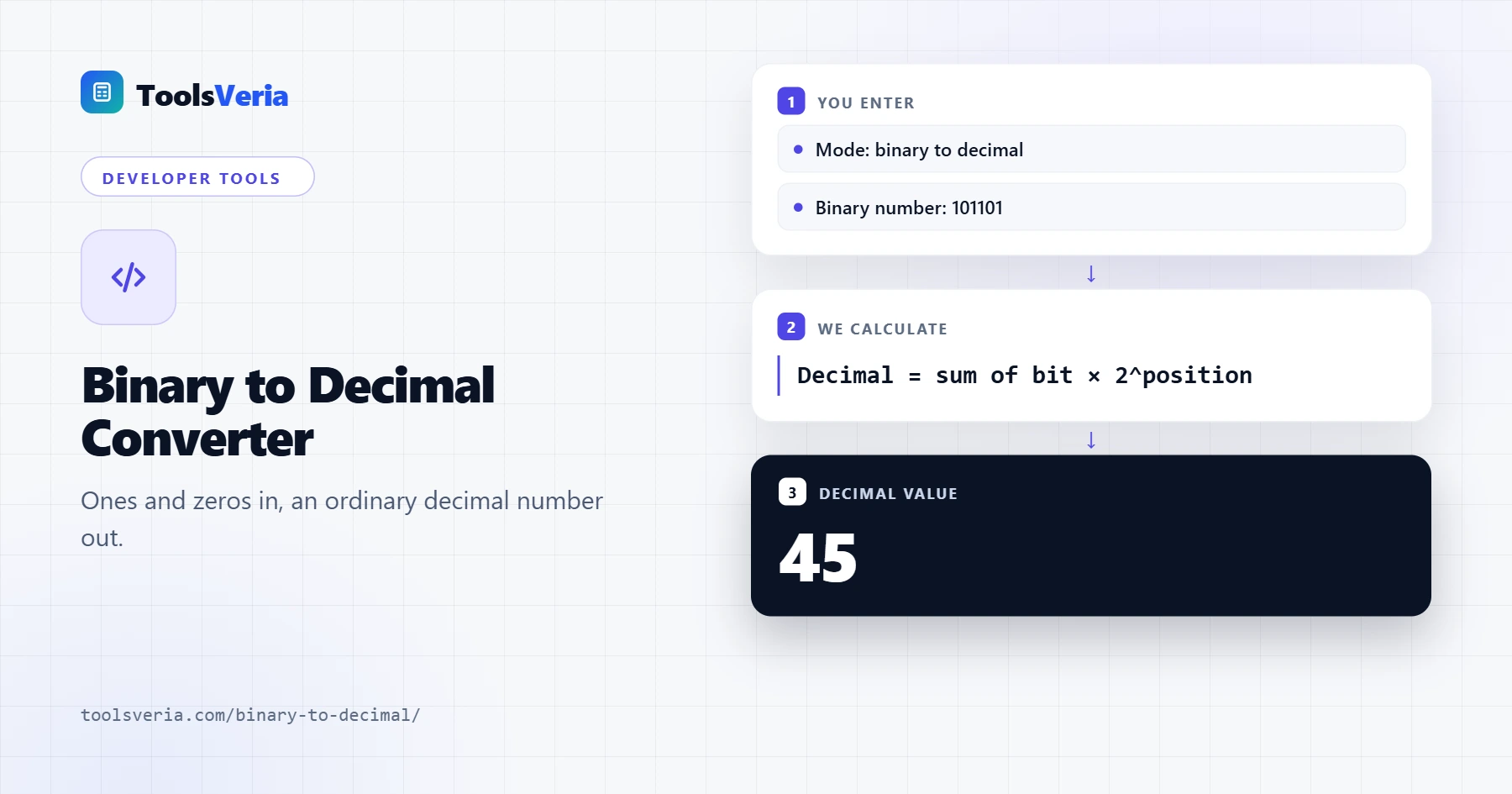
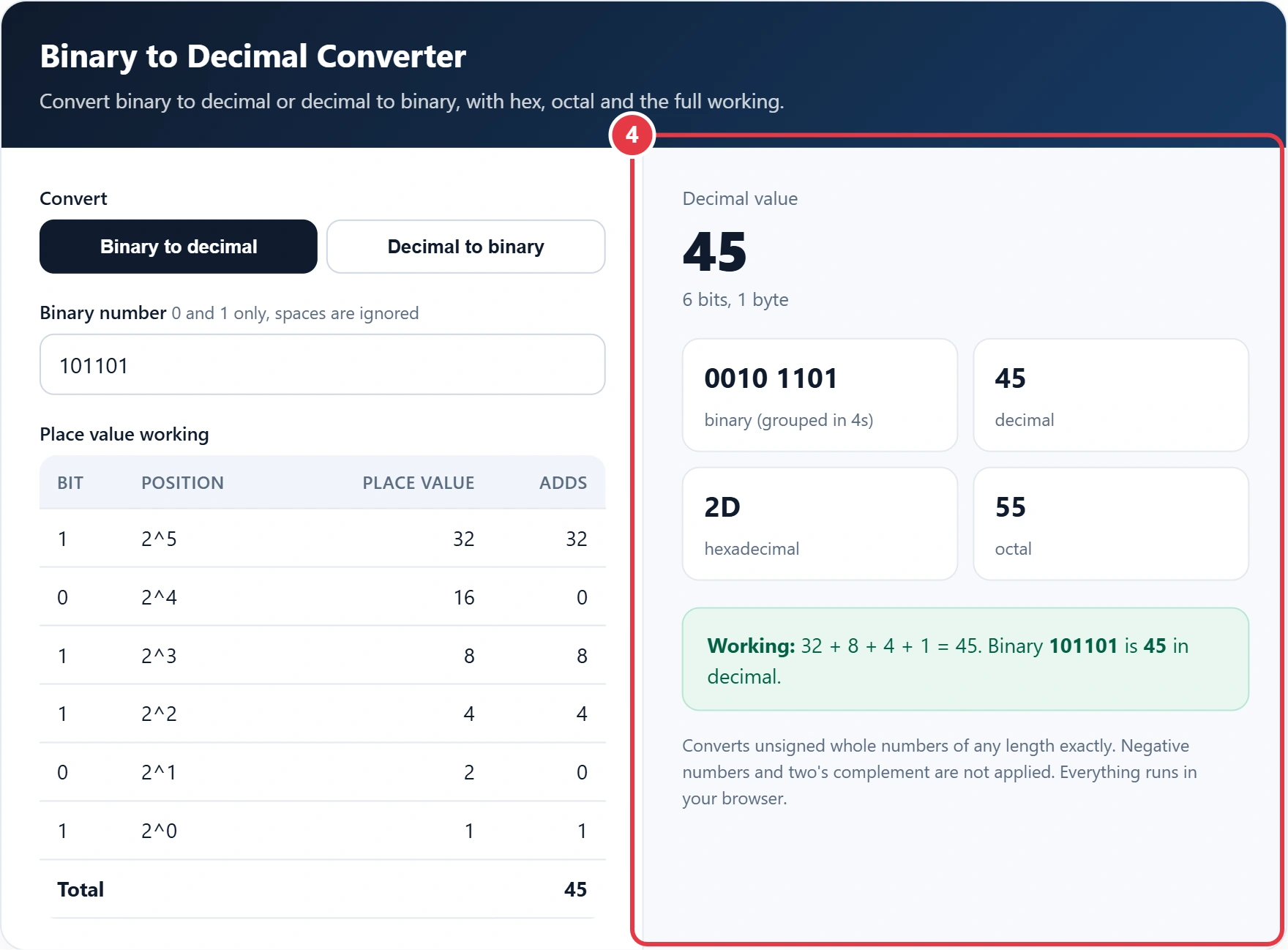
Quick answer: To convert binary to decimal, multiply each bit by its place value (1, 2, 4, 8, 16 and so on, doubling from the right) and add the results. For example, 101101 equals 32 + 0 + 8 + 4 + 0 + 1 = 45, and the largest value a single eight bit byte can hold is 11111111, or 255.
In This Guide
What Is Binary to Decimal Conversion?
Binary is a base 2 number system. Each digit, called a bit, can only be 0 or 1, and each position is worth double the one to its right: 1, 2, 4, 8, 16, 32 and so on. Decimal, the system we use every day, is base 10, so each position is worth ten times the one to its right.
To convert, multiply each bit by its place value and add the results: decimal = sum of (bit × 2 to the power of its position), counting positions from 0 on the right. For 101101 that is 32 + 0 + 8 + 4 + 0 + 1 = 45. Going the other way, divide the decimal number by 2 again and again, then read the remainders from the last to the first.
How Do You Use the Binary to Decimal Converter?
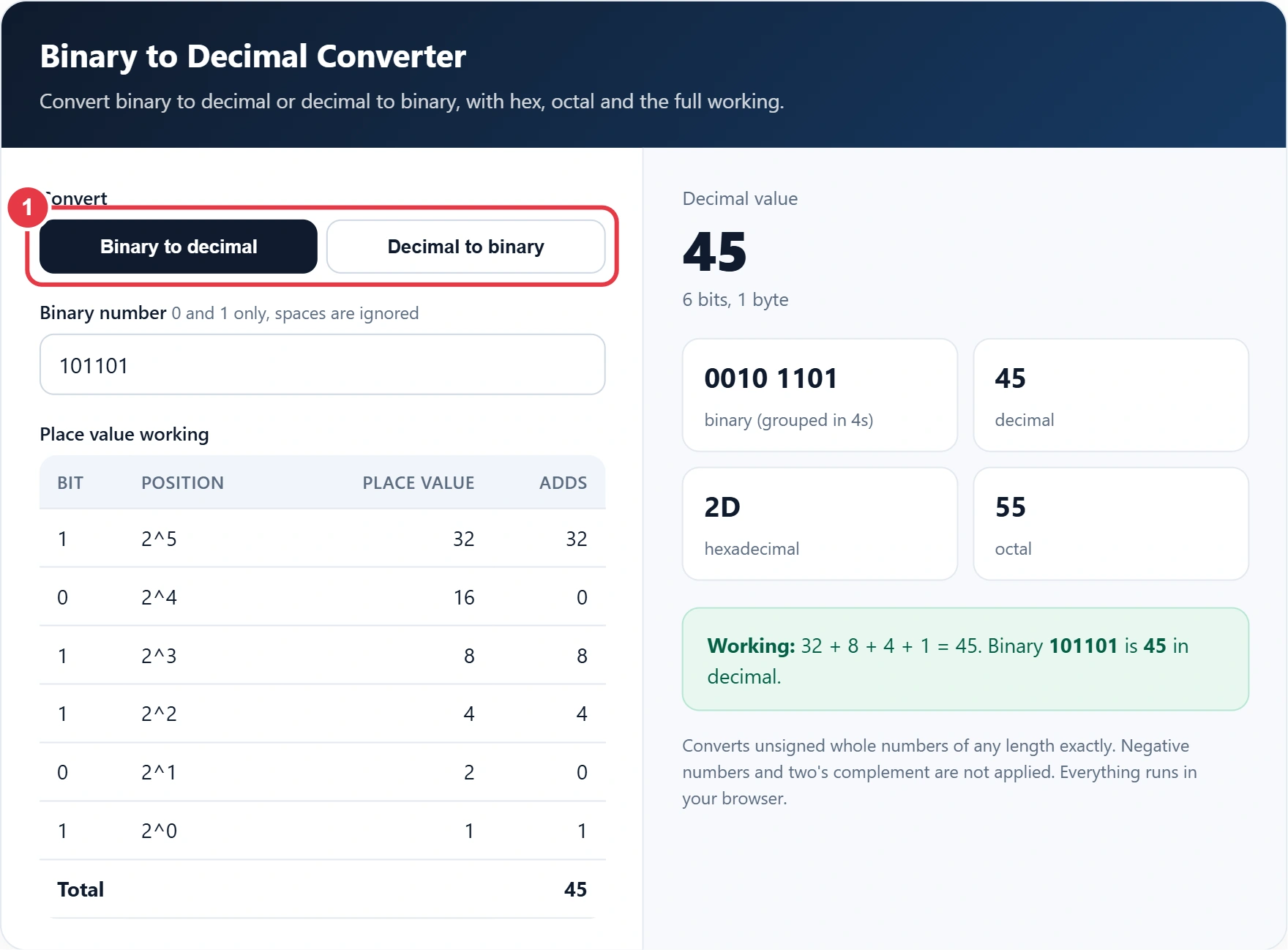
Step 1: Choose the Direction
Pick Binary to decimal to read a binary number, or Decimal to binary to write one, and the current result moves into the input box when you switch. Pick Binary to decimal to read a binary number, or Decimal to binary to write one. When you switch, the current result moves into the input box, so you can check the conversion both ways.
Step 2: Enter Your Number
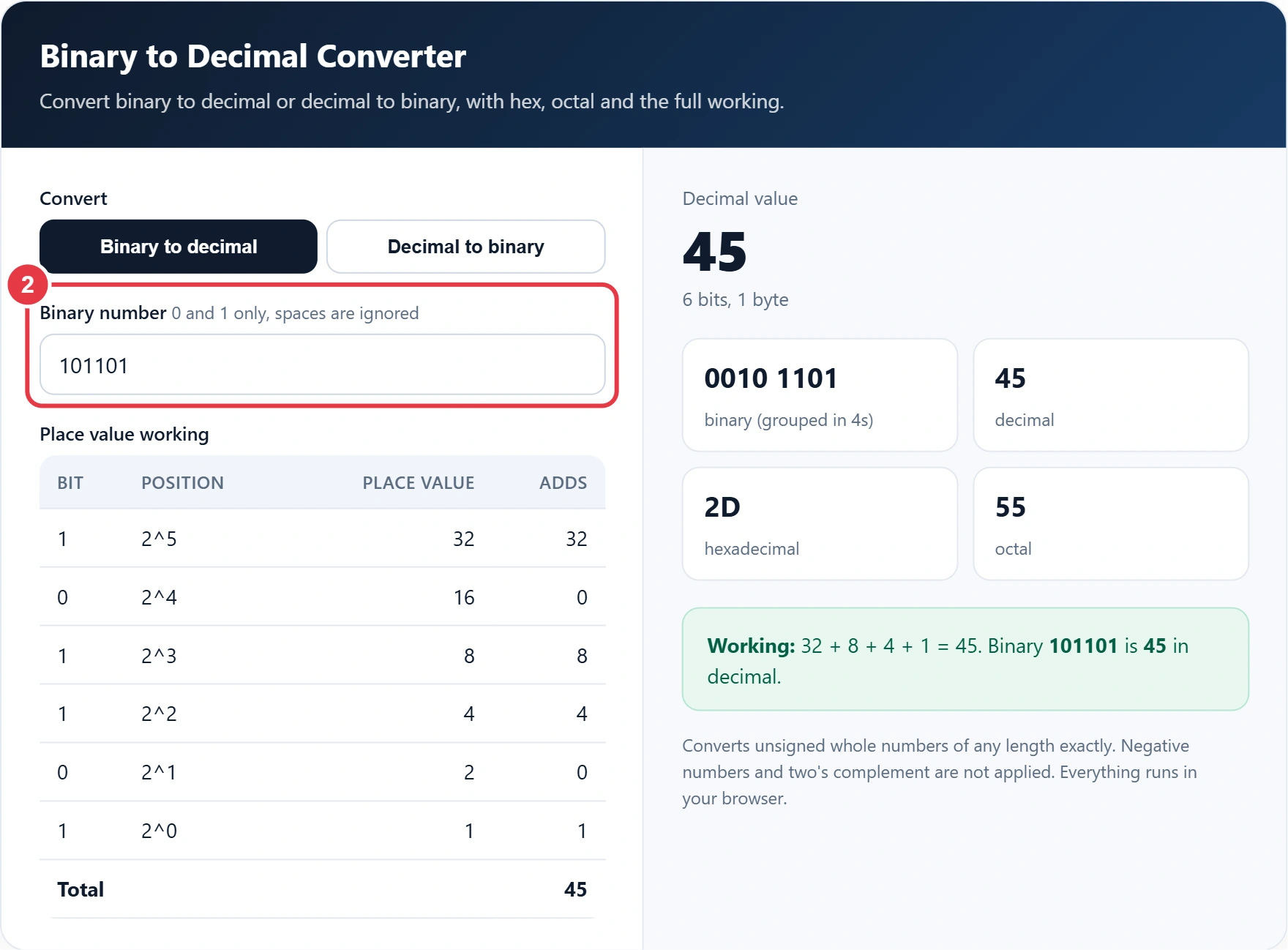
Type or paste the number. Binary input accepts only 0 and 1, and spaces or underscores between groups are ignored, so 1010 1101 works as well as 10101101. There is no 32 or 64 bit limit, so long values convert exactly.
Step 3: Check the Working
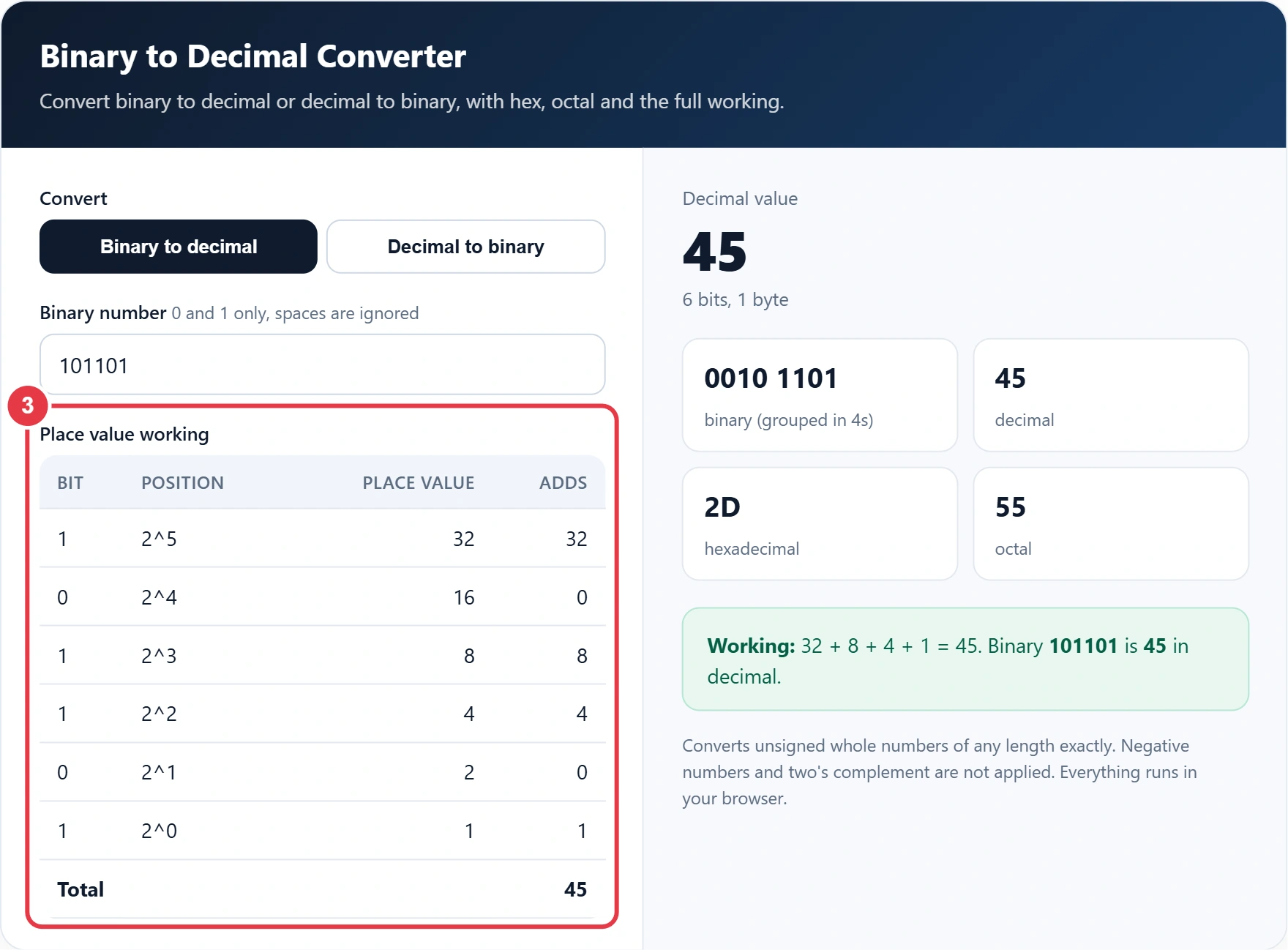
The place value table lists each bit with its position and value, then totals every bit set to 1. Hashes from the SHA256 generator are simply very long binary numbers written in hexadecimal, so the same method applies to them. For values longer than 16 bits the table is hidden, but the result stays exact.
Step 4: Read the Results
The main result shows the converted number, with the bit count, the hexadecimal and octal equivalents and a one line working sum. Developers often meet raw numbers inside log files, and the Unix timestamp converter turns those second counts into readable dates in the same way. Everything runs in your browser, so nothing is uploaded.
How Do Common Binary Numbers Convert to Decimal?
| Binary | Decimal | Hexadecimal |
|---|---|---|
| 1 | 1 | 1 |
| 1010 | 10 | A |
| 1111 | 15 | F |
| 101101 | 45 | 2D |
| 1100100 | 100 | 64 |
| 11111111 | 255 | FF |
| 10000000000 | 1,024 | 400 |
For example, binary 1010 is decimal 10, 1100100 is decimal 100 and 11111111 is decimal 255, which are written as A, 64 and FF in hexadecimal. Eight bits make one byte, which is why 11111111, or 255, is the largest value a single byte can hold. Programmers often write the same values in hexadecimal notation instead, because each hex digit maps neatly onto four bits and long binary strings become far shorter to read and check.
</>Embed this calculator on your website
Add the free Binary to Decimal Converter to your own site or blog. Copy the code below and paste it into an HTML block. It resizes itself and works on phones.
How we checked this tool: the Tools Veria Editorial Team built this tool by hand, checked it against the official rules or published standards where they apply, and tested it against worked examples. Results are estimates for planning, not personal financial or tax advice. Read our editorial policy and disclaimer, or report an error.
Frequently Asked Questions
How do you convert binary to decimal?
Multiply each bit by 2 raised to the power of its position, counting from 0 on the right, then add the results. For example, 1011 is 8 + 0 + 2 + 1 = 11.
How do you convert decimal to binary?
Divide the number by 2 and note the remainder, then keep dividing the result by 2 until you reach 0. Reading the remainders from last to first gives the binary number.
What is 11111111 in decimal?
11111111 in binary is 255 in decimal. It is the largest value that fits in one 8 bit byte.
What is 1010 in decimal?
1010 in binary is 10 in decimal, because it is 8 + 0 + 2 + 0.
Why do computers use binary?
Electronic circuits work most reliably with two states, on and off, which map directly onto 1 and 0. Every number, letter and image is stored as patterns of those two states.
Can this binary converter handle negative numbers?
It converts unsigned whole numbers. Computers usually store negative values using two's complement, which depends on a fixed bit width, so those are not converted here.