UK dividend tax for the 2026/27 tax year, stacked on top of your other income.
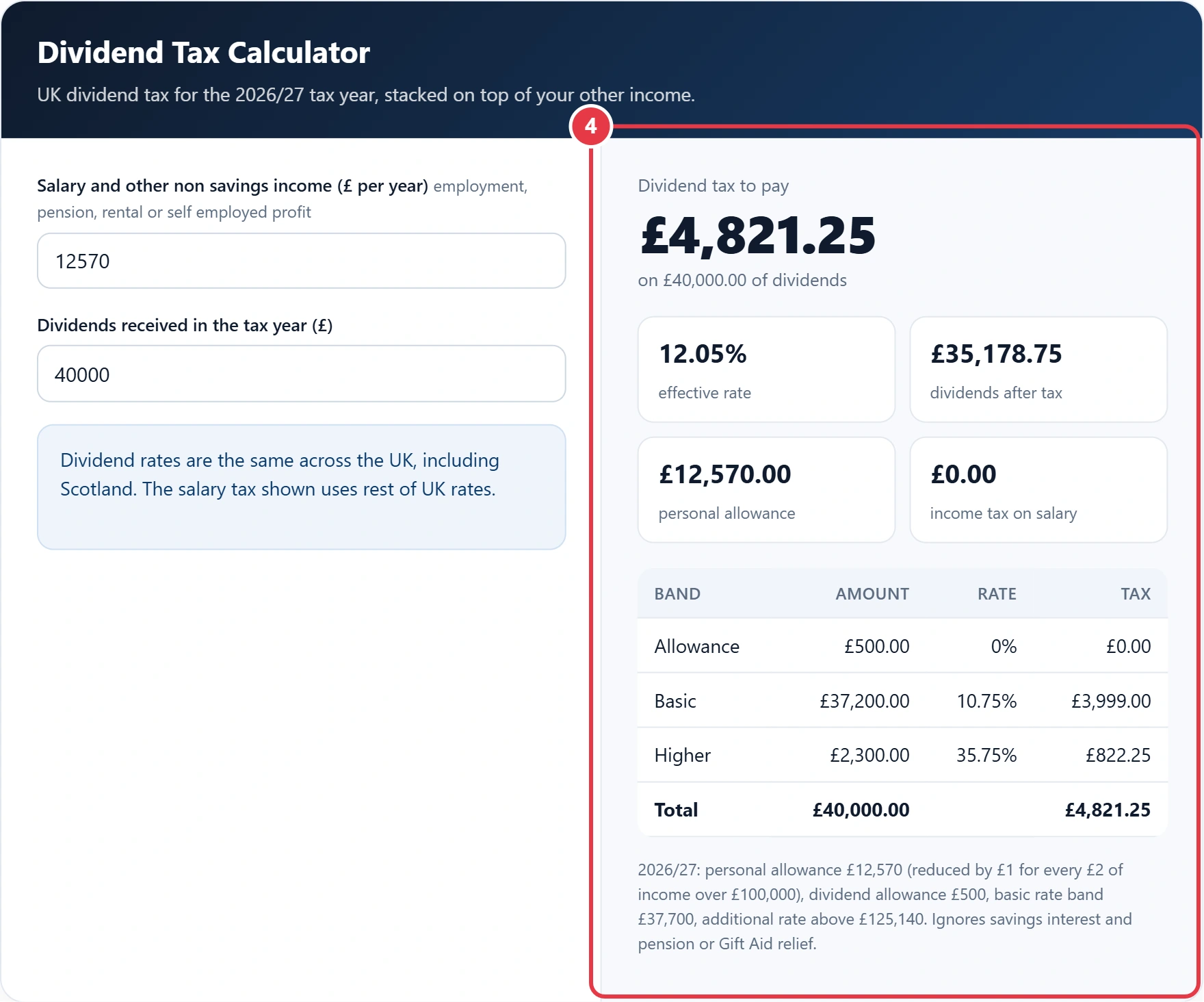
| Band | Amount | Rate | Tax |
|---|
2026/27: personal allowance £12,570 (reduced by £1 for every £2 of income over £100,000), dividend allowance £500, basic rate band £37,700, additional rate above £125,140. Ignores savings interest and pension or Gift Aid relief.
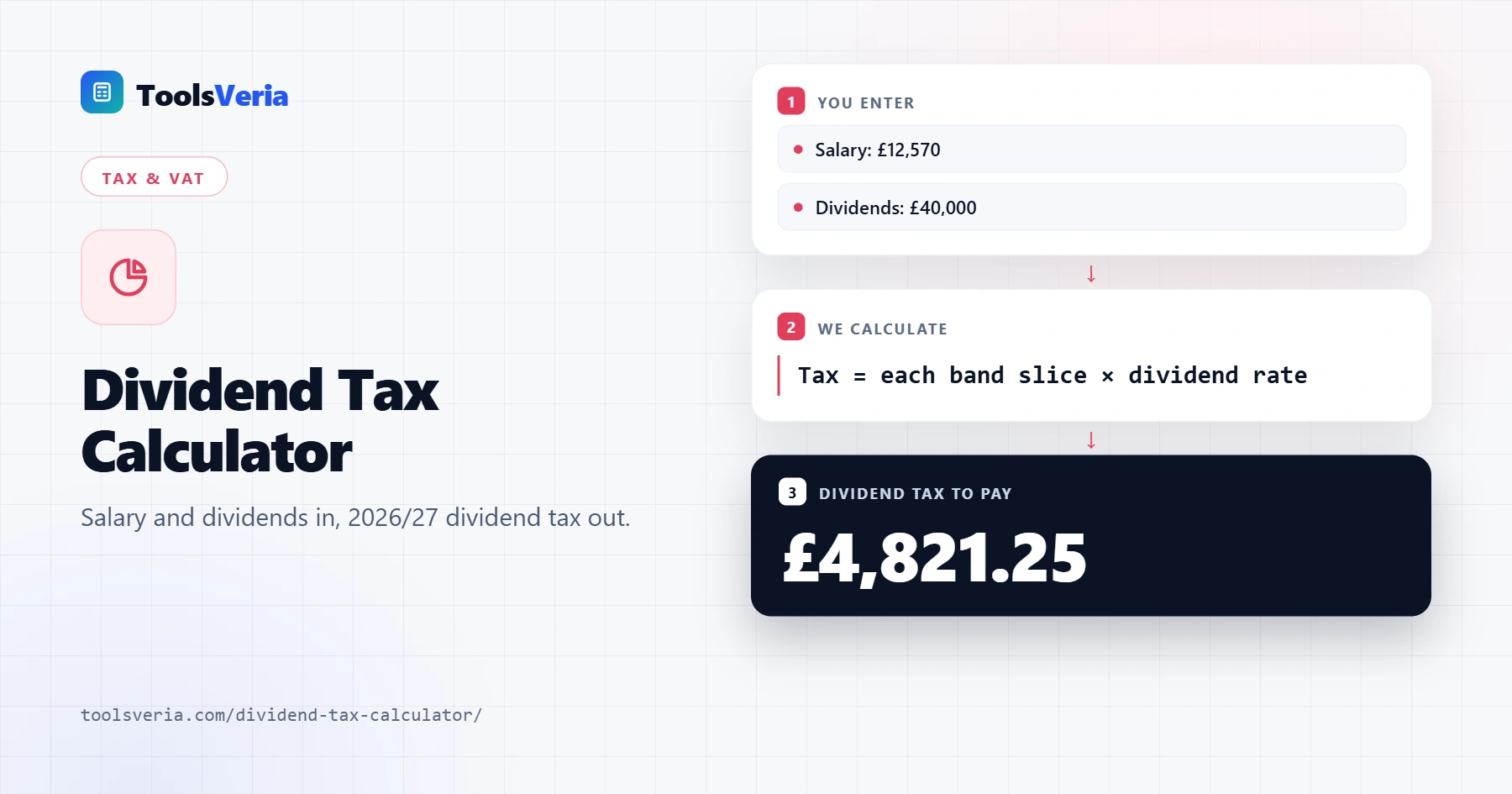
Paying yourself through a limited company, or holding shares outside an ISA? This dividend tax calculator shows how much tax you owe on dividends for 2026/27, using the new rates of 10.75%, 35.75% and 39.35% and the £500 dividend allowance. It follows the method set out in the government guide to tax on dividends, stacking dividends on top of your other income.
What Is Dividend Tax?
Dividend tax is income tax on profits a company pays out to its shareholders. Dividends are always treated as the top slice of your income. Your salary, pension or rental profit uses up your personal allowance and tax bands first, and your dividends fill whatever space is left.
The first £500 of dividends is tax free, but it still uses up part of your band. Anything above that is taxed at 10.75% in the basic rate band, 35.75% in the higher rate band and 39.35% above £125,140. If your total income is over £100,000, your personal allowance shrinks by £1 for every £2, which the calculator handles for you.
How to Use the Dividend Tax Calculator
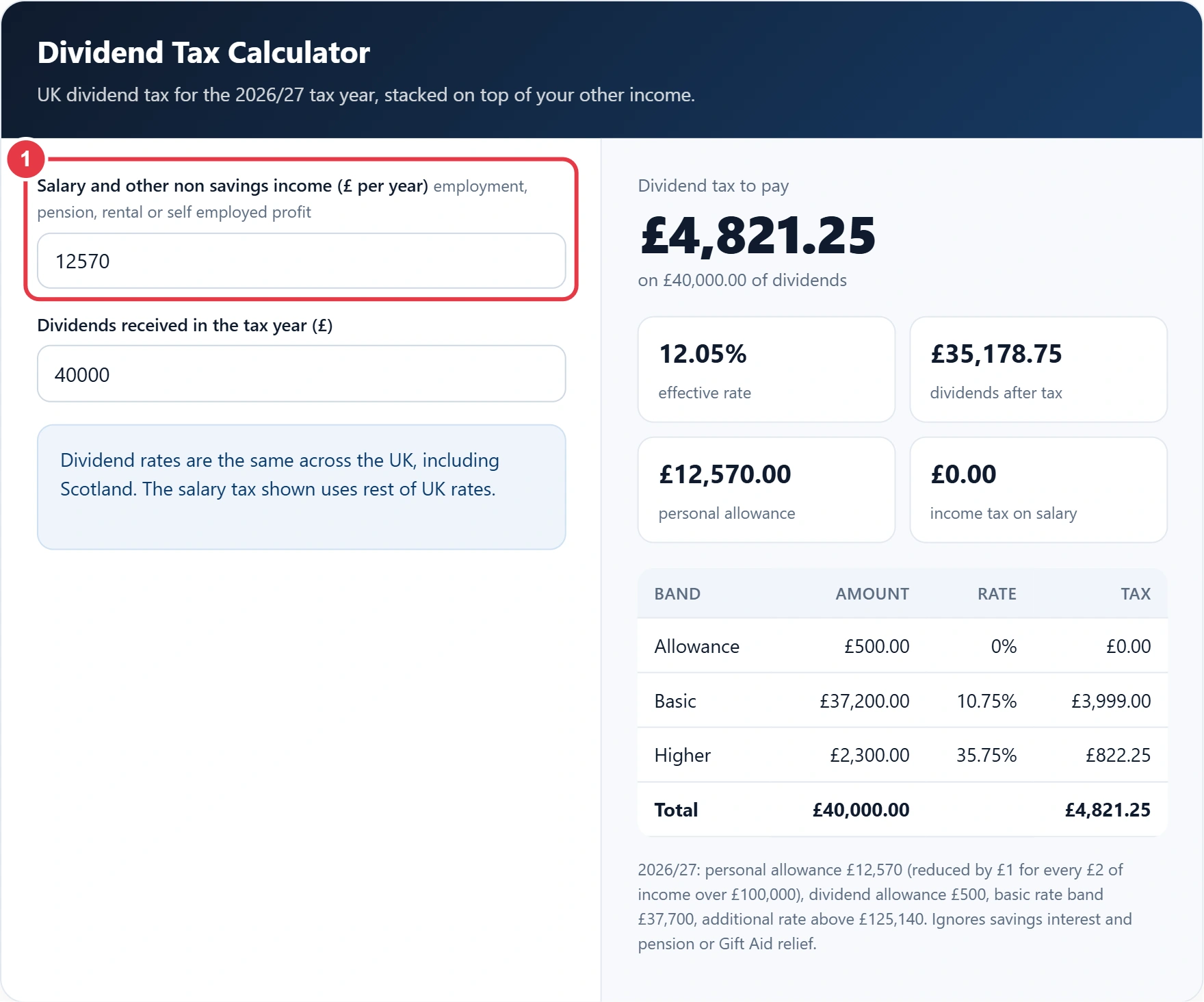
Step 1: Enter Your Other Income
Type your salary and any other non savings income for the tax year, such as pension or rental profit. Sole traders can get their profit figure from our self employed tax calculator before entering it here. Company directors often take a salary of £12,570, which uses the whole personal allowance.
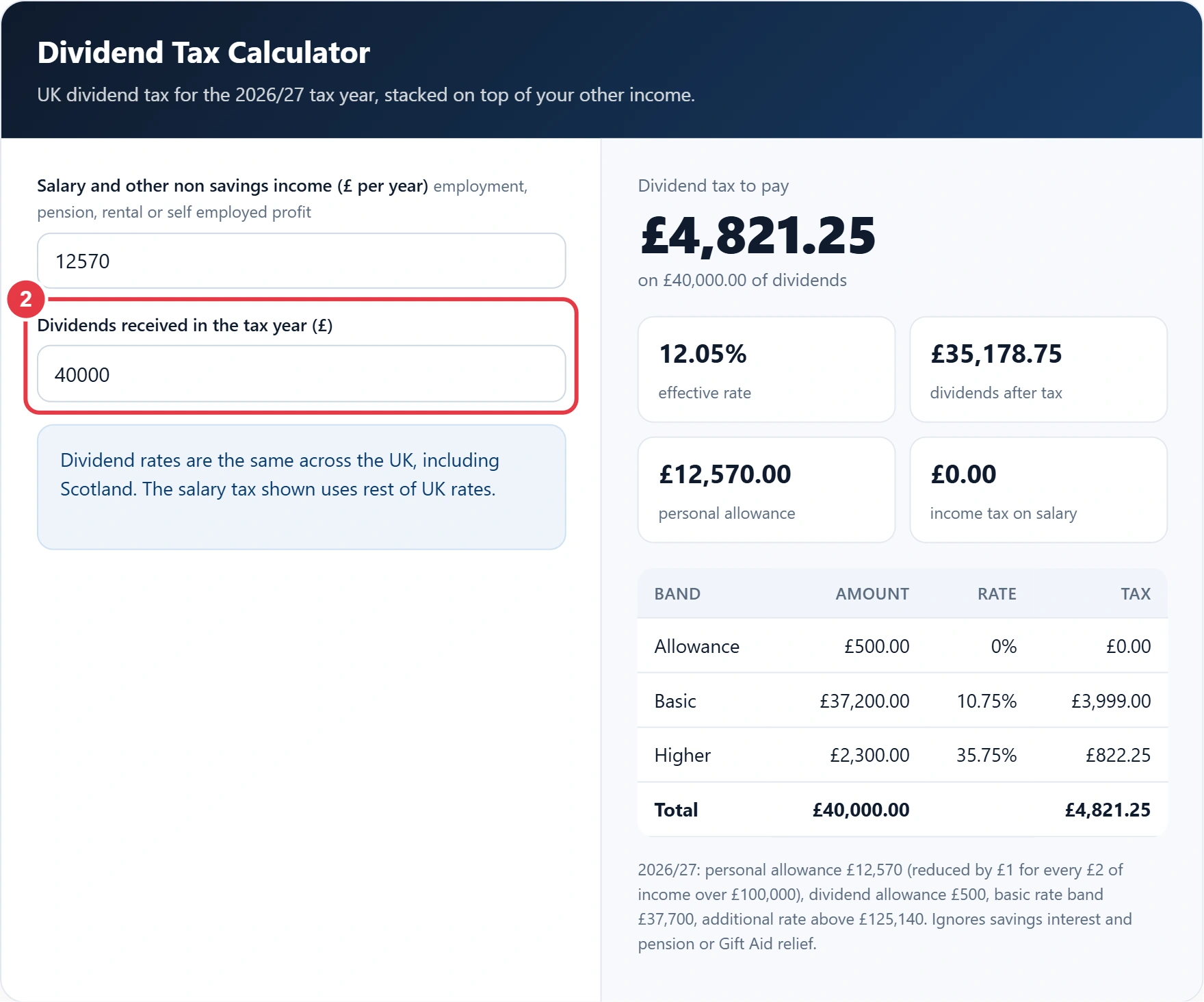
Step 2: Enter Your Dividends
Add the total dividends you received between 6 April 2026 and 5 April 2027. Interest from savings is taxed differently, so use the savings interest calculator for that, and leave out dividends from shares held in an ISA, as these are tax free.
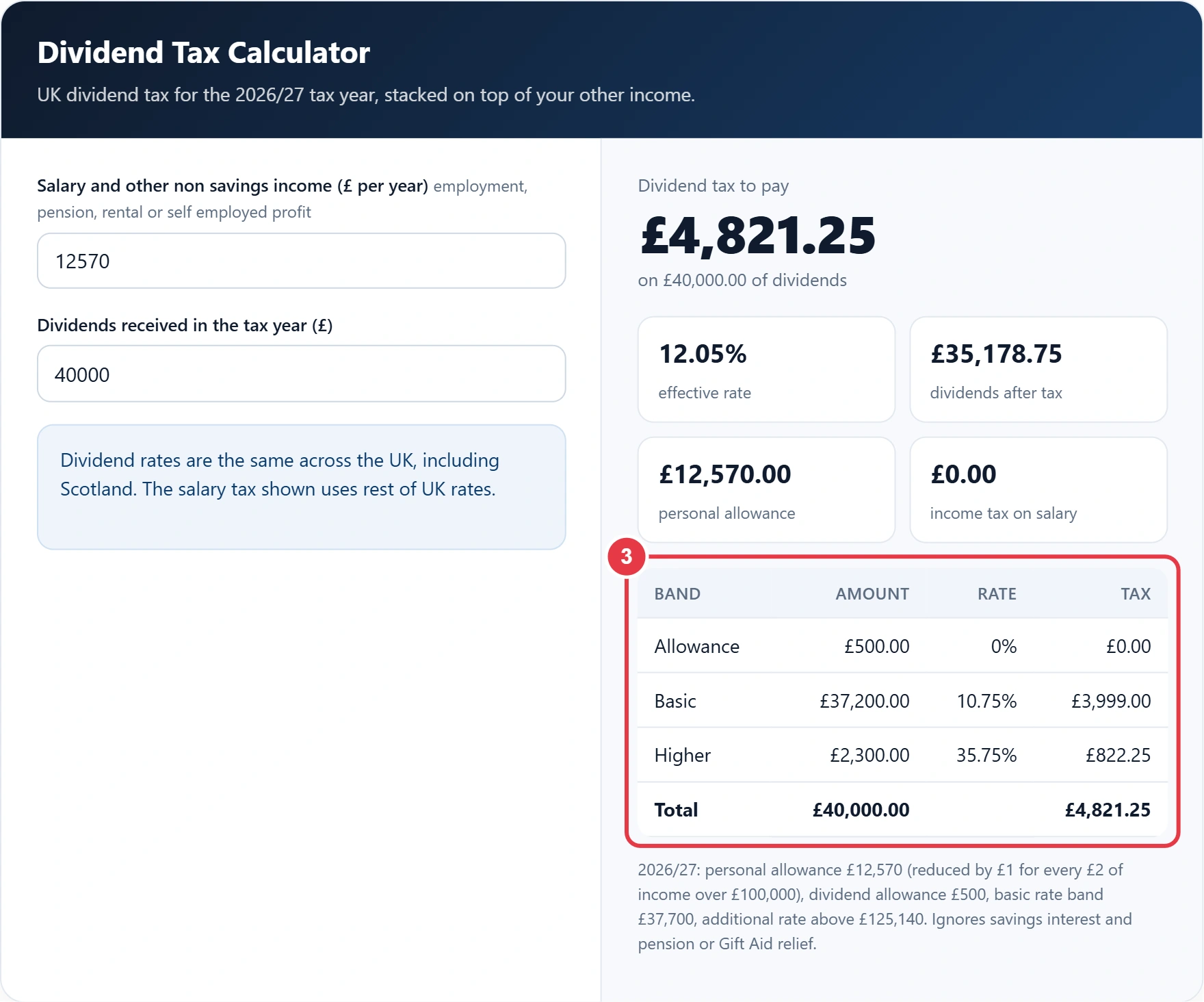
Step 3: Check the Band Breakdown
The table shows how much of your dividend income is covered by allowances and how much falls into each tax band, with the tax due on each slice.
Step 4: Read Your Results
You will see your dividend tax, the effective rate on your dividends, what you keep after tax, and the income tax on your salary for context.
Dividend Tax Rates 2026/27
| Band | Taxable income | Dividend rate |
|---|---|---|
| Dividend allowance | First £500 of dividends | 0% |
| Basic rate | £12,571 to £50,270 | 10.75% |
| Higher rate | £50,271 to £125,140 | 35.75% |
| Additional rate | Over £125,140 | 39.35% |
Dividend rates apply across the whole UK, including Scotland, even though Scottish salary is taxed at different rates. If your dividends are over £10,000 you must report them through Self Assessment, and the HMRC website explains how to register and pay. Below that limit you can usually ask HMRC to collect the tax through your tax code.
Frequently Asked Questions
What are the dividend tax rates for 2026/27?
Dividends are taxed at 10.75% in the basic rate band, 35.75% in the higher rate band and 39.35% in the additional rate band.
How much are dividends tax free in 2026/27?
The dividend allowance is £500. Dividends covered by any unused personal allowance are also tax free.
Does the dividend allowance use up my basic rate band?
Yes. The £500 is taxed at 0% but still counts towards your income, so it can push other dividends into a higher band.
Are dividend tax rates different in Scotland?
No. Dividend tax rates and bands are the same across the UK. Only non savings income such as salary uses Scottish rates.
Do I pay National Insurance on dividends?
No. Dividends are not subject to National Insurance, which is one reason company directors often take part of their pay as dividends.
When do I need to tell HMRC about dividends?
Tell HMRC if your dividends are over the £500 allowance. Above £10,000 you must file a Self Assessment tax return.