Sole trader income tax and Class 4 National Insurance for 2026/27.
England, Wales and Northern Ireland rates for 2026/27. Personal allowance £12,570 (tapered above £100,000), basic 20% to £50,270, higher 40% to £125,140, additional 45%. Class 4 NI 6% on profits £12,570 to £50,270 and 2% above. Voluntary Class 2 and student loans are not included.
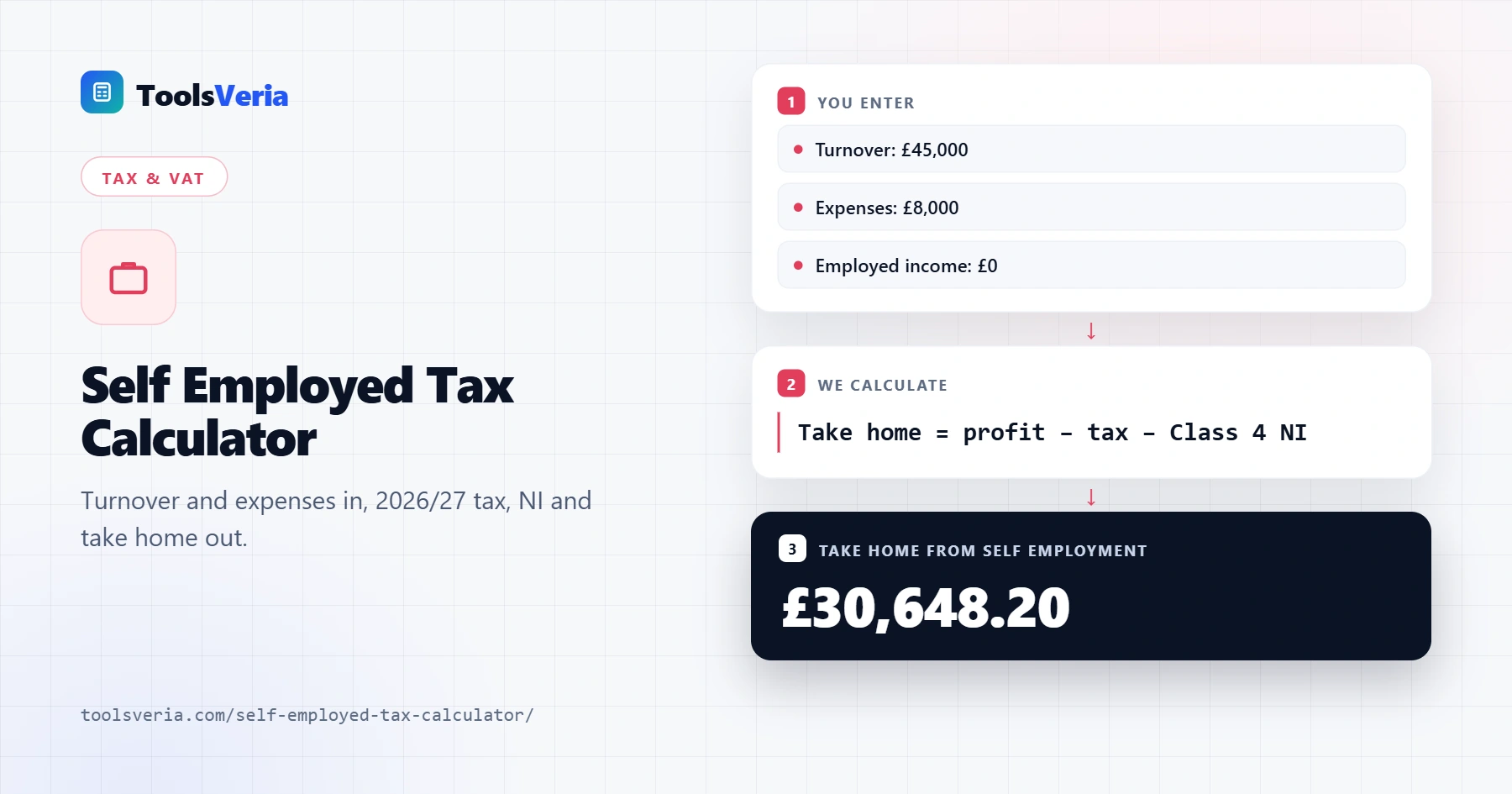
Working for yourself means setting aside money for your own tax bill. This self employed tax calculator uses the same allowances and bands that apply when you file a Self Assessment tax return, estimating the income tax and Class 4 National Insurance a UK sole trader pays for 2026/27 and then showing what you take home.
What Is Self Employed Tax?
As a sole trader you pay tax on your profit, not your turnover. Profit is your income from the business minus allowable expenses such as stock, tools, travel, phone and accountancy fees. If your expenses are small, you can deduct the £1,000 trading allowance instead.
Income tax is charged at 20%, 40% and 45% once your personal allowance of £12,570 is used up. You also pay Class 4 National Insurance of 6% on profits between £12,570 and £50,270, and 2% above that. On £37,000 of profit, that is £4,886 income tax plus £1,465.80 Class 4 NI. Class 2 NI is now voluntary at £3.65 a week.
How to Use the Self Employed Tax Calculator
Step 1: Enter Your Turnover
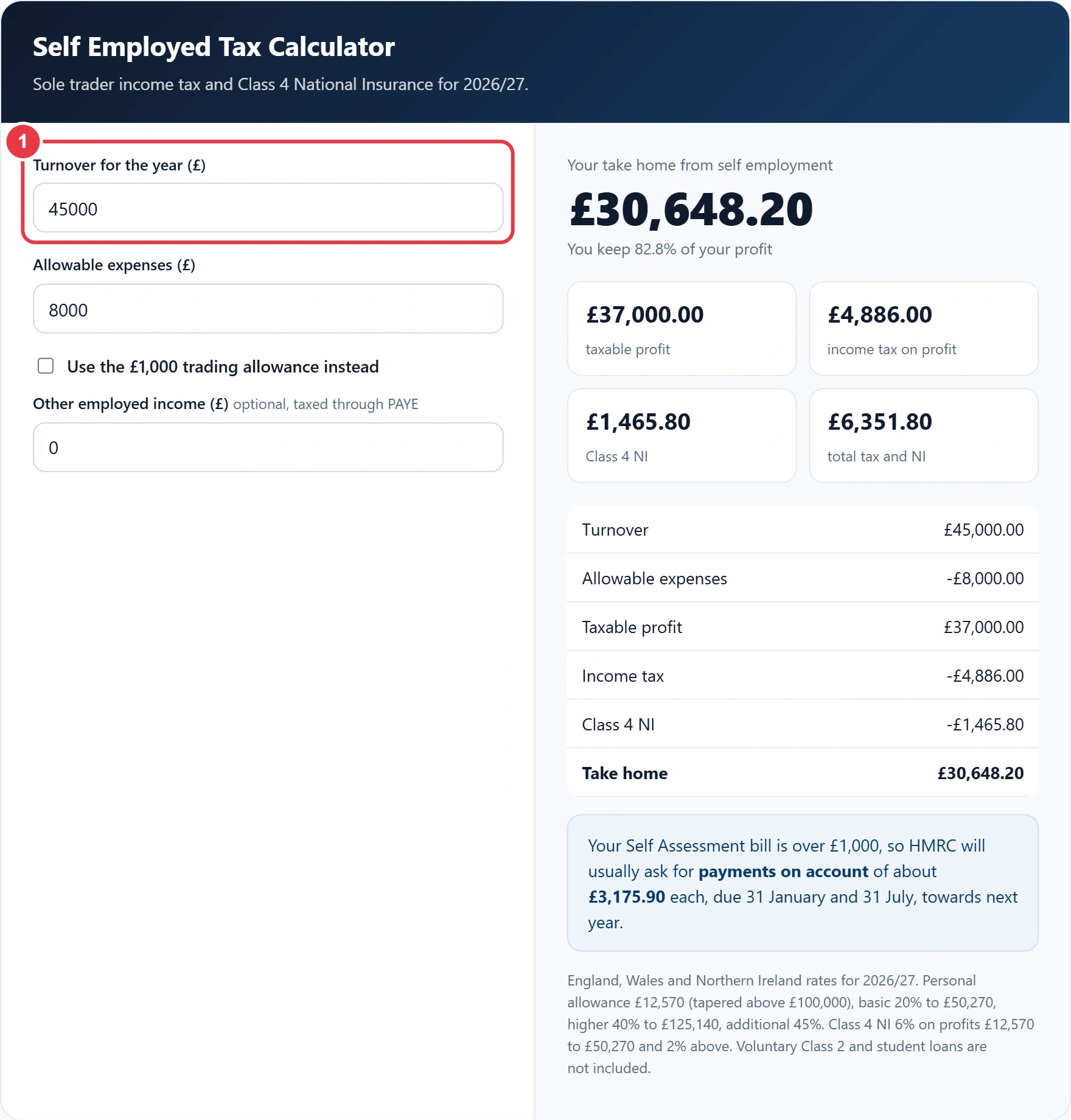
Type your total business income for the tax year, before any costs. This is everything your customers paid you.
Step 2: Enter Expenses or Use the Trading Allowance
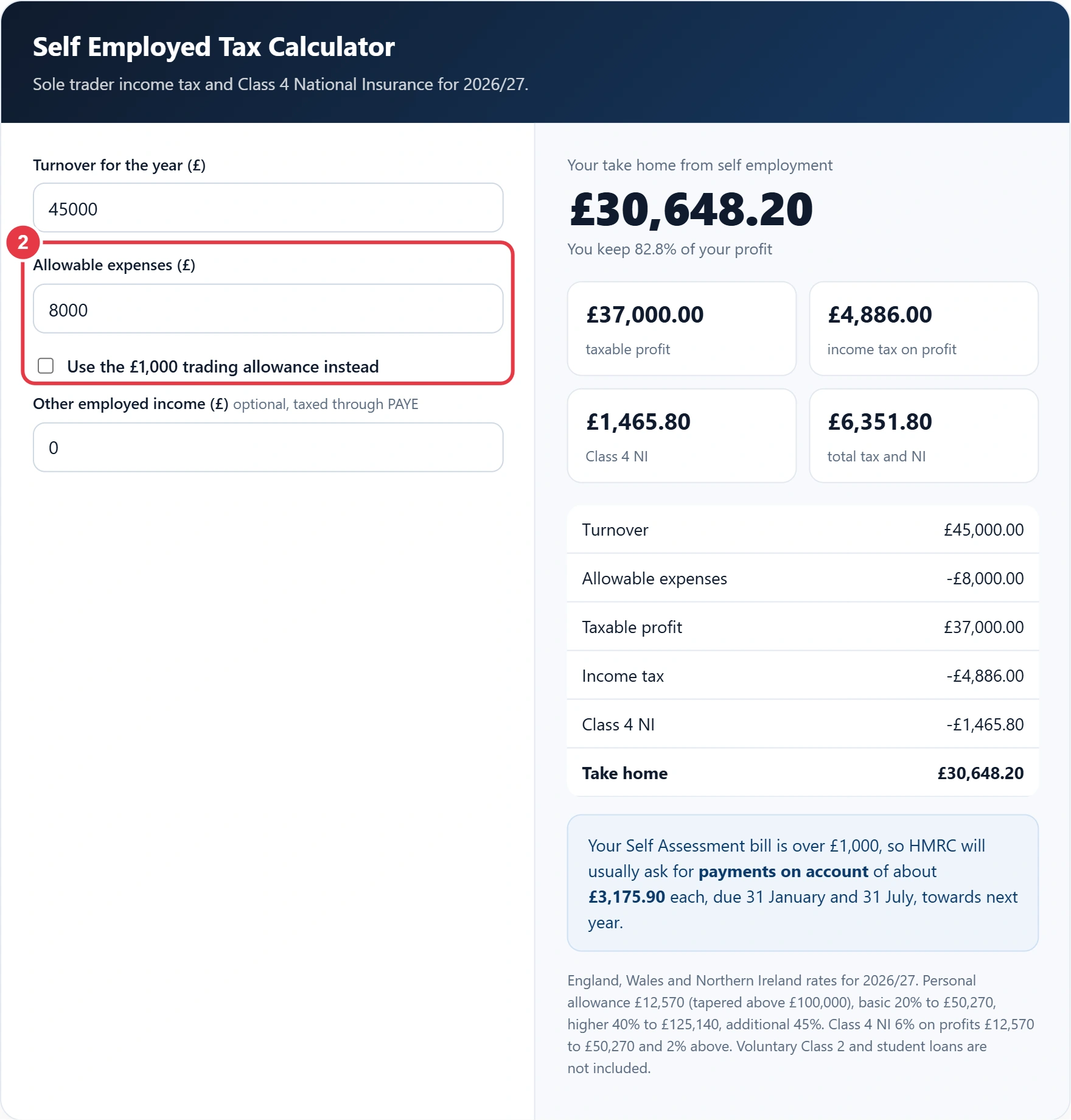
Add your allowable business expenses, including business travel, which the mileage allowance calculator can work out at HMRC's approved rates. If your expenses come to less than £1,000, tick the trading allowance box to deduct a flat £1,000 instead. You cannot claim both.
Step 3: Add Any Employed Income
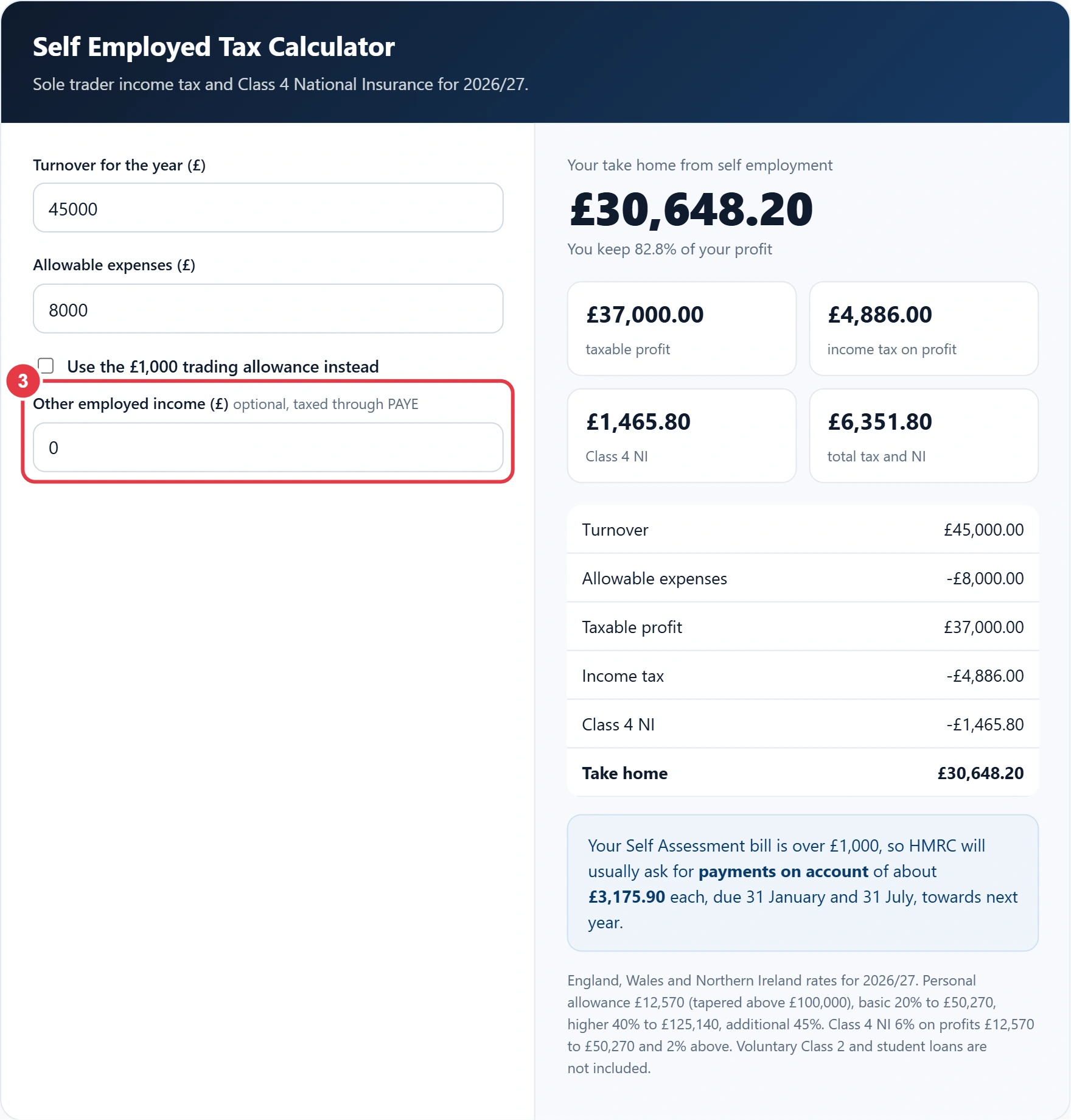
If you also have a job, enter your salary. It uses up your personal allowance first, so more of your profit is taxed. Dividends from a limited company follow different rates, so use the dividend tax calculator for those. The calculator shows only the extra tax due on your self employed profit.
Step 4: Read Your Results
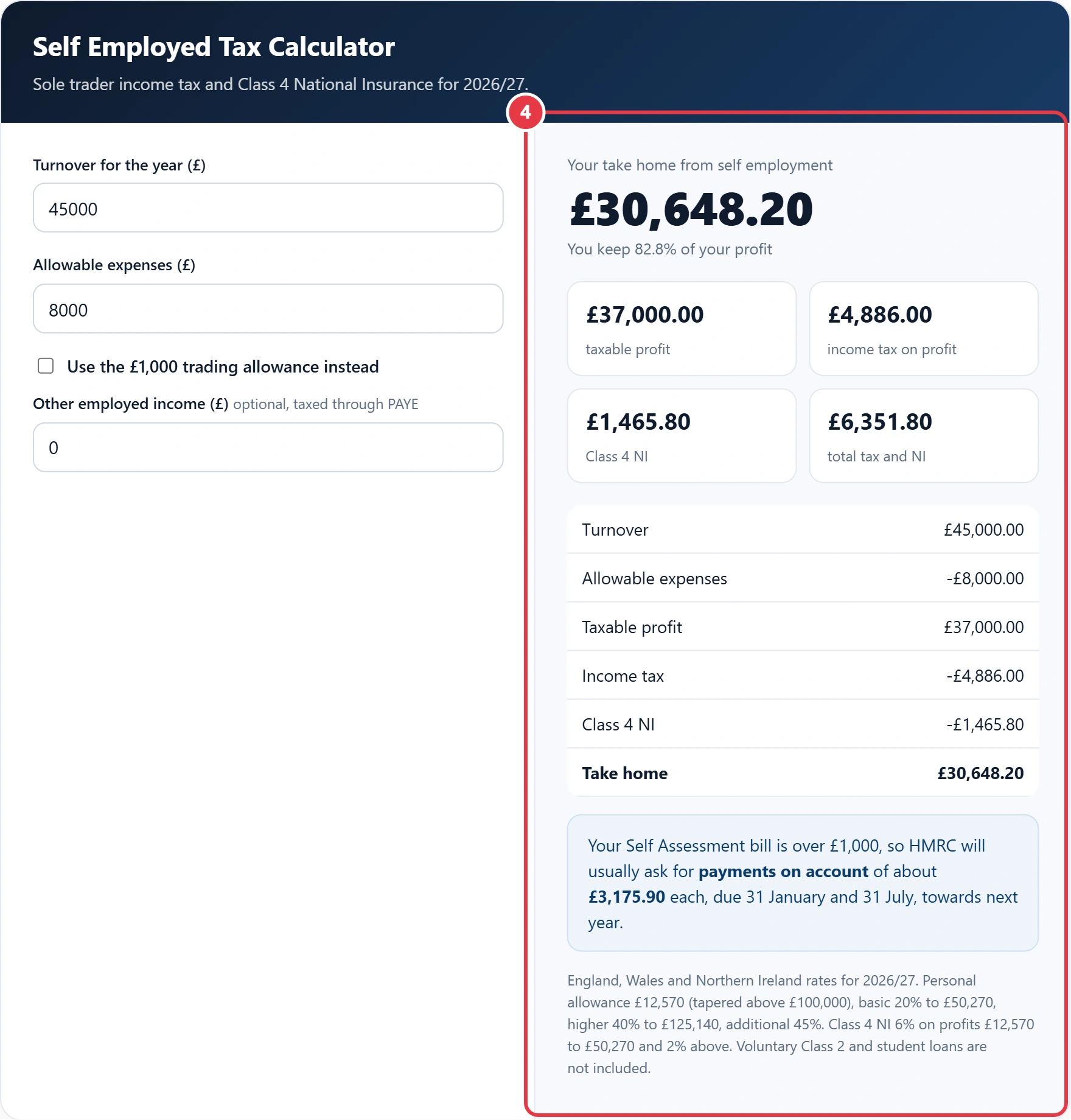
You will see your taxable profit, income tax, Class 4 NI, total bill and take home, plus a note on payments on account.
Self Employed Tax Examples for 2026/27
| Profit | Income tax | Class 4 NI | Take home |
|---|---|---|---|
| £20,000 | £1,486.00 | £445.80 | £18,068.20 |
| £37,000 | £4,886.00 | £1,465.80 | £30,648.20 |
| £60,000 | £11,432.00 | £2,456.60 | £46,111.40 |
If your bill is over £1,000, HMRC usually asks for two payments on account towards next year, each half of this year's bill. The official guidance on payments on account explains the deadlines and is worth reading to plan your cash flow, because in your first year that can mean paying 150% of the bill in January.
Frequently Asked Questions
How much tax do I pay as a sole trader?
You pay income tax at 20%, 40% or 45% on profit above your personal allowance, plus Class 4 NI at 6% on profits between £12,570 and £50,270 and 2% above.
Do I pay tax on turnover or profit?
On profit. Deduct allowable expenses, or the £1,000 trading allowance, from your turnover to find your taxable profit.
Do I still pay Class 2 National Insurance?
No. Class 2 is no longer compulsory. You can pay it voluntarily at £3.65 a week to protect your State Pension record if your profits are low.
What are payments on account?
If your Self Assessment bill is over £1,000, HMRC asks for two advance payments towards next year, due 31 January and 31 July, each half of your last bill.
How much should I save for tax when self employed?
A common rule is to set aside 25% to 30% of your profit. Use the calculator with your expected figures for a closer estimate.
When is the Self Assessment deadline?
Online returns and payment for the 2026/27 tax year are due by 31 January 2028.