Find your real fuel economy in UK mpg, plus L/100km and cost per mile.
Tip: fill the tank, reset your trip meter, then note the litres needed at the next fill up for the most accurate result.
The figure on the window sticker rarely matches real driving. This MPG calculator works out your actual fuel economy from the miles you drove and the fuel you used, in UK miles per gallon. It also converts the result to US mpg, litres per 100 km and km per litre, and the Energy Saving Trust efficient driving advice has simple ways to improve the figure once you know it. You also see your fuel cost per mile, so you can budget properly.
What Is MPG?
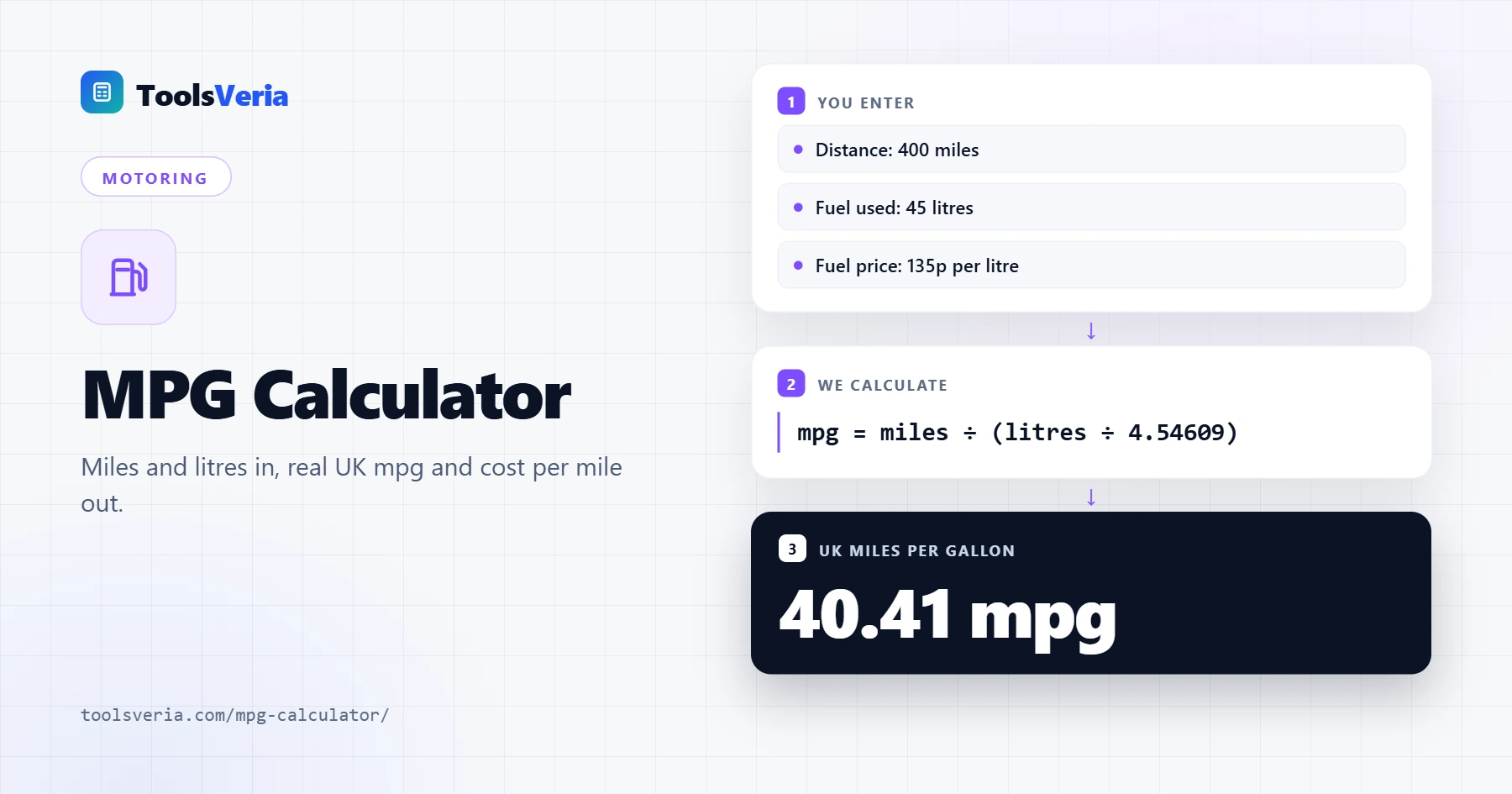
MPG means miles per gallon: how far a car travels on one gallon of fuel. In the UK a gallon is 4.54609 litres, which is about 20% bigger than the US gallon of 3.785 litres. That is why a UK mpg figure always looks higher than the US figure for the same car.
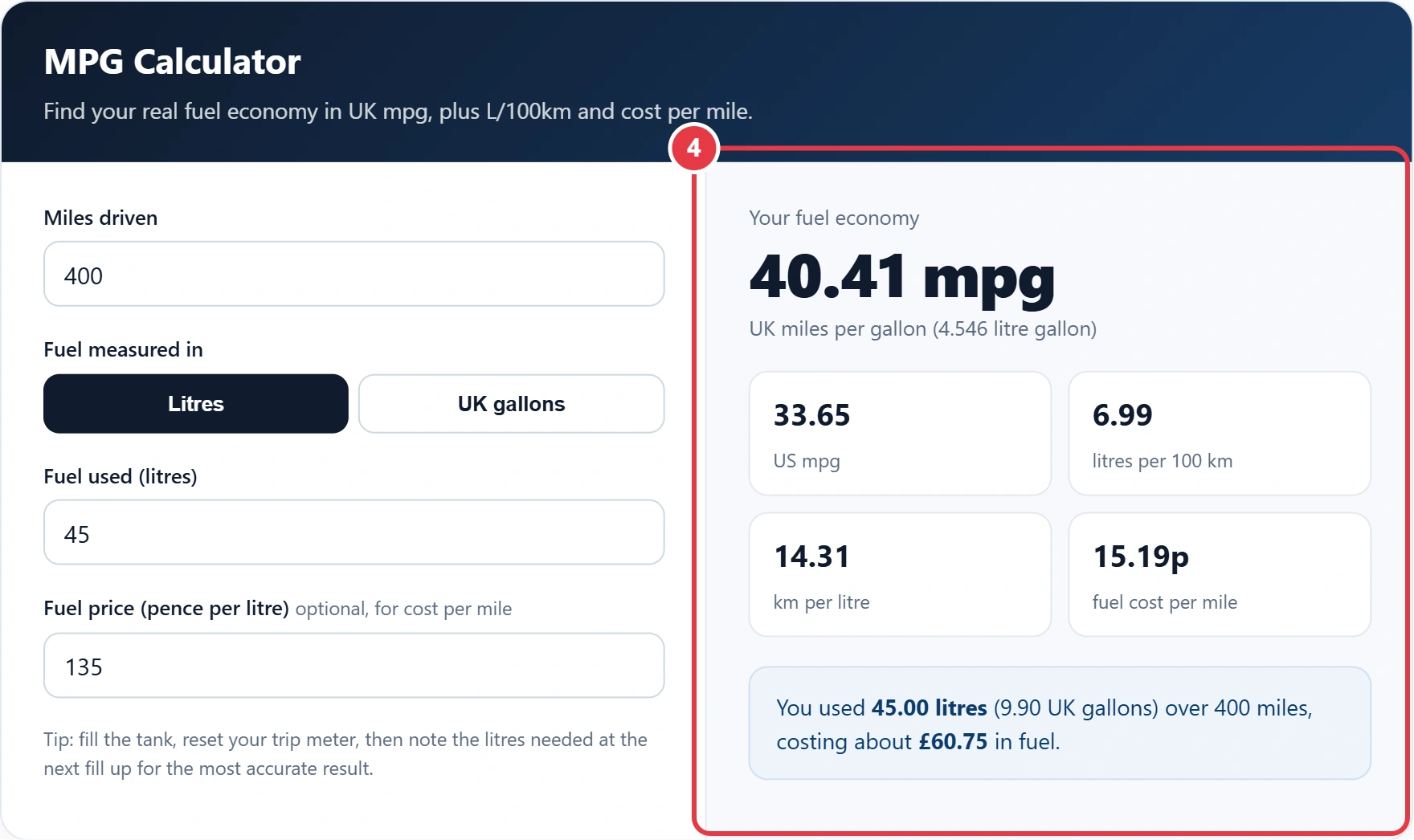
Because UK pumps sell fuel in litres, the formula is mpg = miles ÷ (litres ÷ 4.54609). Drive 400 miles on 45 litres and you have used 9.9 gallons, which gives 40.41 mpg. Cost per mile is simply litres × price per litre ÷ miles, so at 135p a litre that trip costs about 15.2p a mile.
How to Use the MPG Calculator
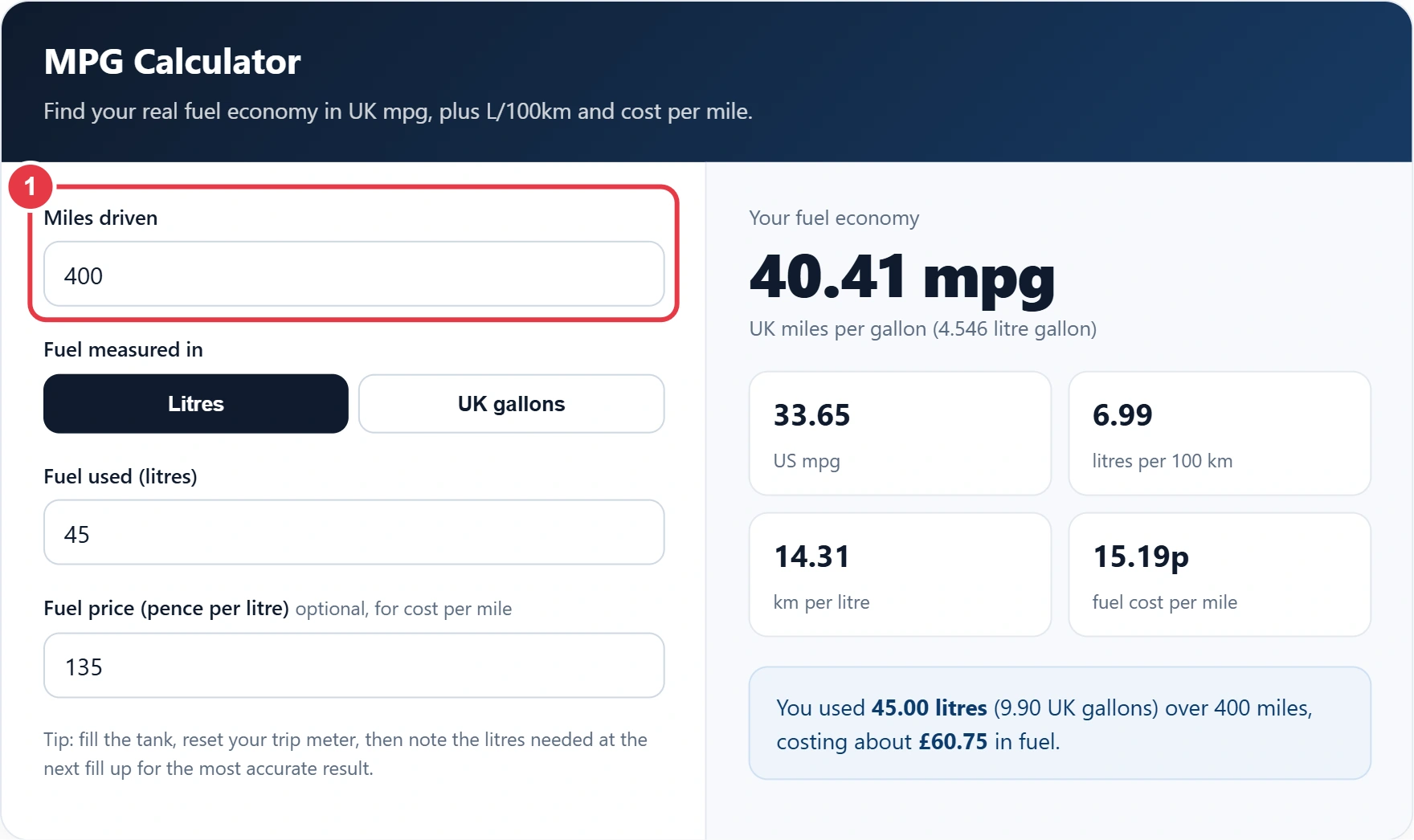
Step 1: Enter the Miles Driven
Reset your trip meter when you fill the tank, drive as normal, then type in the miles shown when you next fill up. A full tank or more gives a fairer average than a single short journey.
Step 2: Enter the Fuel Used
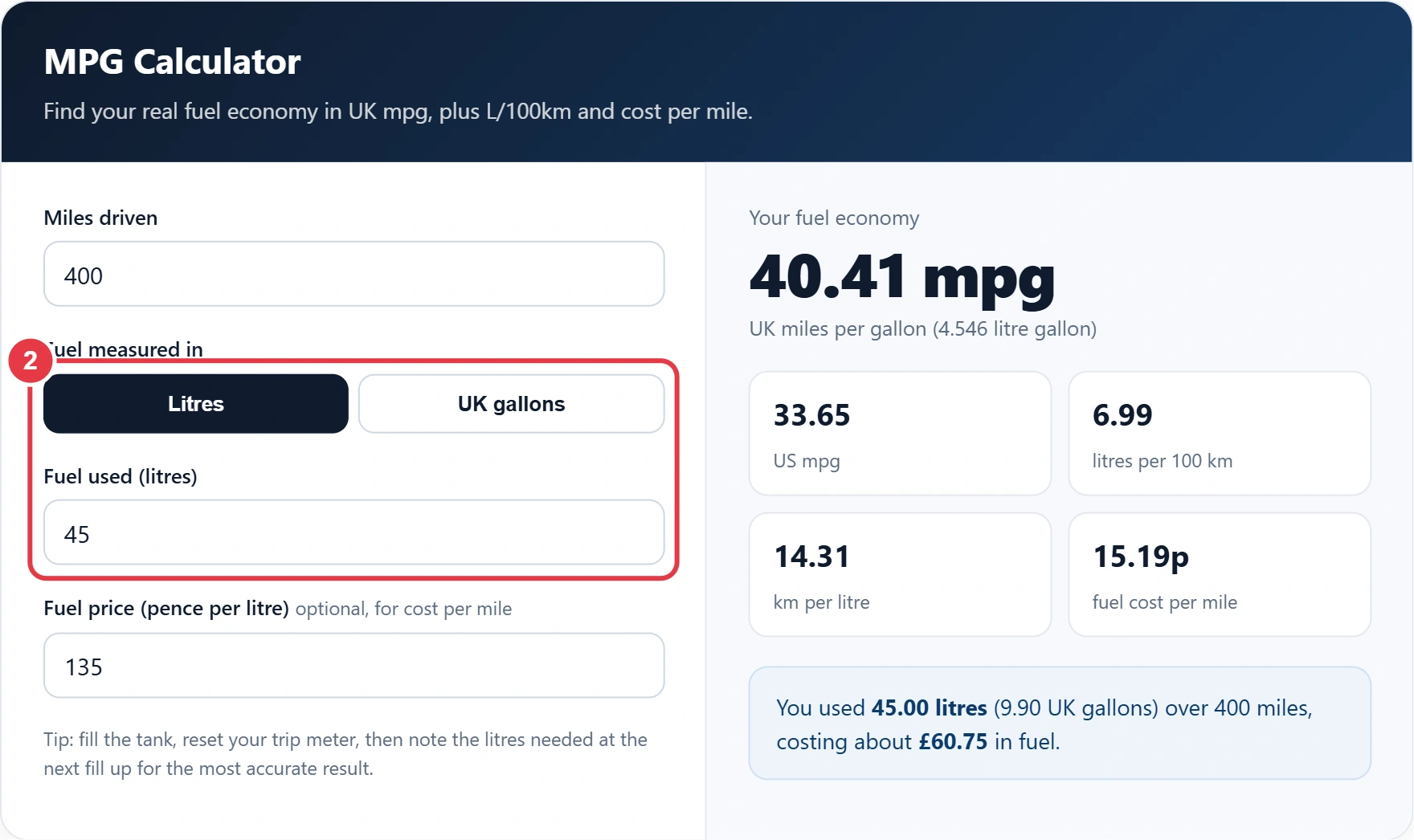
Choose litres or UK gallons, then enter how much fuel it took to fill the tank back up. Your pump receipt shows the exact litres.
Step 3: Add the Fuel Price
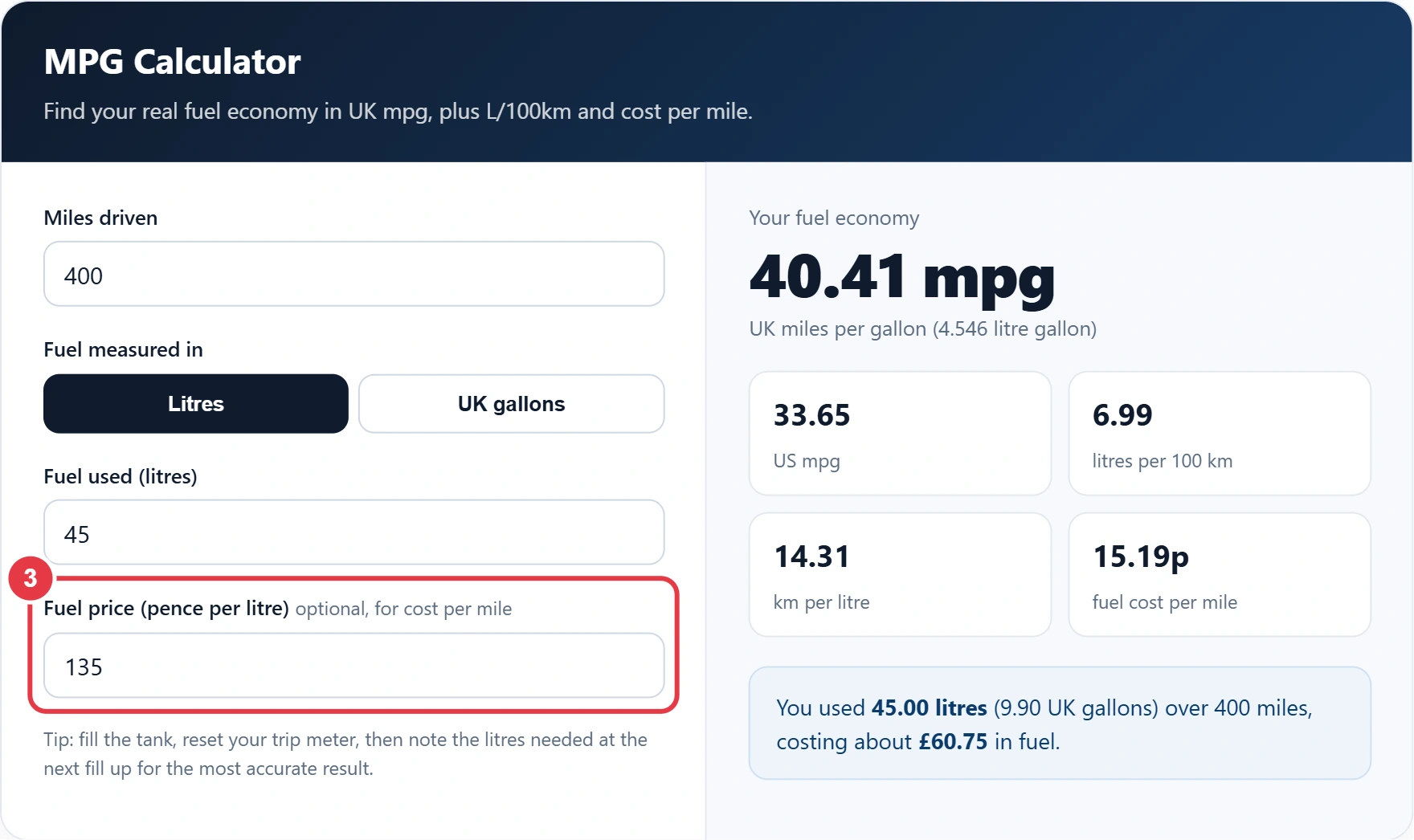
Enter the price you paid in pence per litre to see your cost per mile. This is optional, but it makes comparing cars, routes and driving styles much easier, and if you drive for work the mileage allowance calculator shows how HMRC approved rates compare with what your fuel really costs.
Step 4: Read Your Results
You will see your UK mpg, US mpg, L/100km, km per litre and fuel cost per mile, plus the total fuel cost of the distance you entered. If a European car review quotes litres per 100 km, the L/100km to mpg converter turns it into UK mpg so you can compare like for like with your own result.
Tips to Improve Your MPG
- Check tyre pressures monthly, as under inflated tyres add rolling resistance.
- Accelerate smoothly and change up a gear early.
- Ease off on the motorway: fuel use rises quickly above 60 mph.
- Remove roof boxes and racks when you are not using them.
- Use air conditioning sparingly at low speeds.
Official figures come from laboratory tests, so most drivers see somewhat lower real world economy. You can read how the WLTP test procedure measures fuel use, then compare it with your own result from this calculator.
Frequently Asked Questions
How do I calculate mpg in the UK?
Divide the miles driven by the litres used, then multiply by 4.54609. For example, 400 miles on 45 litres is 400 ÷ 45 × 4.54609 = 40.41 mpg.
Why is UK mpg higher than US mpg?
A UK gallon holds 4.546 litres and a US gallon 3.785 litres. The same car travels further on the bigger UK gallon, so its UK mpg is about 20% higher.
What is a good mpg for a car?
For a modern petrol family car, 45 to 55 mpg is good. Small diesels and hybrids can reach 60 mpg or more in real driving.
How do I convert mpg to L/100km?
Divide 282.481 by the UK mpg figure. So 40 mpg is about 7.06 litres per 100 km.
How do I work out fuel cost per mile?
Multiply the litres used by the price per litre, then divide by the miles driven. At 135p a litre and 40 mpg, fuel costs about 15p a mile.
Is the dashboard mpg reading accurate?
Trip computers are often a few percent optimistic. Brimming the tank and using the pump litres gives a more reliable figure.