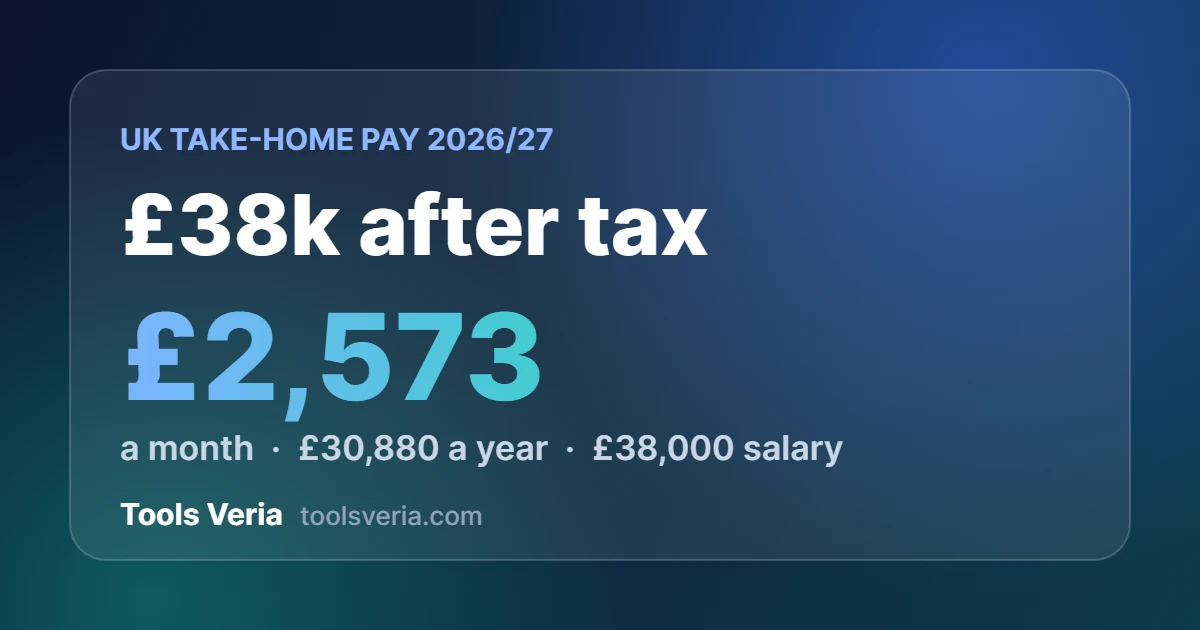
£38k after tax (a £38,000 salary) is £30,880 a year, or £2,573 a month, in England, Wales and Northern Ireland for 2026/27. You pay £5,086 in Income Tax and £2,034 in National Insurance, an effective rate of 18.7%. In Scotland you take home £30,835.
In This Guide
£38k after tax: full breakdown of a £38,000 salary
For an employee on tax code 1257L with no pension, student loan or other deductions.
| Year | Month | Week | |
|---|---|---|---|
| Gross salary | £38,000 | £3,167 | £731 |
| Tax-free Personal Allowance | £12,570 | £1,048 | £242 |
| Income Tax at 20% | £5,086 | £424 | £98 |
| National Insurance | £2,034 | £170 | £39 |
| Take-home pay | £30,880 | £2,573 | £594 |
The first £12,570 is your tax-free Personal Allowance, and the remaining £25,430 is taxed at the 20% basic rate. You pay no higher rate tax at this salary.
Adjust for your pension, student loan and location
Change the options to see your own take-home pay on £38,000.
£38k after tax in Scotland compared with the rest of the UK
A Scottish taxpayer on £38,000 takes home £45 less a year, or £4 less a month, because Scotland charges 21% from £29,527 and 42% from £43,663, compared with 20% and 40% in the rest of the UK.
| Rest of UK | Scotland | |
|---|---|---|
| Income Tax | £5,086 | £5,131 |
| National Insurance | £2,034 | £2,034 |
| Take-home a year | £30,880 | £30,835 |
| Take-home a month | £2,573 | £2,570 |
£38k after tax with a student loan
Student loan repayments are 9% of earnings above your plan threshold, or 6% for a Postgraduate Loan.
| Plan | Threshold | Repayment a year | Take-home a month |
|---|---|---|---|
| Plan 1 | £26,900 | £999 | £2,490 |
| Plan 2 | £29,385 | £775 | £2,509 |
| Plan 4 (Scotland) | £33,795 | £378 | £2,542 |
| Plan 5 | £25,000 | £1,170 | £2,476 |
| Postgraduate Loan | £21,000 | £1,020 | £2,488 |
What £38k after tax really means
- Before tax, £38,000 is £3,167 a month, £731 a week and £19.49 an hour on a 37.5 hour week.
- That is £62 a month less than a full-time worker on the UK median salary of £39,039, who takes home £2,636 a month.
- A full-time worker on the £12.71 National Living Wage earns £24,785, so £38,000 is £13,215 a year more before tax.
- From a £1,000 pay rise you would keep £720 in the rest of the UK and £710 in Scotland.
- With a 5% pension paid before tax, your take-home falls to £29,360 a year (£2,447 a month), but £1,900 goes into your pension pot.
£38k after tax by pay period
How £38k after tax breaks down for the way you are paid. Four-weekly pay gives 13 pay days a year, so each one is smaller than a calendar month.
| Pay period | Take-home |
|---|---|
| A year | £30,880 |
| A month | £2,573 |
| Every four weeks | £2,375 |
| A fortnight | £1,188 |
| A week | £594 |
| A working day (260 days) | £119 |
| An hour (37.5 hour week) | £15.84 |
A monthly budget on £38k after tax
The 50/30/20 rule is a simple starting point: half of your take-home pay for needs, 30% for wants and 20% for savings or paying off debt. On £38k after tax of £2,573 a month that looks like this:
| Share | A month |
|---|---|
| Needs: rent or mortgage, bills, food, travel (50%) | £1,287 |
| Wants: eating out, holidays, subscriptions (30%) | £772 |
| Savings and debt repayments (20%) | £515 |
Housing costs vary widely across the UK, so treat this as a guide and adjust the split to suit where you live.
Ways to keep more of £38k after tax
- Pay into your pension through salary sacrifice. If your employer offers it, salary sacrifice cuts both Income Tax and National Insurance, so every £100 you put in costs you less than £100 of £38k after tax.
- Claim Marriage Allowance. If your spouse or civil partner earns under £12,570, they can transfer £1,260 of their Personal Allowance to you. On £38,000 that cuts your tax by up to £252 a year.
- Check your tax code. Most employees on £38,000 should be on 1257L. An emergency code or an old benefit in kind on your code can quietly reduce your take-home pay.
- Claim work expenses. Uniform, tool and professional subscription costs can qualify for tax relief, which adds a little back to £38k after tax.
Why your payslip may show a different figure
- Tax code: an emergency code such as 1257L W1 or M1, or a K code, changes how much tax is taken each month.
- Pension and salary sacrifice: workplace pensions are often worked out on qualifying earnings, not your full salary.
- Benefits and overtime: company cars, medical cover, bonuses and overtime all change your taxable pay.
- Pay frequency: weekly and four-weekly pay periods round tax and National Insurance slightly differently from a yearly figure.
Take-home pay on nearby salaries
| Salary | Year | Month | Month (Scotland) |
|---|---|---|---|
| £32,000 | £26,560 | £2,213 | £2,215 |
| £33,000 | £27,280 | £2,273 | £2,274 |
| £35,000 | £28,720 | £2,393 | £2,392 |
| £36,000 | £29,440 | £2,453 | £2,451 |
| £40,000 | £32,320 | £2,693 | £2,688 |
| £42,000 | £33,760 | £2,813 | £2,806 |
Compare £38k after tax with nearby salaries above, or see every salary from £15,000 to £150,000 in our UK Take-Home Pay Report 2026/27.
Frequently asked questions
How much is £38k after tax?
£38,000 a year leaves £30,880 after Income Tax and National Insurance in England, Wales and Northern Ireland in 2026/27. That is £2,573 a month or £594 a week, assuming tax code 1257L and no pension or student loan.
How much is £38,000 a month after tax?
Your monthly take-home pay on £38,000 is £2,573. With a 5% workplace pension under a net pay arrangement it falls to about £2,447. In Scotland the figure without a pension is £2,570 a month.
What is £38,000 an hour?
On a 37.5 hour week for 52 weeks, £38,000 works out at £19.49 an hour before tax. After tax and National Insurance it is about £15.84 an hour.
How much student loan do I repay on £38,000?
On Plan 2 you repay 9% of earnings above £29,385, which is £775 a year or £65 a month on £38,000. Plan 1 starts at £26,900, Plan 5 at £25,000 and the Postgraduate Loan at £21,000.
Related calculators and sources
Figures use HMRC rates and thresholds for 2026/27 and the Scottish Government bands. Sources: GOV.UK rates and thresholds for employers 2026 to 2027 and GOV.UK Income Tax in Scotland. Results are estimates and not financial advice.