Work out the tax relief on your pension contributions for 2026/27.
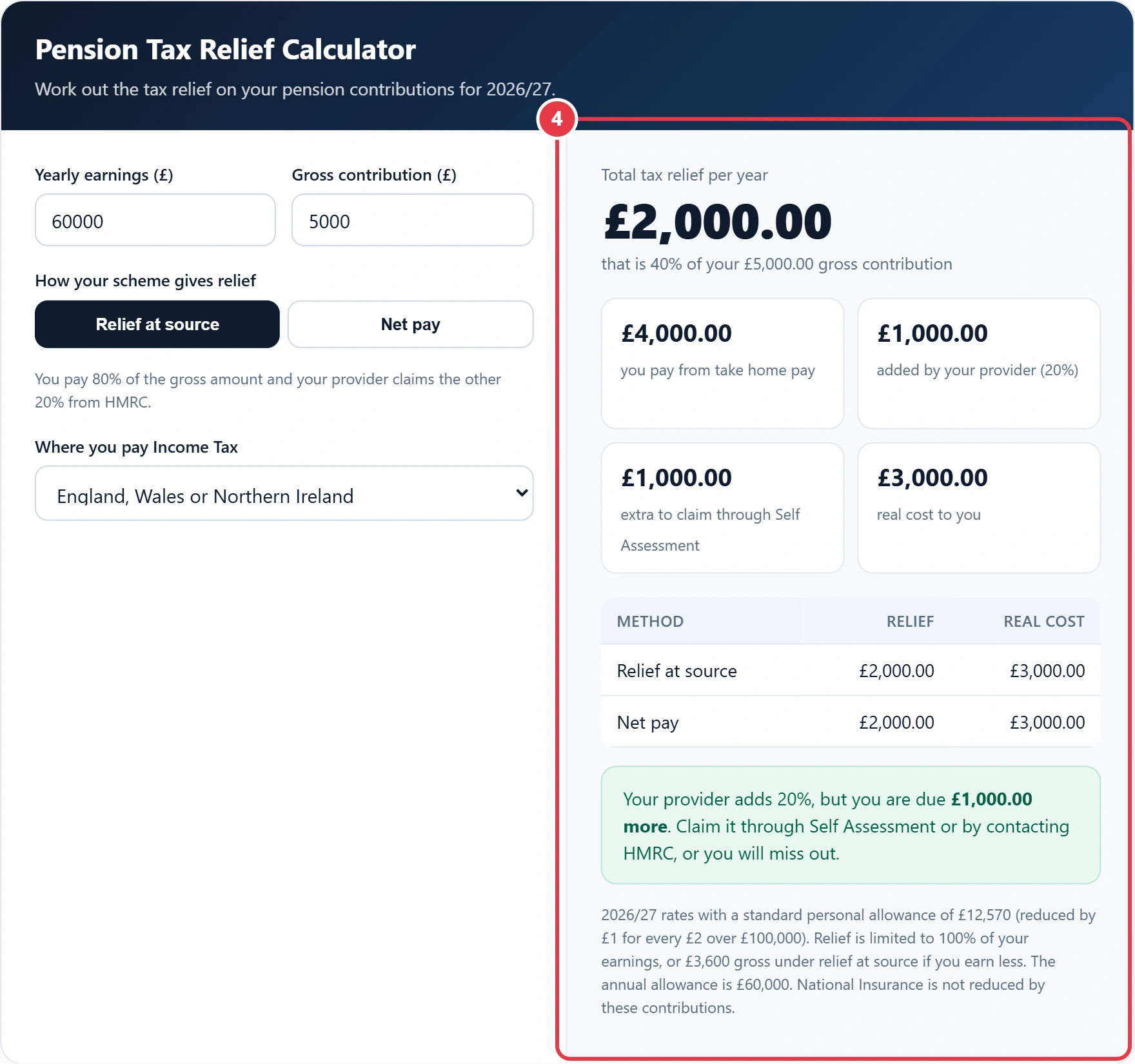
| Method | Relief | Real cost |
|---|
2026/27 rates with a standard personal allowance of £12,570 (reduced by £1 for every £2 over £100,000). Relief is limited to 100% of your earnings, or £3,600 gross under relief at source if you earn less. The annual allowance is £60,000. National Insurance is not reduced by these contributions.
The government tops up what you save into a pension through tax relief, but how you receive it depends on your scheme and your tax rate. This pension tax relief calculator works out your relief for 2026/27 under the rules on the GOV.UK pension tax relief page, shows how much you could claim back yourself and compares relief at source with net pay.
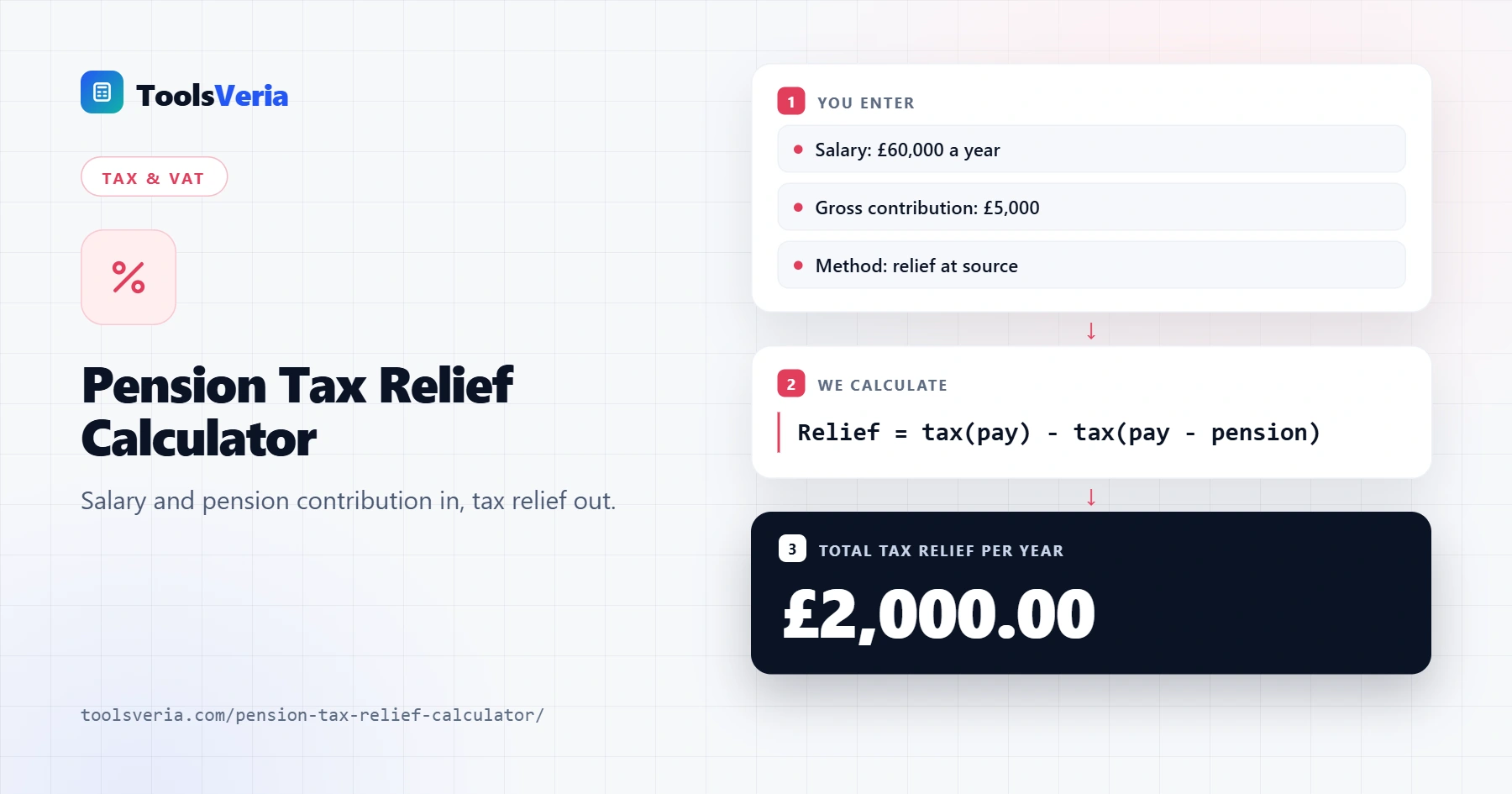
Quick answer: A pension tax relief calculator for 2026/27 shows that under relief at source you pay £80 and your provider claims £20, so £100 goes in. Higher and additional rate taxpayers claim an extra 20% or 25% through Self Assessment. On £60,000 earnings, a £5,000 gross contribution gets £2,000 of relief, or £2,100 in Scotland.
In This Guide
What Is Pension Tax Relief?
Pension tax relief means the money you pay into a pension comes out of income before Income Tax, up to 100% of your earnings. Under relief at source you pay £80 and your provider claims £20 from HMRC, so £100 goes in. Higher and additional rate taxpayers then claim an extra 20% or 25% through Self Assessment. Under net pay your employer takes the full contribution before tax, so all relief arrives automatically in your payslip.
The calculator uses relief = tax on earnings minus tax on (earnings minus contribution). On £60,000 with a £5,000 gross contribution, the whole £5,000 sits in the 40% band, so relief is £2,000. Under relief at source that is £1,000 from your provider plus £1,000 to claim. In Scotland the same example gives £2,100, because the higher rate is 42%.
How Do You Use the Pension Tax Relief Calculator?
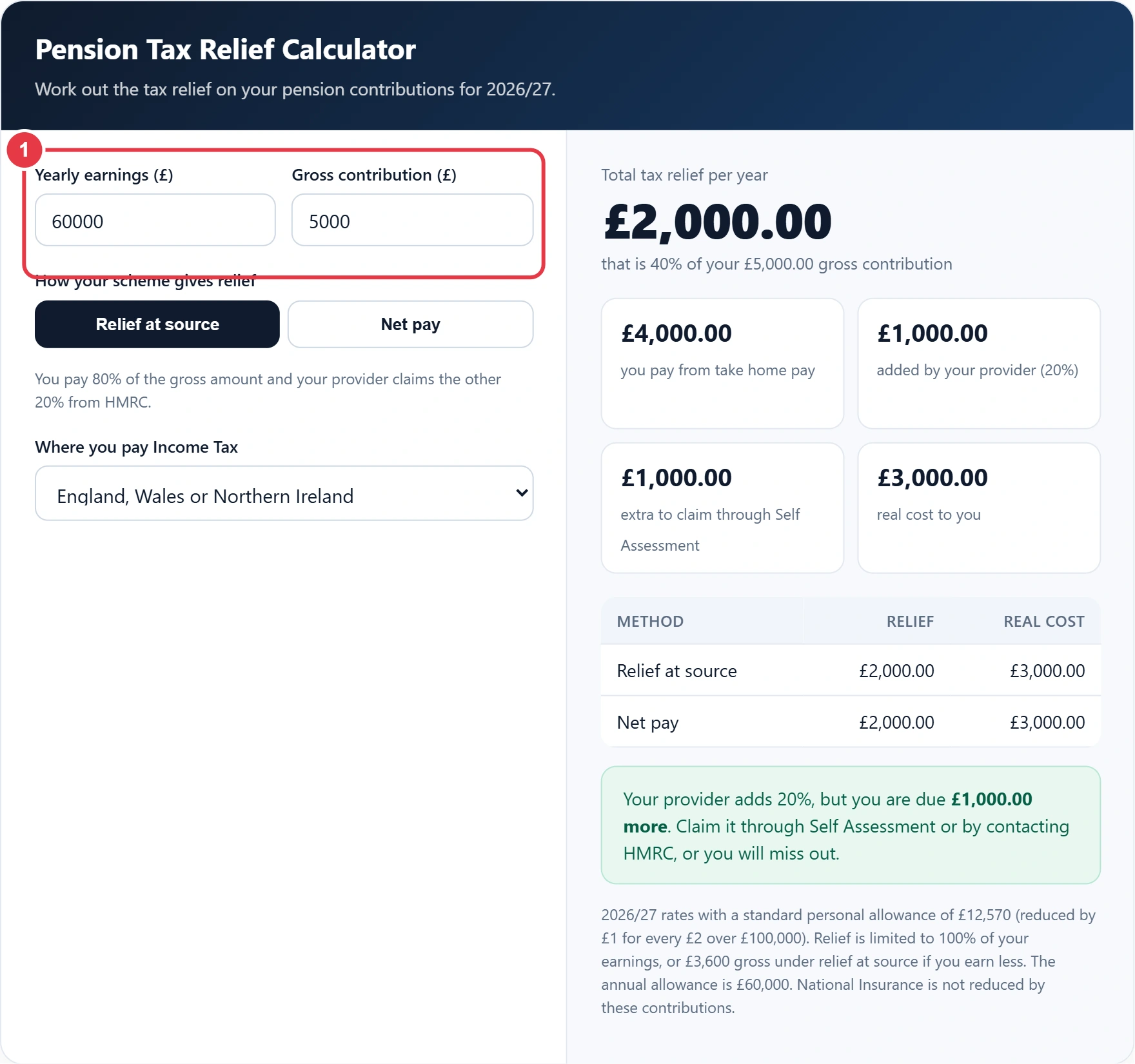
Step 1: Enter Earnings and Contribution
You type in your yearly earnings and the gross amount going into your pension, including the 20% top up under relief at source. Type your yearly earnings and the gross amount going into your pension, including the 20% top up under relief at source. If you sacrifice salary instead, the relief works differently and your NI also falls.
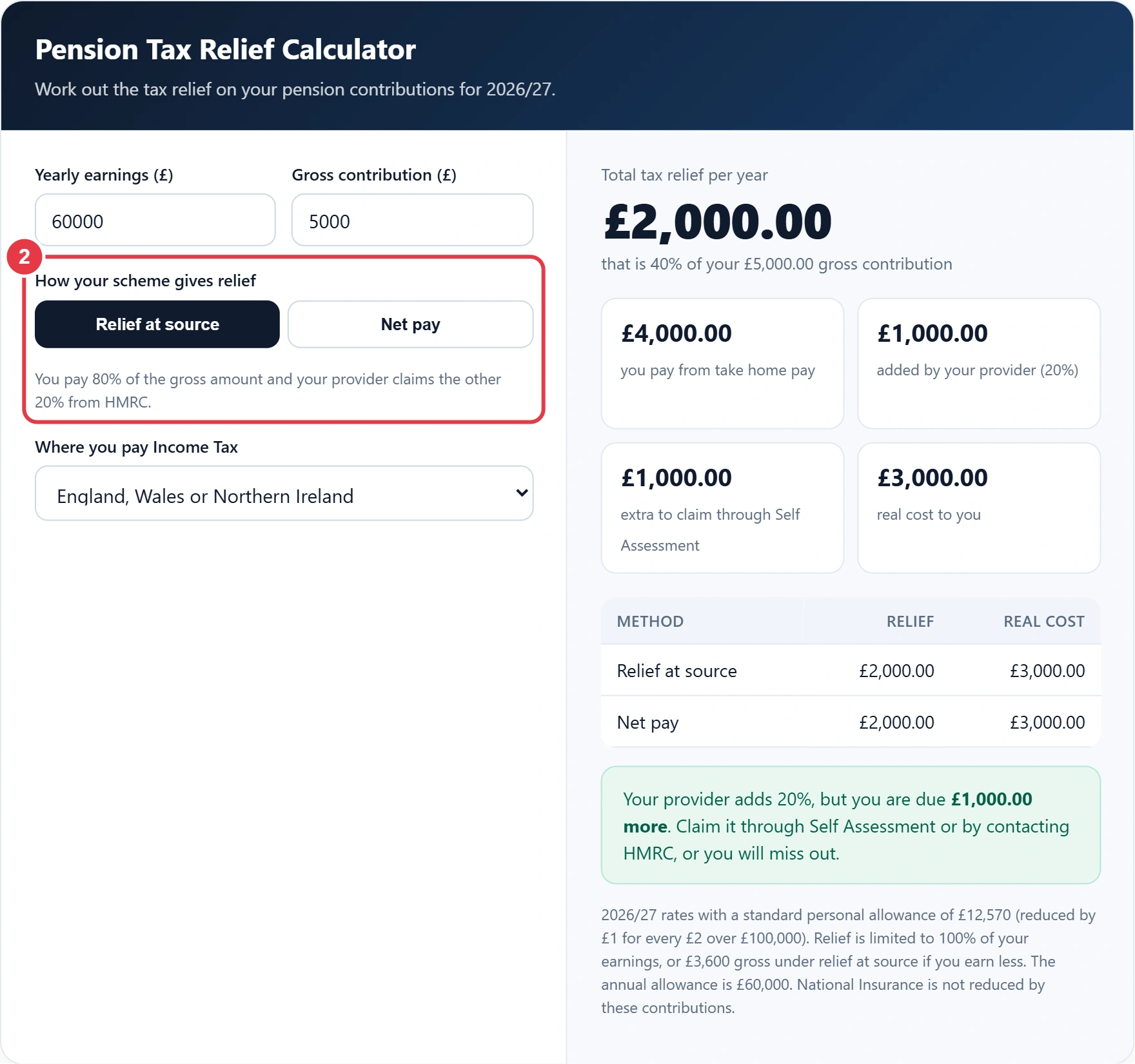
Step 2: Choose the Relief Method
Personal pensions, SIPPs and many workplace schemes use relief at source. Many occupational schemes use net pay. Your payslip or scheme guide will say which applies to you.
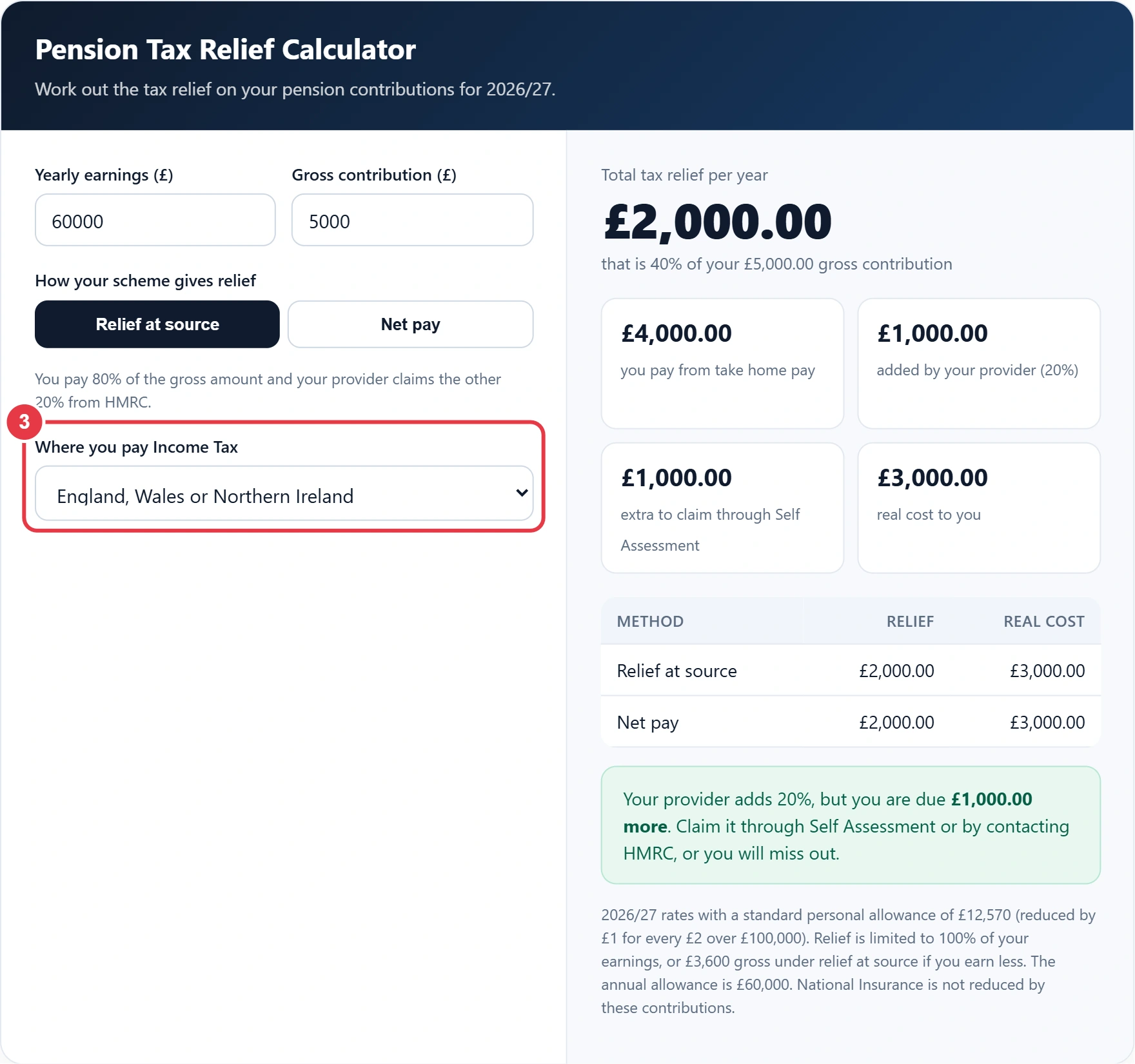
Step 3: Choose Your Tax Region
Pick Scotland if you pay Scottish Income Tax. The rates there run from 19% to 48%, so the extra relief you claim can be 1%, 22%, 25% or 28% on top of the 20% added by your provider.
Step 4: Read Your Results
You will see the total relief, what you pay, what your provider adds, the extra to claim and the real cost. To see what the extra money could become by retirement, the compound interest calculator projects regular contributions over time, and the self employed tax calculator helps if you also have business profits to plan for.
What Are the Pension Tax Relief Rates for 2026/27?
| Your top tax rate | Added by provider | Extra to claim | Cost of £100 in your pension |
|---|---|---|---|
| Basic rate 20% | 20% | None | £80 |
| Higher rate 40% | 20% | 20% | £60 |
| Additional rate 45% | 20% | 25% | £55 |
| Scottish higher rate 42% | 20% | 22% | £58 |
Your provider adds 20% relief, and higher rate taxpayers claim a further 20% and additional rate taxpayers 25%, so £100 in your pension costs £80, £60 or £55. Scottish starter rate taxpayers still get the full 20% from their provider. Relief is available on contributions up to the £60,000 annual allowance, although it is lower if your income is very high or you have already drawn money flexibly from a pension.
</>Embed this calculator on your website
Add the free Pension Tax Relief Calculator to your own site or blog. Copy the code below and paste it into an HTML block. It resizes itself and works on phones.
How we checked this tool: the Tools Veria Editorial Team built this tool by hand, checked it against the official rules or published standards where they apply, and tested it against worked examples. Results are estimates for planning, not personal financial or tax advice. Read our editorial policy and disclaimer, or report an error.
Frequently Asked Questions
How much tax relief do I get on pension contributions?
You get relief at your highest rate of Income Tax: 20%, 40% or 45% in England, Wales and Northern Ireland, and up to 48% in Scotland.
How do higher rate taxpayers claim pension tax relief?
Under relief at source your provider adds 20% and you claim the extra 20% through Self Assessment or by contacting HMRC. Under net pay it is automatic.
What is the difference between relief at source and net pay?
With relief at source you pay from taxed income and your provider claims basic rate relief. With net pay your employer takes contributions before tax is worked out.
Do non taxpayers get pension tax relief?
Under relief at source, yes: you can pay in up to £2,880 a year and get £720 added, making £3,600. Net pay schemes give no relief if you pay no tax.
Is there a limit on pension tax relief?
Relief is limited to 100% of your earnings and the £60,000 annual allowance, which can be lower for very high earners.
Does pension tax relief reduce National Insurance?
No. Relief at source and net pay only reduce Income Tax. Salary sacrifice is the way to save National Insurance as well.