Sam has £3,000 saved, a dealer quote for a £25,000 hatchback and a salesperson repeating “only £380 a month”. To get PCP car finance explained in terms of Sam’s real bill, we need to look past that figure, because roughly £10,000 of the car’s price has been parked at the very end of the agreement and still collects interest the whole time.
Quick answer: With PCP car finance explained simply, you pay a deposit, monthly instalments and an optional balloon at the end, and interest is charged on the full sum borrowed. A £25,000 car with £3,000 down, 9.9% APR over 48 months and a £10,000 balloon costs £380.33 a month, or £552.47 on HP.
We will build Sam’s quote from the ground up, change one lever at a time, set it against hire purchase, and then list the charges that tend to surface only when the car goes back.
In This Guide
PCP Car Finance Explained: Three Payments Hiding Inside One Quote
Sam’s agreement splits into an upfront deposit, a run of identical monthly instalments (24 to 48 is the usual spread, and Sam chose 48), and an optional lump sum at the finish. Dealers call that last amount the balloon; the paperwork may label it the guaranteed minimum future value, or GMFV. The finance company picks it by forecasting what the hatchback should fetch after four years, given the yearly mileage Sam signs up to and ordinary wear.
Here is the part many buyers miss when they hear PCP car finance explained by a dealer. Sam’s instalments chip away only at the slice between the loan and the balloon, yet interest is charged on the full sum borrowed. The £10,000 balloon sits on the lender’s books for all 48 months, so Sam pays interest on it every single month without reducing it by a penny.
At month 48, Sam picks one route: pay the balloon and keep the keys, return the car and leave, or trade it in. Should the hatchback be valued above £10,000, the surplus (dealers call it equity) can seed the next deposit. Before visiting a showroom, read the free MoneyHelper guide to car finance, which lays out each exit route.
How Much Is a PCP Monthly Payment on a £25,000 Car?
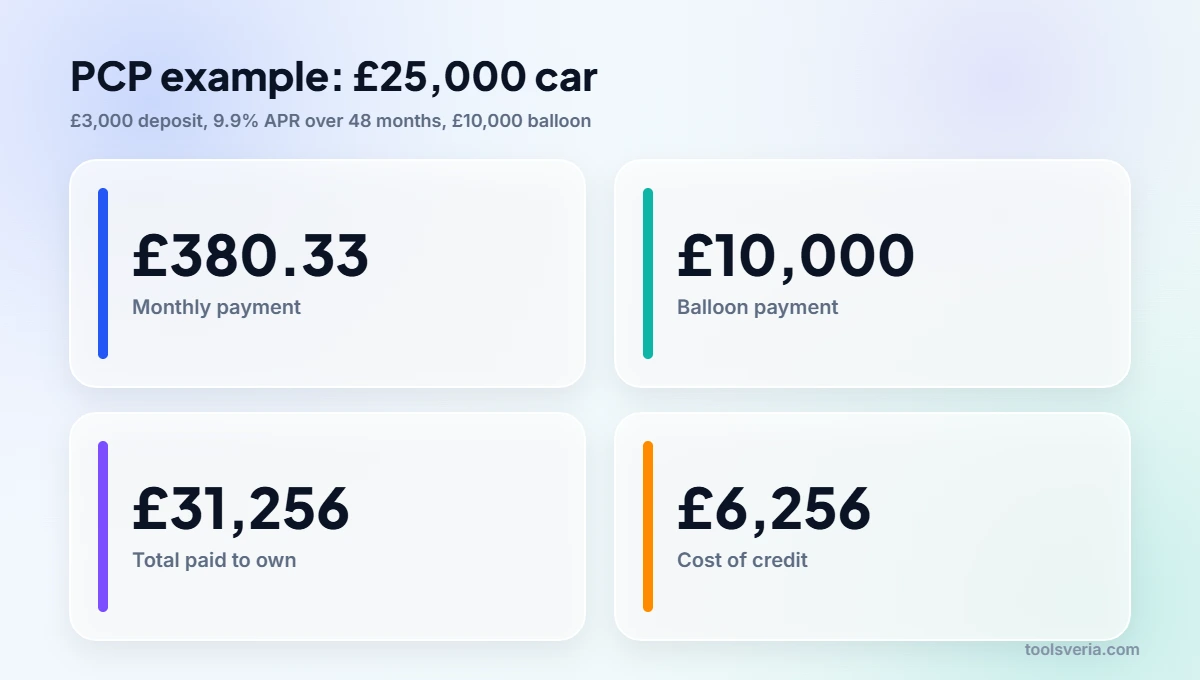
With £3,000 down, £22,000 to borrow, a 48 month term, 9.9% APR and a £10,000 balloon, each monthly instalment works out at £380.33. Sam puts £3,000 down on a car priced at £25,000, leaving £22,000 to borrow. With a 48 month term, 9.9% APR and a £10,000 balloon, each monthly instalment works out at £380.33.
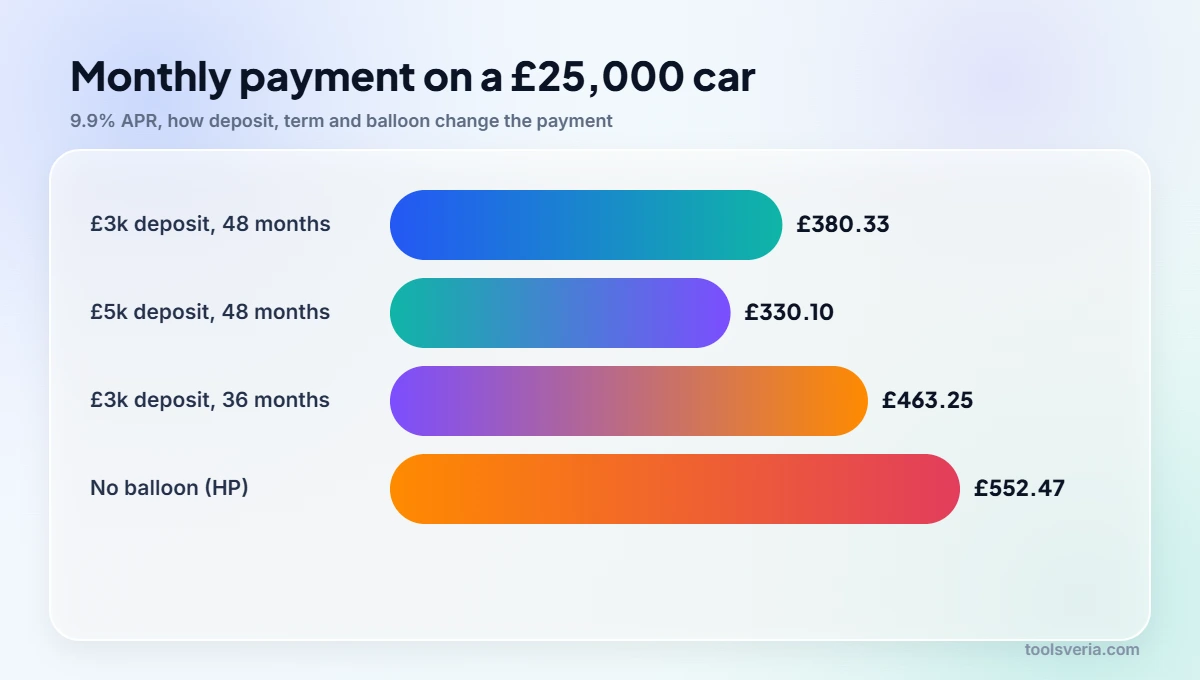
Forty eight of those instalments total £18,255.84. Stack the £3,000 deposit and the £10,000 balloon on top, and owning the hatchback outright costs Sam about £31,256, or around £6,256 above the sticker price. That gap is the price of borrowing. Watch how one tweak at a time shifts the monthly figure:
| Deal on a £25,000 car | Deposit | Term | Balloon | Monthly payment |
|---|---|---|---|---|
| Base example, 9.9% APR | £3,000 | 48 months | £10,000 | £380.33 |
| Bigger deposit, 9.9% APR | £5,000 | 48 months | £10,000 | £330.10 |
| Shorter term, 9.9% APR | £3,000 | 36 months | £10,000 | £463.25 |
| No balloon (same as HP), 9.9% APR | £3,000 | 48 months | £0 | £552.47 |
Finding another £2,000 for the deposit trims about £50 off each month and lowers the interest, since less is borrowed. Squeezing the deal into 36 months pushes the instalment up by roughly £83, because the same gap must be closed a year sooner. Sam’s next step was to type the dealer’s numbers into our PCP calculator, which shows the grand total next to the monthly cost so neither figure can hide behind the other.
Same car on hire purchase: who pays less?
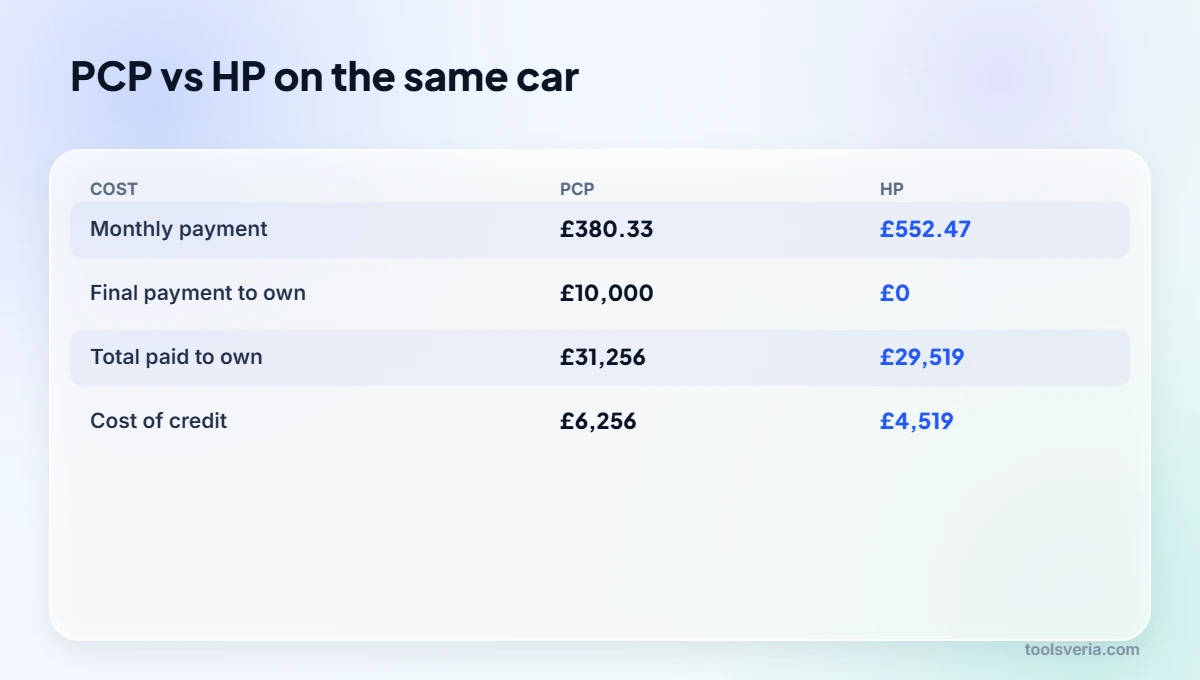
Take the balloon away and Sam’s PCP turns into HP. Every pound borrowed is cleared across the term, and ownership passes with the final instalment. With hire purchase agreements the monthly bill rises, but the balance starts falling immediately, so less interest builds up.
| £25,000 car, £3,000 deposit, 9.9% APR, 48 months | PCP | HP |
|---|---|---|
| Monthly payment | £380.33 | £552.47 |
| Final payment to own the car | £10,000 | £0 |
| Total paid to own the car | £31,256 | £29,519 |
| Cost of credit | £6,256 | £4,519 |
For a driver who intends to keep the hatchback for eight years, HP comes out about £1,737 ahead. PCP leaves roughly £172 extra in Sam’s account each month during the deal, which appeals to someone who swaps cars every three or four years and never plans to settle the balloon. Sam’s own rule of thumb: decide first whether you want to own the car, then pick the product.
Charges that appear when the car goes back
Dealers open with the monthly number, but the agreement and the pre contract information often hold other costs. Sam went through both documents looking for these:
- Excess mileage. The balloon was priced on an agreed yearly mileage. Exceed it and every extra mile carries a fee on return, so a commuter who underestimates pays twice.
- Damage beyond fair wear and tear. Kerbed alloys, dents and stained seats can all be billed at handback.
- Option to purchase fee. A small charge some lenders bolt onto the balloon if you keep the car.
- Arrangement or documentation fees. They inflate the total payable, which is why two quotes with the same APR can differ.
- Insurance and servicing rules. Fully comprehensive cover and main dealer servicing are common conditions.
Then there is fuel. On a high mileage car it can rival the finance itself, so Sam compared two shortlisted models in our MPG calculator using real fill up figures. Because Sam also drives to patients’ homes for work, the mileage allowance calculator helped estimate business miles, and that in turn fed into a realistic annual mileage cap.
What Happens at the End of a PCP Agreement?
Keeping the car means finding the £10,000 balloon from savings or a fresh loan, while switching means a dealer valuation, and if the car is worth less than £10,000 you simply return it. Expect a letter from the lender a few months before the end. Keeping the car means finding £10,000, from savings or a fresh loan; borrowing it adds a second layer of interest, so price that carefully. Switching to a new car means a dealer valuation, with any equity above the balloon going into the next deposit. If the hatchback is worth less than £10,000, Sam simply returns it, and that safety net is the main thing the GMFV buys.
There is also an exit before month 48. Agreements regulated under the Consumer Credit Act give a voluntary termination right: once half the total amount payable has been paid, the car can normally go back with nothing more owed, provided it has been kept in reasonable condition. On PCP the balloon is part of that total, so on Sam’s deal the halfway mark is roughly half of £31,256, about £15,628, which arrives later than many people assume. Your own agreement prints the exact figure.
Waiting a few months to build a bigger deposit can pay off, since every extra pound lowers both the instalment and the interest. Sam tested how fast an easy access pot might grow in our savings interest calculator before deciding whether to delay the purchase.
Key points
- Low PCP instalments come from deferring the balloon, yet that balloon accrues interest for the full term.
- Sam’s £25,000 car costs £380.33 a month on PCP and £552.47 on HP.
- Keeping the car via PCP costs about £1,737 more than HP here.
- Mileage caps, damage charges and fees matter as much as the APR.
- Line up quotes by total amount payable, never by monthly cost alone.
Frequently Asked Questions
I want to keep the car for years. Will PCP still work out cheaper?
Unlikely. In Sam’s example, owning the car costs £31,256 through PCP but £29,519 through HP at the same 9.9% APR, because the balloon gathers interest throughout.
My car is valued at £8,000 but the balloon is £10,000. Am I stuck?
No. You can return it and walk away owing nothing further, as long as you stayed within the mileage cap and avoided damage beyond fair wear and tear.
Two years in, can I clear the whole PCP agreement?
Yes. Ask the lender for a settlement figure; settling early usually cuts the interest, although the quote will still include the £10,000 balloon.
Is it worth emptying my savings for a £5,000 deposit?
A £5,000 deposit cuts Sam’s instalment to £330.10, but that cash then sits in a depreciating car. Keep an emergency fund back before you top up the deposit.
Used with open eyes, PCP lets a driver like Sam run a newer car on a predictable budget. Put every quote through the numbers, line up the total payable against HP and a personal loan, and sign up for a mileage cap that matches the miles you actually drive.