Grace works two days a week at a florist and earns £7,800 a year, well below the point where Income Tax starts. Her husband Tom drives buses for £34,000. For years, £4,770 of Grace’s tax free allowance went unused while Tom paid basic rate tax on every pound above £12,570. Marriage allowance lets Grace hand part of that unused allowance to Tom, and for 2026/27 it cuts his tax bill by £252.
Plenty of eligible couples never apply, often because £252 sounds too small to bother with. Backdating changes that maths, and so do a few edge cases that can shrink the gain to almost nothing. Below are the real numbers for couples in England, Wales, Northern Ireland and Scotland.
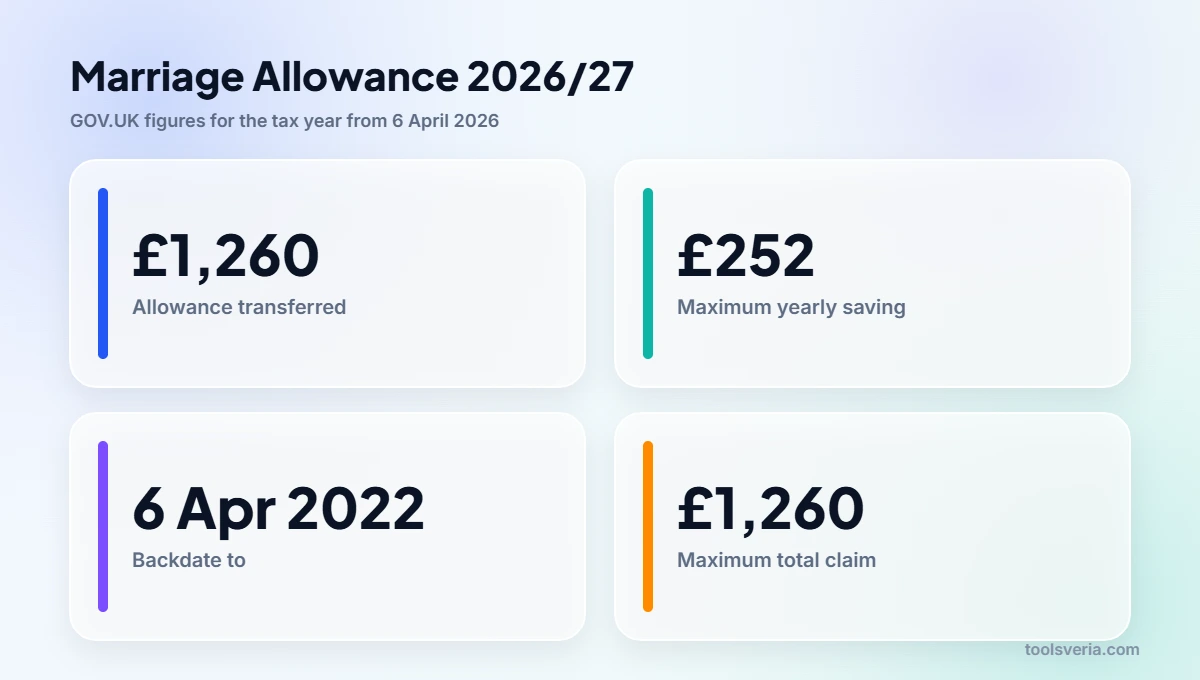
Quick answer: For 2026/27, GOV.UK lets the lower earning spouse or civil partner transfer £1,260 of their £12,570 Personal Allowance to a basic rate taxpaying partner, cutting that partner’s Income Tax by up to £252. Claims can be backdated to 6 April 2022, so a couple eligible throughout can receive up to £1,260 in total.
In This Guide
Who qualifies for Marriage Allowance in 2026/27?
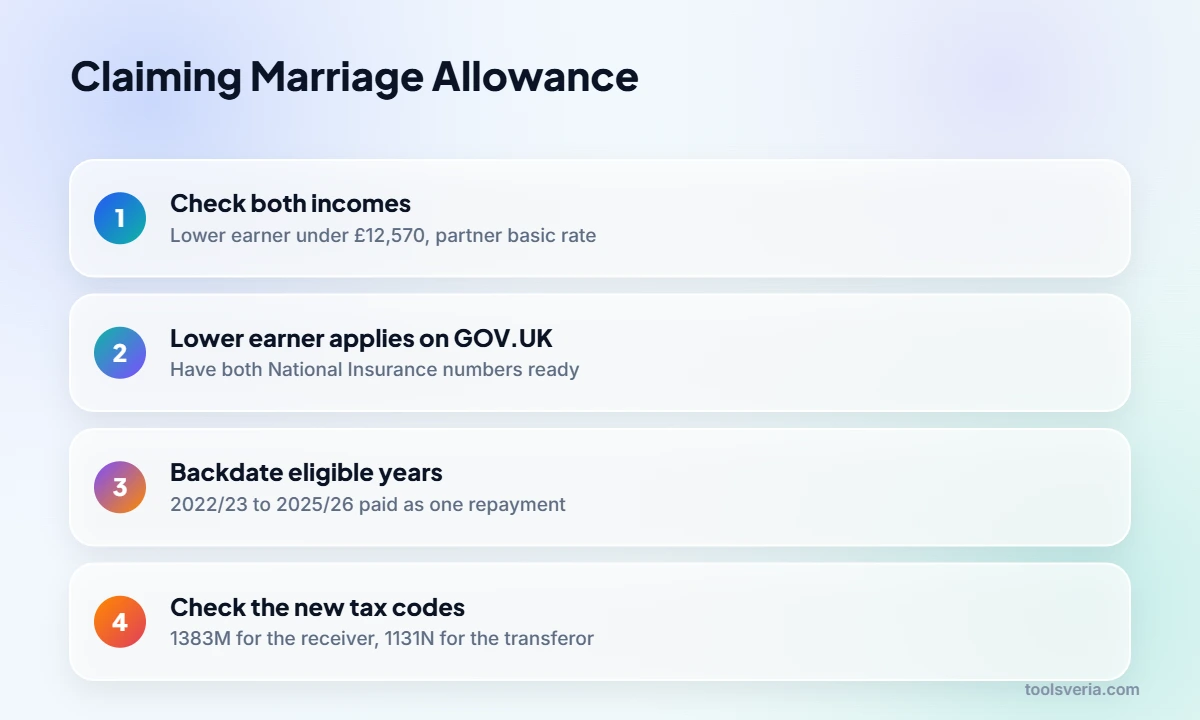
You qualify for Marriage Allowance in 2026/27 if you are married or in a civil partnership, the lower earner has income below the £12,570 Personal Allowance, and the higher earner pays tax no higher than the basic rate, which usually means income between £12,571 and £50,270. The GOV.UK Marriage Allowance page sets out these conditions, and couples who simply live together are not eligible however long they have been together.
Both partners must have been born on or after 6 April 1935. Couples where one partner was born before that date look at Married Couple’s Allowance instead, which is a separate and usually larger relief. Either way, the lower earner can be employed, self employed, retired on a small pension or not working at all.
| Situation | Lower earner’s income | Higher earner’s income | Eligible for 2026/27? |
|---|---|---|---|
| Grace and Tom | £7,800 | £34,000 | Yes |
| Stay at home parent | £0 | £48,000 | Yes |
| Both earning | £14,000 | £29,000 | No, lower earner pays tax |
| Higher rate partner | £5,000 | £58,000 | No, partner pays 40% |
| Cohabiting, unmarried | £3,000 | £31,000 | No, not married |
How much does Marriage Allowance save?
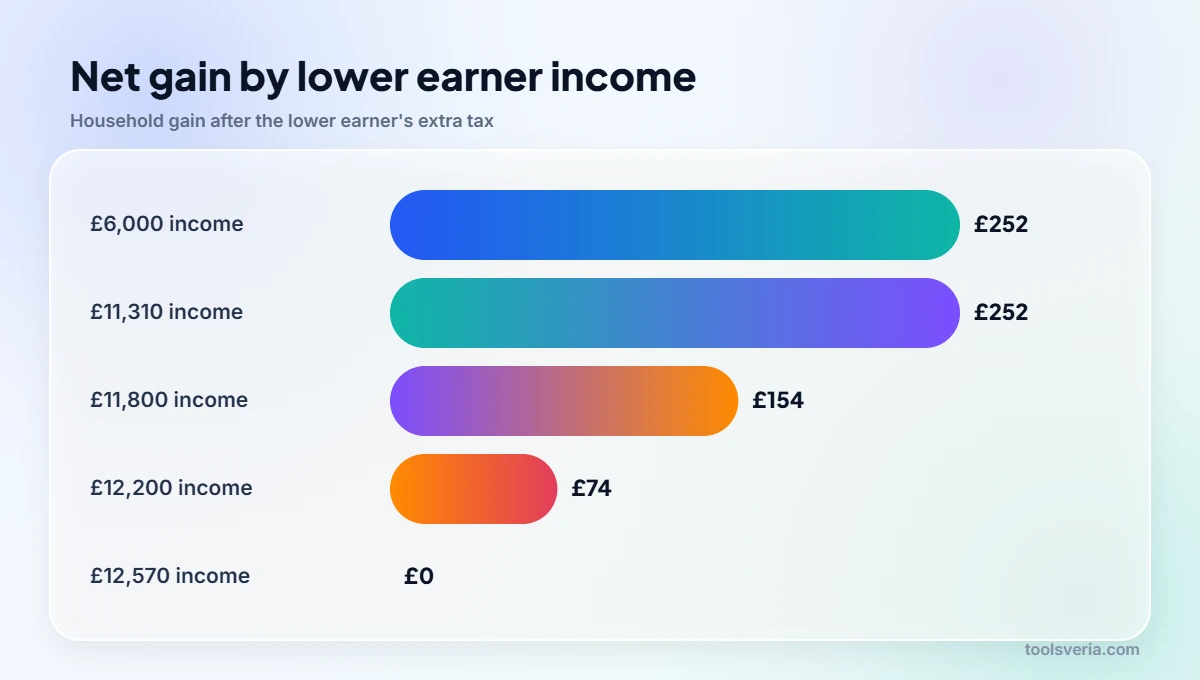
Marriage Allowance saves up to £252 a year, because the £1,260 transferred is worth 20% basic rate tax to the receiving partner. The full £252 reaches the household only when the lower earner’s income is £11,310 or less, since their own allowance falls to £11,310 after the transfer.
Tom’s numbers show the effect. Without the claim, he pays 20% on £21,430, which is £4,286 for 2026/27. With Grace’s transfer, his bill drops to £4,034. Grace’s £7,800 stays far below her reduced £11,310 allowance, so she pays nothing extra and the couple keep the whole £252.
The picture changes when the lower earner sits just under £12,570. Every pound they earn above £11,310 is now taxed at 20%, which eats into the gain. A part timer whose hours were trimmed should check their annual figure first, and the pro rata salary calculator turns a reduced week into a yearly total you can test against the table below.
| Lower earner’s income | Extra tax for lower earner | Saving for partner | Net household gain |
|---|---|---|---|
| £6,000 | £0 | £252 | £252 |
| £11,310 | £0 | £252 | £252 |
| £11,800 | £98 | £252 | £154 |
| £12,200 | £178 | £252 | £74 |
| £12,570 | £252 | £252 | £0 |
How far back can you backdate a Marriage Allowance claim?
A Marriage Allowance claim made during 2026/27 can be backdated to 6 April 2022, covering the 2022/23, 2023/24, 2024/25 and 2025/26 tax years as well as the current one. The Personal Allowance was £12,570 in each of those years, so the transfer was £1,260 and the maximum saving £252 every time.
Grace and Tom married in 2019 and their incomes have barely moved. Claiming now, Tom receives £1,008 for the four earlier years as a single repayment, then £252 for 2026/27 through a higher tax code. That is £1,260 for a form that takes most couples a few minutes. A couple who leave it until after 5 April 2027 lose the 2022/23 year for good, because the window rolls forward each April.
Backdating only works for years in which you met every condition. If Tom was a higher rate taxpayer in 2023/24 because of overtime, that single year drops out and the total falls to £1,008, not £1,260.
Can a pension contribution make you eligible?
Yes, a pension contribution made through salary sacrifice can make a higher earner eligible for Marriage Allowance by bringing their taxable pay back under £50,270. The test is whether the receiving partner pays Income Tax above the basic rate for the year, not what their headline salary says.
Kwame, a lab technician, earns £51,500 and his wife looks after their baby full time. As things stand he pays some 40% tax and cannot receive the transfer. Sacrificing £1,500 of salary into his workplace pension takes his pay to £50,000, so he is a basic rate taxpayer again. The household gains the £252, Kwame saves Income Tax and National Insurance on the sacrificed pay, most of it at the 40% rate, and £1,500 lands in his pension.
Before he signs anything with his HR team, our salary sacrifice pension calculator shows the take home effect month by month, so he can see that the drop in his payslip is far smaller than £1,500.
Families with children should also look at the Child Benefit rules at the same time. A sacrifice that drops pay under £60,000 can remove the High Income Child Benefit Charge, and the child benefit tax charge calculator shows how much of that saving applies alongside the Marriage Allowance gain.
How does Marriage Allowance work in Scotland?
In Scotland, Marriage Allowance works the same way, except the receiving partner must pay Scottish Income Tax at the starter, basic or intermediate rate, which GOV.UK says usually means income between £12,571 and £43,662. The lower earner rule and the £1,260 transfer are unchanged.
Fiona, a Glasgow nurse on £41,000, pays intermediate rate tax and is eligible to receive her husband’s allowance. Her colleague Callum earns £45,000, which puts him into the Scottish higher rate, so he cannot receive a transfer even though a worker on the same pay in Manchester could. Scottish couples near the line should check the threshold before applying.
How do you claim, and what changes on your payslip?
You claim Marriage Allowance online through GOV.UK, and the lower earner is the one who applies when both partners only have wages. You need both National Insurance numbers and some proof of identity, and partners who file a Self Assessment return can claim in the Marriage Allowance section instead.
- The receiving partner’s tax code usually becomes 1383M, meaning £13,830 of tax free pay through PAYE.
- The transferring partner’s code, if they have one, usually becomes 1131N, reflecting their £11,310 allowance.
- New codes can take up to two months to reach payroll, and any gap is corrected over the rest of the year.
If Tom’s payslip still shows 1257L in two months, pasting the code into our tax code calculator confirms what allowance payroll is applying. The claim then renews automatically each April until someone cancels it.
Circumstances do change. If a relationship ends, either partner can cancel, and the GOV.UK guidance on changes warns that the cancellation may be backdated to 6 April, which can leave an underpayment for that year. For any other reason, only the partner who made the claim can cancel, and the allowance runs to 5 April.
Key points
- Marriage Allowance transfers £1,260 of Personal Allowance and saves the receiving partner up to £252 in 2026/27.
- The lower earner needs income below £12,570, and the full £252 gain needs income of £11,310 or less.
- The receiving partner must be a basic rate taxpayer, or a starter, basic or intermediate rate taxpayer in Scotland.
- Claims made in 2026/27 can be backdated to 6 April 2022, worth up to £1,260 in total.
- Unmarried couples cannot claim, however long they have lived together.
Marriage Allowance 2026/27 Terms You Should Know
These terms explain the rules behind Marriage Allowance 2026/27, helping couples judge who qualifies, how much they really gain and how backdating works.
- Married Couple’s Allowance
- A separate tax relief for married couples and civil partners where at least one partner was born before 6 April 1935. It reduces the tax bill directly and is usually worth more than Marriage Allowance, so the two cannot be claimed together.
- Tax year
- The twelve month period used for UK personal tax, running from 6 April to 5 April the following year. Allowances, bands and Marriage Allowance claims all apply year by year, which is why each backdated year is assessed separately.
- Net household gain
- The overall saving a couple keeps once any extra tax paid by the lower earner is deducted from the higher earner’s tax reduction. It falls to nothing when the lower earner’s income reaches the full £12,570 Personal Allowance.
- Higher rate taxpayer
- A person whose taxable income reaches the band charged at 40%. If the receiving partner falls into this band for a year, Marriage Allowance cannot be used for that year, even if the lower earner has plenty of unused allowance.
- Civil partnership
- A legally registered relationship between two people that carries most of the same tax treatment as marriage. Civil partners can claim Marriage Allowance on the same terms as spouses, while unmarried couples living together cannot, however long the relationship.
- Repayment for earlier years
- The refund HMRC makes to the higher earner when a claim covers past tax years. It is paid as one sum for all eligible earlier years, while the current year’s relief normally arrives gradually through the payroll.
Frequently Asked Questions
We married in February 2027. Can we claim for the whole 2026/27 year?
Yes, the transfer applies to the whole tax year in which you marry, so a February 2027 wedding still gives up to £252 for 2026/27. The change is backdated to 6 April 2026 once HMRC accepts the claim.
My wife has no income at all. Does she lose anything by transferring?
No, a partner with no income loses nothing, because her reduced £11,310 allowance is still far more than she uses. You receive the full £252 tax reduction for 2026/27, plus up to £1,008 for the four earlier years if you were eligible.
I earn £52,000. Is there any way for us to qualify?
Possibly, if you can reduce your taxable pay below £50,270 for the year. Salary sacrifice into a workplace pension is the usual route, and once you are a basic rate taxpayer your partner can transfer £1,260 and save you £252.
My husband died last year. Is it too late to claim?
No, a claim can still be made after a partner’s death for the years in which you were both eligible. Call HMRC to arrange it, and any backdated amount for the years from 2022/23 can still be paid.
Grace and Tom are now £1,260 better off for one short application, while Kwame found that a small pension sacrifice unlocked the same relief. Put your own incomes into the calculator to see your net gain and backdating total before the 2022/23 year drops out on 5 April 2027. Figures checked October 2026.