Aisha is a 27 year old physiotherapist in Manchester earning £35,000, and her October payslip shows a student loan deduction of about £42. Her friend Eilidh in Glasgow earns £40,000 and pays only a little more, while Jake, who left university in 2025, pays on a salary well below either of theirs. The student loan repayment thresholds 2026/27 explain all three, because each plan starts collecting at a different level of pay.
Below are the thresholds for every plan in yearly, monthly and weekly form, how they changed from last year, the formula payroll uses and worked figures for five graduates. Later sections cover combined loans, deductions in months when you earn under the line and the write off date for each plan.
Quick answer: For 2026/27, starting 6 April 2026, GOV.UK sets the student loan repayment thresholds at £26,900 for Plan 1, £29,385 for Plan 2, £33,795 for Plan 4, £25,000 for Plan 5 and £21,000 for a Postgraduate Loan. You repay 9% of income above your plan’s threshold, or 6% for a Postgraduate Loan.
In This Guide
What are the student loan repayment thresholds for 2026/27?
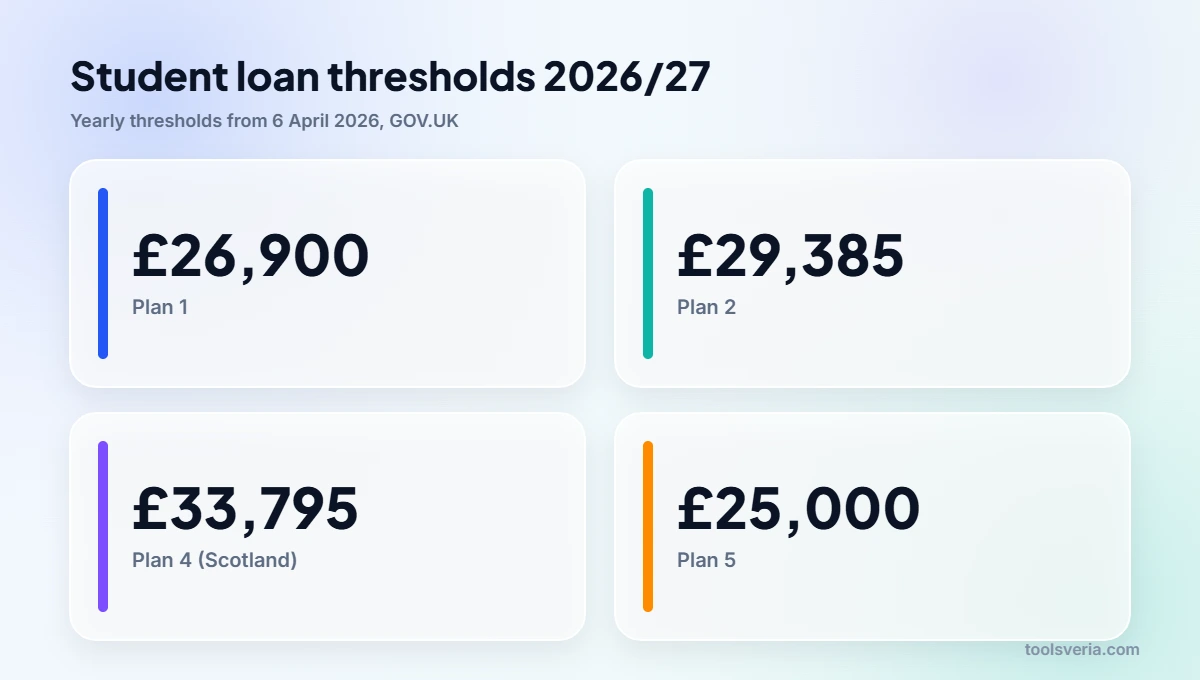
The 2026/27 student loan repayment thresholds are £26,900 a year for Plan 1, £29,385 for Plan 2, £33,795 for Plan 4, £25,000 for Plan 5 and £21,000 for a Postgraduate Loan, applying from 6 April 2026 to 5 April 2027. Employers use the monthly and weekly versions in the GOV.UK rates and thresholds for employers 2026 to 2027, which are the figures in the table.
| Plan | Yearly threshold | Monthly threshold | Weekly threshold | Repayment rate |
|---|---|---|---|---|
| Plan 1 | £26,900 | £2,241.66 | £517.30 | 9% |
| Plan 2 | £29,385 | £2,448.75 | £565.09 | 9% |
| Plan 4 | £33,795 | £2,816.25 | £649.90 | 9% |
| Plan 5 | £25,000 | £2,083.33 | £480.76 | 9% |
| Postgraduate Loan | £21,000 | £1,750.00 | £403.84 | 6% |
Plan 5 is the newest. It covers students from England who started courses on or after 1 August 2023, and the earliest you repay any plan is the April after you leave your course. Most of those who began a three year degree in autumn 2023 finished in summer 2026, so their first repayments fall due from April 2027, while early leavers such as Jake are already paying.
How have the thresholds changed since 2025/26?
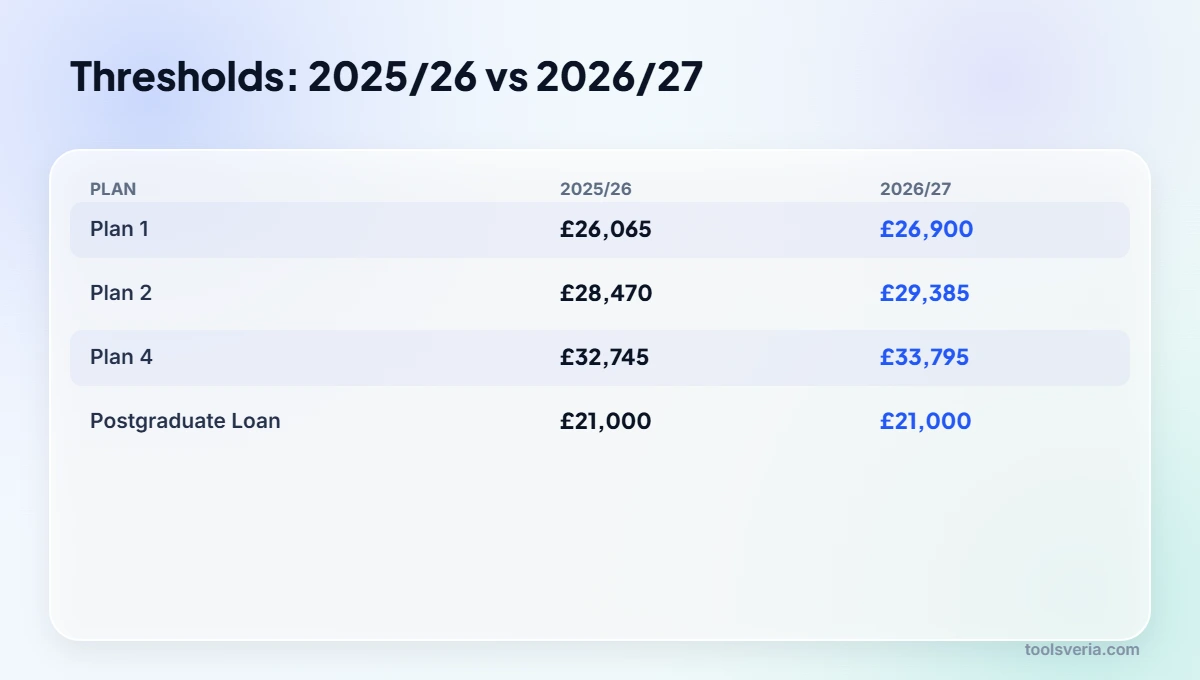
Three thresholds rose on 6 April 2026 and one stayed put: Plan 1 went up by £835, Plan 2 by £915 and Plan 4 by £1,050, while the Postgraduate Loan threshold remained £21,000 and Plan 5 started at £25,000. A higher threshold means a little less is taken from the same salary.
| Plan | 2025/26 threshold | 2026/27 threshold | Change |
|---|---|---|---|
| Plan 1 | £26,065 | £26,900 | +£835 |
| Plan 2 | £28,470 | £29,385 | +£915 |
| Plan 4 | £32,745 | £33,795 | +£1,050 |
| Plan 5 | Not yet repaying | £25,000 | New |
| Postgraduate Loan | £21,000 | £21,000 | No change |
On an unchanged £35,000 salary, Aisha’s Plan 2 bill falls from £587.70 a year to £505.35, a saving of £82.35. Owen in Belfast, on Plan 1 and £32,000, saves £75.15, and Eilidh’s Plan 4 bill on £40,000 drops by £94.50. Plugging a new salary into our student loan repayment calculator after each pay review shows how much of that saving survives, because any rise is also charged at 9% above the line.
Plan 2 borrowers should not expect the same rise next year. The November 2025 Budget announced a three year freeze on the Plan 2 threshold starting in the 2027/28 tax year and running to 2029/30, so £29,385 is the figure to plan around until then.
How much will I repay each month in 2026/27?
You repay 9% of the amount you earn above your plan’s threshold, or 6% above £21,000 for a Postgraduate Loan, and nothing at all if you earn less. In plain words: take your pay, subtract the threshold, then multiply what is left by the repayment rate. The sum uses your gross pay before tax, so the amount of your loan never affects the monthly figure.
- Aisha, Plan 2, £35,000: £35,000 minus £29,385 leaves £5,615. At 9% she repays £505.35 a year, about £42.11 a month.
- Owen, Plan 1 in Northern Ireland, £32,000: £5,100 above the line, so £459 a year or £38.25 a month.
- Eilidh, Plan 4 in Scotland, £40,000: £6,205 above the line, so £558.45 a year or about £46.54 a month.
- Jake, Plan 5, £28,000: £3,000 above the line, so £270 a year or £22.50 a month.
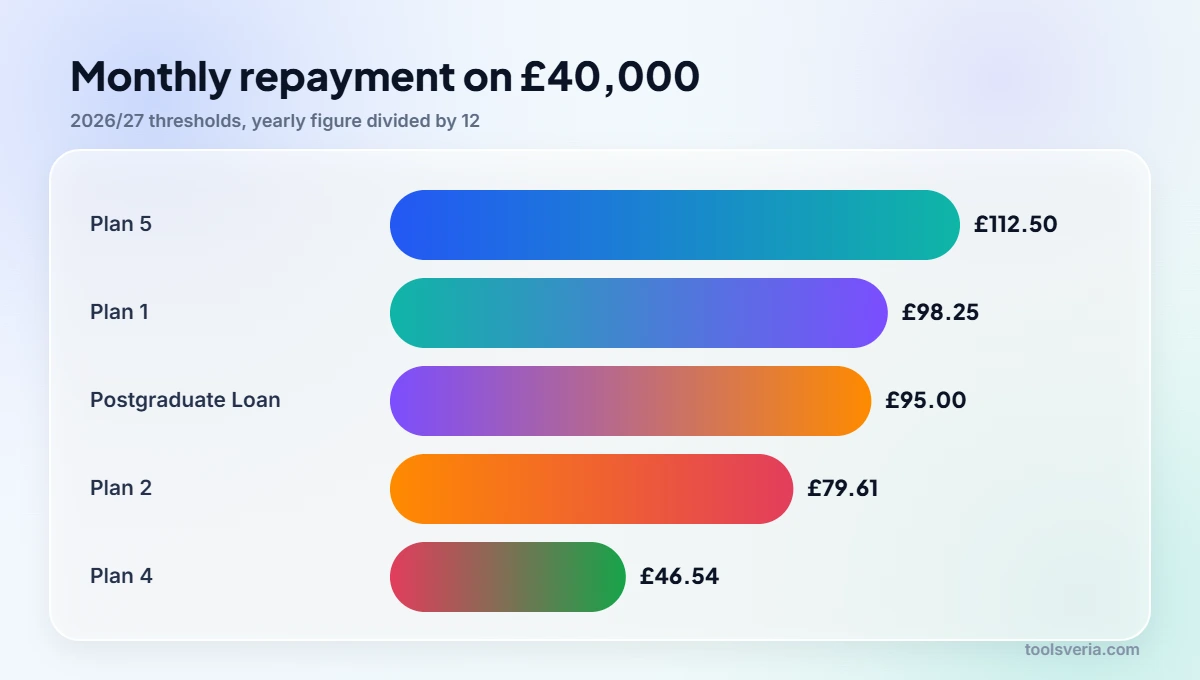
The table repeats the sum at three common salaries. It divides the yearly figure by 12, and real payslips can differ by a few pence or pounds because payroll works on each pay period separately.
| Plan | Monthly on £30,000 | Monthly on £40,000 | Monthly on £50,000 |
|---|---|---|---|
| Plan 1 | £23.25 | £98.25 | £173.25 |
| Plan 2 | £4.61 | £79.61 | £154.61 |
| Plan 4 | £0.00 | £46.54 | £121.54 |
| Plan 5 | £37.50 | £112.50 | £187.50 |
| Postgraduate Loan | £45.00 | £95.00 | £145.00 |
Salary sacrifice changes the picture. Pension contributions made through salary sacrifice reduce the pay that student loan deductions are worked out from, so our salary sacrifice pension calculator is worth running alongside the loan figures if your employer offers a scheme. Self employed borrowers repay through their Self Assessment tax return instead, based on the year’s income.
What if I have more than one student loan plan?
If you have two undergraduate plans, you repay 9% of income above the lowest of their thresholds, and a Postgraduate Loan is always repaid separately at 6% above £21,000 on top of any other plan. That rule comes straight from the GOV.UK guide to what you pay, and it means some people make two deductions every month.
Chloe started a first degree in England in 2010 and a second in 2014, so she holds Plan 1 and Plan 2 loans. On £35,000 her single deduction is 9% of income above £26,900, the lower threshold, which is £729 a year or £60.75 a month. When two loans appear on one payslip, our postgraduate loan repayment calculator shows both deductions side by side. Daniel has a Plan 2 loan and a master’s Postgraduate Loan. On £45,000 he pays £1,405.35 towards Plan 2 and £1,440 towards the Postgraduate Loan, £2,845.35 in total, or about £237.11 a month.
Why was student loan taken when I earn under the threshold?
Student loan is deducted when your pay in a single week or month goes over the weekly or monthly threshold, even if your yearly income ends up below the annual figure. A bonus, overtime or a back pay award can tip one payslip over the line.
Mia is on Plan 2 with a £24,000 salary, which is £2,000 a month and below the £2,448.75 monthly threshold. In December she received a £2,000 bonus, so that month’s pay was £4,000. Payroll took 9% of £1,551.25, about £139. Her total for the year is £26,000, under the £29,385 annual threshold, so the GOV.UK refund rules let her reclaim it through her online repayment account. She has to wait until the tax year ends on 5 April 2027 and the Student Loans Company has confirmed her income with HMRC.
Which plan am I on, and when is it written off?
Your plan depends on where you lived and when you started your course, and each plan is written off after a set number of years from the April you were first due to repay, ending any remaining balance.
| Plan | Who is on it | Written off |
|---|---|---|
| Plan 1 | England or Wales courses started before 1 September 2012, and all Northern Ireland borrowers | 25 years after first due (age 65 for loans taken before 1 September 2006) |
| Plan 2 | England courses started 1 September 2012 to 31 July 2023, Wales from 1 September 2012 | 30 years after first due |
| Plan 4 | Scottish borrowers | 30 years after first due (or age 65 if earlier, for loans before 1 August 2007) |
| Plan 5 | England courses started on or after 1 August 2023 | 40 years after first due |
| Postgraduate Loan | Master’s or doctoral loans from England or Wales | 30 years after first due |
Interest is charged separately from the threshold and changes each year. GOV.UK currently lists 4.1% for Plans 1, 4 and 5 and 6% for a Postgraduate Loan, while Plan 2 runs from 4.1% at incomes up to £29,385 to 6% at £52,885 or more. The government has also capped Plan 2 interest at 6% from 1 September 2026. Interest affects how much you owe, not how much leaves your payslip each month, which is set only by income.
Key points
- From 6 April 2026 the thresholds are £26,900 (Plan 1), £29,385 (Plan 2), £33,795 (Plan 4), £25,000 (Plan 5) and £21,000 (Postgraduate Loan).
- Undergraduate plans take 9% of income above the threshold, and a Postgraduate Loan takes 6% above £21,000.
- A Plan 2 borrower on £35,000 repays £505.35 in 2026/27, £82.35 less than in 2025/26.
- The Plan 2 threshold is due to be frozen for three tax years from 2027/28.
- Deductions made in a month over the monthly threshold can be refunded after the tax year if yearly income stayed under the annual threshold.
Key Student Loan Repayment Threshold Terms
These definitions explain the payroll concepts behind the student loan repayment thresholds 2026/27 so you can check deductions in every pay period under each plan.
- Non-cumulative deduction
- The principle that student loan deductions are worked out separately for each pay period rather than across the whole year. A month with a bonus can trigger a repayment even when annual income finishes below the threshold, and such amounts may be reclaimable.
- Threshold uprating
- The annual adjustment of repayment thresholds announced before each tax year. For 2026/27 the Plan 1 figure rose by £835, Plan 2 by £915 and Plan 4 by £1,050, while the Postgraduate Loan threshold stayed unchanged.
- Concurrent loans
- Holding an undergraduate plan and a Postgraduate Loan at the same time. Each is collected against its own threshold and rate, so the two deductions are added together on the payslip rather than shared out of one charge.
- Weekly threshold
- The yearly threshold converted for staff paid every week, such as £565.09 for Plan 2 in 2026/27. Payroll software compares each week’s gross pay with this figure, ignoring what the employee earned in other weeks.
- Repayment start date
- The April after a borrower leaves their course, which is the earliest point repayments can begin on any plan. Leaving a course early brings it forward, so someone who withdraws can start repaying before former classmates.
- Tax year
- The UK fiscal year running from 6 April to 5 April, which is the period each set of thresholds covers. New figures take effect from the first payday falling on or after 6 April.
Frequently Asked Questions
I earn £29,000 on Plan 2. Do I pay anything this year?
No, £29,000 is below the 2026/27 Plan 2 threshold of £29,385, so nothing is due on a steady salary. A month with overtime or a bonus that lifts pay above £2,448.75 can still trigger a deduction, which you can reclaim after the tax year ends.
I moved from Scotland to London. Does my threshold change?
No, your plan is set by where you lived when you took out the loan, not where you work now. A Scottish borrower stays on Plan 4, repaying 9% above £33,795 in 2026/27, even after moving to London or anywhere else in the UK.
I earn £21,500 and have a master’s loan. Why am I paying?
Because the Postgraduate Loan threshold is only £21,000, well below the undergraduate plans. You repay 6% of the £500 above it, which is £30 a year or £2.50 a month. Any undergraduate loan is repaid separately only once you pass its own threshold.
Will a £3,000 pay rise wipe out the threshold increase?
Partly. On Plan 2, each extra £1,000 above the threshold costs £90 a year, so a £3,000 rise adds £270. The £915 threshold increase saved £82.35, leaving you about £187.65 a year worse off on the loan line but better off overall.
Aisha’s £42 a month, Eilidh’s £46.54 and Jake’s £22.50 all come from the same simple sum applied to different thresholds. Check which plan you are on, run your gross pay through the salary calculator and keep your December and March payslips in case a bonus month earns you a refund. Figures checked October 2026.