Hannah is a lab technician on £31,200 a year, and her baby is due next spring. Her first question to HR was blunt: how much money will arrive while she is off? The answer depends on statutory maternity pay 2026/27 rules, which pay her a generous slice at the start and then a much smaller flat amount for most of the time she is at home.
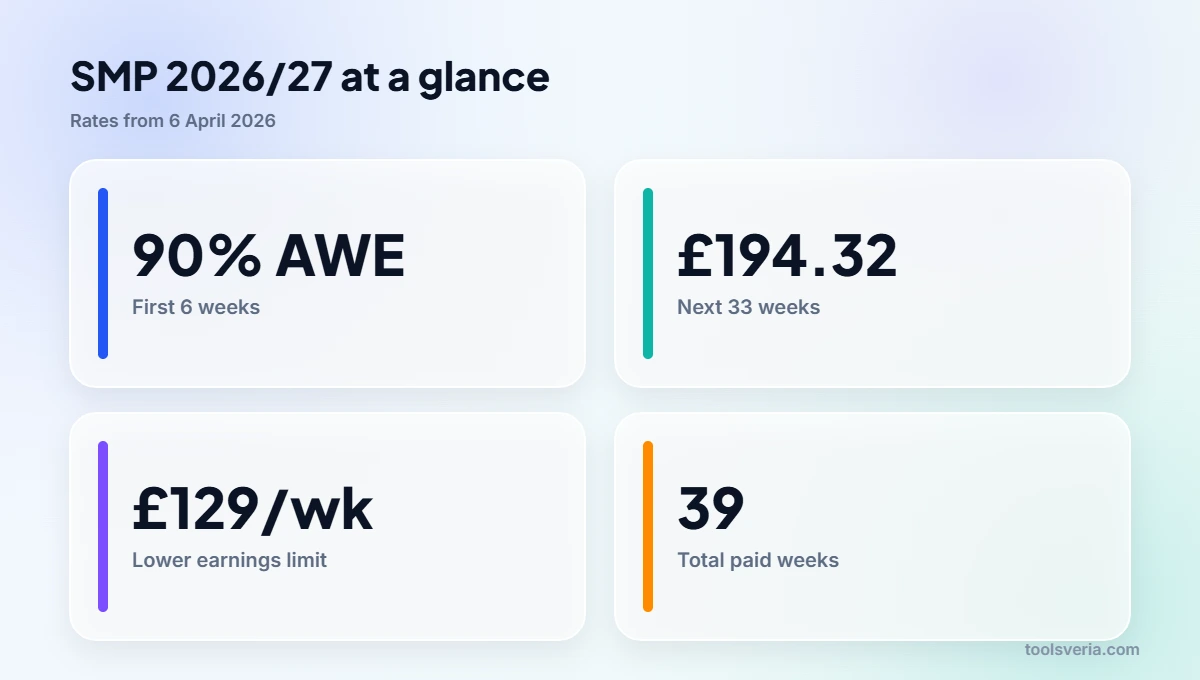
Quick answer: Statutory maternity pay 2026/27 runs for 39 weeks: six weeks at 90% of average weekly earnings with no upper limit, then 33 weeks at £194.32 a week or 90% of earnings if lower. To qualify, you need average earnings of at least £129 a week and 26 weeks of service by the qualifying week.
Below, Hannah and two other mothers with very different pay packets are taken through the sums, using the rates that apply from 6 April 2026. By the end you should be able to sketch your own 39 weeks of income on the back of an envelope, then confirm it with our calculator.
In This Guide
How Long Is Statutory Maternity Pay in 2026/27?
Statutory Maternity Pay runs for 39 weeks, with 90% of average weekly earnings for the first six weeks and then £194.32 a week, or 90% of earnings if lower, for the remaining 33. Statutory Maternity Pay runs for 39 weeks and splits neatly into two blocks. During the opening six weeks, a mother receives 90% of her average weekly earnings with no upper limit. For the remaining 33 weeks she gets £194.32 a week, unless 90% of her earnings would be lower, in which case the smaller number is used.
That second rule matters more than people realise. A mother on modest pay never sees the £194.32 rate at all, because her own 90% figure already sits beneath it. Someone on a higher salary experiences a sharp drop in week seven, often to less than half of what she was used to. Planning the household budget around that cliff edge is the single most useful thing you can do before leave starts.
Maternity leave itself can last up to 52 weeks, so the final 13 weeks are unpaid unless an employer scheme tops things up. The GOV.UK page on maternity pay confirms the current weekly rate, and our figures below use the same £194.32.
Do you pass the earnings and service tests?
Two hurdles decide whether an employer must pay statutory maternity pay 2026/27 at all. First, you need 26 weeks of continuous employment with that employer by the end of the 15th week before the week your baby is due, a point usually called the qualifying week. Second, your average weekly earnings across an eight week reference period ending in that qualifying week must reach the lower earnings limit, which is £129 a week for 2026/27.
Counting back 15 weeks from a due date by hand is fiddly, and a miscount of a single week can change which payslips fall in the reference period. Our days between dates calculator helps you pin down the exact Saturday that week ends, so you know which pay dates HR will look at.
Ella, a part time café assistant, shows what happens when the second test fails. Her average across the eight weeks came to £125, just £4 short of the £129 threshold. Her employer owes her no SMP, though she can still claim Maternity Allowance from Jobcentre Plus, which has its own rules and is not covered by our tool. Had Ella picked up one extra shift during those weeks, the outcome might have been entirely different.
Hannah, Zainab and Ella: the numbers
Hannah on £600 a week
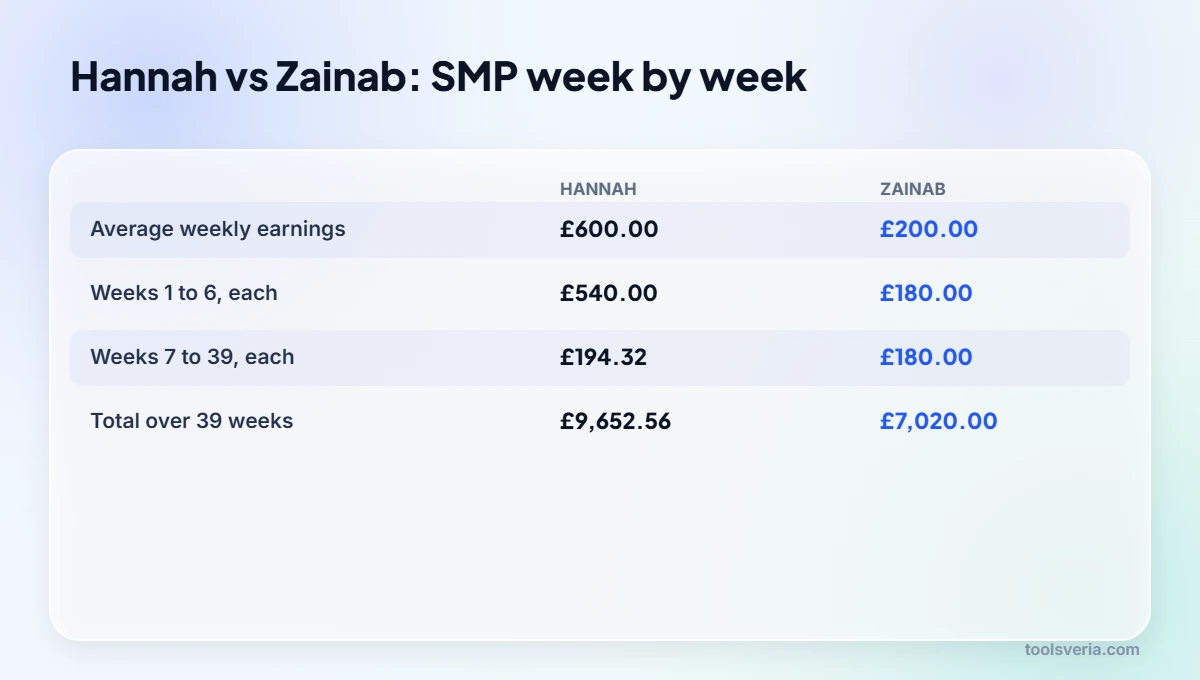
Hannah’s £31,200 salary averages £600 a week. For six weeks she receives 90% of that, which is £540 a week, or £3,240 in total. From week seven her own 90% figure is far above £194.32, so the flat rate applies: 33 weeks at £194.32 gives £6,412.56. Across the full 39 weeks her SMP adds up to £9,652.56 before tax and National Insurance.
Zainab on £200 a week
Zainab works 20 hours a week in a pharmacy and averages £200. Ninety per cent of her pay is £180, and that never rises above the £194.32 cap, so she receives £180 in every one of the 39 weeks. Her total comes to £7,020. She feels no drop at week seven, which makes budgeting simpler, though the overall sum is lower than Hannah’s.
Ella on £125 a week
As covered above, Ella falls below the £129 lower earnings limit, so her SMP total is nil and she turns to Maternity Allowance instead.
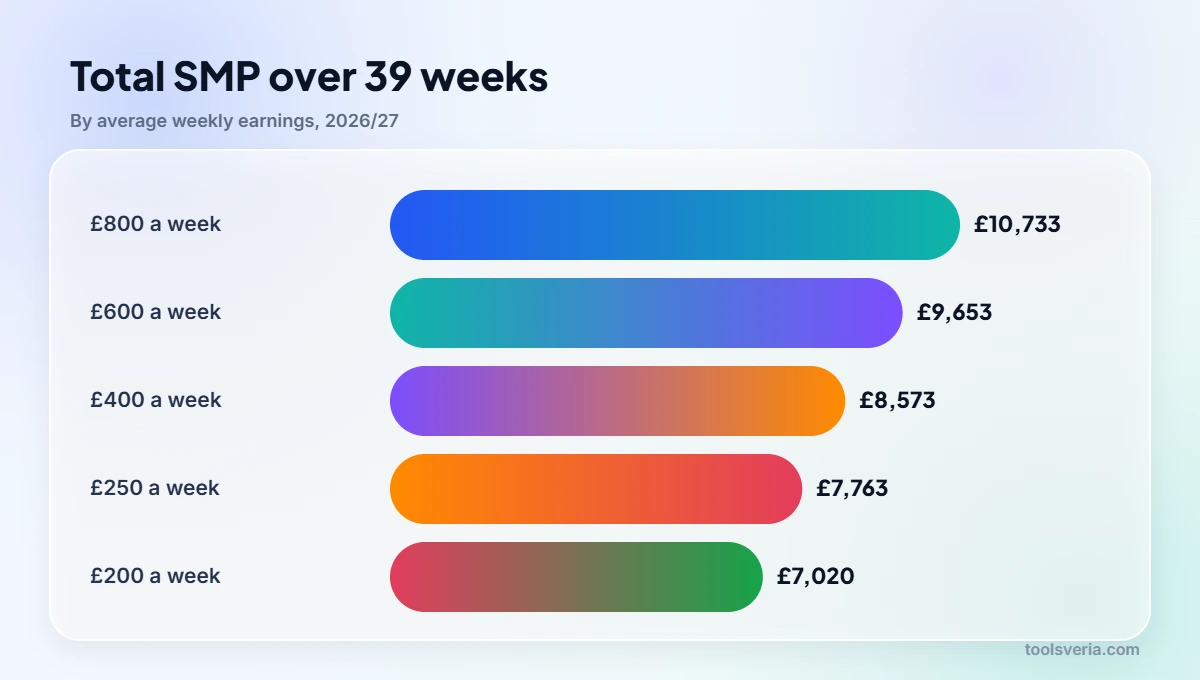
| Average weekly earnings | Weeks 1 to 6 (each) | Weeks 7 to 39 (each) | Total over 39 weeks |
|---|---|---|---|
| £125 | Not eligible | Not eligible | £0 (check Maternity Allowance) |
| £200 | £180.00 | £180.00 | £7,020.00 |
| £250 | £225.00 | £194.32 | £7,762.56 |
| £400 | £360.00 | £194.32 | £8,572.56 |
| £600 | £540.00 | £194.32 | £9,652.56 |
| £800 | £720.00 | £194.32 | £10,732.56 |
Notice how the final column climbs only by the six higher weeks. Doubling earnings from £400 to £800 adds just £2,160 to the 39 week total, because 33 of those weeks are pinned at the same £194.32.
Is Statutory Maternity Pay Taxed?
Yes, statutory maternity pay goes through payroll like a normal wage, so income tax and National Insurance can still come off it. Statutory maternity pay 2026/27 goes through payroll like a normal wage, so income tax and National Insurance can still come off it. Hannah’s six weeks at £540 will see deductions, while her £194.32 weeks will often attract very little once her personal allowance is spread across the year. Expect your payslips to look different from one month to the next.
Annual leave keeps building up throughout maternity leave, including the unpaid weeks. Many mothers bolt their accrued holiday onto the end of leave, which buys extra weeks at full pay. If Hannah has 14 days banked, our holiday pay calculator shows what those days are worth against her usual salary.
Timing is the last trap. The earliest you can start SMP is 11 weeks before the week your baby is due, and pay normally starts at the same time as your leave. Choosing a start date that lands mid month can leave one payslip noticeably thin, so ask payroll how they will split the first and last periods.
Returning part time after maternity leave
Plenty of mothers ask to come back on fewer days. Zainab is thinking about dropping from 20 hours to 15, and Hannah is weighing up a four day week. Before agreeing, each of them wants to know what the new salary would be. Running the full time figure through our pro rata salary calculator gives that answer in seconds: Hannah’s £31,200 at four days becomes £24,960.
Remember that a second pregnancy later on is assessed on the earnings in its own reference period. If you return on reduced hours and your average stays above £129, you will still qualify, but the 90% weeks will be smaller than they were the first time round.
Key points
- SMP lasts 39 weeks: six at 90% of average earnings, then 33 at £194.32 or 90%, whichever is lower.
- You need average weekly earnings of at least £129 and 26 weeks of service by the qualifying week.
- On £600 a week, total SMP comes to £9,652.56; on £200 a week, it is £7,020.
- Holiday keeps accruing during leave and can extend the time you are paid at your normal rate.
Frequently Asked Questions
My pay rose just before my qualifying week. Does SMP use the higher figure?
It can. A pay rise that takes effect at any point from the start of the reference period until your maternity leave ends should lead to SMP being recalculated, so ask payroll to rework your average and your six weeks at 90%.
I earn £150 a week. Will I get £194.32 after the first six weeks?
No. Ninety per cent of £150 is £135, which is lower than £194.32, so you receive £135 for all 39 weeks, a total of £5,265.
My employer offers six months at full pay. Do I lose SMP?
Company schemes normally include SMP within the enhanced amount rather than paying it on top. Once the enhanced period ends, the statutory £194.32 rate usually carries on until week 39.
I fell £4 short of the £129 limit. Is there anything at all for me?
Yes. Like Ella, you can apply for Maternity Allowance through GOV.UK. Your employer gives you a form explaining why SMP is not due, and you include it with the claim.
Hannah now has a clear plan: £540 a week for six weeks, £194.32 for the next 33, then her banked holiday before any unpaid stretch. Put your own average earnings into the calculator, mark the drop at week seven on your calendar and you will go on leave knowing exactly what is coming in.