Bethany works two days a week in a café and earns about £110 a week. When flu kept her at home for a fortnight last winter, she received nothing, because her pay sat below the old earnings threshold. Under the statutory sick pay 2026/27 rules she would be paid, and from the very first full day she was off.
The April 2026 reforms behind statutory sick pay 2026/27 changed who gets SSP, when it starts and how much lower earners receive. Bethany and three colleagues with very different hours and pay are followed below so you can see exactly what reaches each payslip.
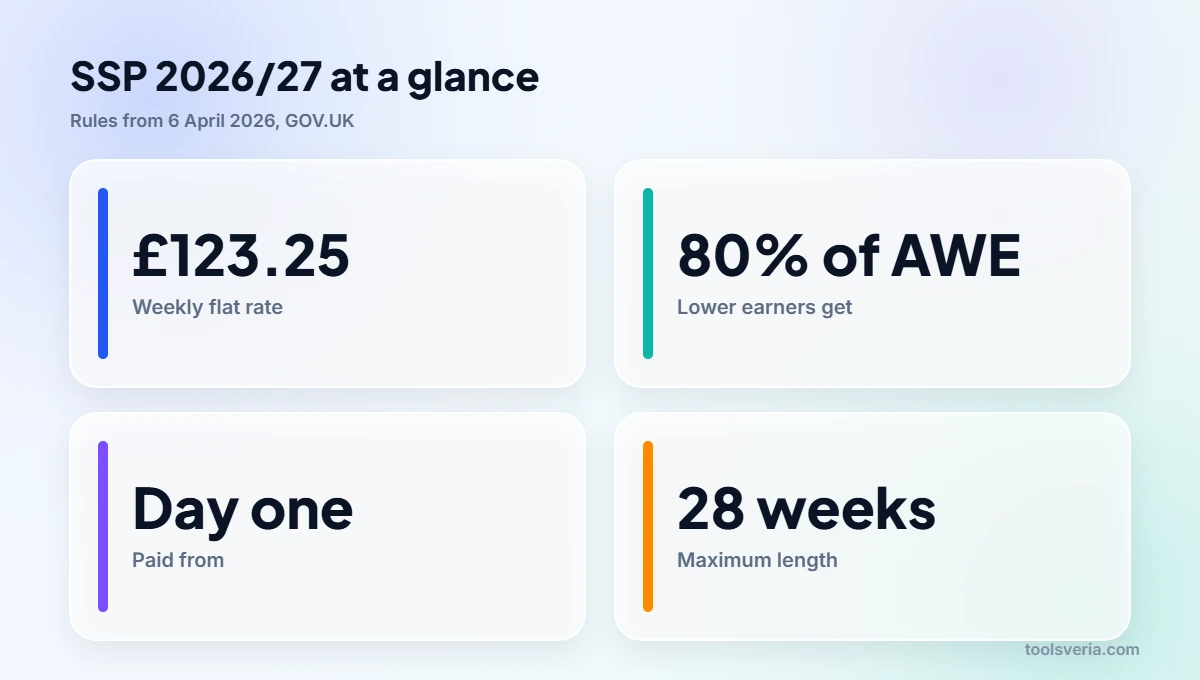
Quick answer: Statutory sick pay 2026/27 is £123.25 a week or 80% of your average weekly earnings, whichever is lower. From 6 April 2026 it is paid from your first full day of sickness, with no minimum earnings test, for up to 28 weeks, which is a maximum of £3,451 at the full rate.
In This Guide
Statutory Sick Pay 2026/27: How Much Is It?
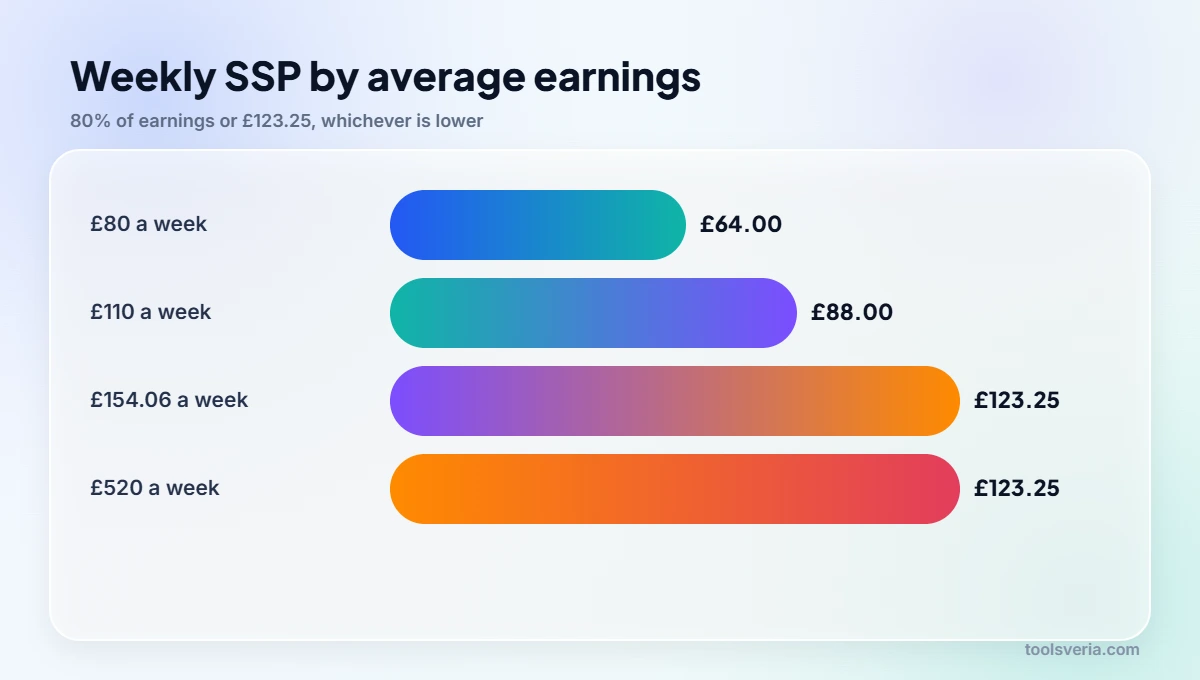
Statutory Sick Pay 2026/27 pays £123.25 a week, or 80% of your average weekly earnings if that comes to less. The GOV.UK page on what SSP pays confirms both figures, and your employer works out the average from your pay over an eight week period before you fell ill.
The crossover point is £154.06 a week. Anyone averaging more than that receives the flat £123.25, because 80% of their earnings would be higher. Anyone averaging less receives 80% of their own figure. Bethany, on £110, gets £88 a week, while her manager on £450 gets the full £123.25.
| Average weekly earnings | 80% of earnings | Weekly SSP in 2026/27 |
|---|---|---|
| £80 | £64.00 | £64.00 |
| £110 | £88.00 | £88.00 |
| £154.06 | £123.25 | £123.25 |
| £300 | £240.00 | £123.25 |
| £520 | £416.00 | £123.25 |
If your hours vary, the eight week average can surprise you. A run of extra shifts before an illness lifts it, while a quiet spell lowers it. Logging your actual hours in our time card calculator each week gives you a record to compare against the figure payroll uses.
Who qualifies for Statutory Sick Pay from April 2026?
From 6 April 2026, you qualify for Statutory Sick Pay if you are an employee, have done some work for your employer and are too ill to work for at least one full working day. Agency workers may also be entitled. The earnings threshold that previously shut out low paid staff has gone, so there is no minimum weekly pay to reach.
Two groups still miss out. You cannot receive SSP while you are getting Statutory Maternity Pay, and it stops once you have had the maximum 28 weeks. The government’s guidance on absences spanning 6 April 2026 explains how a sickness that began under the old rules is handled after the switch, which matters for anyone off sick across that date.
You also have to play your part. Tell your employer you are ill before the deadline they set, or within seven days if they have not set one, and provide a fit note once you have been off for more than seven days in a row. A late notice can cost you some of the SSP you would otherwise receive.
How is the daily rate of SSP worked out?
The daily rate of SSP is your weekly SSP divided by the number of days you normally work in a week, and it is paid for each of those working days that you are off sick. Those normal working days are called qualifying days.
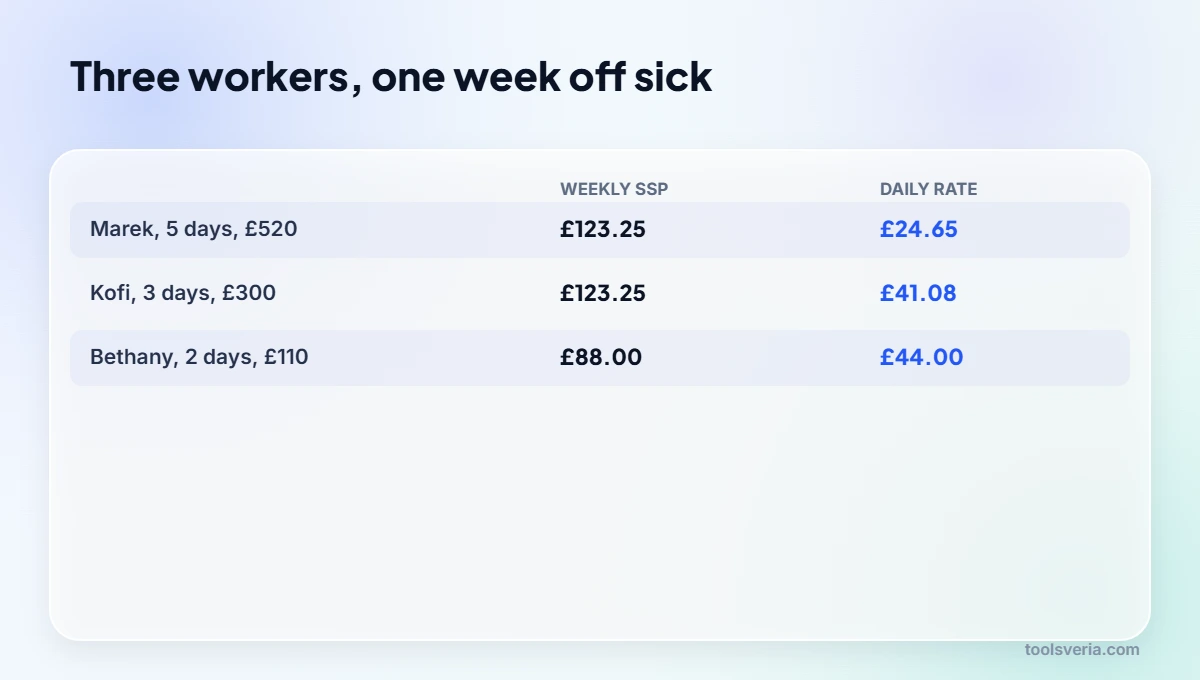
Marek: five days a week, £520 average
Marek is a warehouse operative who works Monday to Friday. His weekly SSP is £123.25, so his daily rate is £24.65. A back injury keeps him off for eight working days, which pays £197.20. Before April 2026, his first three qualifying days would have been unpaid waiting days; under the new rules those three days are worth an extra £73.95 to him.
Bethany: two days a week, £110 average
Bethany’s weekly SSP is 80% of £110, which is £88. Across her two qualifying days that is £44 a day. Two weeks of flu covers four of her working days, so she receives £176. Under the old threshold she would have received nothing at all for the same illness.
Kofi: three days a week, £300 average
Kofi works three long shifts as a care worker. His weekly SSP is the flat £123.25, giving about £41.08 per qualifying day. Off for one full week, he receives £123.25, the same as a five day worker who misses a whole week, because the payment tracks the days he is rostered to work, not the seven days of the week.
Counting qualifying days gets fiddly when an absence crosses a weekend or a bank holiday. Our UK working days calculator counts the working days between two dates, which you can then match against your own rota before checking the SSP total.
How long can you get Statutory Sick Pay for?
You can get Statutory Sick Pay for up to 28 weeks in a single period of sickness, which at the full rate is a maximum of £3,451. Separate spells of illness that are each longer than one full working day and fall within eight weeks of each other are linked and count as one period.
Shirin, an office administrator on £600 a week, was signed off for surgery and recovery. At £123.25 a week for the full 28 weeks she received £3,451, compared with roughly £16,800 of normal pay over the same time. Her employer’s sick pay scheme topped her up for the first three months, which is why checking your contract matters as much as knowing the statutory figure.
Linking catches people out. Tariq was off for three days in January, returned to work and then went off again six weeks later. Because the gap was under eight weeks, both spells count towards the same 28 week limit, even though they felt like separate illnesses to him.
Is Statutory Sick Pay taxed?
Statutory Sick Pay is taxed through payroll like normal wages, so Income Tax and National Insurance are deducted when your total pay for the period is high enough. Many people on SSP alone pay little or nothing, because £123.25 a week sits well below the weekly share of the £12,570 Personal Allowance.
Annual leave keeps building up while you are off sick. If Marek returns after a long absence, our holiday pay calculator helps him see what his accrued days are worth, and some employees choose to take holiday at full pay instead of a stretch of SSP. If you think your SSP is wrong, raise it with your employer first, then ask the HMRC Statutory Payment Disputes Team to review it.
Key points
- From 6 April 2026, SSP is £123.25 a week or 80% of average weekly earnings, whichever is lower.
- SSP is paid from the first full day of sickness, with no waiting days and no minimum earnings.
- Anyone averaging more than £154.06 a week receives the full £123.25.
- SSP lasts up to 28 weeks per period of sickness, a maximum of £3,451 at the full rate.
- Spells of sickness within eight weeks of each other are linked into one period.
Statutory Sick Pay 2026/27 Terms Explained
These definitions explain the reforms, tests and payment rules behind statutory sick pay 2026/27 so employees and employers can check what each payslip should show.
- Waiting days
- Unpaid days at the start of a sickness absence before SSP began, a feature of the rules in force before 6 April 2026. Their removal means payment now starts from the first full day an employee is too ill to work.
- Earnings threshold
- The minimum average weekly pay that employees previously had to reach before receiving any SSP. Its abolition from April 2026 brought low paid and part-time staff into the scheme, paid at a percentage of their own earnings.
- Agency worker
- A person supplied to work for a client business through an employment agency, which usually remains responsible for paying wages. Agency workers may qualify for SSP, with the agency normally acting as the paying employer.
- Reference period
- The span of pay used to calculate average weekly earnings, normally the eight weeks before sickness began. Overtime or extra shifts during that window raise the average, while a quiet spell lowers the resulting SSP rate.
- Crossover point
- The level of average weekly earnings, £154.06 for 2026/27, at which 80% of pay exactly equals the flat SSP rate. Staff below it receive a share of their own wages, while staff above it receive the fixed weekly amount.
- Fit note
- A statement from a doctor or other authorised healthcare professional giving advice about a person’s fitness for work. Employers rely on it as evidence for longer absences, while short spells are normally covered by the employee’s own self-certification.
Frequently Asked Questions
I only work Saturdays and earn £90. Will I get anything?
Yes, from 6 April 2026 there is no earnings threshold. Your weekly SSP would be 80% of £90, which is £72, and with one qualifying day each week you receive £72 for every Saturday you are too ill to work.
I was sick on Monday afternoon and went home at lunch. Is Monday paid?
No, SSP is paid only for full days of sickness, so a part day does not count. If you were still unwell on Tuesday, that would be your first SSP day, and your employer usually pays your normal wage for the hours you worked on Monday.
My employer pays full sick pay for four weeks. Do I lose SSP?
No, an occupational scheme usually includes SSP within the higher payment rather than replacing it. Once the company scheme runs out, the statutory £123.25 a week, or 80% of earnings if lower, carries on until you reach 28 weeks.
I have been off for 10 days. Can I keep self certifying?
No, once you have been off sick for more than seven days in a row you need to give your employer a fit note. GPs, nurses, pharmacists, physiotherapists and occupational therapists can issue one, so arrange it promptly to avoid any gap in your SSP.
Bethany now knows that a fortnight of flu is worth £176 rather than nothing, and Marek knows his first three days count. Enter your own average pay, working days and dates into the calculator to see your figure before payday. Figures checked October 2026.