Statutory 8% simple interest on an unpaid judgment in England and Wales, with part payments.
Use for an attachment of earnings or administration order, or County Court enforcement that produced a payment.
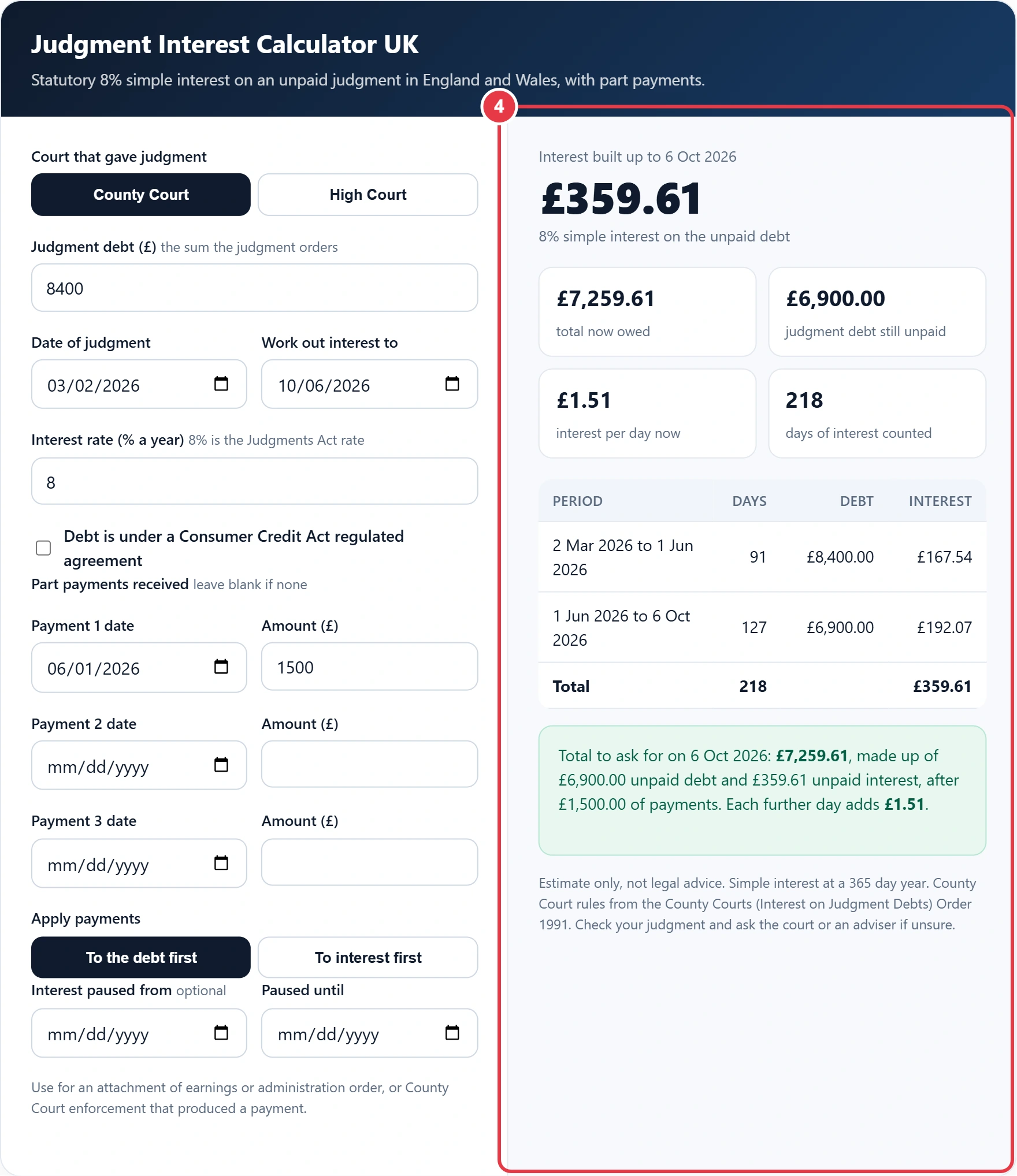
| Period | Days | Debt | Interest |
|---|
Estimate only, not legal advice. Simple interest at a 365 day year. County Court rules from the County Courts (Interest on Judgment Debts) Order 1991. Check your judgment and ask the court or an adviser if unsure.
This judgment interest calculator UK works out the statutory interest on an unpaid County Court or High Court judgment in England and Wales, day by day, for creditors chasing payment and debtors checking a demand. It applies the 8% a year rate set by the Judgment Debts (Rate of Interest) Order 1993 under section 17 of the Judgments Act 1838, then handles part payments, paused periods and the £5,000 County Court rule. Figures checked October 2026.
Quick answer: Multiply the unpaid judgment debt by 8%, divide by 365 and multiply by the days since judgment. A judgment interest calculator UK shows a £10,000 judgment builds £2.19 a day, or £800 a year. In the County Court only judgments of £5,000 or more carry this interest; High Court judgments always do.
In This Guide
What Is Judgment Interest?
Judgment interest is simple interest that a court judgment debt carries by law from the day judgment is given until it is paid. It is separate from the interest you claimed before judgment, which is decided under section 69 of the County Courts Act 1984 or a contract and is already included in the judgment sum.
The formula in plain words: unpaid debt × 8% ÷ 365 = interest per day, and interest per day × days outstanding = interest owed. It is never compounded, so unpaid interest does not earn more interest. When a part payment comes in, the daily figure drops because it is worked out on the smaller unpaid debt from that date.
How to Use the Judgment Interest Calculator UK
Step 1: Choose the Court and Enter the Judgment
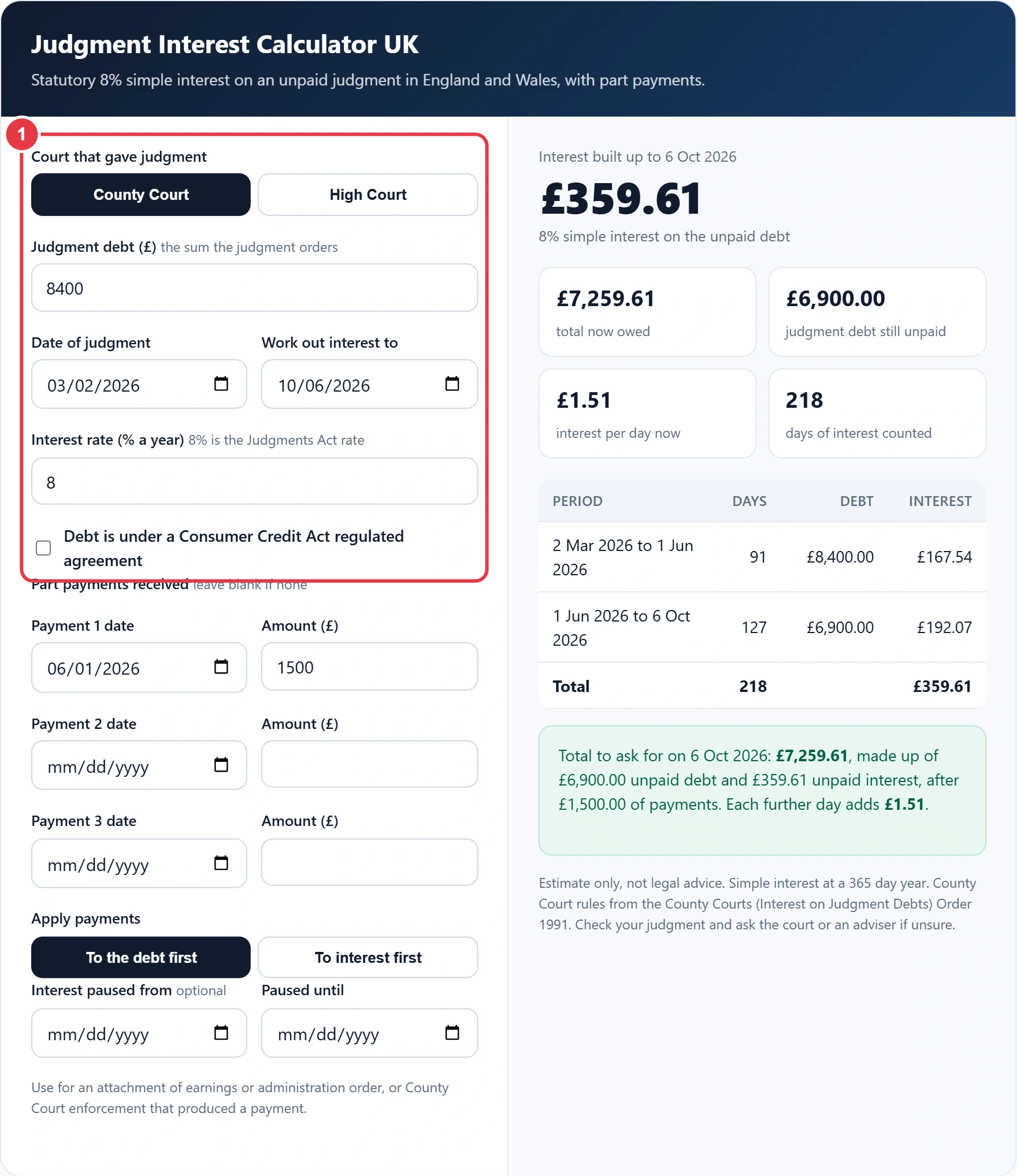
Pick the court named on the judgment, then enter the sum the judgment orders you to be paid, the date of judgment and the date you want interest worked out to. Leave the rate at 8% unless the court ordered something different.
Step 2: Add Part Payments
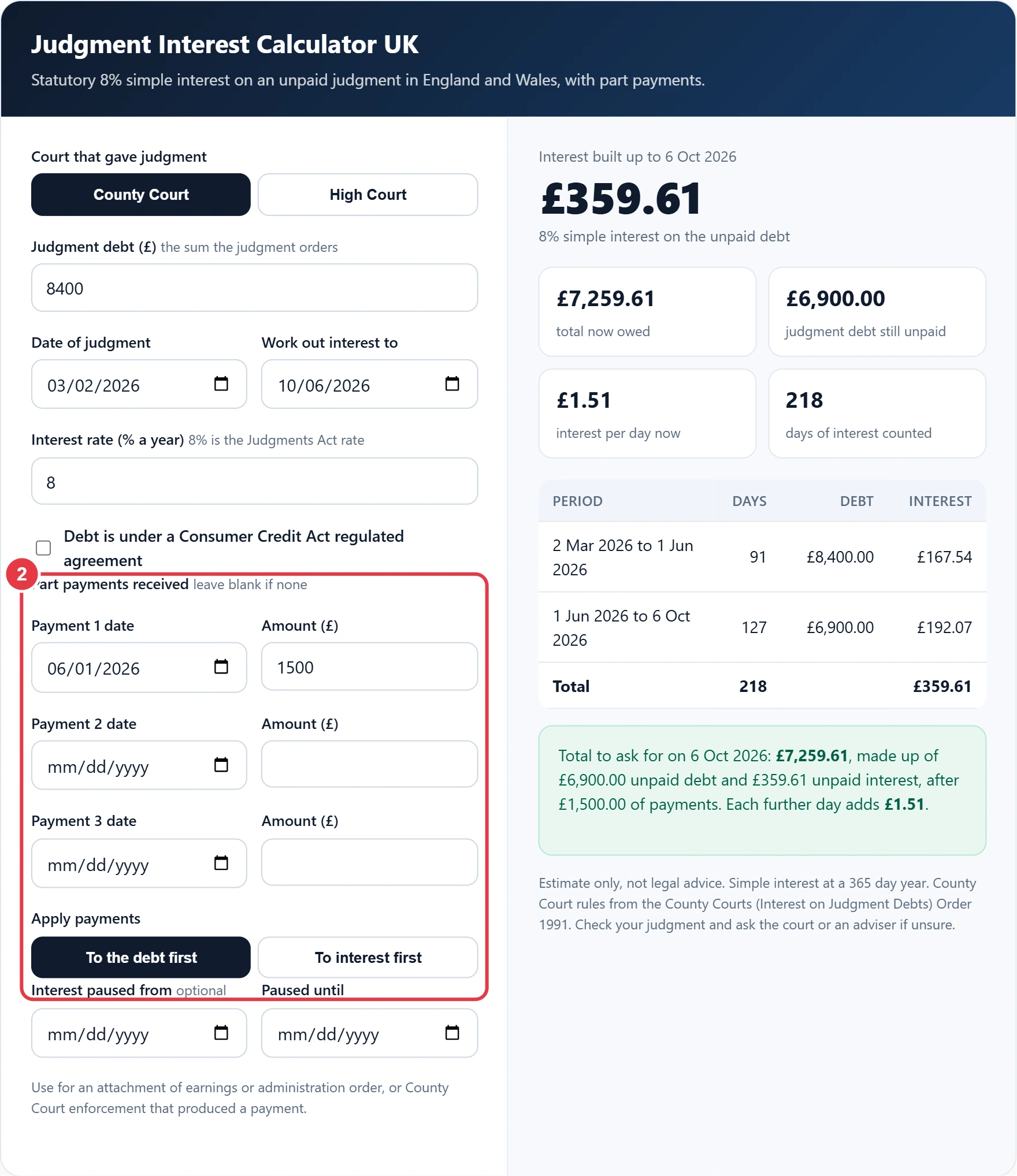
Enter up to three payments with the date each one cleared. For County Court judgments, article 6 of the 1991 Order says money paid goes to the judgment debt first and then towards interest, so the default reflects that rule. You can switch to interest first if your judgment or agreement says so.
Step 3: Enter Any Pause
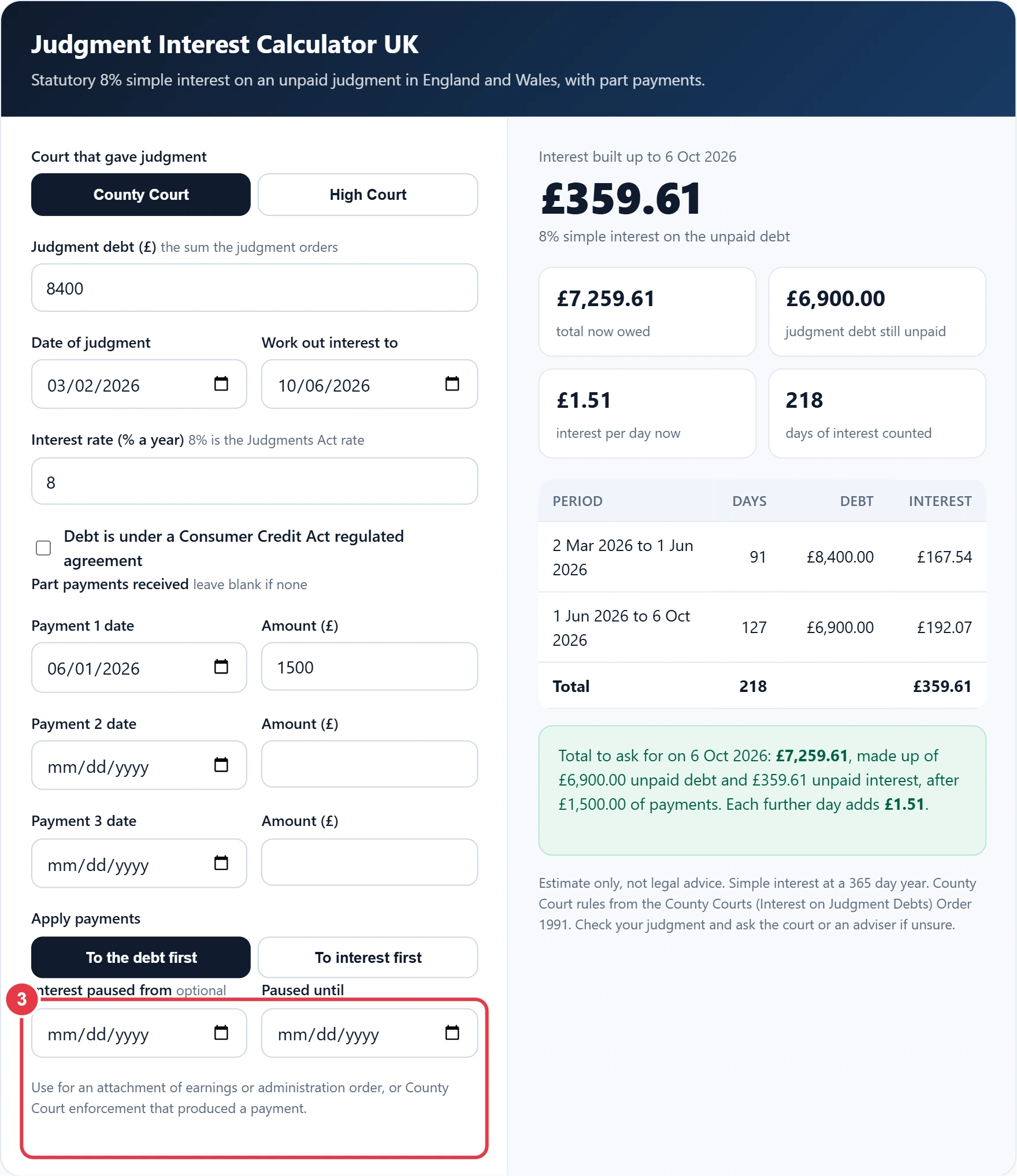
Interest does not run while an attachment of earnings order or administration order is in force. Once County Court enforcement starts it also stops, unless that enforcement produces no payment at all. Enter the start and end dates of any such period and the calculator skips those days.
Step 4: Read the Results
You get the interest built up, the total now owed, the unpaid debt and the interest added each further day. The period table shows each stretch of days and the balance used, which is the working a court or debtor will ask to see. To double check a day count, the days between dates calculator gives the same figure for any two dates.
How Is Interest on a Judgment Debt Calculated?
Interest on a judgment debt is 8% a year of the unpaid amount, counted daily from the date of judgment. Every £1,000 unpaid adds about 22p a day, which matches the daily method on the GOV.UK guide to working out interest, where the annual figure is divided by 365.
| Unpaid judgment | Interest per day at 8% | Interest per year at 8% |
|---|---|---|
| £5,000 | £1.10 | £400 |
| £10,000 | £2.19 | £800 |
| £25,000 | £5.48 | £2,000 |
| £50,000 | £10.96 | £4,000 |
| £100,000 | £21.92 | £8,000 |
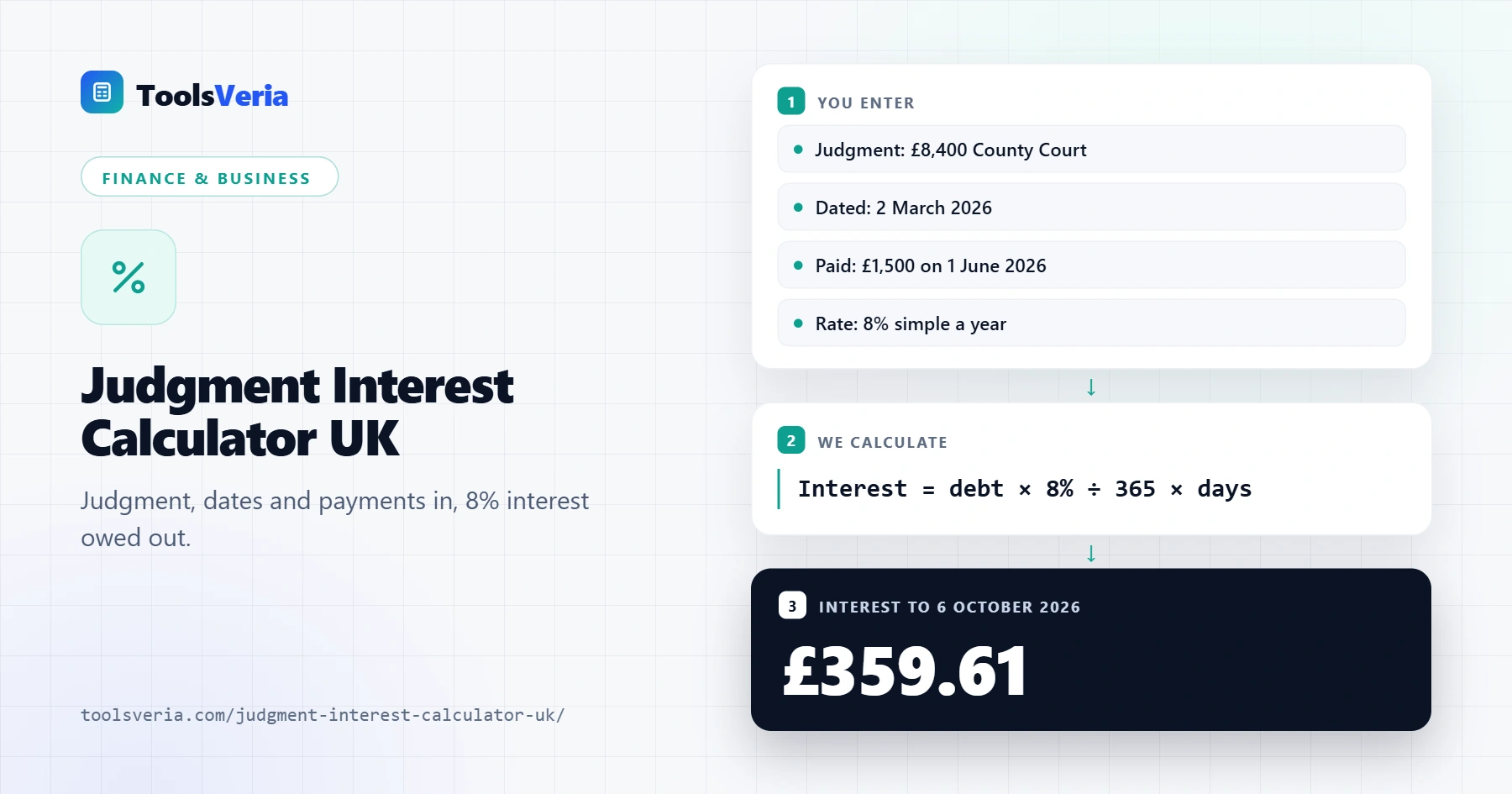
Worked example: Priya, a kitchen fitter in Leeds, gets a County Court judgment for £8,400 on 2 March 2026. The customer pays £1,500 on 1 June 2026. For the first 91 days interest runs on £8,400 at £1.84 a day, which comes to £167.54. The payment cuts the debt to £6,900, so for the next 127 days to 6 October 2026 interest runs at £1.51 a day, adding £192.07. Priya can ask for £7,259.61 in total: £6,900 of debt and £359.61 of interest.
Does a County Court Judgment Under £5,000 Carry Interest?
No, a County Court judgment for less than £5,000 does not carry statutory interest after judgment. The County Courts (Interest on Judgment Debts) Order 1991 applies only to a "relevant judgment" of £5,000 or more, while every High Court judgment carries interest under the 1838 Act whatever its size. Many small claims are therefore interest free once judgment is given, so the interest you claim up to judgment matters more. The small claims court fee calculator works out that pre judgment 8% figure and the court fees together. Enter the judgment sum exactly as the order states it, because the £5,000 test is applied to the sum of money the judgment orders.
| Situation | County Court | High Court |
|---|---|---|
| Judgment under £5,000 | No interest | 8% a year |
| Judgment of £5,000 or more | 8% a year | 8% a year |
| Consumer Credit Act regulated debt | No statutory interest | Depends on the agreement and the court order |
| Suspended possession order on a home | No interest | Check the order |
| Payment by instalments | None on an instalment until it falls due | Check the order |
When Does Judgment Interest Stop?
Judgment interest stops when the debt is paid in full, and in the County Court it also stops once the creditor starts enforcement proceedings. Article 4 of the County Courts (Interest on Judgment Debts) Order 1991 says interest then runs again as if enforcement had never happened if it produces no payment, and no interest builds while an attachment of earnings or administration order is in force. Charging order proceedings do not stop it.
If the court allows payment by instalments or by a set date, article 3 means interest does not run on an instalment until it falls due. Debtors who keep to an instalment order therefore usually pay little or no judgment interest. Business debts claimed under the Late Payment of Commercial Debts (Interest) Act 1998 or under a contract can carry a different rate, which you can type into the rate box.
Unlike savings interest, judgment interest is simple, so it grows in a straight line. The compound interest calculator shows how much faster the same 8% would grow if interest were added to the balance, which is why compounding claims on a judgment get rejected. This calculator is an estimate and not legal advice, so check the figures against your judgment and speak to the court or a regulated adviser if your case has unusual terms.
</>Embed this calculator on your website
Add the free Judgment Interest Calculator UK to your own site or blog. Copy the code below and paste it into an HTML block. It resizes itself and works on phones.
How we checked this tool: the Tools Veria Editorial Team built this tool by hand, checked it against the official rules or published standards where they apply, and tested it against worked examples. Results are estimates for planning, not personal financial or tax advice. Read our editorial policy and disclaimer, or report an error.
Frequently Asked Questions
What is the interest rate on a county court judgment?
The rate is 8% a year simple interest, set for section 17 of the Judgments Act 1838 by the 1993 Order. In the County Court it applies only to judgments of £5,000 or more, running from the date of judgment until payment.
How do I calculate 8% interest on a judgment per day?
Multiply the unpaid debt by 0.08 and divide by 365. A £8,400 judgment builds £1.84 a day, so 91 days adds £167.54. Recalculate the daily figure after every part payment because it falls with the debt.
Do small claims judgments carry interest?
Usually not. A County Court judgment under £5,000 carries no statutory interest after judgment, and many small claims are below that. Interest you claimed up to the judgment date is already part of the judgment sum.
Does interest stop when I pay a CCJ by instalments?
Yes, while you keep up. Under article 3 of the 1991 Order no interest builds on an instalment until it falls due, so paying each one on time means little or no judgment interest is added to a County Court judgment.
Is judgment interest simple or compound?
Judgment interest is always simple. The 8% is charged only on the unpaid judgment debt, never on interest already built up, so £10,000 unpaid for two years adds £1,600, not £1,664 as compounding would give.
Are part payments taken off the debt or the interest first?
For County Court judgments, article 6(2) of the 1991 Order applies payments to the judgment debt first, then to interest. This lowers the daily interest sooner. A £1,500 payment on £8,400 cuts the daily figure from £1.84 to £1.51.