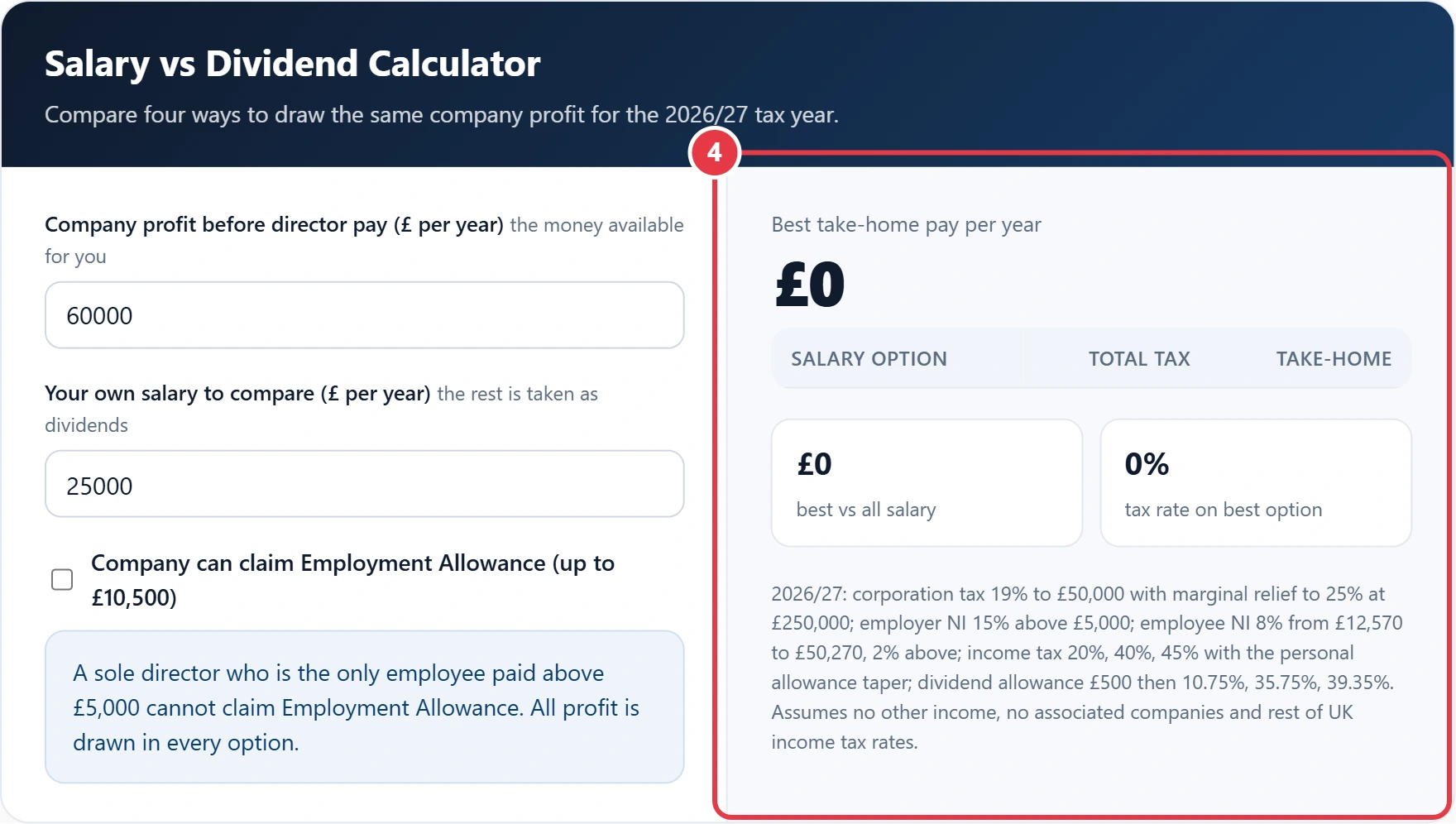
Compare four ways to draw the same company profit for the 2026/27 tax year.
| Salary option | Total tax | Take-home |
|---|
2026/27: corporation tax 19% to £50,000 with marginal relief to 25% at £250,000; employer NI 15% above £5,000; employee NI 8% from £12,570 to £50,270, 2% above; income tax 20%, 40%, 45% with the personal allowance taper; dividend allowance £500 then 10.75%, 35.75%, 39.35%. Assumes no other income, no associated companies and rest of UK income tax rates.
Should you pay yourself a salary, dividends or a mix of both? This salary vs dividend calculator takes the profit your company has available and shows your take-home pay under four common pay strategies for 2026/27. It uses the HMRC rates and thresholds for employers together with corporation tax, income tax and dividend tax, so you can see which mix leaves the most money in your pocket.
Quick answer: A salary vs dividend calculator for 2026/27 works out profit minus salary and employer NI, minus corporation tax, to find the dividends available. For most directors, a salary of £12,570 with the rest as dividends gives the highest take-home pay, because dividends carry no National Insurance, although the answer changes with profit levels and Employment Allowance.
In This Guide
What Is the Salary vs Dividend Choice?
A salary is a business cost, so it cuts corporation tax, but it carries 15% employer National Insurance above £5,000 and 8% employee NI above £12,570. Dividends carry no National Insurance at all, but they are paid from profit that has already been taxed at 19% to 25%, and then taxed again at dividend rates.
The calculator works out each option in the same order HMRC does: profit minus salary and employer NI, minus corporation tax, equals dividends. It then applies income tax, employee NI and dividend tax to you personally. For most directors in 2026/27, a salary of £12,570 with the rest as dividends gives the highest take-home pay, but the answer changes with profit levels and Employment Allowance.
How Do You Use the Salary vs Dividend Calculator?
Step 1: Enter the Company Profit
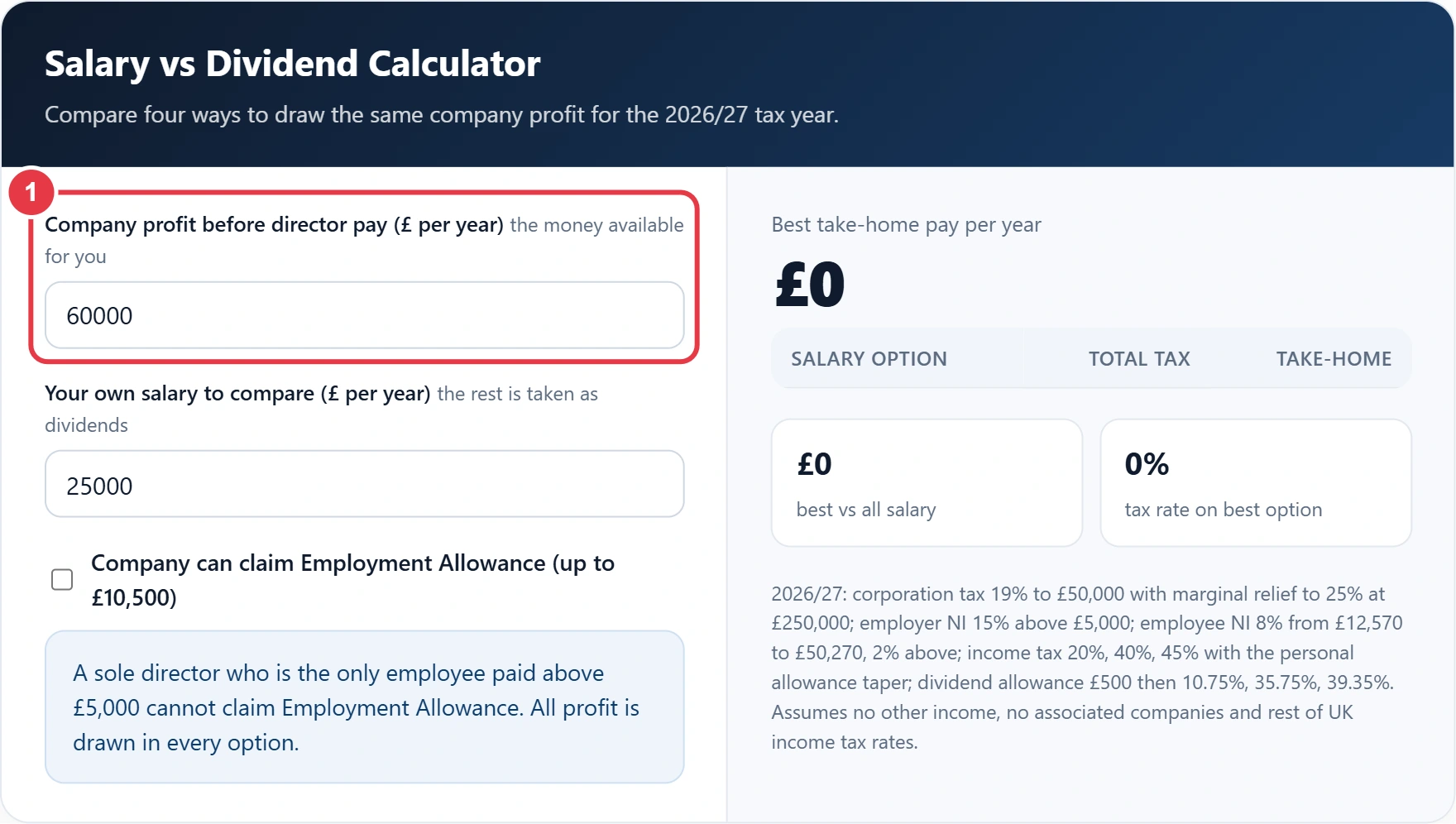
Type the yearly profit before any pay to you, which is your turnover minus business expenses, and every option draws out all of this profit so the comparison is fair. Type the yearly profit before any pay to you, which is your turnover minus business expenses. Every option draws out all of this profit, so the comparison is fair.
Step 2: Add Your Own Salary to Compare
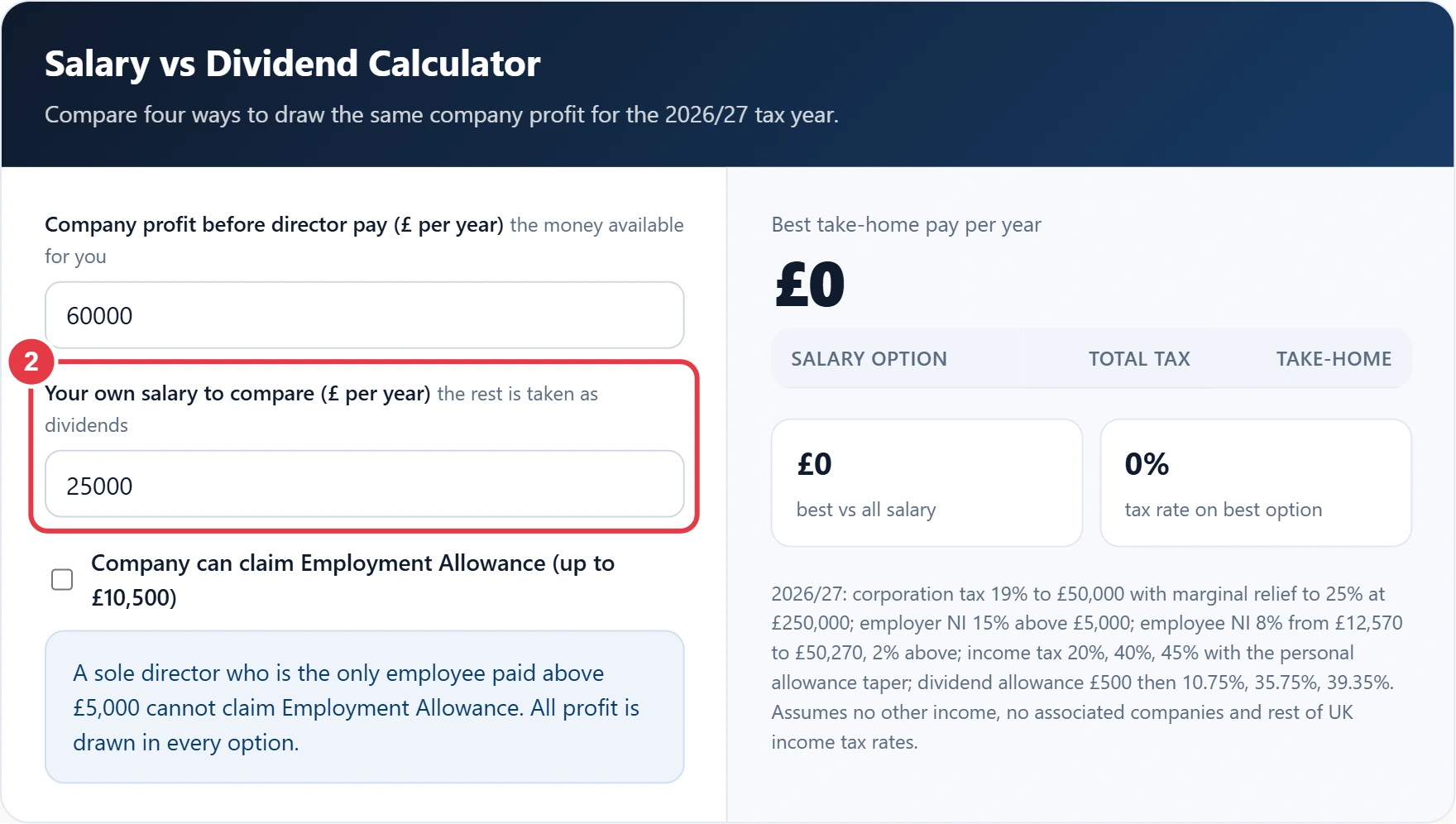
The fourth row tests any salary you like, for example the figure your accountant suggested. If you want to see that salary as an hourly figure, the hourly to annual salary calculator converts it both ways in a few seconds.
Step 3: Set Employment Allowance
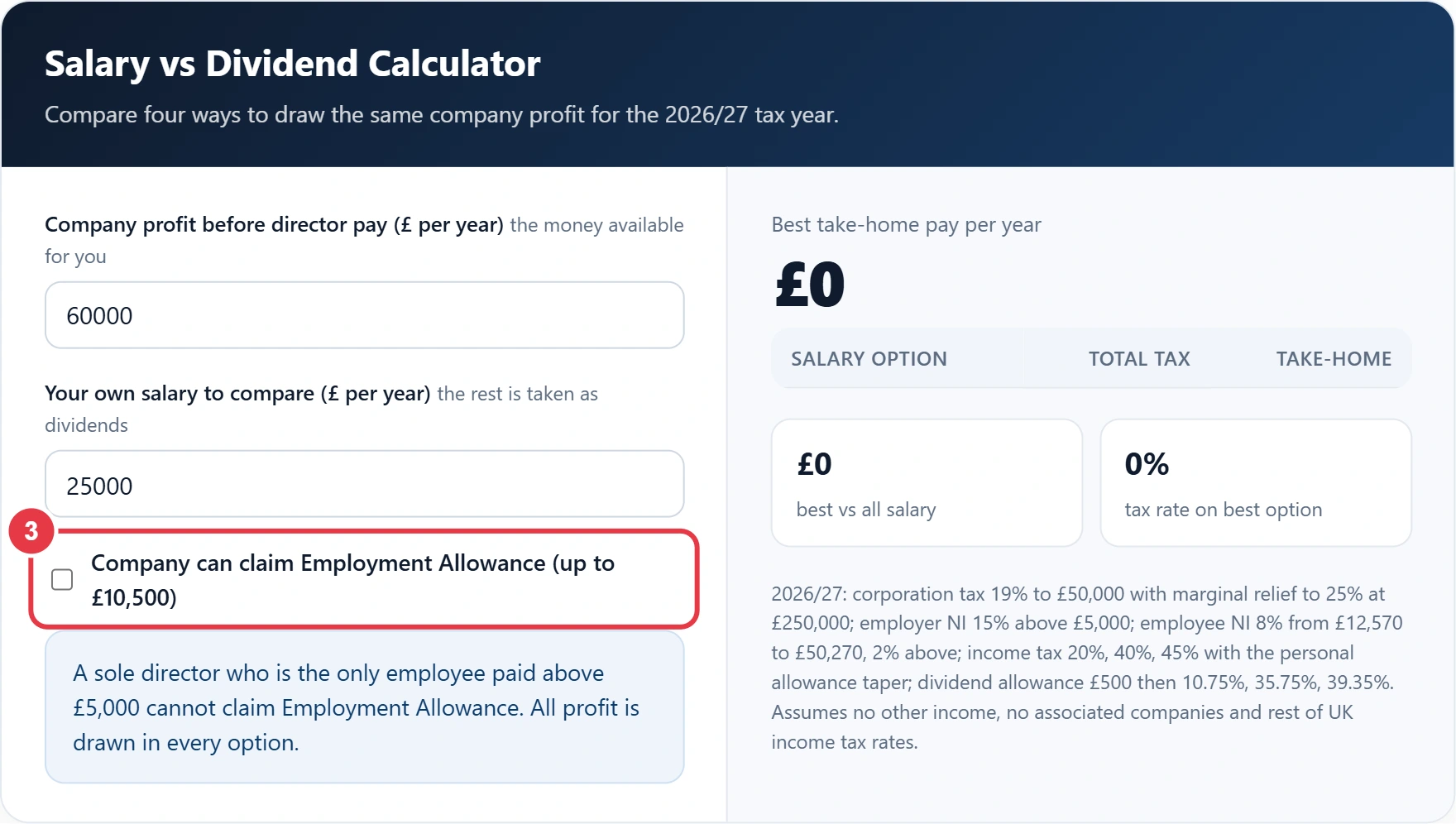
Tick the box only if the company employs someone else paid above £5,000. The allowance wipes out up to £10,500 of employer NI, which makes a higher salary more attractive.
Step 4: Compare the Results
The best option is highlighted, with its monthly take-home and how much more it gives than taking everything as salary. To see the dividend tax on your chosen mix in detail, the dividend tax calculator breaks it down band by band for the same tax year.
What Is the Best Salary and Dividend Mix for £60,000 Profit?
| Option | Total tax | Take-home pay |
|---|---|---|
| £5,000 salary + dividends | £14,706.29 | £45,293.71 |
| £12,570 salary + dividends | £13,908.80 | £46,091.20 |
| £25,000 salary + dividends | £15,455.55 | £44,544.45 |
| All salary (£52,826) | £18,803.47 | £41,196.53 |
On £60,000 profit in 2026/27, a £12,570 salary plus dividends gives the highest take-home pay of £46,091.20, compared with £41,196.53 when everything is taken as salary. These figures assume no Employment Allowance and no other income. A salary of at least £6,708 also earns a qualifying year for your State Pension, and the Employment Allowance eligibility rules explain when a one director company can claim, so check both before you set your payroll for the year.
</>Embed this calculator on your website
Add the free Salary vs Dividend Calculator to your own site or blog. Copy the code below and paste it into an HTML block. It resizes itself and works on phones.
How we checked this tool: the Tools Veria Editorial Team built this tool by hand, checked it against the official rules or published standards where they apply, and tested it against worked examples. Results are estimates for planning, not personal financial or tax advice. Read our editorial policy and disclaimer, or report an error.
Frequently Asked Questions
Is it better to take salary or dividends in 2026/27?
For most single director companies, a salary of £12,570 with the rest as dividends gives the most take-home pay. Taking everything as salary usually costs the most because of employer and employee NI.
Why is £12,570 often better than £5,000?
Salary above £5,000 costs 15% employer NI, but the salary also saves 19% or more in corporation tax, so the extra salary up to £12,570 still comes out ahead.
Do dividends count towards my State Pension?
No. Only a salary at or above the lower earnings limit of £6,708 a year earns a qualifying year for the State Pension.
Can I pay dividends if the company made a loss?
No. Dividends can only be paid from profits left after corporation tax, including profits retained from earlier years.
Does Employment Allowance change the best option?
Yes. If your company can claim it, employer NI on a higher salary may be fully covered, which can make a larger salary worth taking.
Is pension contribution an option too?
Yes. Employer pension contributions are another tax efficient route, but they are not included in this comparison, so speak to an accountant if you plan to use them.