High Income Child Benefit Charge for the 2026/27 tax year, based on the higher earner's income.
The charge is 1% of the Child Benefit for every £200 of adjusted net income over £60,000, and the full amount at £80,000 or more. Partial £200 steps are ignored. It is paid by the partner with the higher income.
Earning over £60,000 and receiving Child Benefit? This child benefit tax charge calculator shows how much of your family's Child Benefit you will have to pay back for 2026/27. It uses the thresholds published in the GOV.UK guide to the High Income Child Benefit Charge, together with the current weekly rates, so you can decide whether to keep claiming or opt out of payments.
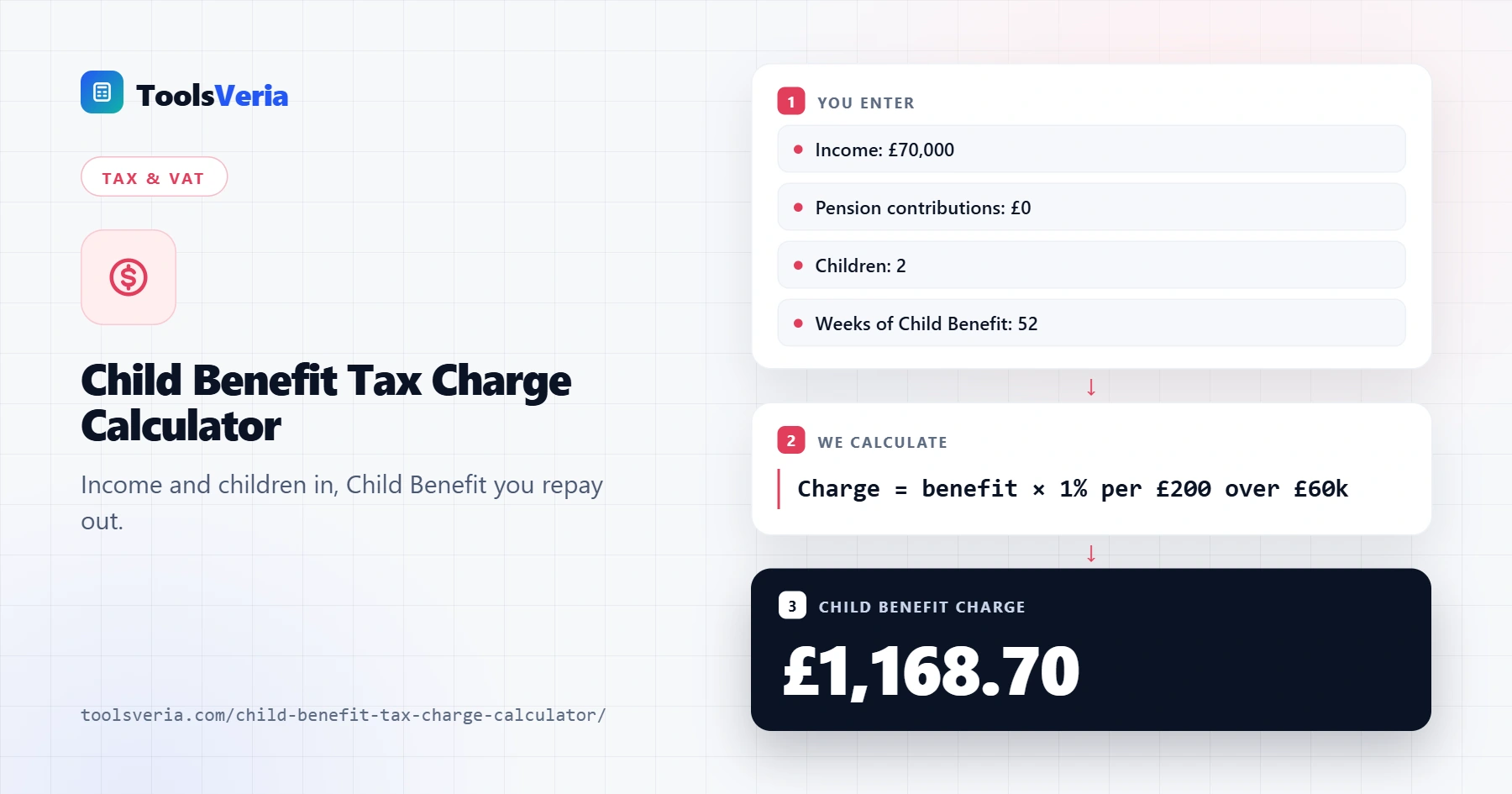
Quick answer: A child benefit tax charge calculator applies the High Income Child Benefit Charge rule: you repay 1% of Child Benefit for every full £200 of adjusted net income over £60,000. At £70,000 you repay 50%, and at £80,000 or more you repay all of it. For 2026/27, two children receive £2,337.40 over 52 weeks.
In This Guide
What Is the High Income Child Benefit Charge?
The High Income Child Benefit Charge is a tax charge that claws back Child Benefit when either partner has adjusted net income over £60,000. It is always paid by the partner with the higher income, even if the other partner receives the benefit. Adjusted net income is your total taxable income minus gross pension contributions and Gift Aid donations.
The formula is: charge = Child Benefit × 1% for every full £200 over £60,000. At £70,000 you repay 50%, and at £80,000 or more you repay all of it. For 2026/27, Child Benefit is £27.05 a week for the eldest child and £17.90 for each other child, so two children receive £2,337.40 over 52 weeks.
How to Use the Child Benefit Tax Charge Calculator
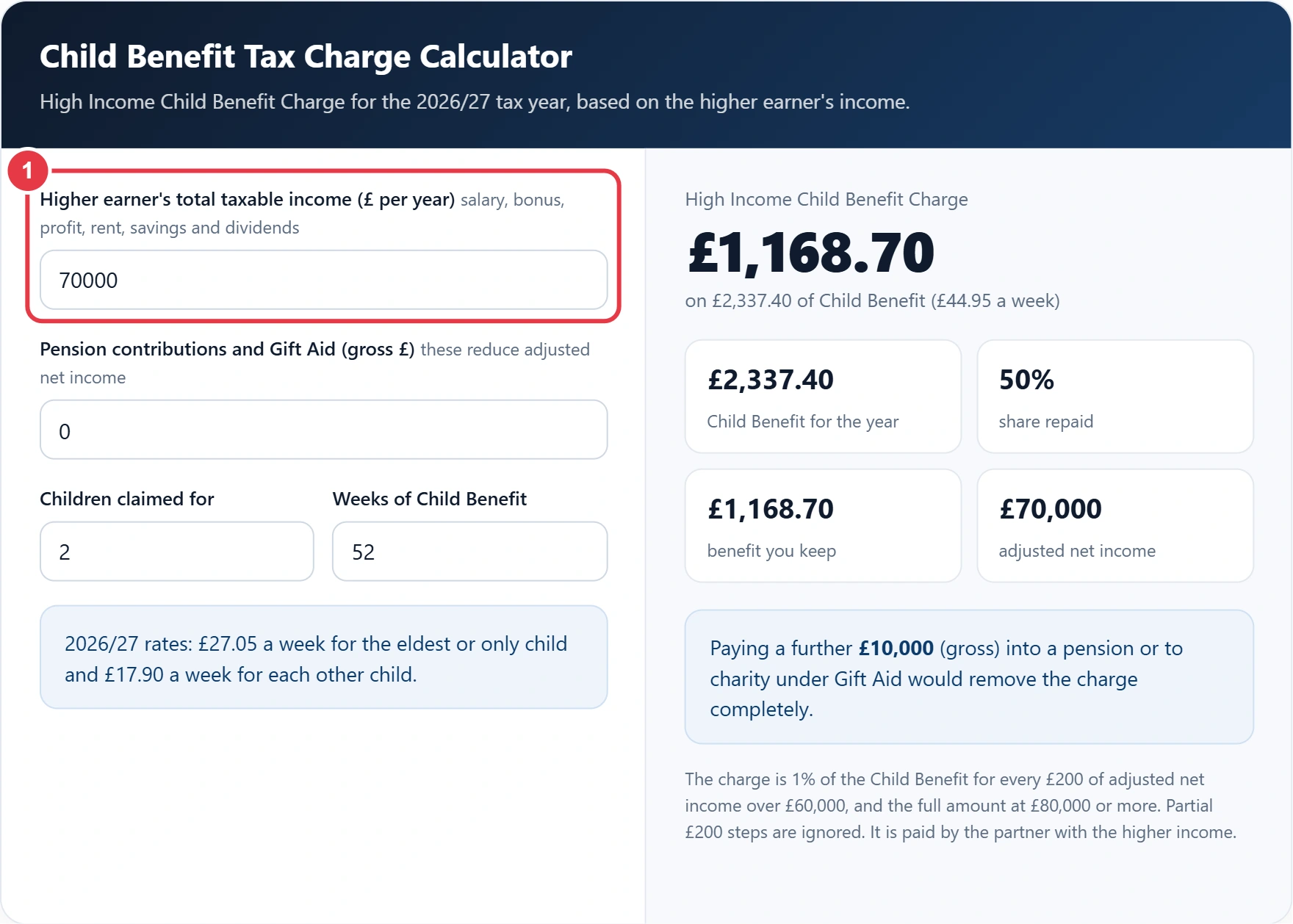
Step 1: Enter the Higher Earner's Income
Type the total taxable income of whichever partner earns more, including salary, bonus, taxable benefits, rental profit, savings interest and dividends.
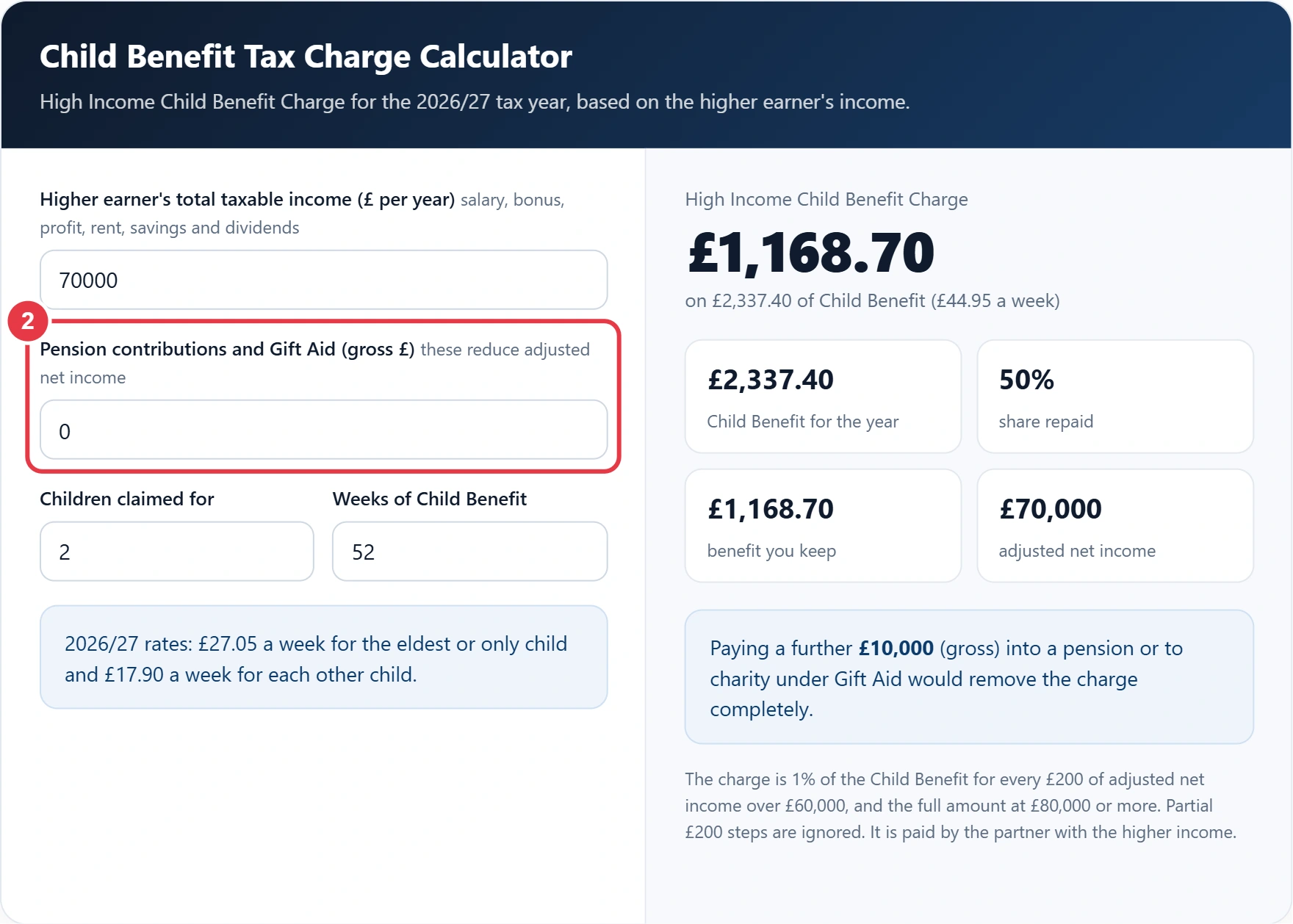
Step 2: Add Pension Contributions and Gift Aid
Enter the gross value of personal pension contributions and Gift Aid donations. Salary sacrifice pension payments are already excluded from your pay, so leave those out to avoid counting them twice.
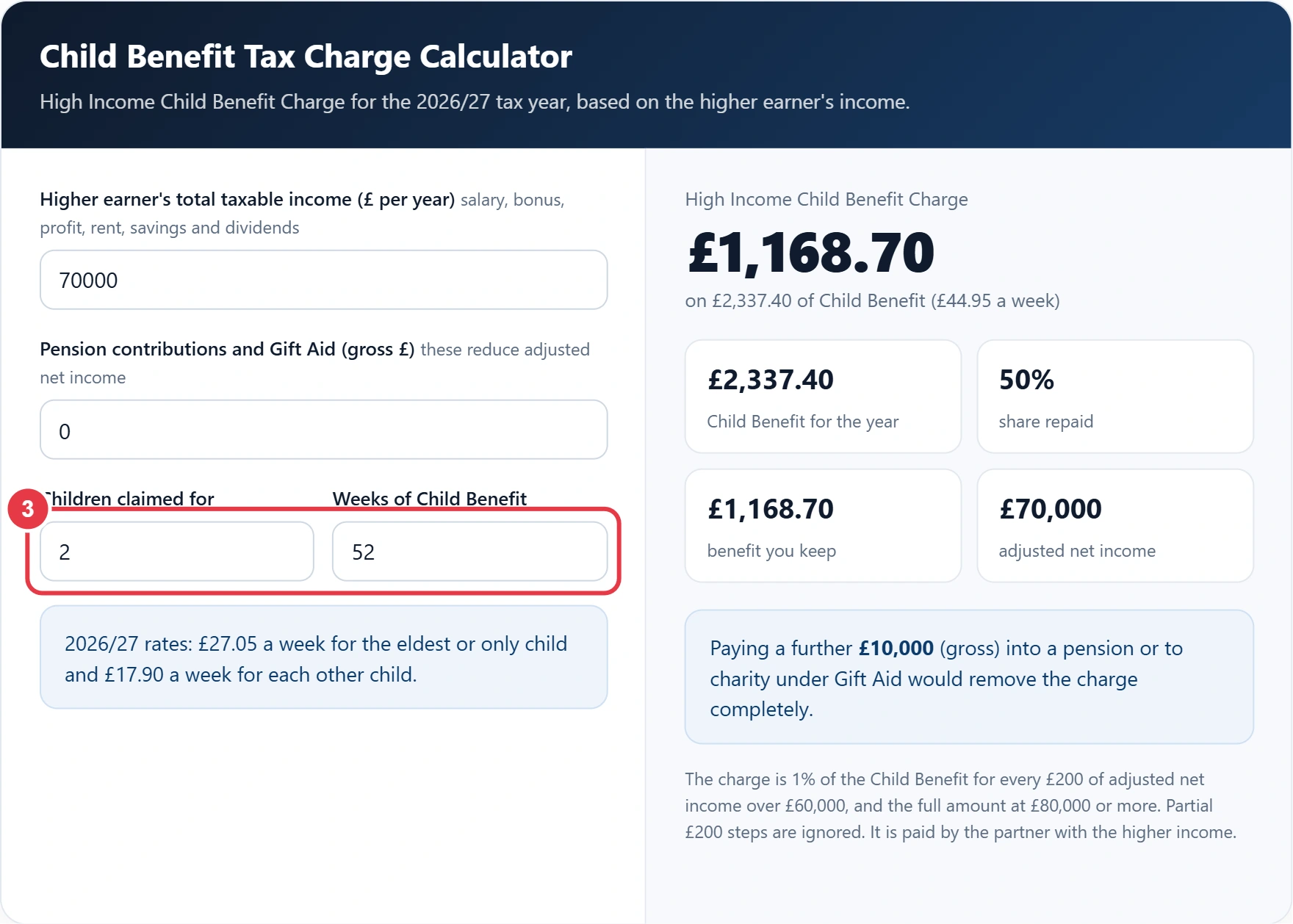
Step 3: Enter Your Children and Weeks
Add the number of children you claim for and the weeks of Child Benefit paid in the tax year. Use fewer weeks if a baby arrived during the year, and the maternity pay calculator can help you plan income for that period too.
Step 4: Read Your Results
You will see the charge, the share repaid and the benefit you keep. If your income includes company dividends, our dividend tax calculator shows the separate tax due on them, which is added to the charge on your Self Assessment return.
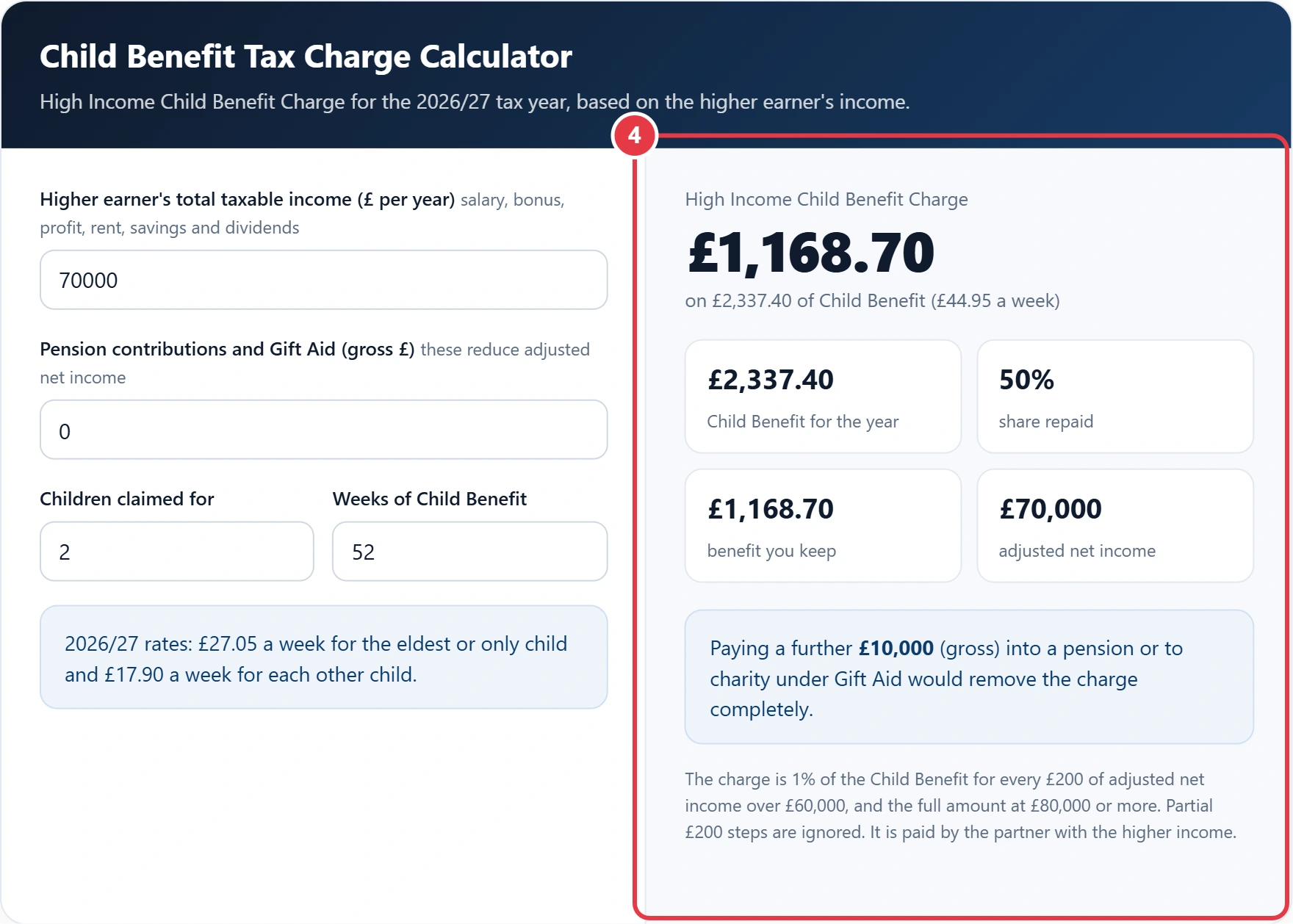
Child Benefit Charge Examples for 2026/27
| Adjusted net income | Share repaid | Charge with 2 children |
|---|---|---|
| £60,000 | 0% | £0.00 |
| £65,000 | 25% | £584.35 |
| £70,000 | 50% | £1,168.70 |
| £75,000 | 75% | £1,753.05 |
| £80,000 | 100% | £2,337.40 |
Even if you repay everything, it is usually worth claiming. A claim protects National Insurance credits for a parent who is not working. You can keep the claim but opt out of payments, and the official Child Benefit rates page lists the weekly amounts each year, so review your choice whenever your income changes.
</>Embed this calculator on your website
Add the free Child Benefit Tax Charge Calculator to your own site or blog. Copy the code below and paste it into an HTML block. It resizes itself and works on phones.
How we checked this tool: the Tools Veria Editorial Team built this tool by hand, checked it against the official rules or published standards where they apply, and tested it against worked examples. Results are estimates for planning, not personal financial or tax advice. Read our editorial policy and disclaimer, or report an error.
Frequently Asked Questions
What is the Child Benefit tax charge threshold for 2026/27?
The charge starts when adjusted net income is over £60,000. You repay 1% for every £200 above that, and all of it at £80,000 or more.
Who pays the High Income Child Benefit Charge?
The partner with the higher adjusted net income pays it, even if the other partner receives the Child Benefit.
How much is Child Benefit in 2026/27?
From 6 April 2026 it is £27.05 a week for the eldest or only child and £17.90 a week for each additional child.
Can pension contributions reduce the charge?
Yes. Personal pension contributions and Gift Aid donations reduce adjusted net income, which can lower or remove the charge.
Is the charge based on household income?
No. It is based on the individual income of the higher earning partner, not the combined income of the household.
Should I stop claiming Child Benefit if I earn over £80,000?
You can opt out of payments, but keep the claim in place. It protects National Insurance credits and gets your child a National Insurance number automatically.