Decode a UK PAYE tax code and see the tax free pay it gives you in 2026/27.
| Part | What it means |
|---|
The allowance is roughly the code number × 10; payroll tables add a few pounds more. The estimate uses 2026/27 rates for England, Wales and Northern Ireland (20% to £37,700 of taxable pay, 40% to £125,140, then 45%) and ignores National Insurance.
Not sure what the letters and numbers on your payslip mean? This tax code calculator decodes any UK PAYE code, from the standard 1257L to K codes, BR and emergency codes, using the definitions in the GOV.UK guide to what your tax code means. It shows the tax free pay your code gives you and estimates the Income Tax you will pay in 2026/27.
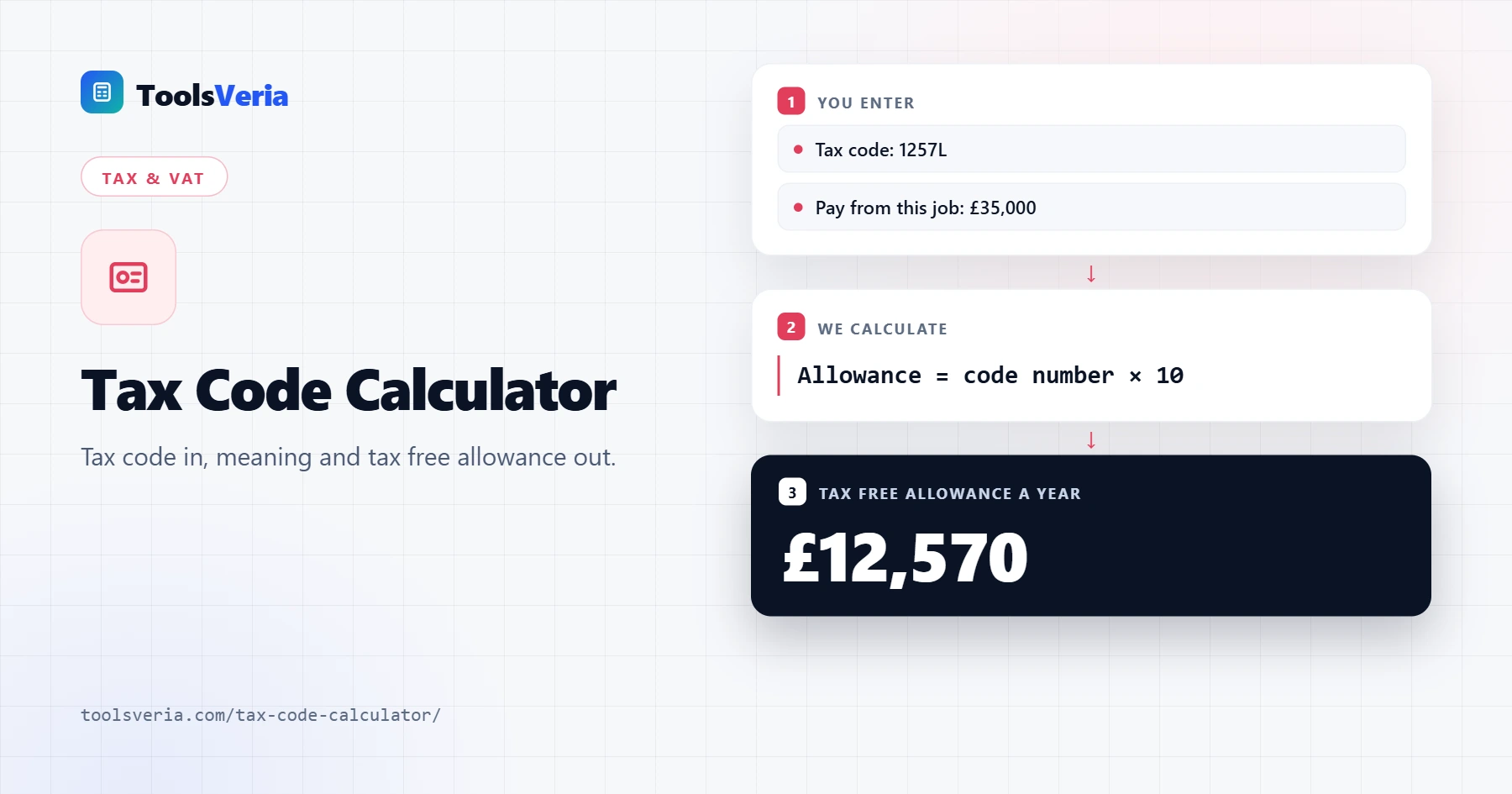
Quick answer: A tax code calculator uses tax free allowance = code number × 10, so 1257L gives about £12,570 a year, matching the 2026/27 Personal Allowance. A K code adds to taxable pay instead, so K475 adds about £4,750. BR, D0 and D1 tax all pay at one flat rate, and 0T means no allowance at all.
In This Guide
What Is a Tax Code?
Your tax code tells your employer or pension provider how much pay to treat as tax free before taking Income Tax. HMRC sets it using your Personal Allowance, plus or minus things such as company benefits, untaxed income, Marriage Allowance or tax owed from earlier years. Each job or pension has its own code.
The formula is: tax free allowance = code number × 10. So 1257L gives about £12,570 a year, which matches the 2026/27 Personal Allowance. A K code works the other way: K475 adds about £4,750 to your taxable pay. Letters such as BR, D0 and D1 mean all pay is taxed at one flat rate, and 0T means no allowance at all.
How to Use the Tax Code Calculator
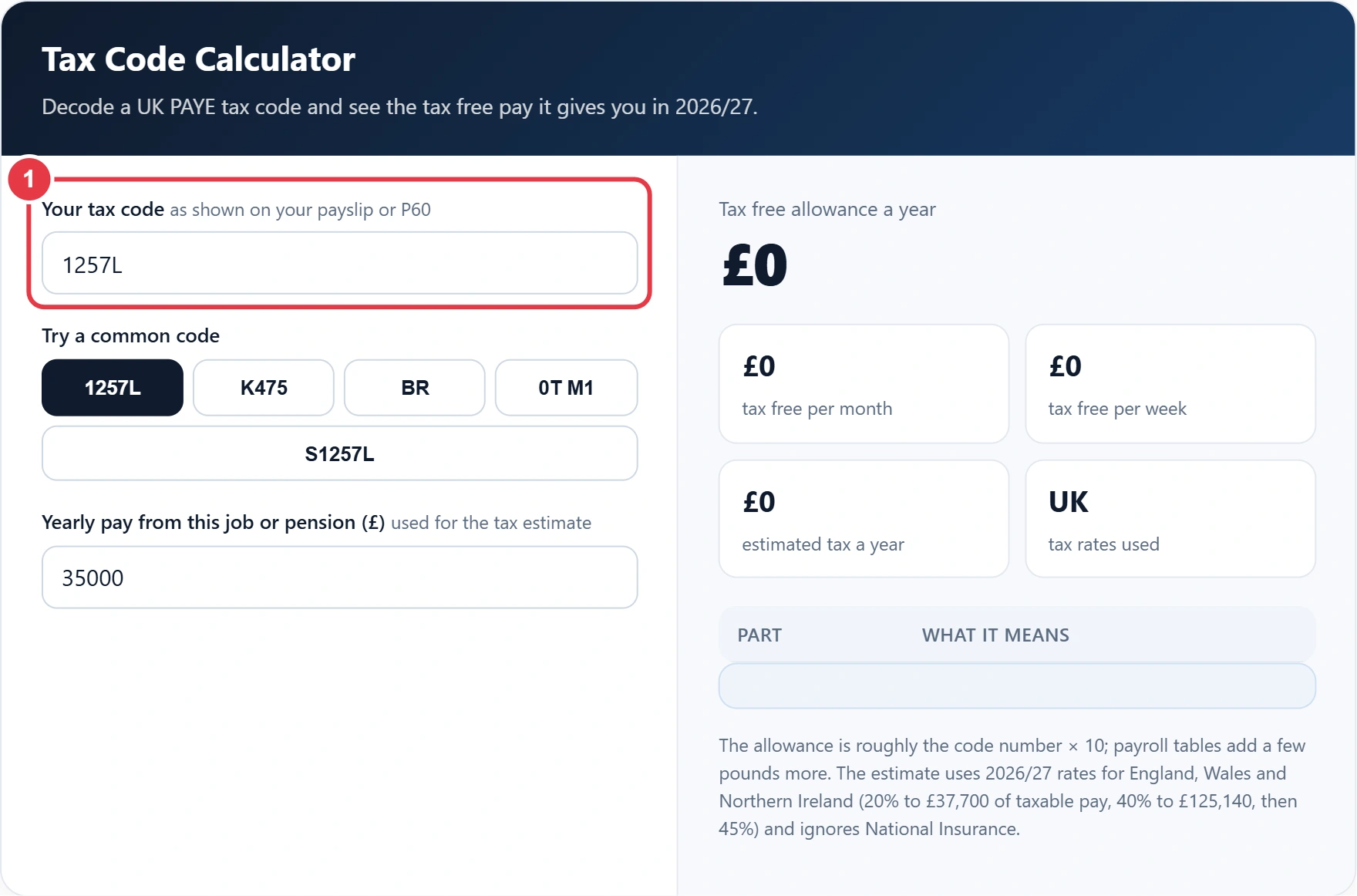
Step 1: Enter Your Tax Code
Type the code exactly as it appears on your payslip, P60 or personal tax account, including any S or C at the start and W1, M1 or X at the end.
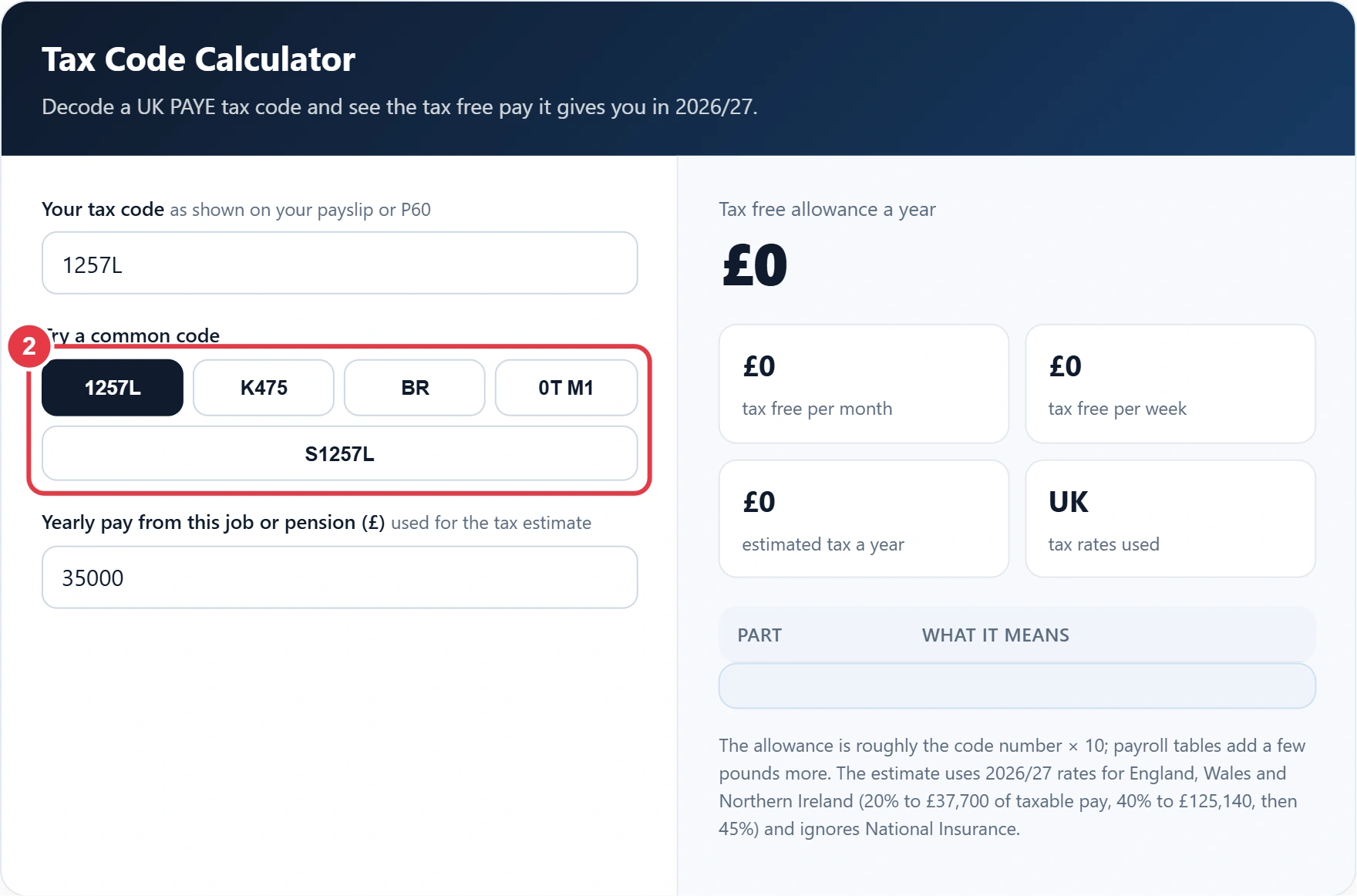
Step 2: Try Common Codes
Tap one of the example buttons to compare codes side by side. This is handy when you start a second job, as your new employer may use BR while your main job keeps 1257L.
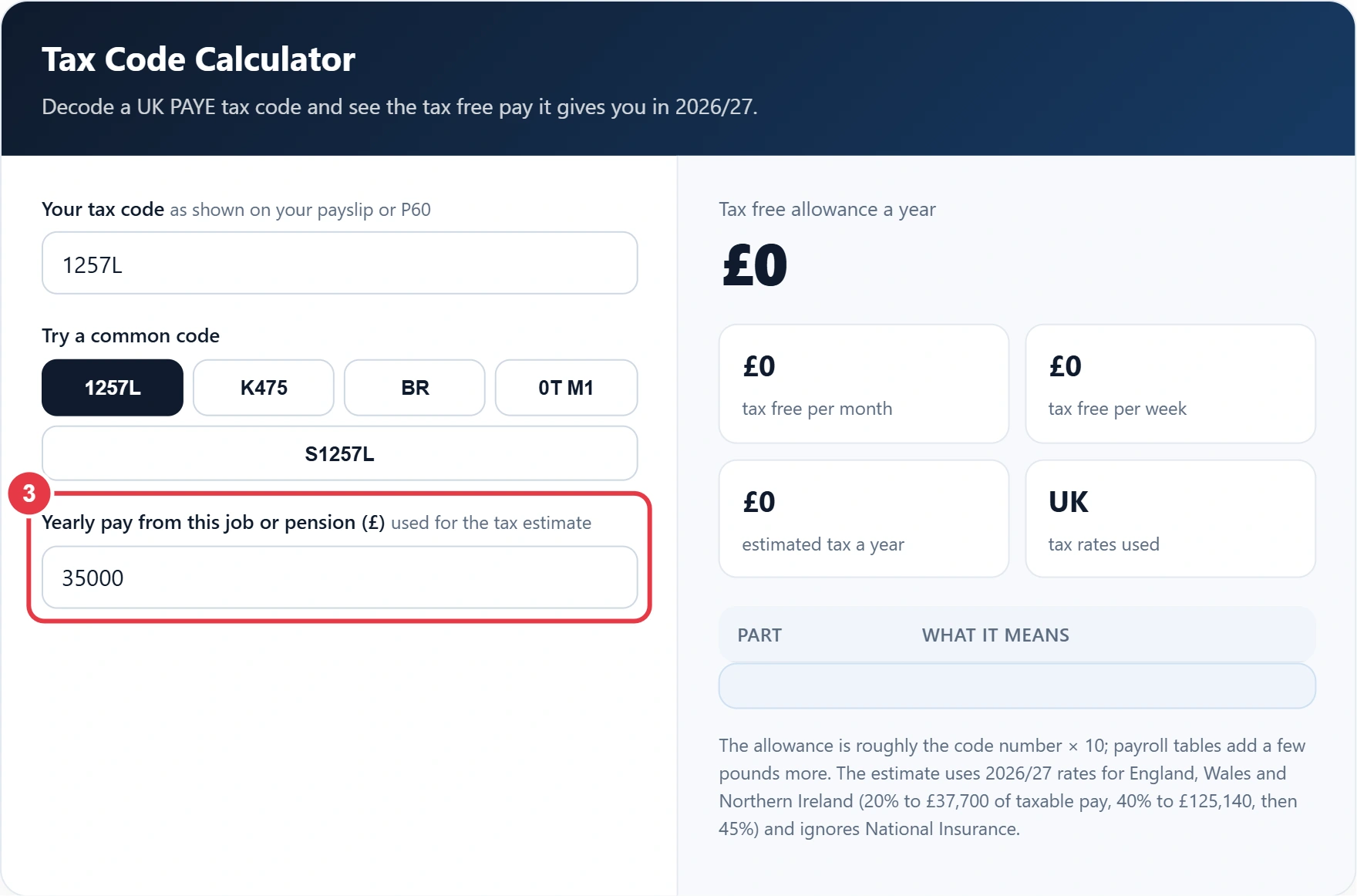
Step 3: Enter Your Yearly Pay
Add your pay from this job for the full year. If you are paid by the hour, the hourly to annual salary calculator gives you a yearly figure first, so the tax estimate reflects your real earnings.
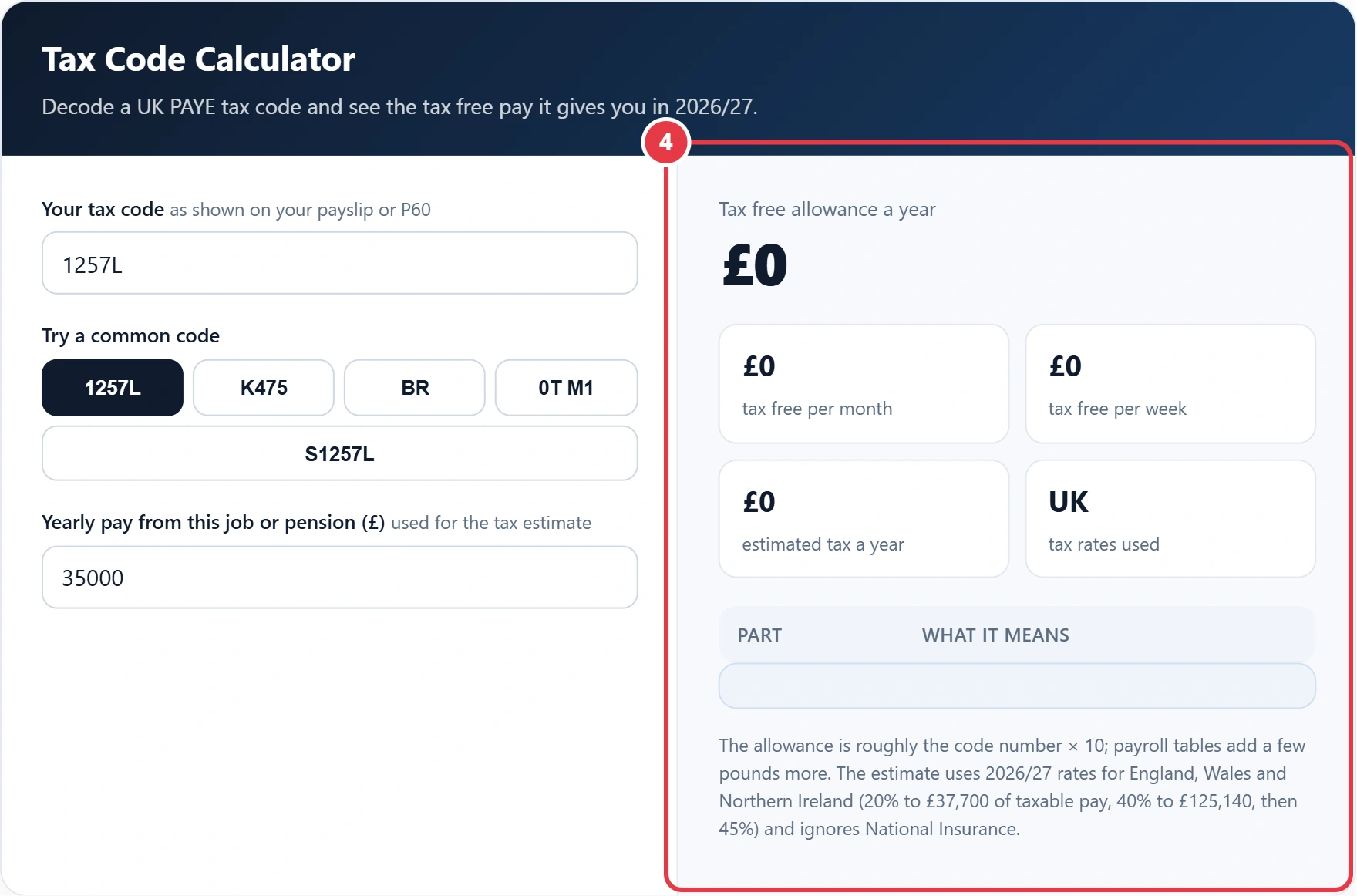
Step 4: Read Your Results
You will see your tax free allowance per year, month and week, an Income Tax estimate and a plain English meaning for each part of the code. Working for yourself as well? Our self employed tax calculator covers profit that is not taxed through PAYE, so you can plan for both.
Common UK Tax Codes Explained
| Code | Meaning | Tax free allowance |
|---|---|---|
| 1257L | Standard Personal Allowance | £12,570 |
| 1383M | Received Marriage Allowance | £13,830 |
| 1131N | Transferred Marriage Allowance | £11,310 |
| K475 | Untaxed income above allowance | Minus £4,750 |
| BR | All pay at 20% | £0 |
| D0 | All pay at 40% | £0 |
| 0T | No allowance, normal bands | £0 |
| 1257L M1 | Emergency, monthly basis | £1,047.50 a month |
If you think your code is wrong, check it in your personal tax account or the HMRC app. The official guidance on emergency tax codes explains why W1, M1 and X appear, and HMRC will usually send your employer a corrected code once it has your details.
</>Embed this calculator on your website
Add the free Tax Code Calculator to your own site or blog. Copy the code below and paste it into an HTML block. It resizes itself and works on phones.
How we checked this tool: the Tools Veria Editorial Team built this tool by hand, checked it against the official rules or published standards where they apply, and tested it against worked examples. Results are estimates for planning, not personal financial or tax advice. Read our editorial policy and disclaimer, or report an error.
Frequently Asked Questions
What does the tax code 1257L mean?
It means you get the standard Personal Allowance of £12,570 a year tax free from this job. It is the most common code for 2026/27.
How do I work out my tax free allowance from my code?
Multiply the number in your code by 10. For example, 1257L gives about £12,570 a year.
What is a K tax code?
A K code means your untaxed income or benefits are worth more than your allowance. The amount is added to your taxable pay, but no more than half your pay can be taken in tax.
What does BR mean on my payslip?
BR means all pay from that job is taxed at the 20% basic rate with no allowance. It is often used for a second job or pension.
What is an emergency tax code?
It is a code ending W1, M1 or X. Tax is worked out on each payment on its own rather than across the whole year.
What do S and C at the start of a code mean?
S means Scottish Income Tax rates apply and C means Welsh rates apply. The rest of the code works the same way.