Convert ml to oz in US or UK fluid ounces, or switch to ounces to millilitres.
| ml | US fl oz | UK fl oz |
|---|
1 US fl oz = 29.5735 ml and 1 UK fl oz = 28.4131 ml. Fluid ounces measure volume, not weight. For ounces on a kitchen scale use grams instead.
This ml to oz converter changes millilitres into US or UK fluid ounces, and back again, for recipes, drinks, baby bottles, cosmetics and travel liquids. It uses the exact legal definitions of both ounces, set out in the fluid ounce entry on Wikipedia, and shows cups, pints and a chart at the same time so you never have to guess which ounce a label means.
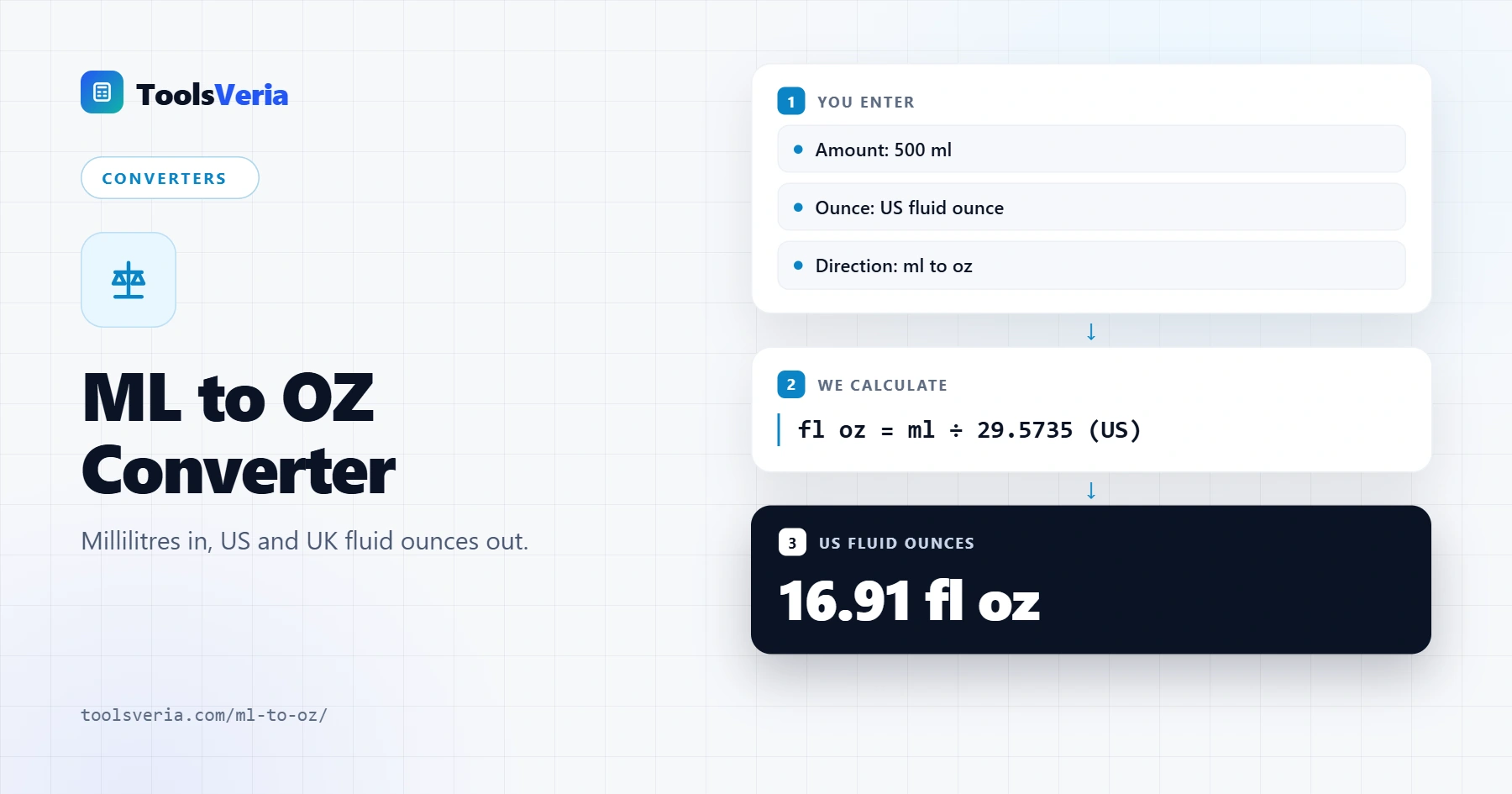
Quick answer: To convert ml to oz, divide the millilitres by 29.5735 for US fluid ounces or by 28.4131 for UK fluid ounces. So 100 ml is 3.38 US fl oz or 3.52 UK fl oz, 500 ml is 16.91 US fl oz, and one litre is 33.81 US fl oz.
In This Guide
What Is the ML to OZ Conversion?
The ml to fl oz conversion turns a metric volume in millilitres into the fluid ounce used in the United States or the United Kingdom. A millilitre is one thousandth of a litre, while a fluid ounce is a much larger imperial or US customary unit.
The formula is fl oz = ml ÷ 29.5735 for US ounces and fl oz = ml ÷ 28.4131 for UK ounces. To go the other way, multiply ounces by the same number. Because the UK ounce is smaller, the same bottle always shows about 4% more ounces in UK units.
How to Use the ML to OZ Converter
Step 1: Choose the Direction
Select ml to fl oz to convert millilitres, or fl oz to ml if your recipe or label gives ounces. Switching direction converts the number already in the box.

Step 2: Enter the Amount
Type the amount you want to change from ml to oz, taken from the bottle, jug or recipe. Decimals are fine, so 12.5 ml or 0.5 fl oz both work. The result updates as you type.

Step 3: Pick US or UK Ounces
Choose US fluid ounces for American recipes, drinks and product labels, and UK fluid ounces for older British recipes and imperial pint measures. Set 1, 2 or 3 decimal places depending on how precise you need to be.

Step 4: Read the Results
The big number is your conversion. Below it you see the other ounce type, US cups, UK pints and litres, plus a chart of common sizes in both ounces. For bigger volumes the litre to gallon converter turns litres into US or UK gallons in the same way.

How Many Ounces Are in 100 ml?
There are 3.38 US fluid ounces or 3.52 UK fluid ounces in 100 ml. That is why airport liquid rules written as 100 ml in Europe appear as 3.4 oz in the United States. The chart below covers the sizes people convert most often.
| Millilitres | US fl oz | UK fl oz | Common example |
|---|---|---|---|
| 5 ml | 0.17 | 0.18 | Teaspoon of medicine |
| 30 ml | 1.01 | 1.06 | Shot of espresso or spirit |
| 100 ml | 3.38 | 3.52 | Travel liquid limit |
| 250 ml | 8.45 | 8.80 | Metric cup or small carton |
| 330 ml | 11.16 | 11.61 | Drinks can |
| 500 ml | 16.91 | 17.60 | Bottle of water |
| 750 ml | 25.36 | 26.40 | Wine bottle |
| 1,000 ml | 33.81 | 35.20 | One litre |
Worked example: Priya is following an American cocktail recipe that serves eight and needs a 750 ml bottle of prosecco. In US units that bottle holds 750 ÷ 29.5735 = 25.36 fl oz, so each glass gets about 3.2 fl oz, or 94 ml. Her British grandmother's recipe book would call the same bottle 26.40 fl oz.
Is a US Fluid Ounce the Same as a UK Fluid Ounce?
No, a US fluid ounce is 29.57 ml and a UK fluid ounce is 28.41 ml, so the US ounce is about 4% larger. The gap grows with bigger units: a US pint is 16 US fl oz (473 ml), while a UK pint is 20 UK fl oz (568 ml).
Most online charts for milliliters to ounces only give the US figure, which is fine for American recipes but slightly off for British ones. US nutrition labels go further and round one fluid ounce to 30 ml. When a label shows both, trust the ml figure, because that is the measured amount, and use this ml to oz tool for the ounce type you need.
Can I Convert ml to oz by Weight?
Only for water and liquids with a similar density, because a fluid ounce measures volume and an ounce on a scale measures weight. One ml of water weighs about 1 gram, and a weight ounce is 28.35 g, so 100 ml of water weighs about 3.53 oz.
Honey, oil and flour all weigh different amounts per millilitre, so convert them by weight with a scale or the cups to grams converter, which uses typical densities for common ingredients. If you are packing a cabin bag, the UK hand luggage rules still limit most liquids to containers of 100 ml, so check your airport before you fly.
Key ML to OZ Terms Explained
These terms explain the units behind every ml to oz result on this page, including why the US and UK ounces give different numbers.
- Millilitre
- A metric unit of volume equal to one thousandth of a litre. A teaspoon is 5 ml, a drinks can is 330 ml and a standard bottle of water is 500 ml, which is 16.91 US fluid ounces.
- US fluid ounce
- The fluid ounce used in the United States, equal to 29.5735 ml. Sixteen of them make a US pint of 473 ml and eight make a US cup of 236.6 ml. Nutrition labels round it to 30 ml.
- UK fluid ounce
- The imperial fluid ounce used in older British recipes, equal to 28.4131 ml. Twenty of them make a UK pint of 568 ml, so the same volume shows about 4% more UK ounces than US ounces.
- Weight ounce
- An ounce of mass on a kitchen scale, equal to 28.35 grams. It measures how heavy something is, not how much space it fills, so it only matches fluid ounces closely for water.
- Density
- How much a given volume of a substance weighs. Water is about 1 gram per ml, while honey, oil and flour differ, which is why liquids other than water need a scale to convert volume to weight.
</>Embed this calculator on your website
Add the free ML to OZ Converter to your own site or blog. Copy the code below and paste it into an HTML block. It resizes itself and works on phones.
How we checked this tool: the Tools Veria Editorial Team built this tool by hand, checked it against the official rules or published standards where they apply, and tested it against worked examples. Results are estimates for planning, not personal financial or tax advice. Read our editorial policy and disclaimer, or report an error.
Frequently Asked Questions
How many ml is 1 oz?
One US fluid ounce is 29.57 ml and one UK fluid ounce is 28.41 ml. US nutrition labels round the US figure to 30 ml, which is close enough for drinks but not for medicine or baking.
How many oz is 500 ml?
500 ml is 16.91 US fluid ounces or 17.60 UK fluid ounces. A standard 500 ml water bottle is therefore just under 17 oz in American units, a little more than two US cups.
Is 8 oz the same as 250 ml?
Not exactly. 8 US fluid ounces is 236.6 ml, one US cup, while 250 ml is a metric cup and equals 8.45 US fl oz. The difference is about 13 ml, which rarely matters in cooking.
How do I convert oz to ml?
Multiply the fluid ounces by 29.5735 for US ounces or by 28.4131 for UK ounces. For example, 12 US fl oz is 12 × 29.5735 = 354.9 ml, the size of a standard American drinks can.
Why does my bottle say 3.4 oz instead of 100 ml?
Because 100 ml equals 3.38 US fluid ounces, which brands and airports round to 3.4 oz. The two figures describe the same travel sized container, so a 100 ml bottle meets a 3.4 oz limit.
Are fluid ounces and ounces the same thing?
No. Fluid ounces measure volume and ounces measure weight. They only line up for water, where one US fluid ounce weighs about 1.04 weight ounces, so use grams or ounces on a scale for dry ingredients.