
Megan in Leeds is owed £780 by a former flatmate who moved out without paying his share of the bills. Sunita in Swindon paid a landscaper £2,950 up front for a patio that was never laid. Both are ready to go to court, and both want to know the same thing first: how much the small claims court fees will be, and whether they get that money back.
The answer depends on more than the debt. Interest, a defence, and the step needed to collect after judgment all change the bill. We follow both claims through every fee below, using the HMCTS fees list for England and Wales updated in July 2026.
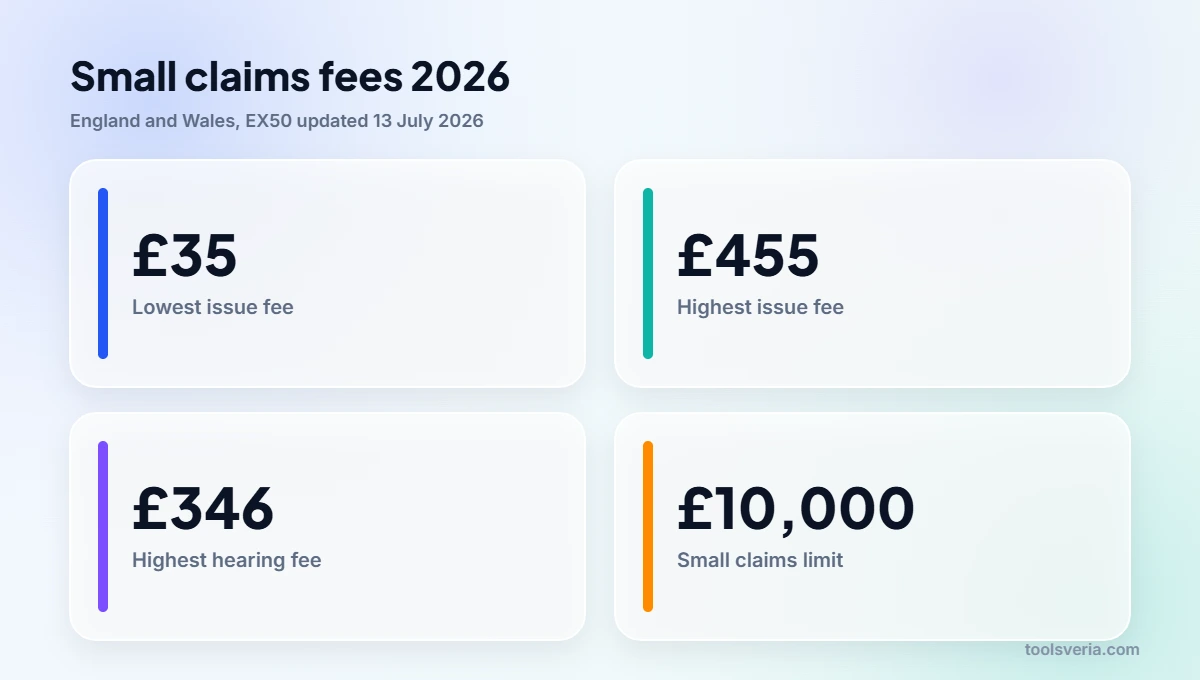
Quick answer: For 2026, the HMCTS EX50 fees list sets small claims issue fees in England and Wales at £35 to £455, depending on the amount claimed including interest. If the claim is defended, a hearing fee of £27 to £346 follows, so a defended £2,000 claim costs £296 in court fees.
In This Guide
How much are small claims court fees in 2026?
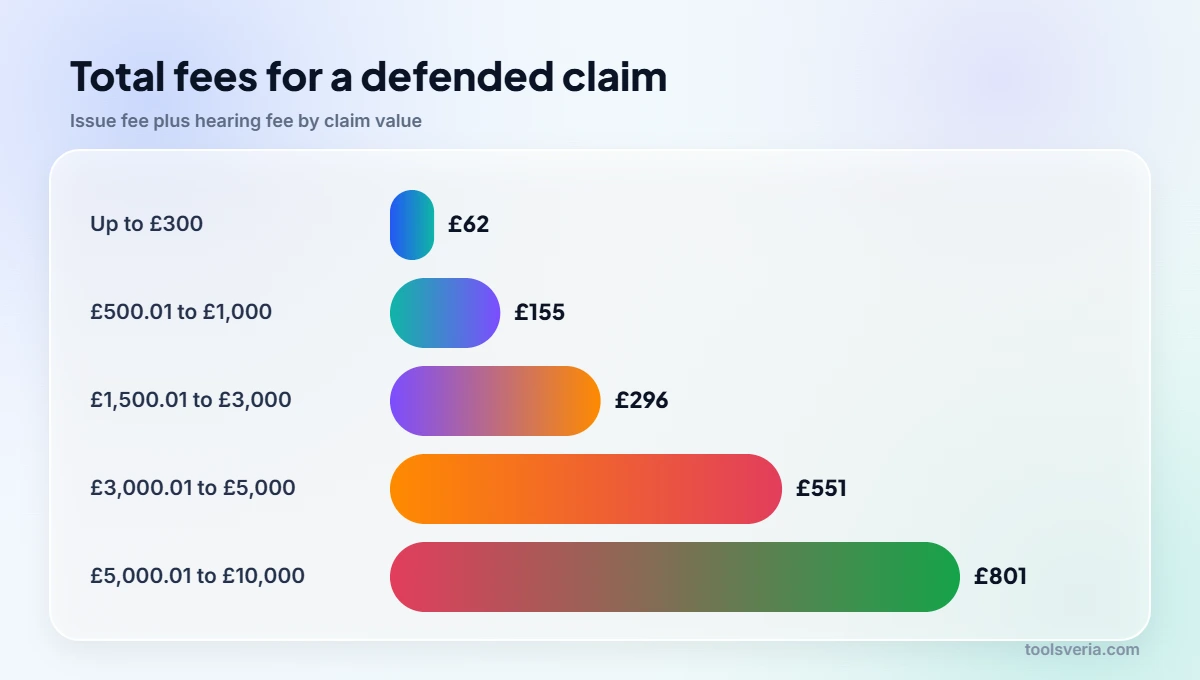
Small claims court fees in 2026 are an issue fee of £35 to £455 to start the claim, plus a hearing fee of £27 to £346 if the defendant defends it and the court lists a hearing. Both fees rise with the value of the claim, and the bands below come from the EX50 civil court fees list on GOV.UK, last updated on 13 July 2026.
| Amount claimed, including interest | Issue fee | Hearing fee | Total if defended |
|---|---|---|---|
| Up to £300 | £35 | £27 | £62 |
| £300.01 to £500 | £50 | £59 | £109 |
| £500.01 to £1,000 | £70 | £85 | £155 |
| £1,000.01 to £1,500 | £80 | £123 | £203 |
| £1,500.01 to £3,000 | £115 | £181 | £296 |
| £3,000.01 to £5,000 | £205 | £346 | £551 |
| £5,000.01 to £10,000 | £455 | £346 | £801 |
The small claims track handles most money claims up to £10,000. Above that, the issue fee becomes 5% of the claim, so £12,000 costs £600 to issue, and the case normally moves to a track where legal costs can be recovered and lost. Scotland and Northern Ireland run separate systems with their own limits and fees, so the figures here apply to England and Wales only.
How is your fee band worked out?
Your fee band is worked out from the total value of the claim on the day you issue it: the debt, plus any interest up to that date, plus any fixed compensation for a late business payment. That single total sets both the issue fee and, later, the hearing fee.
Megan claims £780 without interest, which sits in the £500.01 to £1,000 band. Her issue fee is £70. Her former flatmate never replies, so she asks for judgment in default and pays no hearing fee, spending £70 in total. Had he filed a defence and the case reached a hearing, she would have paid £85 more, making £155.
Claiming on paper with form N1 or through Money Claim Online costs the same, and the online service works out the fee for you. Online is usually quicker to process, accepts claims up to £99,999.99, and lets you track the case. If the dispute is over a rental deposit, check first with the tenancy deposit cap calculator whether the deposit itself was lawful, since an overcharge can change what you claim.
Can interest push your claim into a higher fee band?
Yes, interest can push a claim into a higher fee band, because the court fee is based on the total claimed including interest to the date of issue. A claim sitting just under a band edge can cross it with a few weeks of interest, and the higher hearing fee follows it.
Interest on most debts is simple interest at 8% a year. The formula in plain words: multiply the debt by 0.08, divide by 365 for the daily amount, then multiply by the number of days overdue. The GOV.UK guide to working out claim interest uses exactly these three steps.
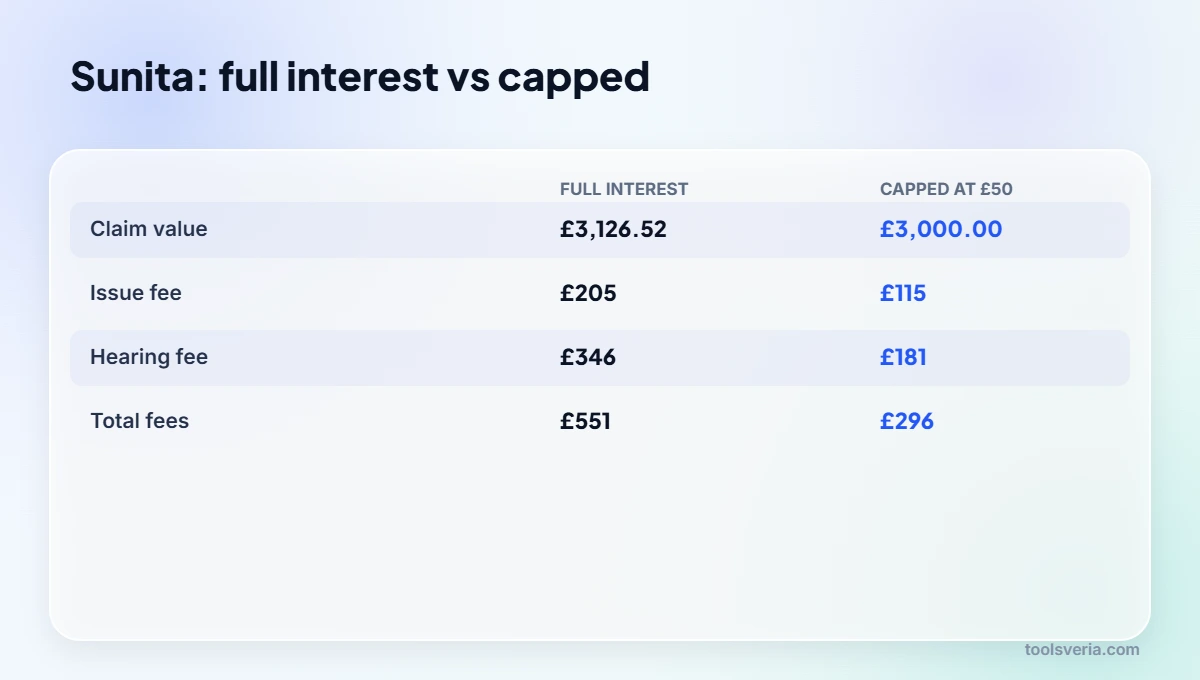
Sunita’s £2,950 refund was due on 10 January 2026 and she issues on 10 October 2026, 273 days later. Her daily interest is about 64.66p, giving £176.52, so her claim totals £3,126.52. That crosses £3,000, so her issue fee is £205 and a hearing would add £346: £551 in total. If she limits her interest to £50, the claim is exactly £3,000, the issue fee drops to £115 and the hearing fee to £181, a total of £296. Giving up £126.52 of interest cuts her fees by £255.
| Sunita’s options | Claim value | Issue fee | Hearing fee | Total fees |
|---|---|---|---|---|
| Full interest of £176.52 | £3,126.52 | £205 | £346 | £551 |
| Interest limited to £50 | £3,000.00 | £115 | £181 | £296 |
| Debt only, no interest | £2,950.00 | £115 | £181 | £296 |
Businesses owed money by another business follow different rules: they can claim 8% plus the Bank of England base rate, and the GOV.UK rules on claiming debt recovery costs add a fixed £40, £70 or £100 depending on the size of the debt. That fixed sum counts towards the band too, so a £2,950 invoice plus £70 is already £3,020 before any interest.
Most errors creep in when people count the days overdue by hand, so our days between dates calculator gives the exact figure before you multiply.
Do you get your court fees back if you win?
You usually get your court fees back if you win, because the judge normally orders the defendant to pay your issue fee and any hearing fee on top of the debt and interest. Include the fees on your claim form and mention them again at the hearing so they appear in the judgment.
What you rarely recover, beyond small claims court fees, is the cost of a solicitor. That rule keeps the risk low for both sides, but it means paying a lawyer for a £2,000 claim can wipe out most of the gain. Many people handle small claims themselves for this reason.
If money is tight, the Help with Fees scheme can reduce or remove court fees for people on a low income or certain benefits; you apply online or with form EX160 before you pay. Most defended money claims up to £10,000 are also referred to the free HMCTS Small Claims Mediation Service, a one hour telephone session, before a hearing is listed. A settlement there means no hearing fee at all, which would save Sunita £181 or £346 depending on her band.
What does it cost to enforce a judgment?
Enforcing a county court judgment costs between £69 and £139 per application in 2026, depending on the method, and these fees are normally added to the debt the defendant owes. Winning does not make the money arrive, so it is worth budgeting for one enforcement step when you decide whether to claim.
| Enforcement step | Fee from July 2026 | When it helps |
|---|---|---|
| Order to obtain information | £69 | You do not know the debtor’s income or assets |
| Warrant of control | £96 | Enforcement agents can take goods to sell |
| Attachment of earnings order | £139 | The debtor is employed and paid through payroll |
| Third party debt order | £139 | The debtor has money in a bank account |
| Charging order | £139 | The debtor owns property |
Add it all up for Sunita. With her interest limited, a defended claim plus a warrant of control costs £115, £181 and £96, which is £392 in fees, all recoverable from the landscaper if he can pay. Before issuing at all, ask yourself whether the other side has money or a job, because a judgment against someone with nothing is hard to collect.
Timing matters in the other direction too. Most contract debts must be claimed within six years of the date payment was due under the Limitation Act 1980, while workplace disputes go to a tribunal instead, where the employment tribunal time limit calculator shows a far shorter deadline.
Key points
- Small claims court fees for issuing a claim in England and Wales range from £35 to £455 under the EX50 list updated on 13 July 2026.
- A hearing fee of £27 to £346 is paid only if the claim is defended and listed for a hearing.
- The fee band is set by the debt plus interest plus any fixed business compensation on the issue date.
- Limiting interest to stay at £3,000 instead of £3,126.52 saves £255 in fees on a defended claim.
- Winning claimants normally recover court fees from the defendant, but not their own legal costs.
Small Claims Court Fees 2026 Terms Explained
These terms explain the procedures and documents that shape small claims court fees 2026, from issuing a claim through to collecting the money after judgment.
- Form N1
- The claim form used to start a county court money claim on paper in England and Wales. It records the parties, the sum sought and the particulars of claim, and it costs exactly the same to issue as an online claim.
- Money Claim Online
- The HMCTS digital service for starting and tracking county court claims for a fixed sum of money. It accepts claims up to £99,999.99, works out the issue fee automatically and lets claimants request judgment without posting paperwork.
- Default judgment
- A judgment entered for the claimant when the defendant fails to respond to a claim within the time allowed. Since no hearing takes place, the claimant avoids a hearing fee and can move on to enforcement if payment still does not arrive.
- Hearing fee
- A second court charge payable by the claimant once a defended small claim is listed for a hearing. Like the issue fee it is banded by claim value, and a claimant who wins can usually recover it from the losing party.
- Fast track
- The county court track for many claims above the small claims limit, where procedure is more formal and legal costs can be recovered by, or ordered against, either side. Moving onto it considerably raises the financial risk of losing.
- Fixed compensation for late payment
- A statutory flat sum one business may claim from another for each invoice paid late, on top of any interest. It forms part of the total claim value on the issue date, so including it can move a claim into a higher fee band.
Frequently Asked Questions
I am owed £1,450 plus a few months of interest. Which fee do I pay?
It depends on whether the interest takes you past £1,500. Up to £1,500 the issue fee is £80 and the hearing fee £123; one penny more and they become £115 and £181, so consider limiting interest to stay below the line.
The defendant paid up after I issued. Do I get the £70 back?
Usually yes, if you ask for it. When a defendant pays after you issue, you can request the issue fee and interest as part of the settlement, and the court can order them if the defendant refuses, because your claim form already included them.
Is it cheaper to claim online than with a paper form?
No, Money Claim Online and the paper N1 form pay the same issue fees in 2026. Online claims are calculated automatically and are usually processed faster, which makes them the simpler choice for most people claiming a fixed sum.
When exactly do I pay the hearing fee?
You pay the hearing fee only after the claim is defended and the court lists it for a hearing, and the notice sets the payment deadline. Missing that deadline can lead to the claim being struck out, so diary it as soon as the notice arrives.
Megan’s £780 claim cost her £70, and Sunita knows that capping her interest at £50 keeps her fees at £296 instead of £551. Run your own figures through the small claims court fees bands before you issue, include the fees in your claim, and keep one enforcement step in your budget. This guide covers England and Wales and is general information, not legal advice. Figures checked October 2026.