Turn a full time salary into your part time pay by hours or days.
Figures are before tax and National Insurance. Statutory holiday is 5.6 weeks of your usual working days, capped at 28 days.
Offered a part time role and want to know what the salary really means for you? This pro rata salary calculator converts any full time salary into your actual pay based on the hours or days you work, and works out your statutory holiday under UK holiday rules at the same time. You get your yearly, monthly, weekly and hourly figures instantly, so you can compare the offer with your current job.
What Is a Pro Rata Salary?
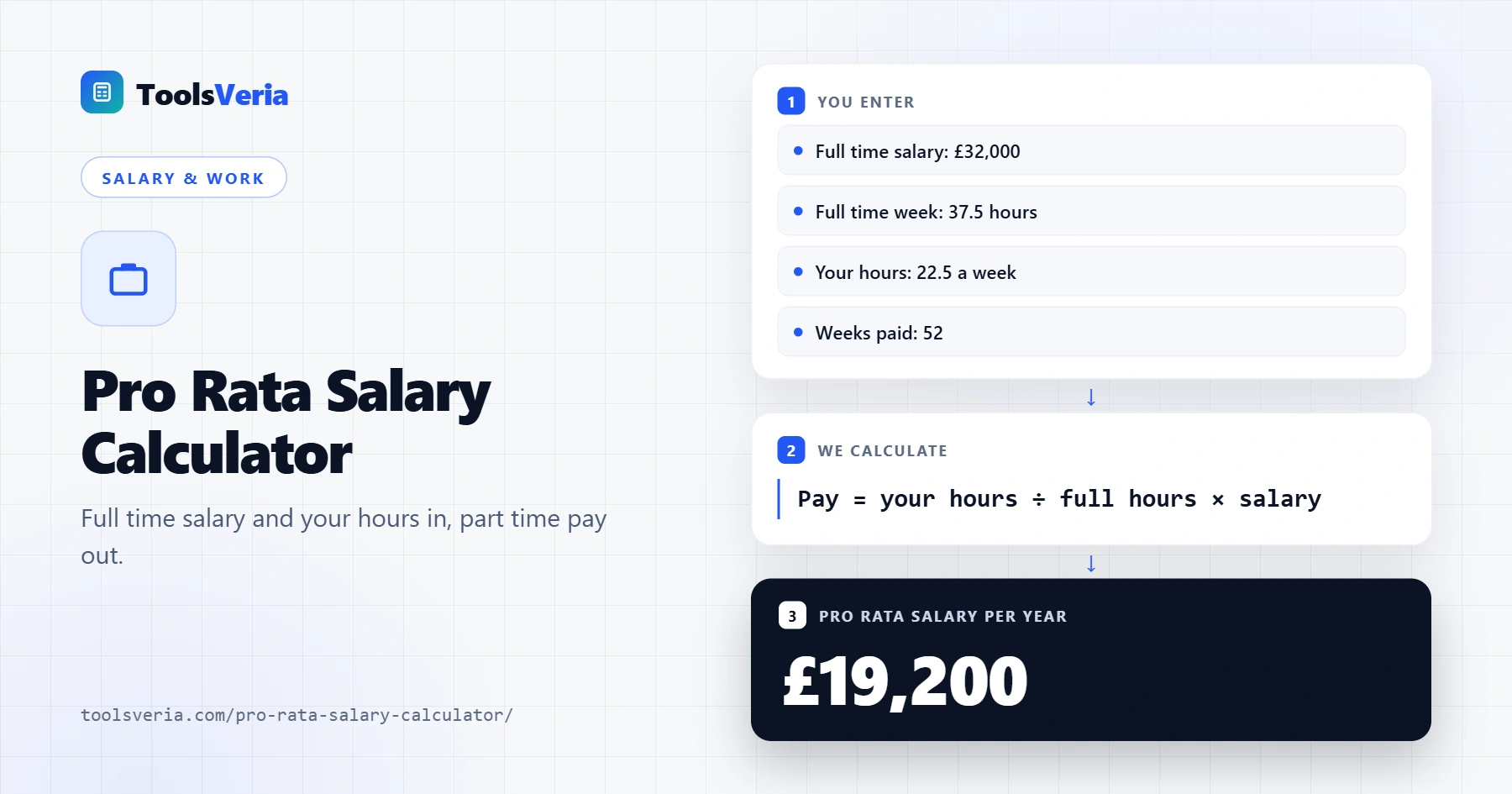
"Pro rata" is Latin for "in proportion". A pro rata salary is the full time salary for a job, scaled down to match the hours you actually work. Employers in the UK often advertise part time roles as "£32,000 pro rata", which means £32,000 is what a full time employee would earn, not what you will be paid.
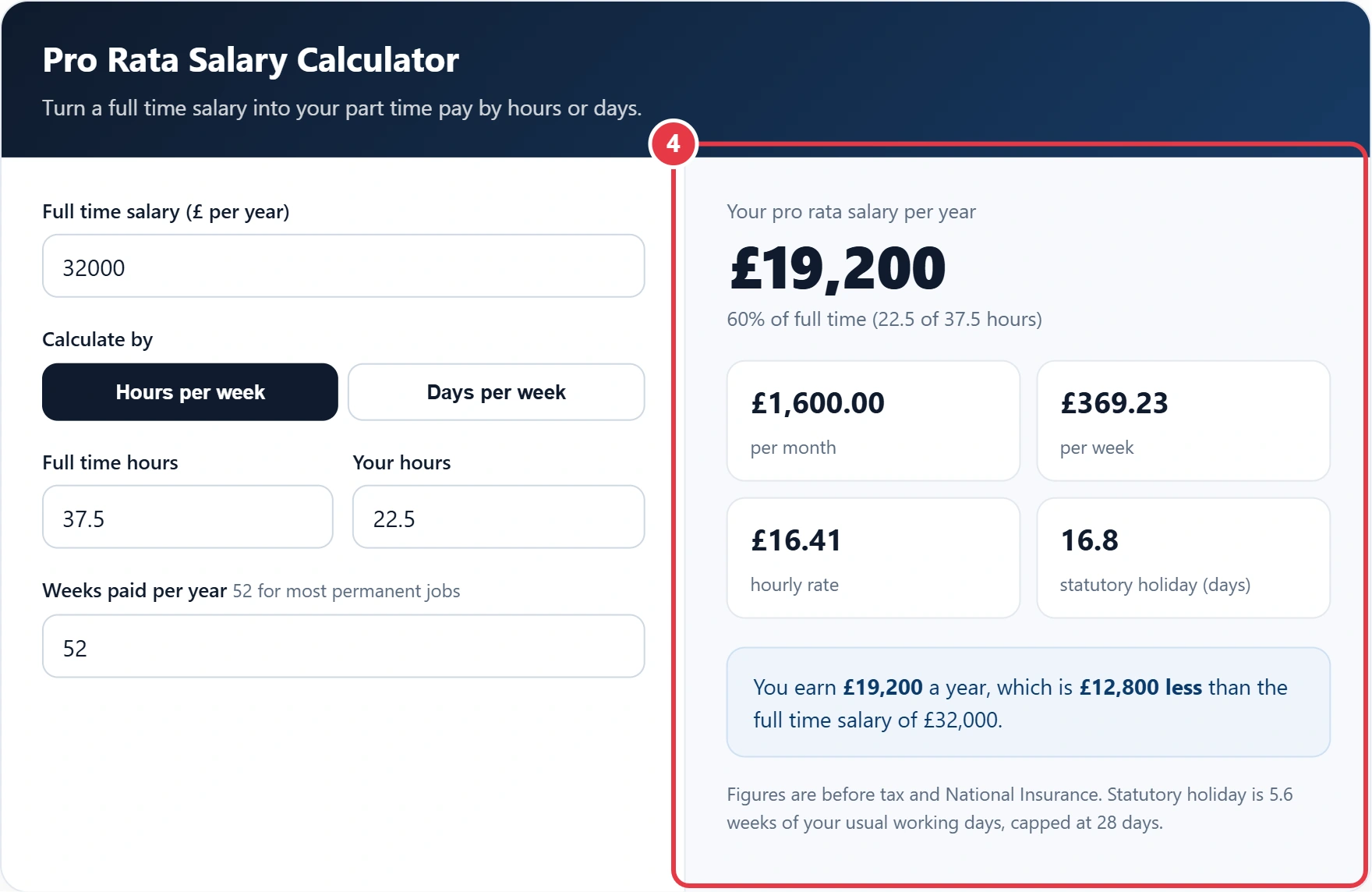
The formula is simple: your hours ÷ full time hours × full time salary. If the full time week is 37.5 hours and you work 22.5 hours, you work 60% of the week, so you earn 60% of the salary. The same works with days: three days out of five is also 60%.
How to Use the Pro Rata Salary Calculator
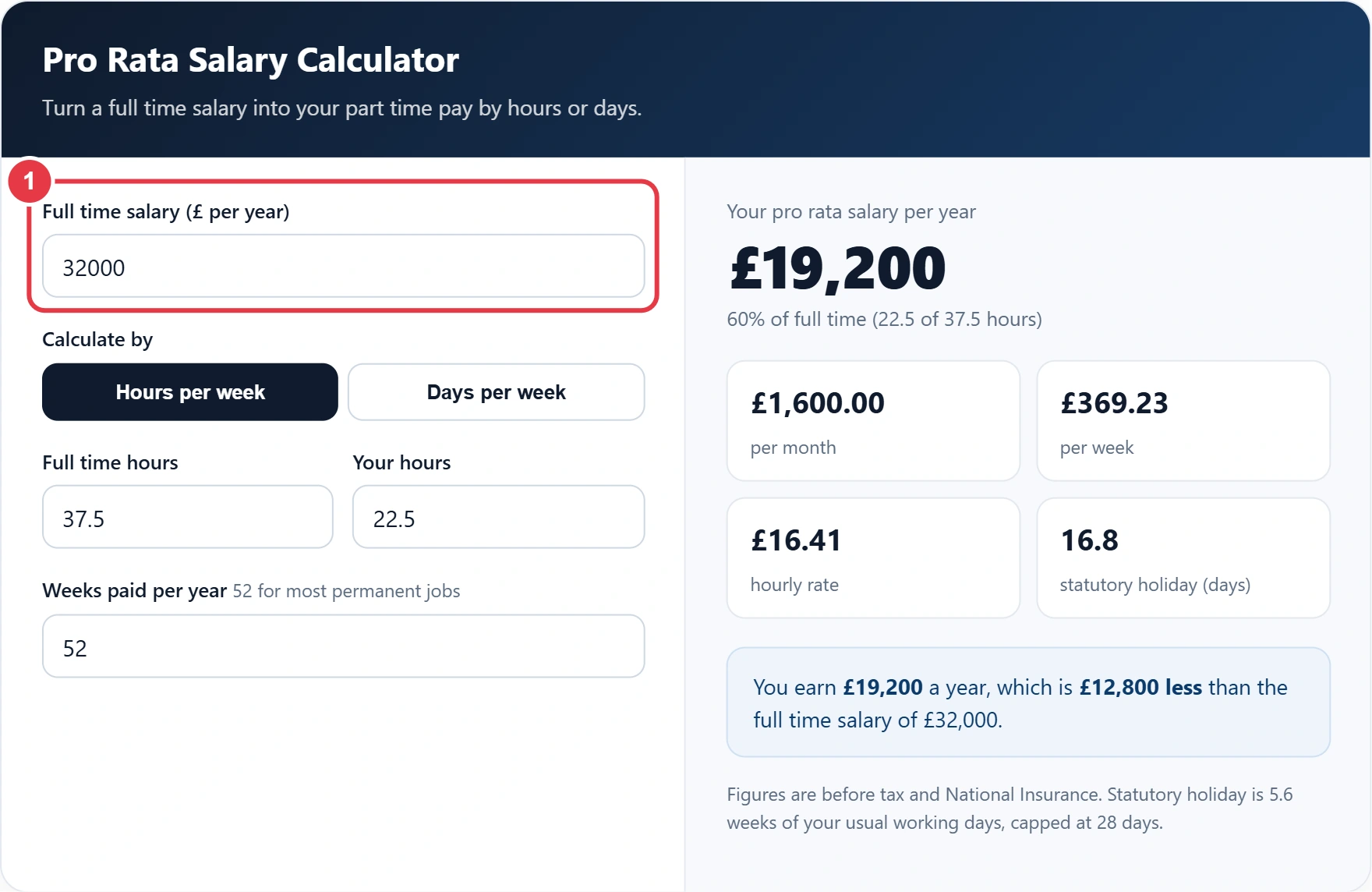
Step 1: Enter the Full Time Salary
Type the annual salary shown in the job advert or your contract. This is the figure a full time employee would earn before tax.
Step 2: Choose Hours or Days
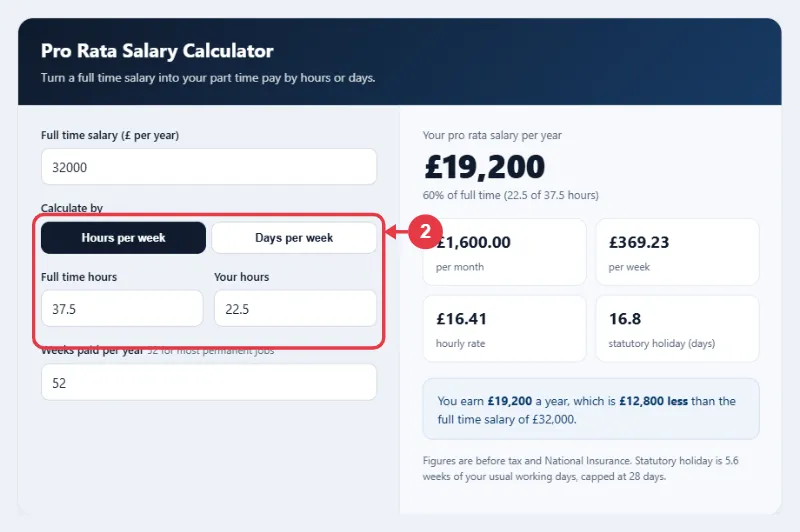
Select Hours per week if your contract states hours, or Days per week if it states days. Then enter the full time pattern and your own pattern. Most UK office jobs use 37.5 or 40 hours over five days.
Step 3: Set the Weeks Paid per Year
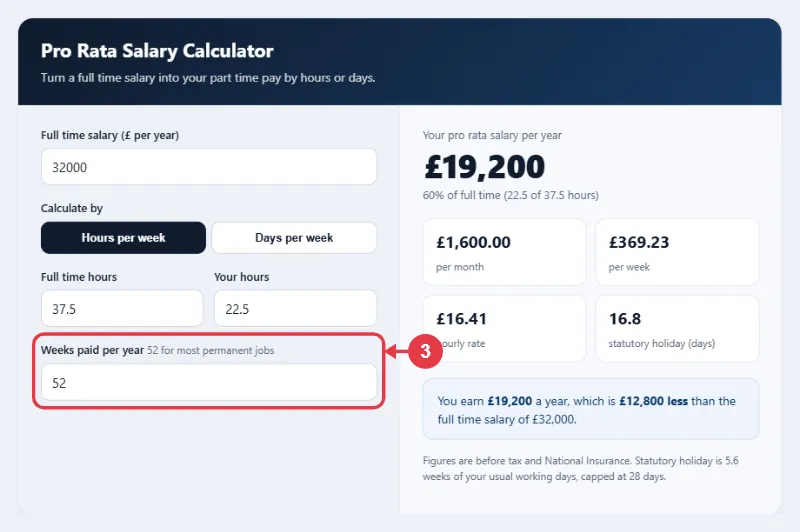
Leave this at 52 for a normal permanent job. Change it for term time only contracts, for example 39 weeks plus paid holiday, so the calculator scales the salary further. The holiday pay calculator helps you check that paid holiday figure before you enter it.
Step 4: Read Your Results
The results update as you type. You will see your pro rata salary, the percentage of full time you work, and your pay per month, per week and per hour, plus your statutory holiday in days. To compare the offer with an hourly paid job, the hourly to annual salary calculator converts any hourly rate into a yearly figure on the same basis.
Pro Rata Salary Examples
| Full time salary | Pattern | Pro rata salary |
|---|---|---|
| £25,000 | 3 of 5 days | £15,000 |
| £32,000 | 22.5 of 37.5 hours | £19,200 |
| £40,000 | 4 of 5 days | £32,000 |
| £50,000 | 30 of 40 hours | £37,500 |
Your take home pay will be lower once tax and National Insurance are taken off. The Acas guidance on part time work confirms that part time workers have the same rights as full time colleagues, including pro rata holiday and pension.
Frequently Asked Questions
What does pro rata mean on a salary?
It means the salary shown is the full time rate. You are paid a share of it based on how many hours or days you work compared with a full time employee.
How do I calculate pro rata salary?
Divide your weekly hours by the full time weekly hours, then multiply by the full time salary. For example, 22.5 ÷ 37.5 × £32,000 = £19,200.
Is pro rata salary before or after tax?
Pro rata salary is always a gross figure, before Income Tax, National Insurance and pension deductions.
How much holiday do part time workers get?
UK workers get 5.6 weeks of paid holiday. A part time worker on three days a week gets 16.8 days, which is 5.6 × 3.
Does pro rata apply to term time contracts?
Yes. Term time roles are usually pro rated by both hours and weeks worked, so set the weeks paid field to match your contract.
Is my hourly rate lower if I work part time?
No. Your hourly rate stays the same as a full time colleague doing the same job. Only the total pay changes.