England and Wales county court money claims, fees from the EX50 updated 13 July 2026.
Estimate only, check with HMCTS. Fee bands use the total claimed, including interest. Claims up to £10,000 normally go to the small claims track. Scotland and Northern Ireland use different courts and fees. Figures checked October 2026.
This small claims court fee calculator works out what it costs to sue for money in the county court in England and Wales in 2026: the issue fee, the hearing fee if the claim is defended, any enforcement fee and the interest you can add. It uses the HMCTS fees updated in July 2026 and warns you when interest pushes the claim into a dearer fee band.
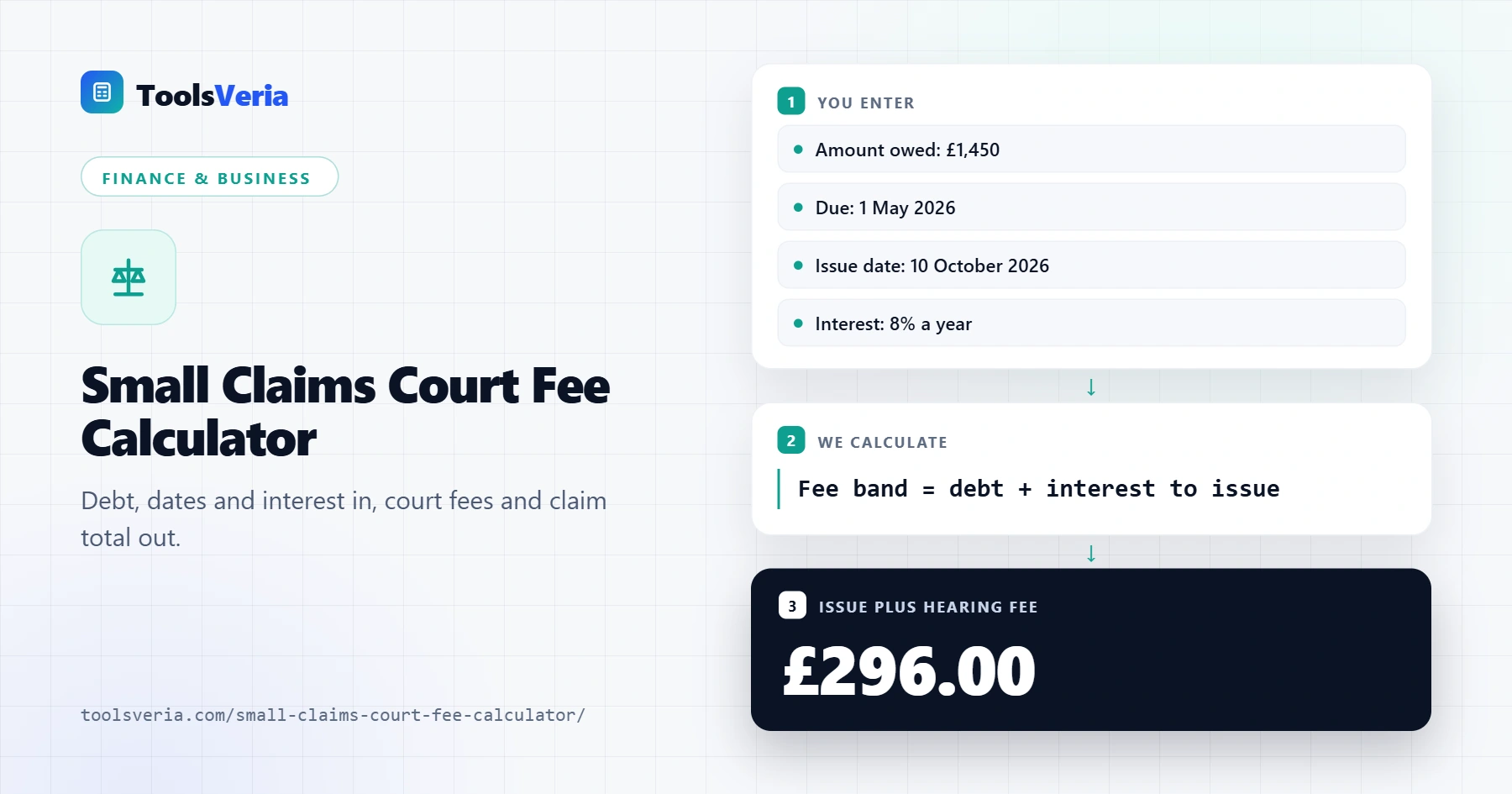
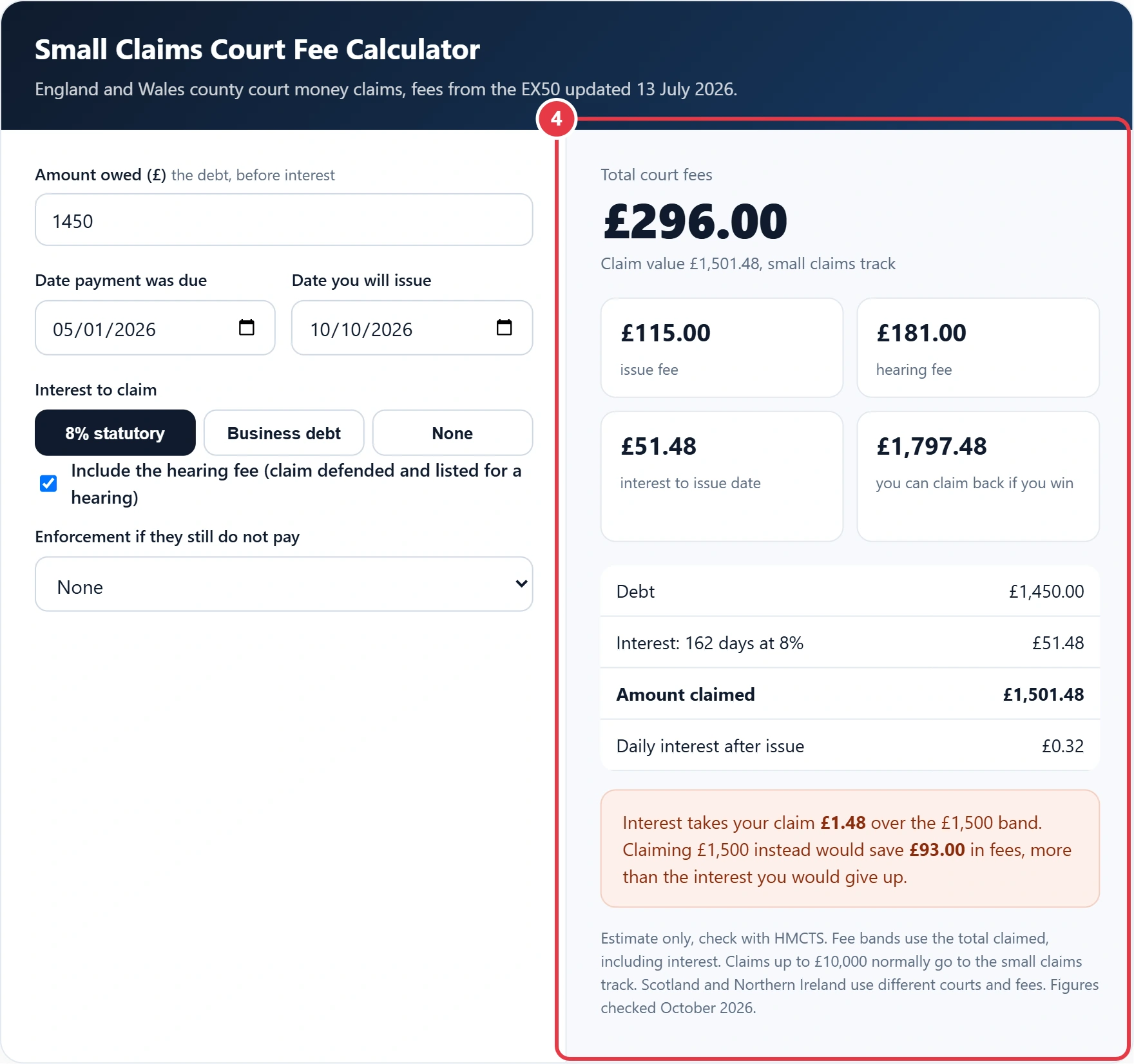
Quick answer: Issuing a small claim costs £35 to £455 depending on the amount, and a hearing costs £27 to £346 more if the claim is defended. A £1,450 debt with 162 days of 8% interest becomes £1,501.48, so the small claims court fee calculator shows £115 plus £181 instead of £80 plus £123.
In This Guide
What Are Small Claims Court Fees?
Small claims court fees are the charges HM Courts and Tribunals Service makes to issue a money claim and, if it is defended, to hear it, set out in the official EX50 fees list for the civil courts.
The formula in plain words: add the debt, any interest up to the date you issue and any fixed compensation for a business debt. That total is the value of your claim, and it decides both the issue fee and the hearing fee from the tables below. The fees are the same whether you claim on paper or through Money Claim Online, which accepts claims up to £99,999.99. Every figure here matches the EX50 civil court fees list on GOV.UK, last updated on 13 July 2026, so the bands are current for claims issued now.
| Amount claimed (including interest) | Issue fee | Hearing fee (small claims) |
|---|---|---|
| Up to £300 | £35 | £27 |
| £300.01 to £500 | £50 | £59 |
| £500.01 to £1,000 | £70 | £85 |
| £1,000.01 to £1,500 | £80 | £123 |
| £1,500.01 to £3,000 | £115 | £181 |
| £3,000.01 to £5,000 | £205 | £346 |
| £5,000.01 to £10,000 | £455 | £346 |
| £10,000.01 to £200,000 | 5% of the claim | Not small claims |
How to Use the Small Claims Court Fee Calculator
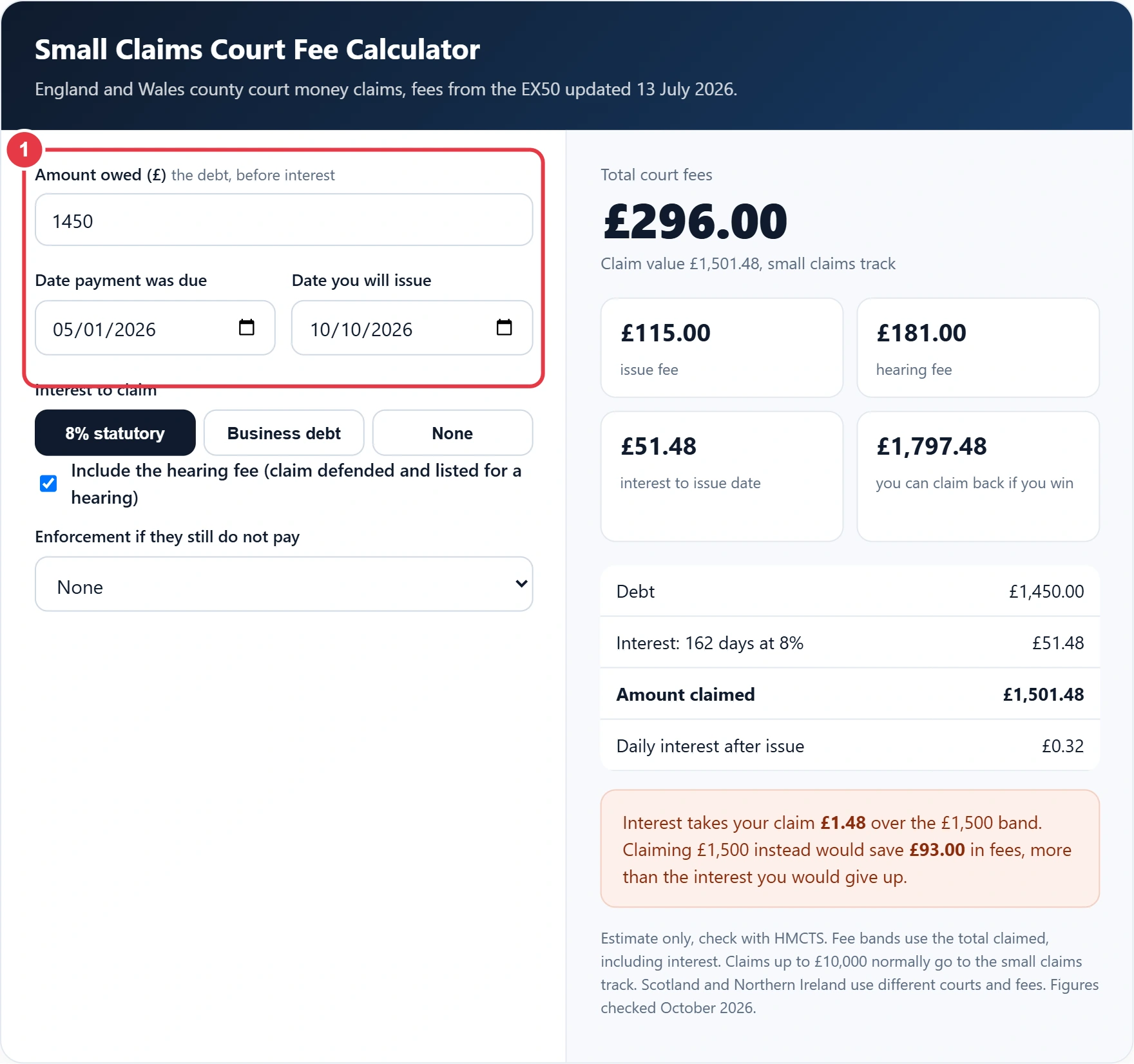
Step 1: Enter the Debt and the Dates
Type the amount you are owed without interest, the date it should have been paid and the date you plan to issue the claim. The gap between the two dates is the number of days interest runs before you claim.
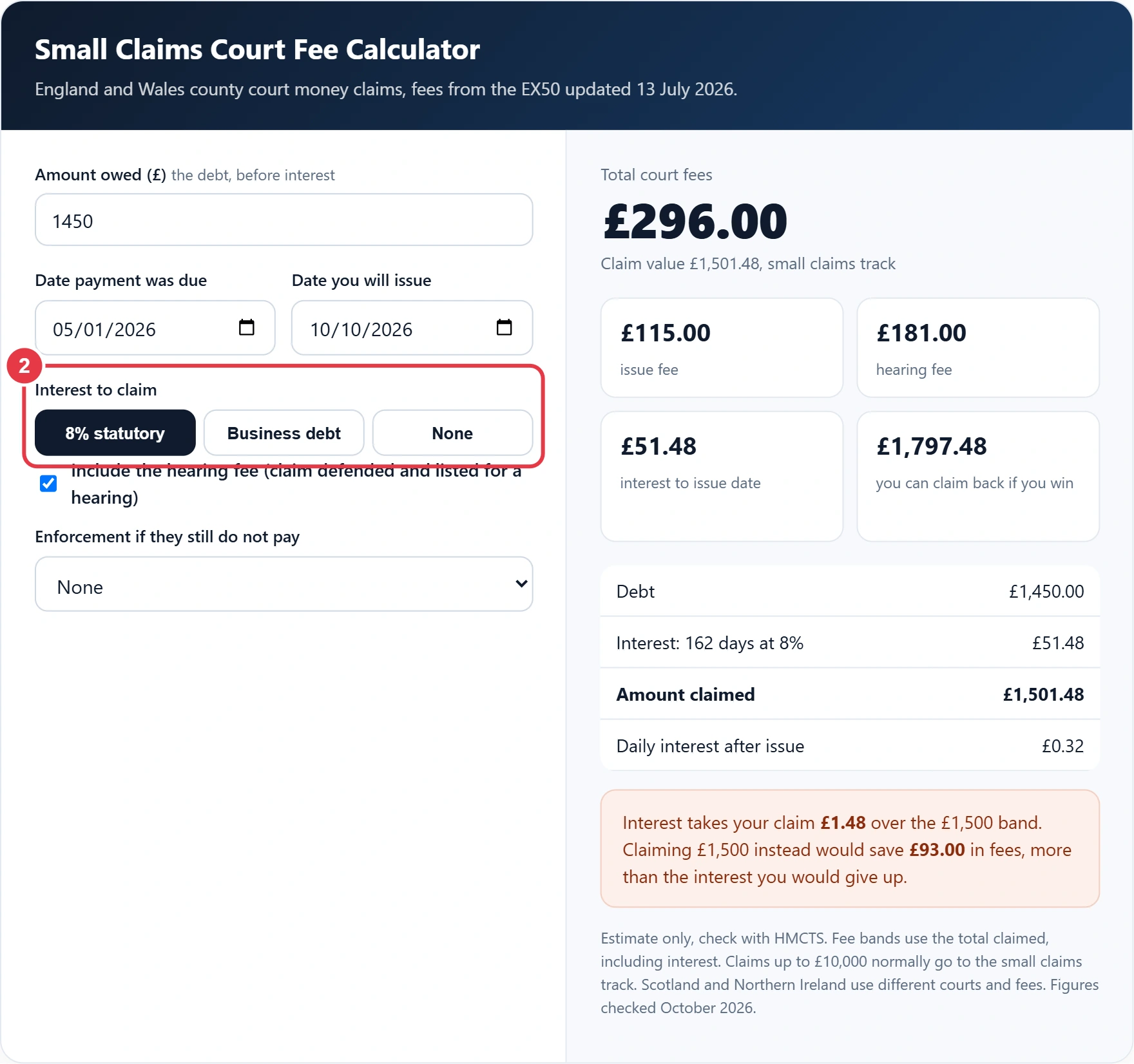
Step 2: Choose the Interest
Pick 8% statutory for most debts between individuals or from a consumer. Pick Business debt if one business owes another under a contract with no interest clause, then enter the Bank of England base rate that applied on the reference date. Choose None if you prefer to claim the debt only.
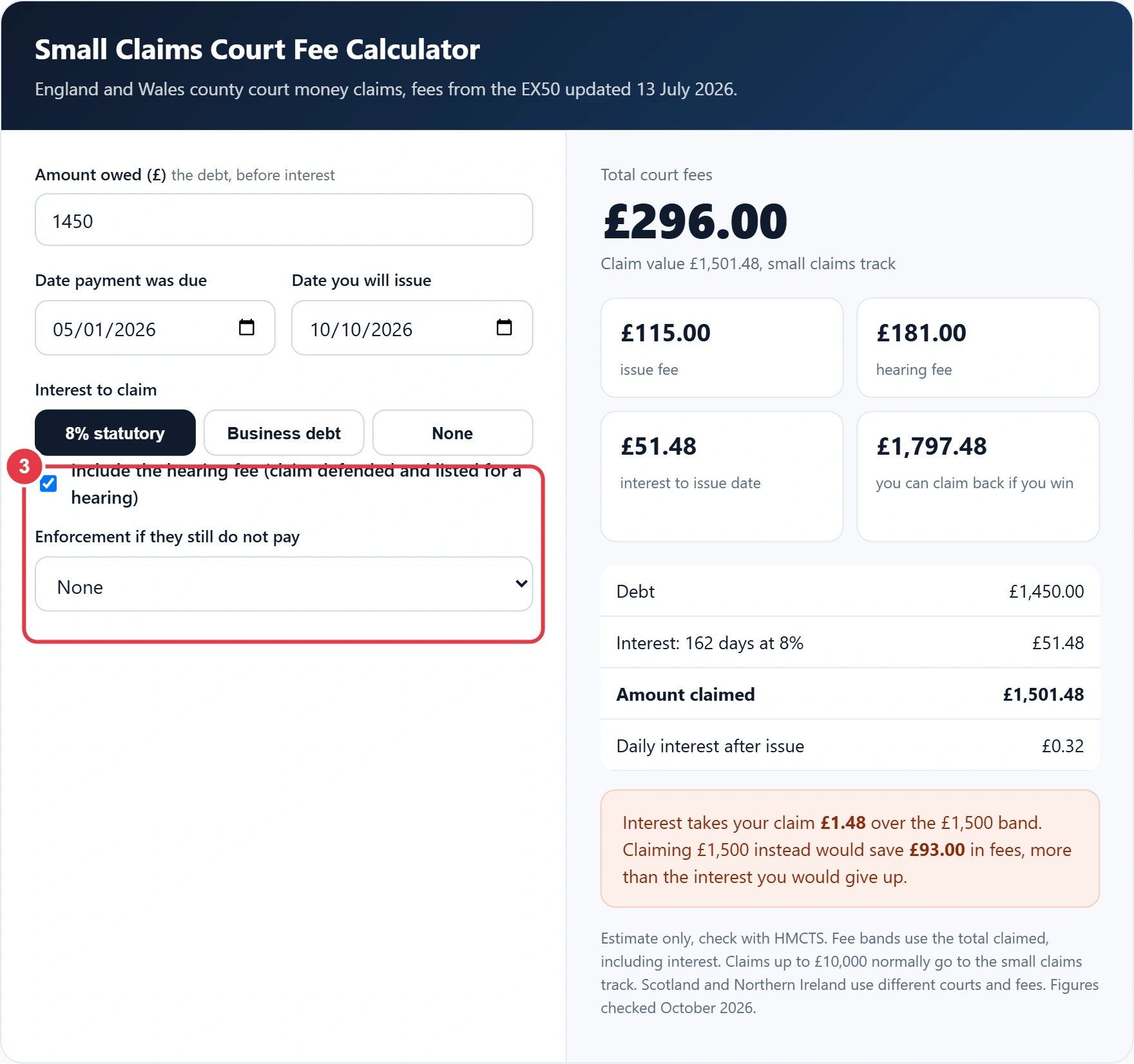
Step 3: Add the Hearing and Enforcement
Leave the hearing fee ticked to budget for a defended claim, which you pay only when the court lists a hearing. If you expect to chase payment after judgment, add a warrant of control at £96 or an attachment of earnings order at £139.
Step 4: Read the Fees and Your Claim Total
The headline in the small claims court fee calculator is your total court fees. The stats split them out and show the interest, and the table gives the amount claimed and the daily interest to add if the case runs on. The box flags a band problem or tells you the total to ask for if you win.
How Much Does It Cost to Take Someone to Small Claims Court?
It costs between £35 and £455 to issue a small claim, plus a hearing fee of £27 to £346 if the defendant defends it, so a defended £2,000 claim costs £296 in court fees. If you win, the judge normally orders the defendant to repay those fees with the debt.
Worked example: Hannah in Bristol paid a builder a £2,400 deposit for a kitchen that was never fitted, and the refund was due on 1 March 2026. She issues on 1 September 2026, 184 days later. Interest at 8% is £2,400 × 0.08 ÷ 365, about 53p a day, so £96.79 in total, making her claim £2,496.79. Her issue fee is £115 and, when the builder defends, the hearing fee is £181. Her fees total £296, and if she wins she can ask for £2,792.79 plus about 53p a day until judgment.
Can Interest Push a Claim Into a Higher Fee Band?
Yes, because the fee is based on the total you claim, including interest. A £1,450 debt that is 162 days late gains £51.48 at 8%, taking it to £1,501.48 and over the £1,500 line, so the issue fee jumps from £80 to £115 and the hearing fee from £123 to £181.
Giving up £1.48 of interest saves £93 in fees, which is why the small claims court fee calculator checks the band edge for you. To count the days late precisely, the days between dates calculator gives the exact number to check against the table. The same thing happens with business debts: a £4,800 invoice 122 days late at an example 12% plus £70 fixed compensation reaches £5,062.53, lifting the issue fee from £205 to £455.
What Interest Can You Claim on a Small Claim?
For most debts you can claim simple interest at 8% a year from the date payment was due. The GOV.UK guide on working out interest on a court claim uses the same three steps: multiply the debt by 0.08, divide by 365 and multiply by the days overdue, so £1,000 for 50 days gives £11.
Businesses owed money by another business can instead charge 8% plus the Bank of England base rate, and the GOV.UK rules on claiming debt recovery costs add a fixed £40, £70 or £100 depending on whether the debt is under £1,000, under £10,000 or larger. Time limits matter in other disputes too: for a workplace claim the employment tribunal time limit calculator works out the last day to act. Claims up to £10,000 also go to the free HMCTS Small Claims Mediation Service first, which settles many cases before any hearing fee is due, and the small claims court fee calculator assumes no settlement.
</>Embed this calculator on your website
Add the free Small Claims Court Fee Calculator to your own site or blog. Copy the code below and paste it into an HTML block. It resizes itself and works on phones.
How we checked this tool: the Tools Veria Editorial Team built this tool by hand, checked it against the official rules or published standards where they apply, and tested it against worked examples. Results are estimates for planning, not personal financial or tax advice. Read our editorial policy and disclaimer, or report an error.
Frequently Asked Questions
How much does it cost to file a small claim in 2026?
The issue fee is £35 for claims up to £300, rising to £80 up to £1,500, £115 up to £3,000, £205 up to £5,000 and £455 up to £10,000. These are the EX50 fees updated on 13 July 2026.
How much is the small claims hearing fee?
The hearing fee is £27 up to £300, £59 up to £500, £85 up to £1,000, £123 up to £1,500, £181 up to £3,000 and £346 above £3,000. You only pay it if the claim is defended and listed for a hearing.
Do I get my court fees back if I win a small claim?
Usually yes. The judge normally orders the losing defendant to pay your issue and hearing fees on top of the debt and interest. Ask for them on your claim form and again at the hearing.
Does interest count towards the court fee band?
Yes. The fee depends on the total amount claimed, including interest to the date of issue. A £1,450 debt with £51.48 interest becomes £1,501.48, which moves the issue fee from £80 to £115.
Is Money Claim Online cheaper than a paper claim?
No. Money Claim Online and paper N1 claims pay the same issue fees under the July 2026 EX50 list. Online claims are faster to issue and track, and accept claims up to £99,999.99.
What is the small claims limit in England and Wales?
Most money claims up to £10,000 go to the small claims track. Claims up to that value are referred to the free HMCTS Small Claims Mediation Service before a hearing is arranged.