England, Wales and Northern Ireland, 2026/27. See what the taper costs you and how to escape it.
| Now | With extra pension |
|---|
Estimate for 2026/27 using GOV.UK rates: personal allowance £12,570 reduced by £1 for every £2 of adjusted net income over £100,000; 20% to £50,270, 40% to £125,140, 45% above; employee NI 8% and 2% on salary. Other income is treated as non savings income. For relief at source, the tax saved includes the 20% your provider claims. Not for Scottish taxpayers. Check your own position with HMRC or a regulated adviser.
This 60% tax trap calculator is for employees and other taxpayers in England, Wales and Northern Ireland whose 2026/27 income lands between £100,000 and £125,140. It works out your adjusted net income, shows how much of the personal allowance you lose over £100,000 and finds the pension contribution that wins it back, with the tax, NI and childcare effects side by side. Figures checked October 2026.
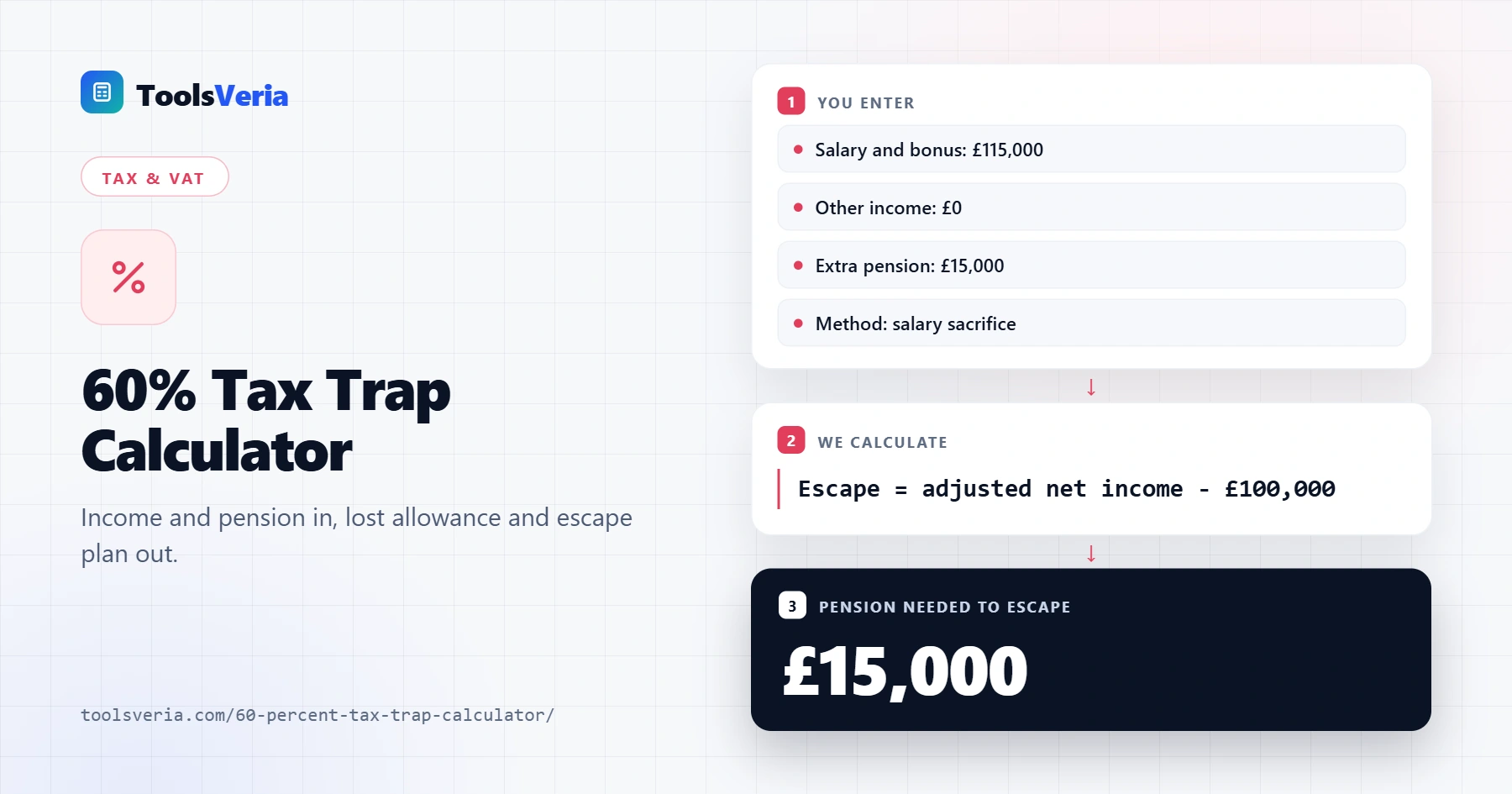
Quick answer: Between £100,000 and £125,140 you lose £1 of personal allowance for every £2 earned, so each extra £1 costs 60p in Income Tax, or 62p with NI. A 60% tax trap calculator shows the escape: pay gross pension contributions equal to your adjusted net income above £100,000.
In This Guide
What Is the 60% Tax Trap?
The 60% tax trap is the band of income from £100,000 to £125,140 where the tapering of the £12,570 personal allowance pushes your effective Income Tax rate to 60%. It is not a separate tax band in law: it is the 40% higher rate plus the tax on allowance you no longer have.
The formula in plain words: personal allowance equals £12,570 minus half of your adjusted net income above £100,000, never below zero. An extra £2 of income above £100,000 costs 80p at 40%, and it also removes £1 of allowance, which then becomes taxable at 40%, another 40p. That is £1.20 of tax on £2, or 60%. The allowance is gone completely at £125,140, after which the rate drops back to 45%.
How to Use the 60% Tax Trap Calculator
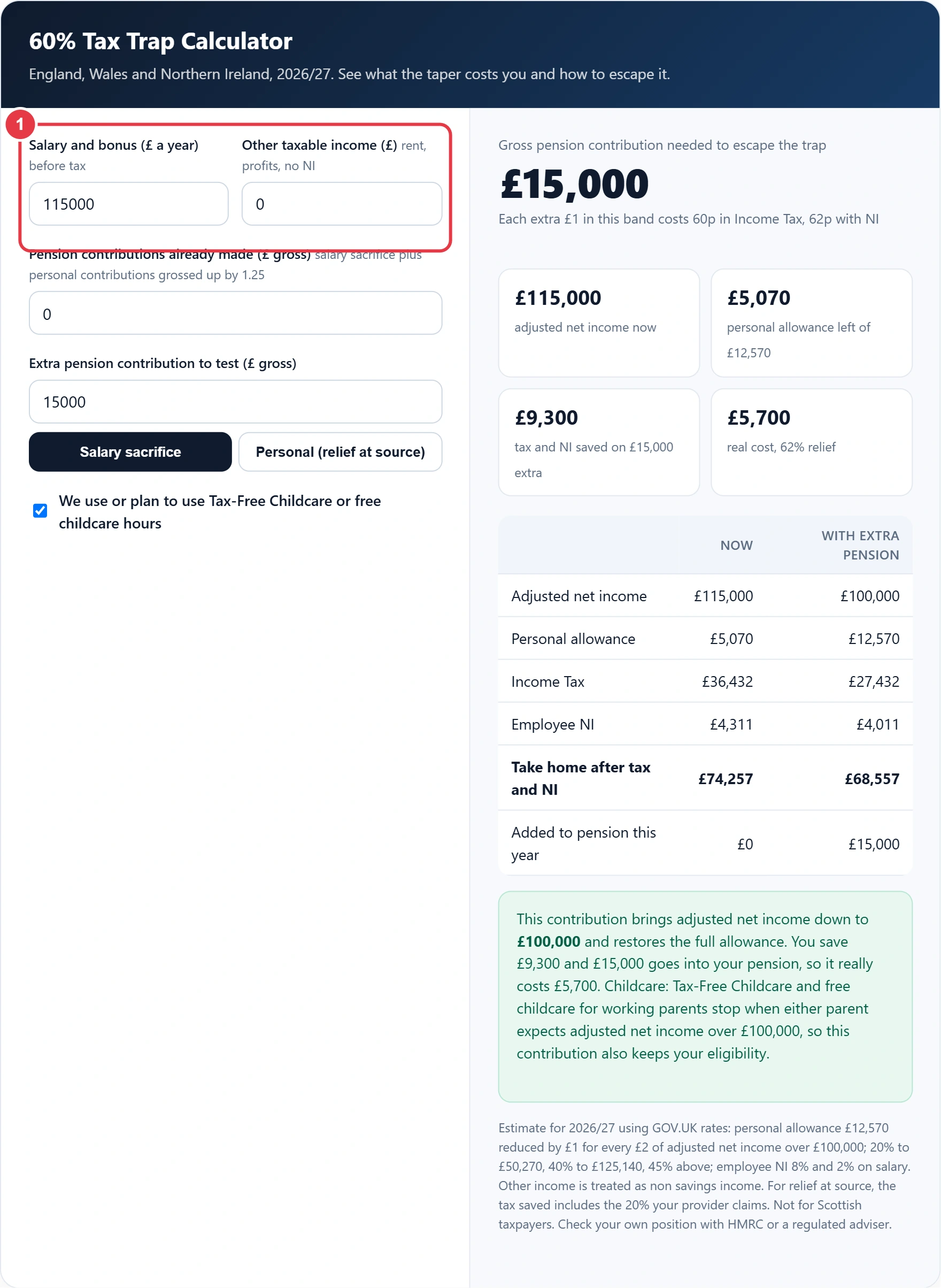
Step 1: Enter Your Salary and Other Income
Type your 2026/27 salary plus any bonus before tax, because both carry employee NI. Put rental profit, self employed profit or other taxable income in the second box. A bonus paid in March 2027 counts in this tax year, so include it if it is likely: a single bonus is the most common way people fall into the trap.
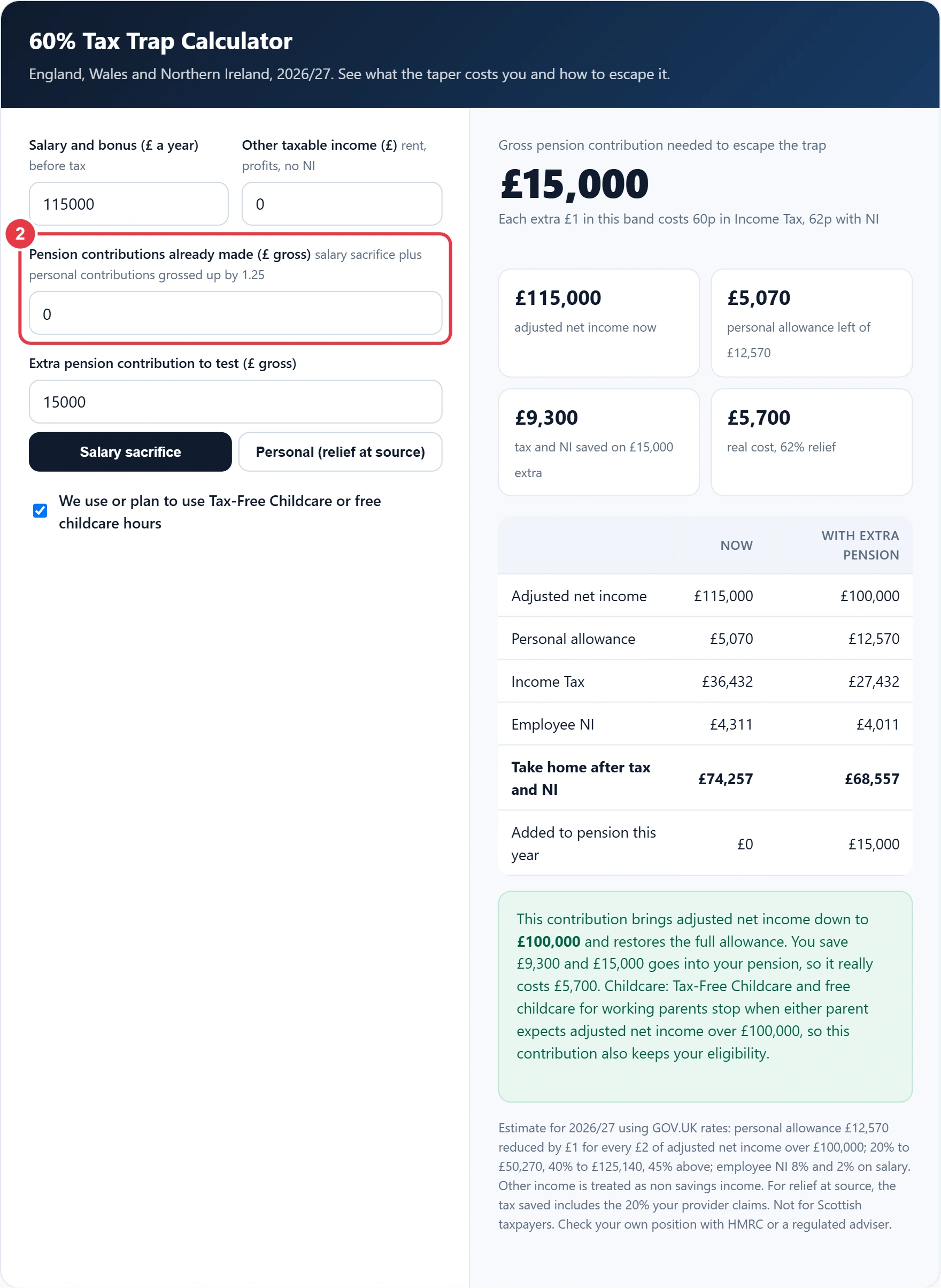
Step 2: Add Pension Contributions Already Made
Enter what already goes into your pension this tax year, as a gross figure. Salary sacrifice counts at face value. A personal contribution to a relief at source pension, such as a SIPP, is grossed up by 1.25, so £4,000 paid becomes £5,000. These amounts already reduce your adjusted net income.
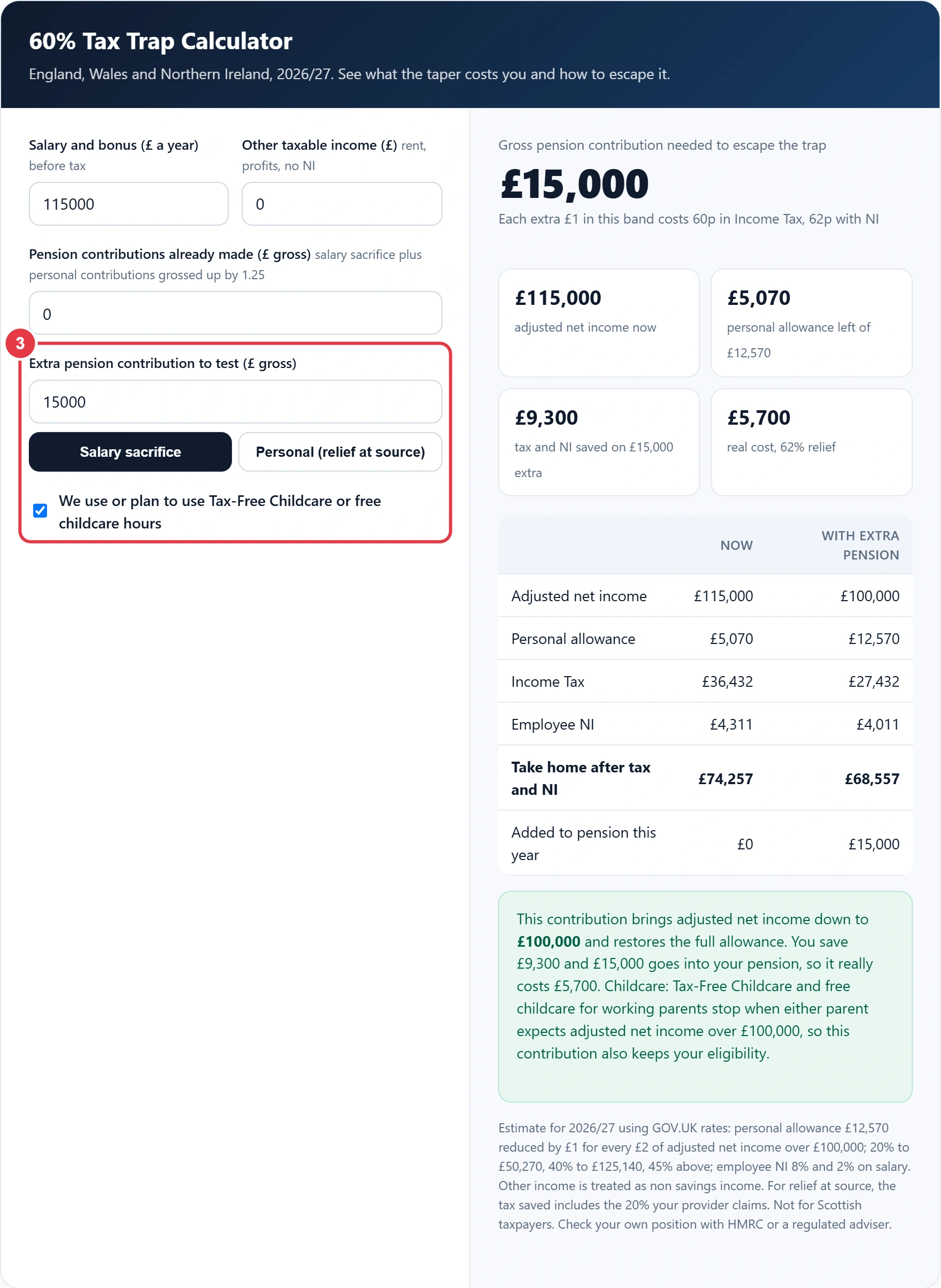
Step 3: Test an Extra Contribution
Enter a further gross contribution and choose how it is paid. Salary sacrifice also saves 2% employee NI on the salary you give up. A personal contribution gets 20% added by the provider and the rest back through Self Assessment, with no NI saving. Tick the childcare box if you use Tax-Free Childcare or funded hours.
Step 4: Read Your Escape Plan
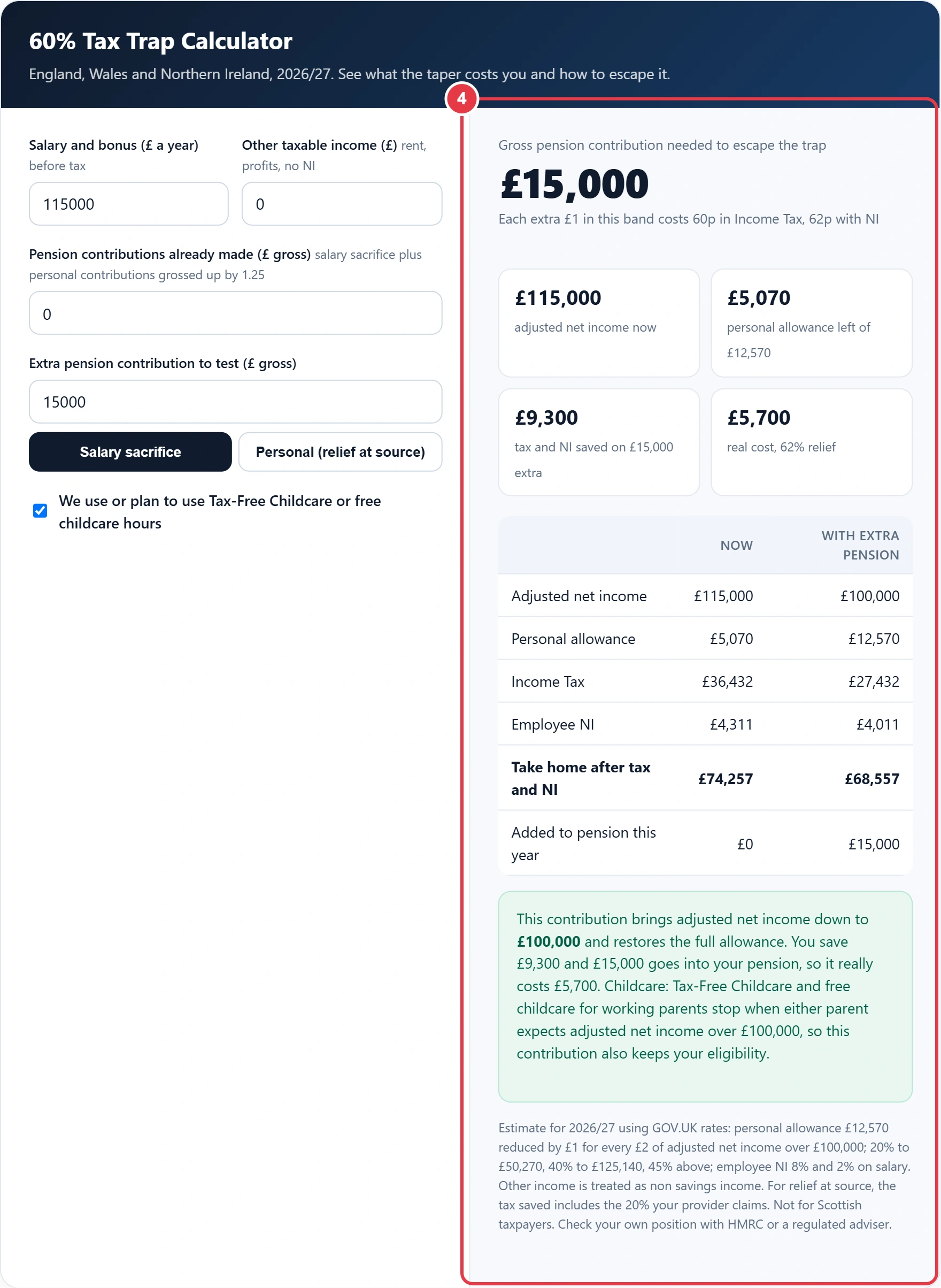
The headline shows the gross contribution that brings adjusted net income back to £100,000. The stats show your current allowance, the tax and NI saved by the contribution you tested and its real cost. The table compares tax, NI, take home pay and pension saving before and after, line by line.
How Much Pension Do I Need to Avoid the 60% Tax Trap?
You need a gross pension contribution equal to your adjusted net income above £100,000, capped at £25,140 for the trap band itself. With salary sacrifice, every £1 of that contribution saves 60p of Income Tax and 2p of NI, so it costs you about 38p.
| Salary (no other income) | Allowance left | Sacrifice to escape | Tax and NI saved | Real cost |
|---|---|---|---|---|
| £105,000 | £10,070 | £5,000 | £3,100 | £1,900 |
| £110,000 | £7,570 | £10,000 | £6,200 | £3,800 |
| £115,000 | £5,070 | £15,000 | £9,300 | £5,700 |
| £120,000 | £2,570 | £20,000 | £12,400 | £7,600 |
| £125,140 | £0 | £25,140 | £15,587 | £9,553 |
| £130,000 | £0 | £30,000 | £17,871 | £12,129 |
Worked example: Daniel earns a £108,000 salary and expects a £7,000 bonus, so he enters £115,000 as salary and bonus. His adjusted net income is £115,000 and his allowance falls to £5,070. His Income Tax is £36,432. If he sacrifices £15,000 into his workplace pension, adjusted net income drops to £100,000, his full £12,570 allowance returns and his tax falls to £27,432. He saves £9,000 of tax and £300 of NI, so £15,000 reaches his pension for a real cost of £5,700.
How Is Adjusted Net Income Worked Out?
Adjusted net income is your total taxable income minus certain reliefs, and it is the figure HMRC uses for the taper. Start with salary, bonus, profits, rent, savings interest and dividends. Then take off salary sacrificed or paid by net pay, and grossed up personal pension contributions and Gift Aid donations, which GOV.UK says to gross up by £1.25 for every £1 you pay. Trading losses also come off.
That is why Gift Aid works as well as a pension for escaping the trap. A £4,000 donation is treated as £5,000 gross and cuts adjusted net income by £5,000. Unlike a pension contribution, though, the money goes to the charity rather than to your own retirement.
Salary Sacrifice or Personal Contribution: Which Is Better?
Salary sacrifice is usually better because it also saves employee NI, and some employers pass on their own NI saving. Both routes restore the allowance in exactly the same way, as the comparison for a £15,000 gross contribution at £115,000 shows.
| Route | How relief arrives | Tax saved | NI saved | Real cost |
|---|---|---|---|---|
| Salary sacrifice | Lower salary through payroll | £9,000 | £300 | £5,700 |
| Relief at source (SIPP) | £3,000 added by provider, £6,000 via Self Assessment | £9,000 | £0 | £6,000 |
With relief at source you pay £12,000 from take home pay, the provider claims £3,000 and you reclaim the other £6,000 on your tax return, so check the timing. The salary sacrifice pension calculator shows the payslip effect in detail, and the pension tax relief calculator covers relief at source claims.
Does the 60% Tax Trap Affect Childcare Support?
Yes. You cannot get Tax-Free Childcare if you or your partner expect adjusted net income over £100,000 in the tax year, and the same limit applies to free childcare for working parents in England. Tax-Free Childcare alone is worth up to £2,000 a child each year, according to the GOV.UK Tax-Free Childcare guide, so a parent with two young children can lose far more than the 60% figure suggests.
Because the test is on expected income for the current tax year, a pension contribution made before 5 April 2027 that keeps you at or below £100,000 also protects your childcare support. The limit applies to each parent separately, not to combined household income.
Things to Check Before You Pay In
- Annual allowance: total pension input is normally capped at £60,000 a year. Very high earners may have a lower limit, which the tapered annual allowance calculator checks.
- Access: pension money is locked away until your normal minimum pension age, so keep enough cash for short term needs.
- NI detail: sacrifice below £50,270 saves 8% NI, not 2%. The National Insurance calculator shows your exact figure.
- Scotland: Scottish bands differ, so the trap rate is higher there. This tool covers England, Wales and Northern Ireland only.
</>Embed this calculator on your website
Add the free 60% Tax Trap Calculator to your own site or blog. Copy the code below and paste it into an HTML block. It resizes itself and works on phones.
How we checked this tool: the Tools Veria Editorial Team built this tool by hand, checked it against the official rules or published standards where they apply, and tested it against worked examples. Results are estimates for planning, not personal financial or tax advice. Read our editorial policy and disclaimer, or report an error.
Frequently Asked Questions
What is the 60% tax trap?
It is the income band from £100,000 to £125,140 where the personal allowance is withdrawn at £1 for every £2 earned. In 2026/27 that makes the effective Income Tax rate 60%, or 62% for employees once 2% NI is added.
At what income does the 60% tax trap start and end?
It starts when adjusted net income goes over £100,000 and ends at £125,140, where the £12,570 personal allowance is fully withdrawn. Above £125,140 the marginal Income Tax rate is the 45% additional rate.
How much should I put in my pension to avoid the 60% tax?
Pay a gross contribution equal to your adjusted net income above £100,000. Someone on £115,000 needs £15,000 gross, which saves £9,000 of Income Tax and restores the full £12,570 personal allowance.
Does salary sacrifice get me out of the 60% tax trap?
Yes. Salary sacrifice lowers your salary, so it lowers adjusted net income directly. It also saves 2% employee NI above £50,270, so £10,000 sacrificed at £110,000 costs about £3,800 after £6,200 of tax and NI savings.
Does Gift Aid reduce adjusted net income?
Yes. Gift Aid donations are grossed up by £1.25 for every £1 and deducted from adjusted net income. A £4,000 donation counts as £5,000, which restores £2,500 of personal allowance for someone in the trap.
Do I lose Tax-Free Childcare at £100,000?
Yes. You cannot get Tax-Free Childcare if you or your partner expect adjusted net income over £100,000 for the tax year. The same limit applies to free childcare for working parents in England.