Statutory holiday for fixed days, or 12.07% accrual for irregular hours.
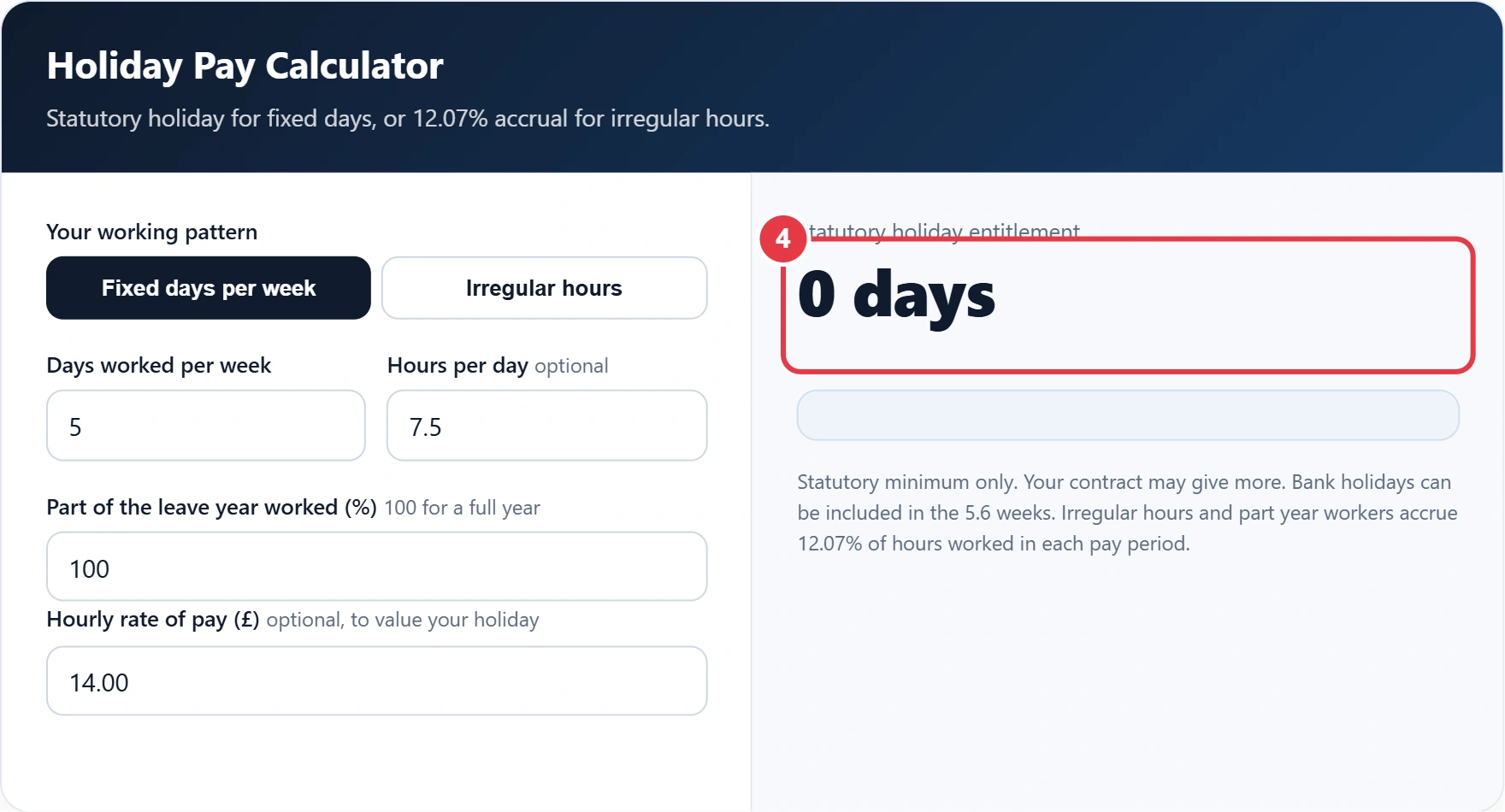
Statutory minimum only. Your contract may give more. Bank holidays can be included in the 5.6 weeks. Irregular hours and part year workers accrue 12.07% of hours worked in each pay period.
Not sure how much paid leave you are owed, or what it is worth in pounds? This holiday pay calculator follows the official UK holiday entitlement rules to work out your statutory holiday in days and hours if you work a fixed number of days. If your hours change week to week, it uses the 12.07% accrual method instead.
What Is Holiday Pay?
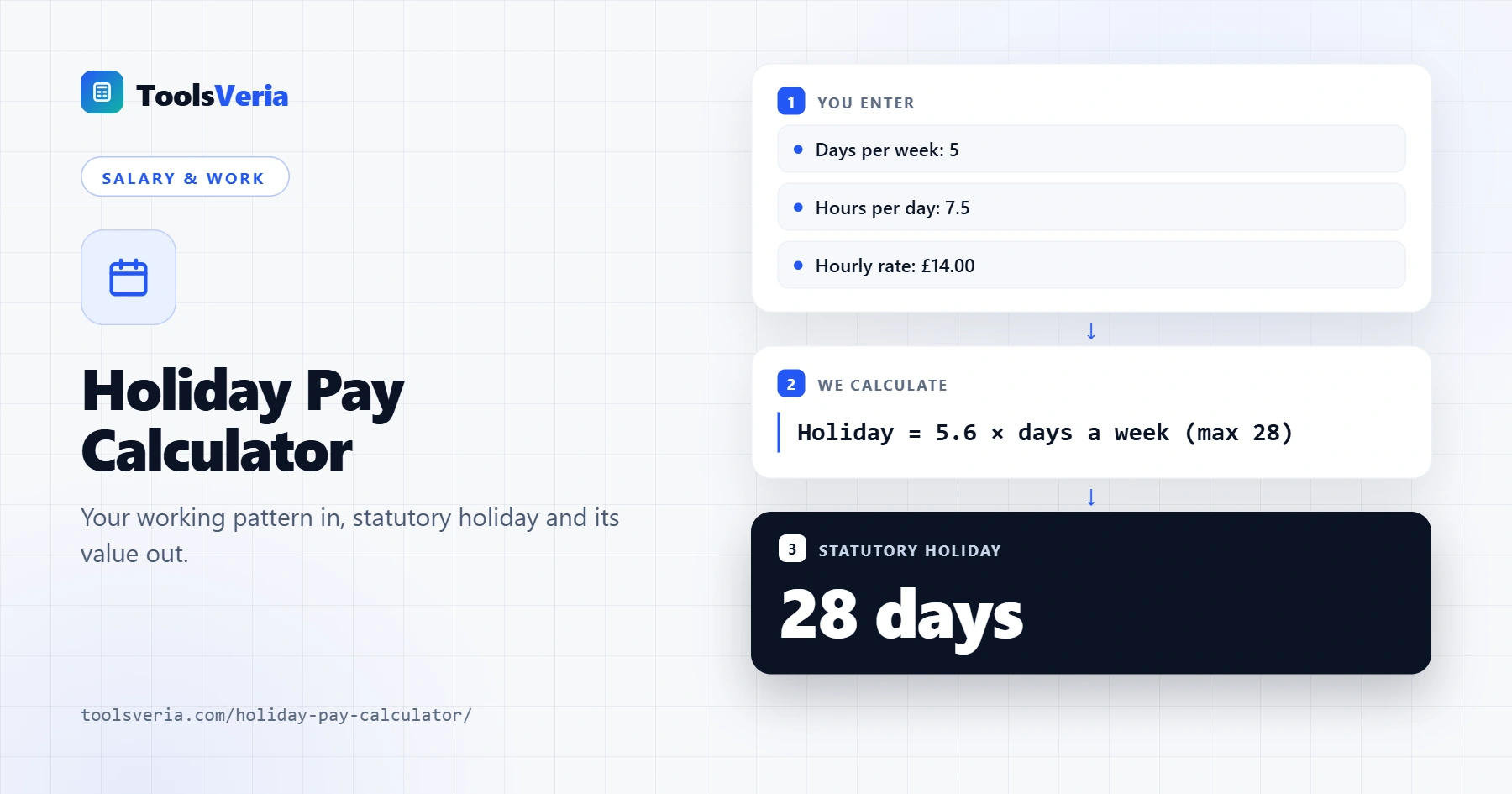
Almost every UK worker is entitled to 5.6 weeks of paid holiday a year. For someone on a fixed pattern, the formula is 5.6 × days worked per week, capped at 28 days. A five day worker gets 28 days, a three day worker gets 16.8 days, and a six day worker is still capped at 28. If you are moving to fewer days, the pro rata salary calculator shows how your pay scales alongside your leave. Holiday pay is normally your usual pay for the days you take off.
Irregular hours and part year workers accrue holiday as they go instead: hours worked × 12.07%. The 12.07% comes from 5.6 weeks of holiday divided by the 46.4 weeks a full time worker actually works in a year. So 120 hours worked earns 14.48 hours of paid holiday.
How to Use the Holiday Pay Calculator
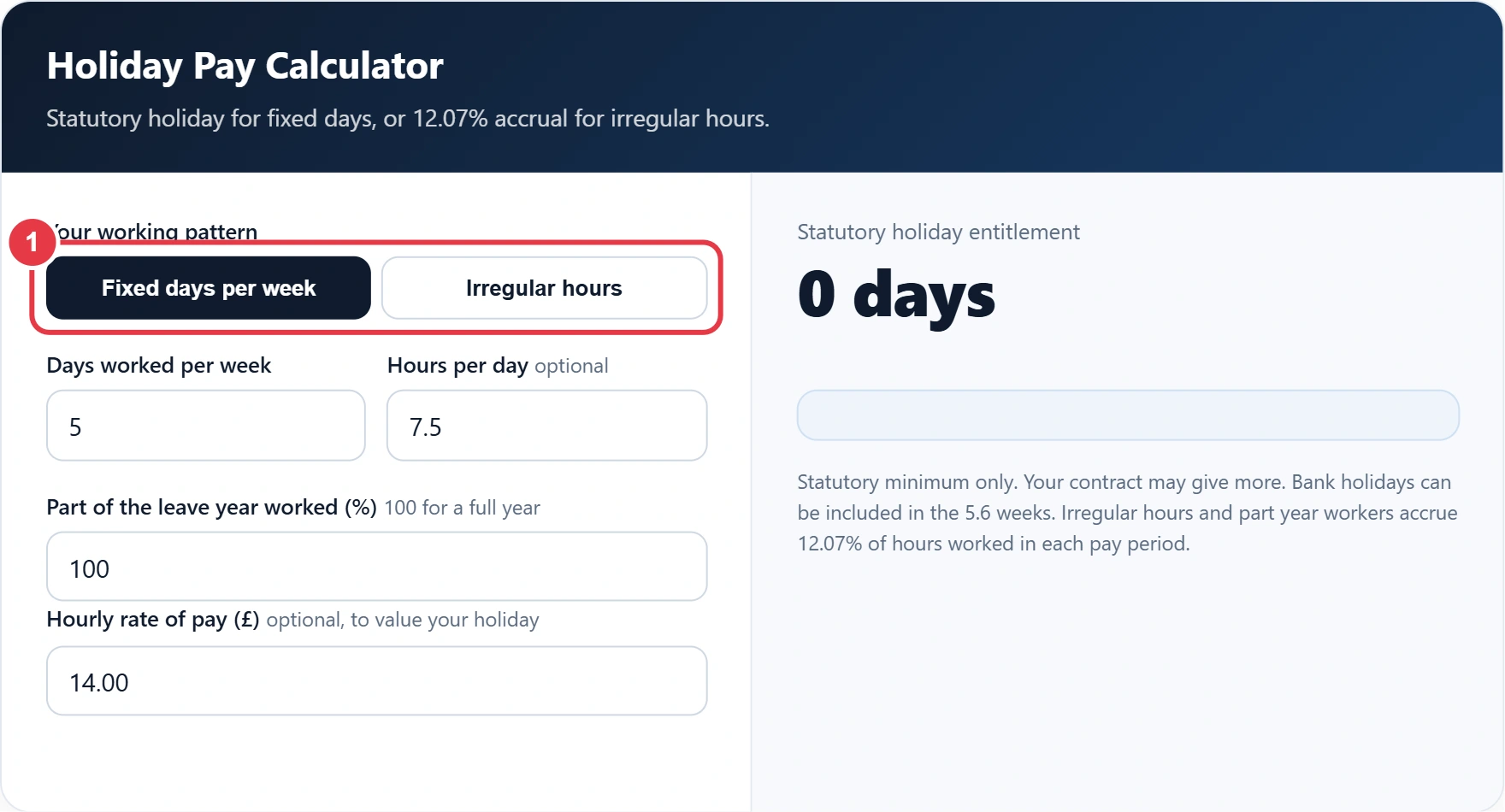
Step 1: Choose Your Working Pattern
Select Fixed days per week if you work the same number of days most weeks. Select Irregular hours if your hours vary, such as zero hours, casual or bank work.
Step 2: Enter Your Days or Hours
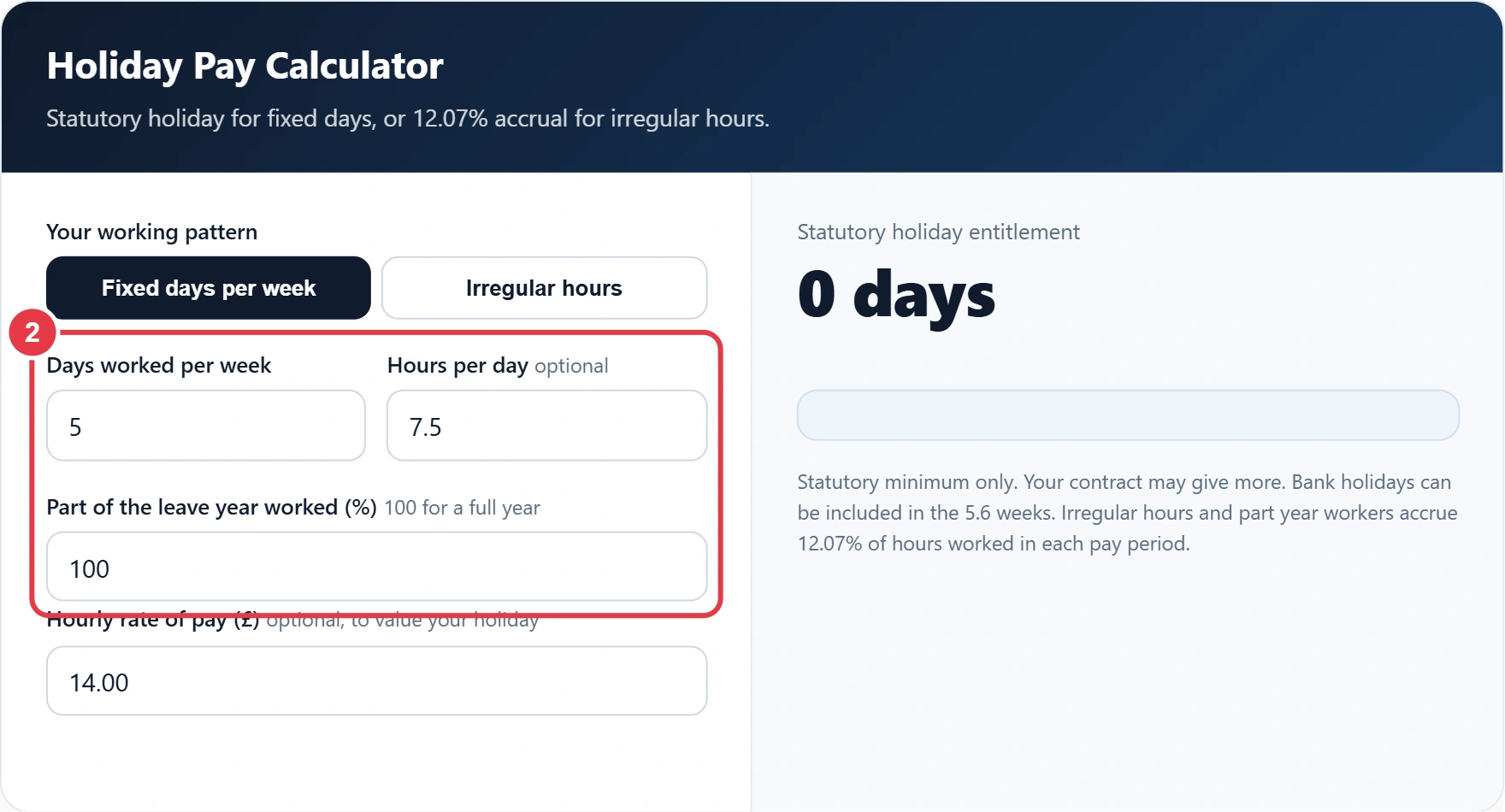
For fixed days, enter days per week and, if you know it, your usual hours per day. If you start or leave part way through the leave year, set the percentage of the year you work. For irregular hours, enter the hours worked in the pay period.
Step 3: Add Your Hourly Rate
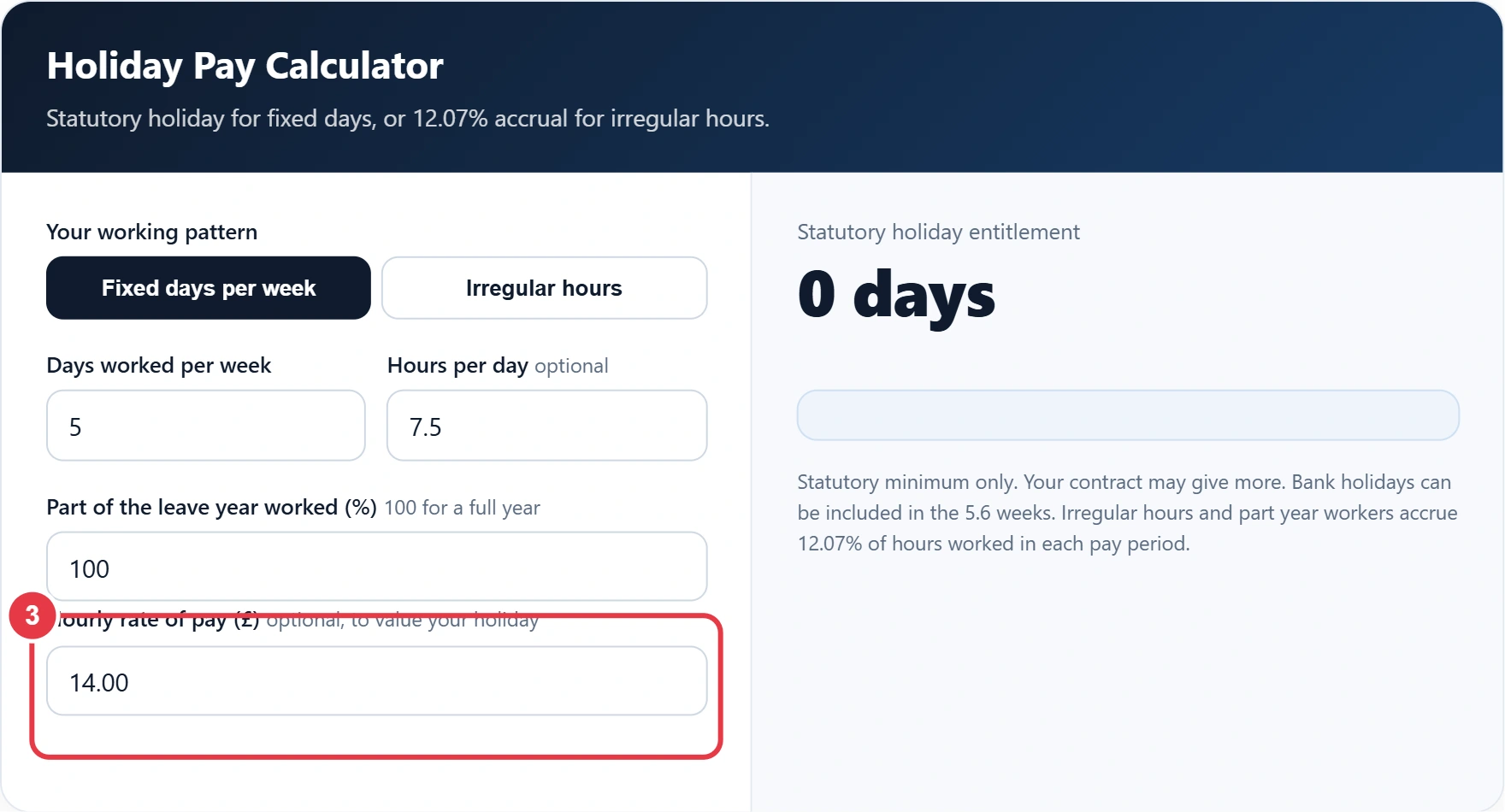
Enter your hourly rate of pay to see what your holiday is worth in pounds. If you only know your salary, the hourly to annual salary calculator converts it to an hourly figure first. Leave the box blank if you only need the entitlement in days or hours.
Step 4: Read Your Results
The results update as you type. You will see your entitlement in days and hours, or the hours accrued this pay period, together with the holiday pay value.
Holiday Entitlement Examples
| Working pattern | Calculation | Statutory holiday |
|---|---|---|
| 5 days a week | 5.6 × 5 | 28 days |
| 3 days a week | 5.6 × 3 | 16.8 days |
| 6 days a week | 5.6 × 6 = 33.6, capped | 28 days |
| 120 irregular hours | 120 × 12.07% | 14.48 hours |
For irregular hours workers, employers can choose to pay rolled up holiday pay of 12.07% on top of each payslip instead of paying when leave is taken. If you think your holiday pay has been calculated wrongly, Acas explains how to check your entitlement and what to do next.
Frequently Asked Questions
How many days holiday am I entitled to in the UK?
Most workers get 5.6 weeks of paid holiday a year. For a five day week that is 28 days, which can include bank holidays.
How do I calculate 12.07% holiday pay?
Multiply the hours you worked in the pay period by 0.1207 to get your holiday hours, then multiply by your hourly rate. For example, 120 hours × 12.07% = 14.48 hours.
Why is holiday pay 12.07%?
Full time workers get 5.6 weeks of holiday and work the other 46.4 weeks. 5.6 divided by 46.4 is 12.07%.
Do part time workers get holiday pay?
Yes. Part time workers get 5.6 weeks of their usual working pattern, so someone working three days a week gets 16.8 days.
Can I get more than 28 days of statutory holiday?
No. Statutory holiday is capped at 28 days even if you work six or seven days a week, although your employer can offer more.
Is holiday pay taxed?
Yes. Holiday pay is taxed and has National Insurance taken off in the same way as your normal wages.