See your overtime pay and total gross pay for the week.
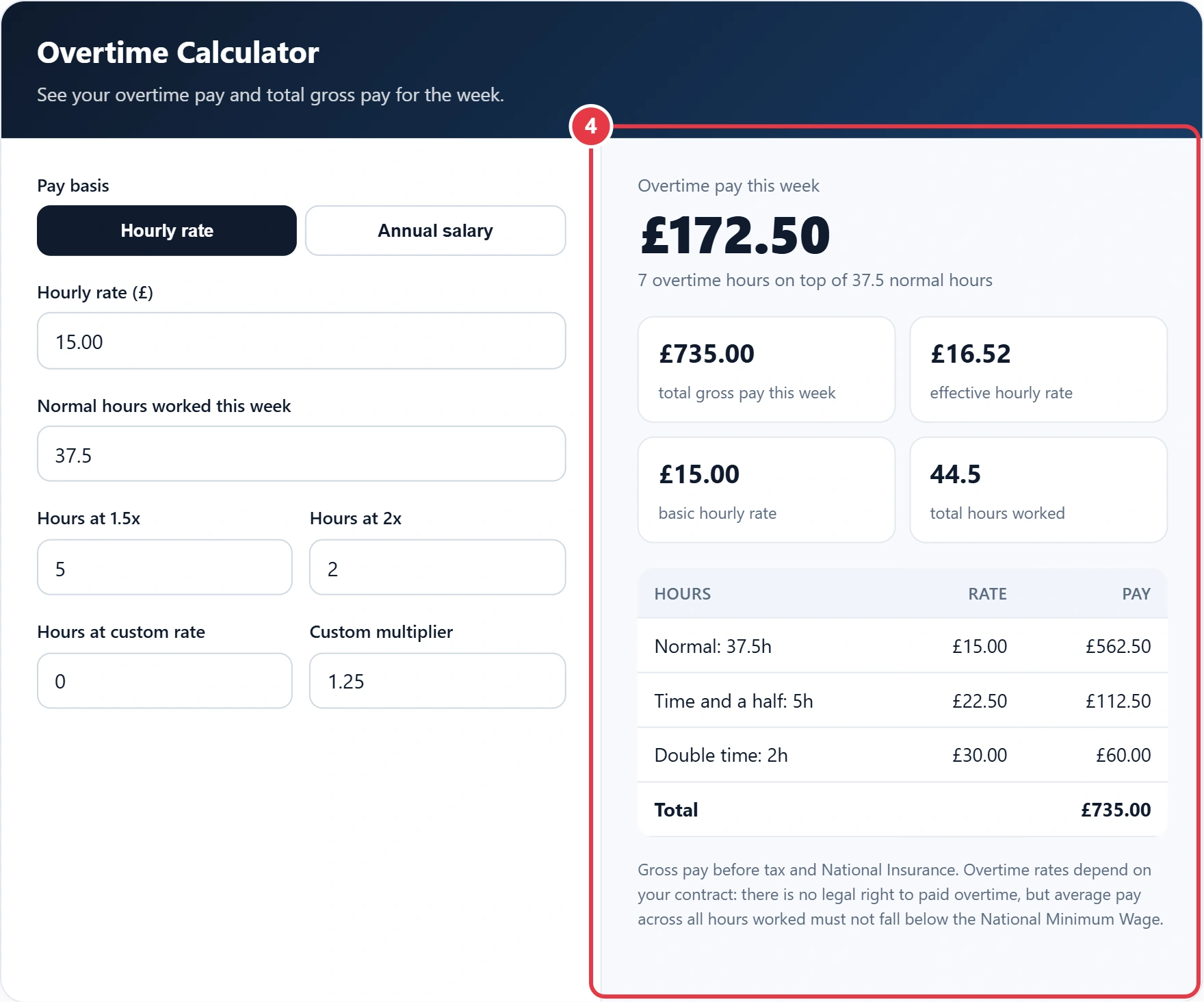
| Hours | Rate | Pay |
|---|
Gross pay before tax and National Insurance. Overtime rates depend on your contract: there is no legal right to paid overtime, but average pay across all hours worked must not fall below the National Minimum Wage.
Worked extra hours this week and want to check your payslip? Your contract sets the overtime rate, so it helps to know the UK rules on overtime pay before you start. This overtime calculator then works out your pay at time and a half, double time or any custom multiplier, and adds it to your normal pay to give total gross pay for the week.
What Is Overtime Pay?
Overtime is any time you work beyond your normal contracted hours. Many employers pay it at an enhanced rate: time and a half (1.5x) for evenings or Saturdays, and double time (2x) for Sundays or bank holidays. Some pay a flat rate, and some offer time off in lieu instead of money.
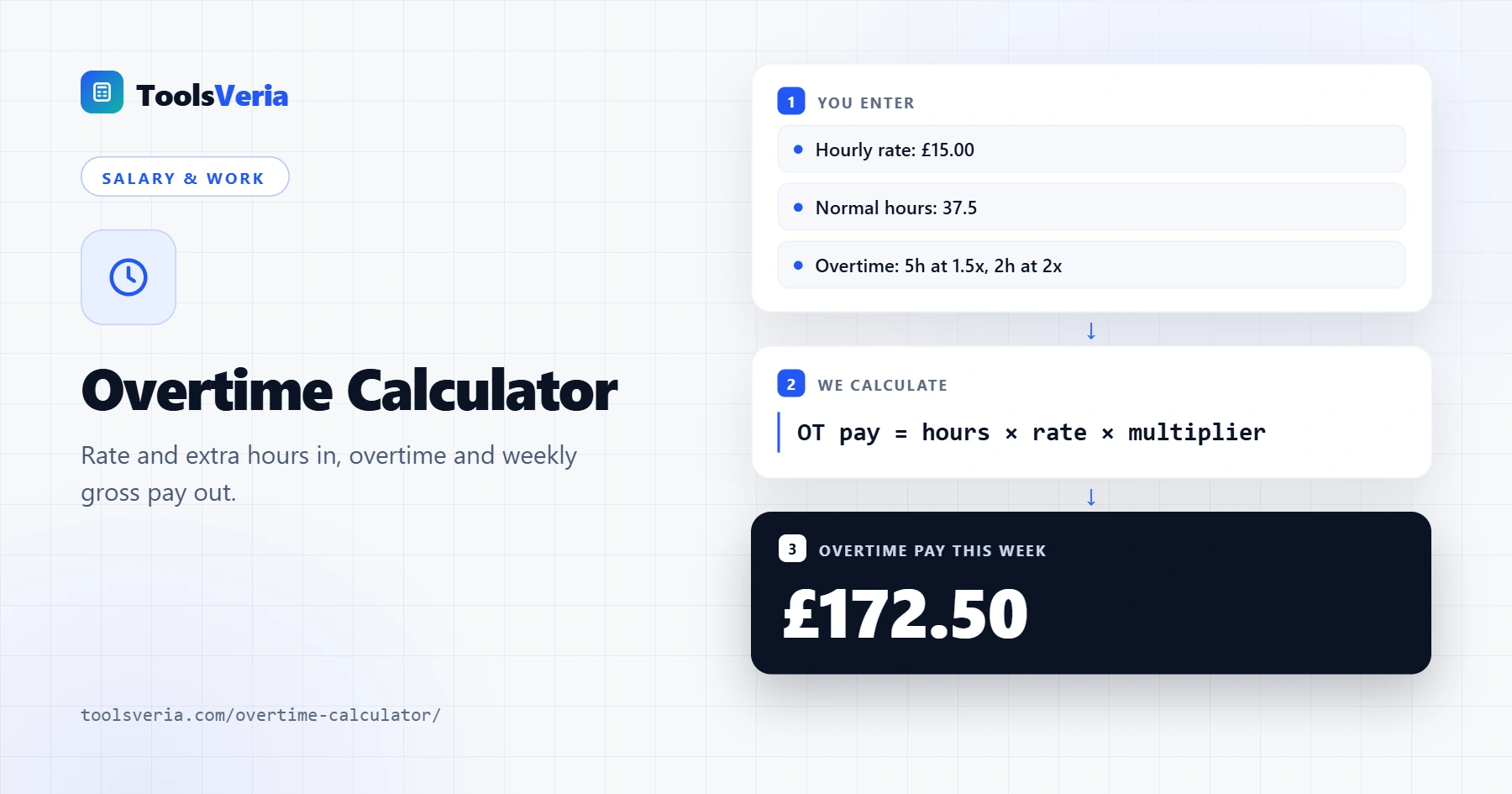
The formula is overtime hours × hourly rate × multiplier. On £15 an hour, five hours at time and a half is 5 × £15 × 1.5 = £112.50. The hourly to annual salary calculator converts between hourly and yearly pay if you need to check a rate. If you are salaried, your hourly rate is your annual salary divided by 52, then by your contracted weekly hours.
How to Use the Overtime Calculator
Step 1: Enter Your Pay
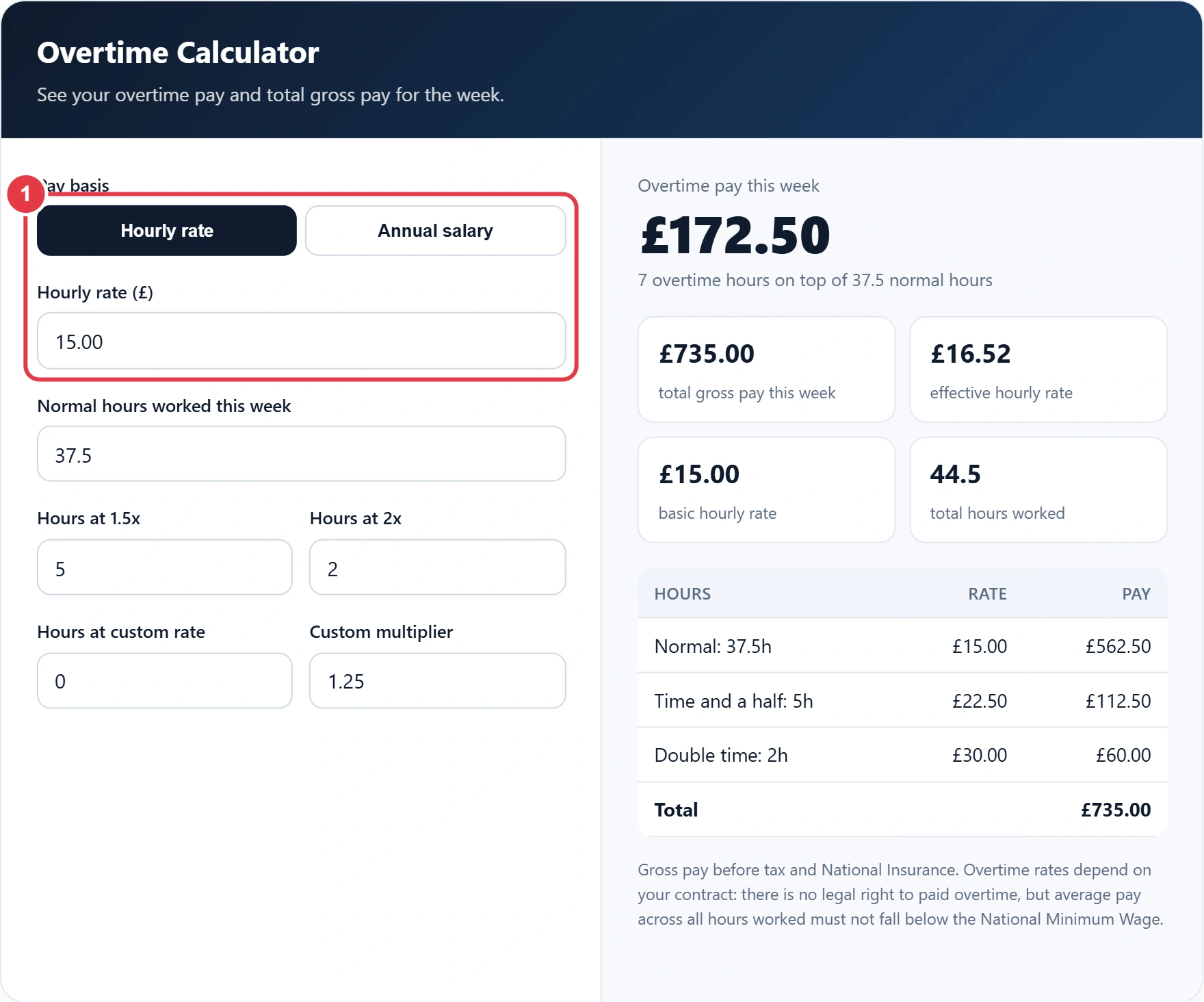
Choose Hourly rate and type your basic rate, or choose Annual salary and enter your salary with your contracted weekly hours. The calculator converts a salary into an hourly figure for you.
Step 2: Enter Your Normal Hours
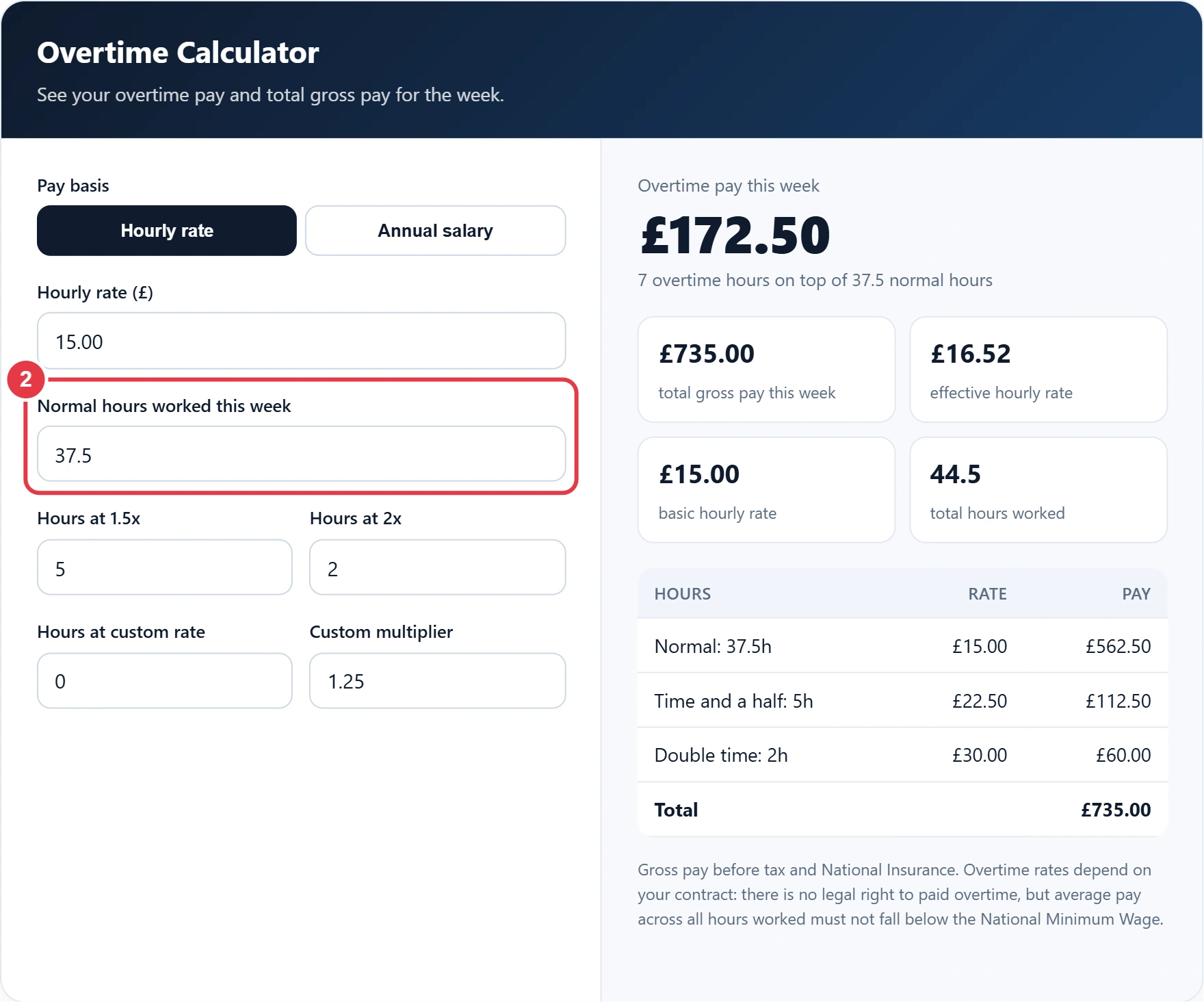
Add the hours you worked this week at your basic rate. If you clock in and out at different times each day, the time card calculator adds them up for you, so you can copy the total here. For most full time jobs this is 37.5 or 40 hours.
Step 3: Add Your Overtime Hours
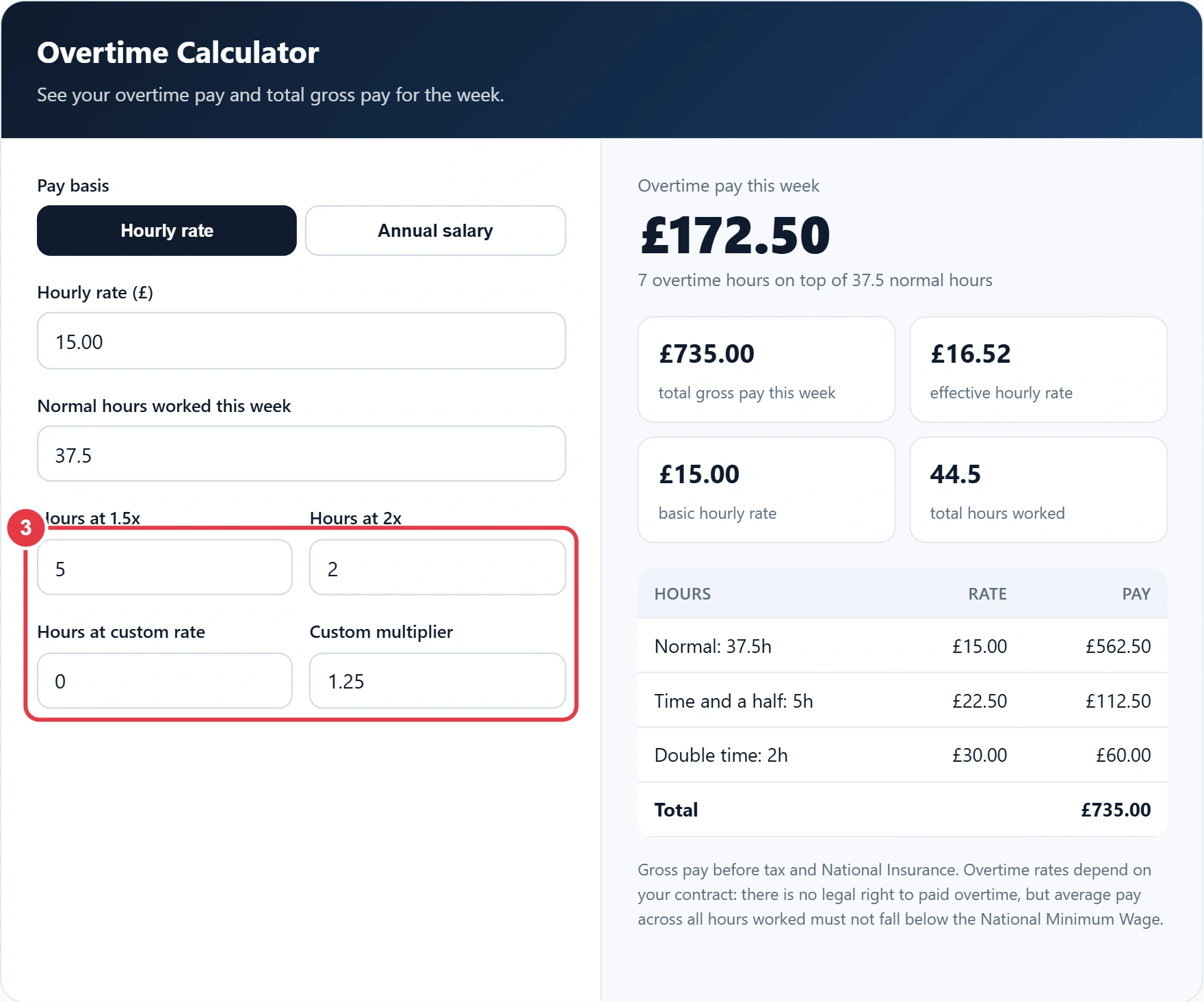
Enter hours paid at time and a half and at double time. If your employer uses another rate, such as 1.25x or 1.33x, put those hours in the custom field and set the multiplier.
Step 4: Read Your Results
You will see your overtime pay, total gross pay for the week, your effective hourly rate across every hour worked, and a line by line breakdown you can match to your payslip.
Overtime Pay Examples at £15 an Hour
| Overtime | Rate per hour | Overtime pay |
|---|---|---|
| 5 hours at 1.5x | £22.50 | £112.50 |
| 2 hours at 2x | £30.00 | £60.00 |
| 8 hours at 1.25x | £18.75 | £150.00 |
| 10 hours at 1x | £15.00 | £150.00 |
Employers do not have to pay extra for overtime, but your average hourly pay across all the hours you work in a pay reference period must not fall below the minimum wage for your age. This matters most for salaried staff doing a lot of unpaid overtime, and the current National Minimum Wage rates show the figure to compare against.
Frequently Asked Questions
How do I calculate time and a half?
Multiply your hourly rate by 1.5, then by the number of overtime hours. At £15 an hour, time and a half is £22.50 an hour.
Is overtime pay a legal right in the UK?
No. Your employment contract decides whether overtime is paid and at what rate. Your average pay for all hours worked must still meet the minimum wage.
How do I work out overtime on a salary?
Divide your annual salary by 52 and then by your contracted weekly hours to get an hourly rate. Then apply the overtime multiplier.
What is double time?
Double time is twice your normal hourly rate. It is often paid for Sundays, bank holidays or late night call outs.
Is overtime taxed more than normal pay?
No. Overtime is taxed at your usual rates, but a large overtime payment can push part of that month's pay into a higher tax band through PAYE.
Does overtime count towards holiday pay?
Regular overtime should normally be included when working out holiday pay for the first four weeks of statutory leave.