Net operating income, cap rate and the price that hits your target return.
NOI excludes mortgage payments, income tax and capital spending such as a new roof. Rents and costs are your own estimates, so check them against local lettings data.
This real estate cap rate calculator helps landlords and property investors work out net operating income and the capitalisation rate of a rental property, then the price you could pay to hit a target return. It follows the standard capitalisation rate formula used by valuers and lenders, and works in pounds, dollars or euros.
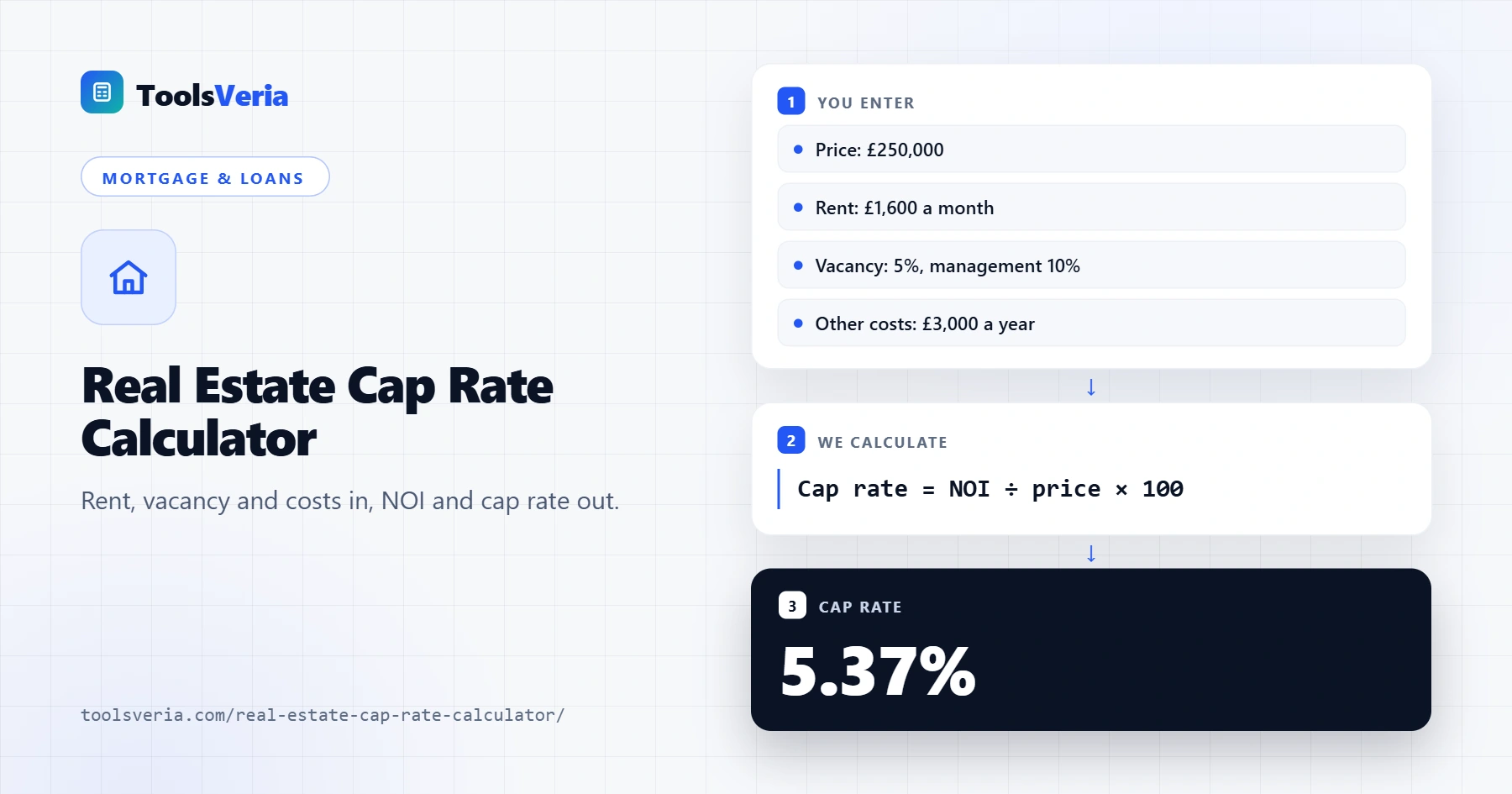
Quick answer: A real estate cap rate calculator uses cap rate = NOI ÷ purchase price × 100. A £250,000 flat with net operating income of £13,416 has a cap rate of 5.37%, and to reach 6% the buyer would pay no more than £223,600. A cap rate of 5% to 8% is common for residential rentals.
In This Guide
What Is a Cap Rate?
A cap rate is the yearly net operating income of a property divided by its price, shown as a percentage, and it measures the return before any mortgage. The formula is cap rate = NOI ÷ purchase price × 100, and turning it around gives value = NOI ÷ target cap rate.
Net operating income is the rent you actually collect after vacancy, minus running costs such as management, insurance, repairs, service charges and property taxes. Mortgage interest, income tax and one off improvements stay out, so two buyers with different finance see the same cap rate on the same building.
How to Use the Real Estate Cap Rate Calculator
Step 1: Enter Price, Rent and Vacancy
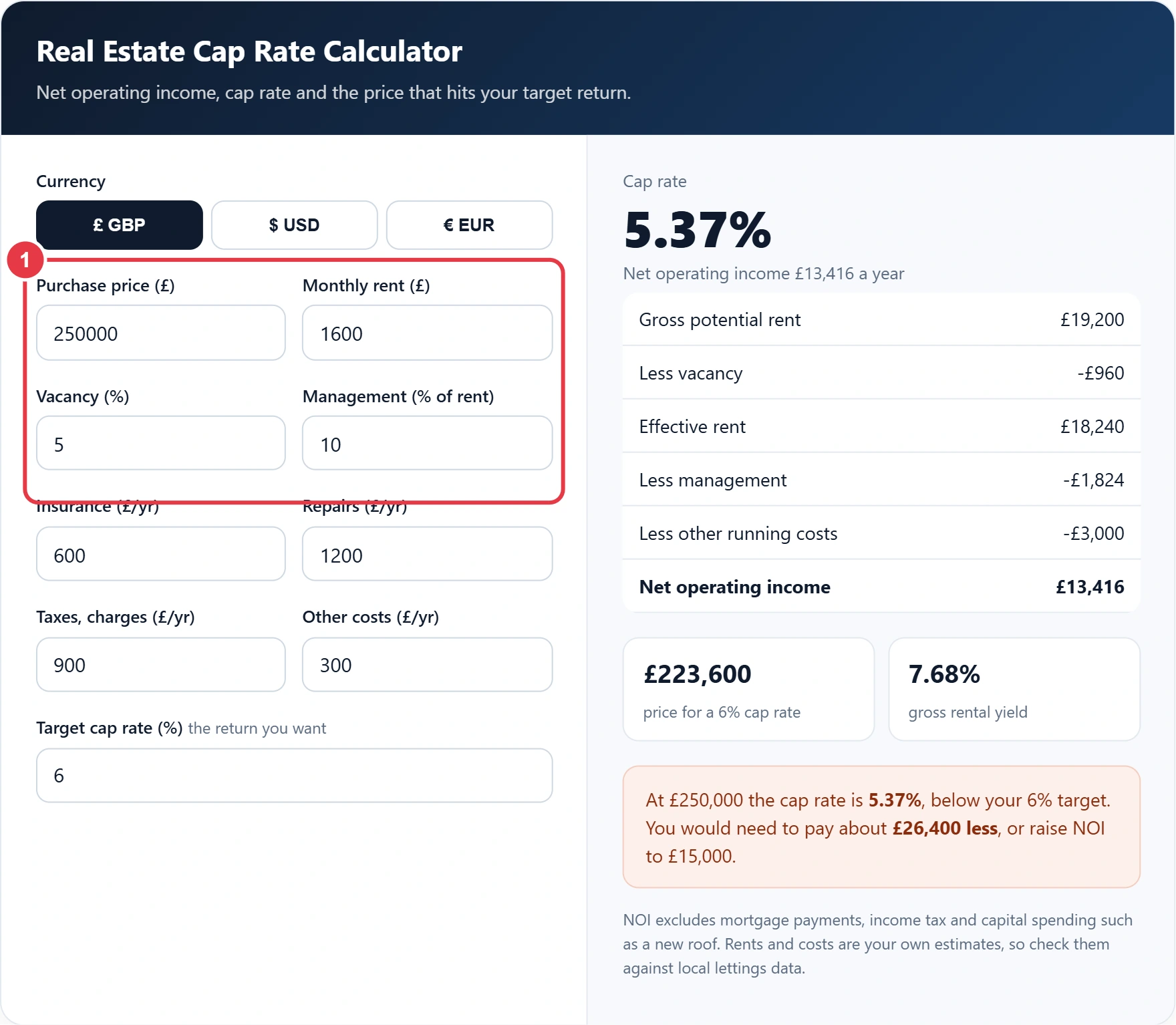
Choose your currency and type the asking price and the monthly rent. A vacancy allowance of 4% to 8% covers empty weeks between tenants and unpaid rent, and management fees for a full service letting agent are often 10% to 15% of rent collected.
Step 2: Add Running Costs
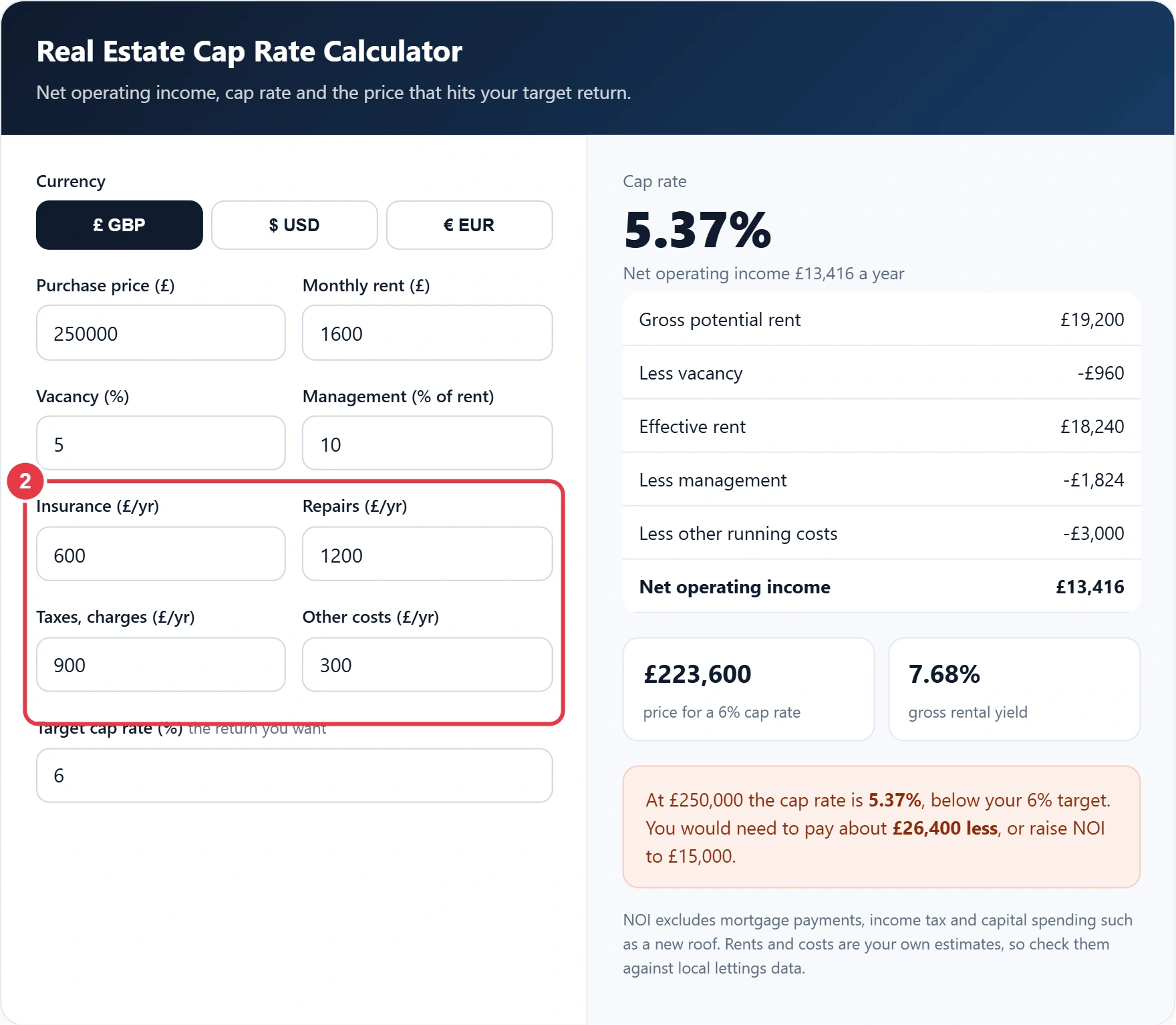
Enter yearly figures for insurance, repairs, property taxes or service charges and anything else the owner pays, such as safety certificates or ground rent. Use quotes or past bills rather than rules of thumb wherever you can.
Step 3: Set a Target Cap Rate
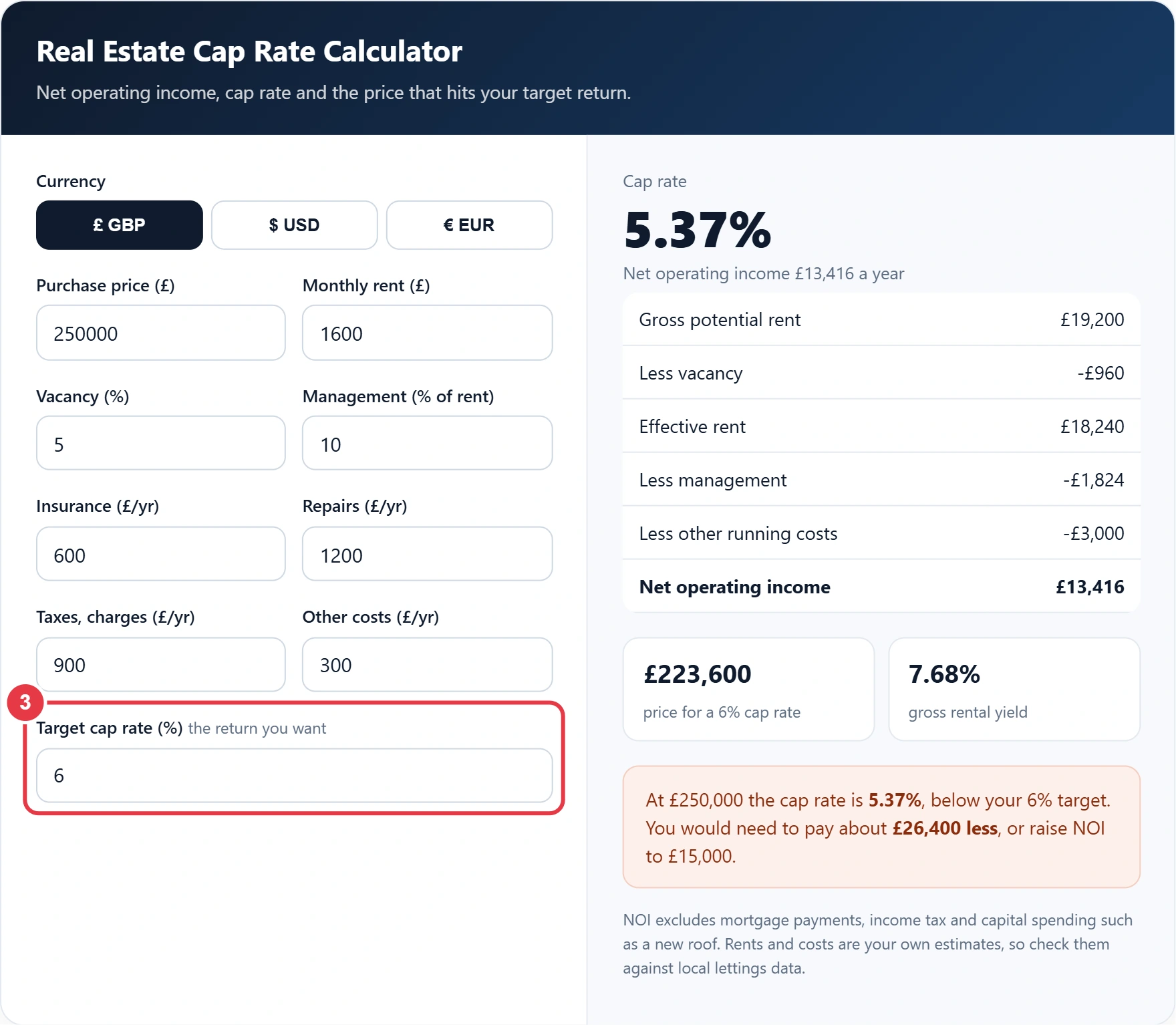
Pick the return you want. Many investors compare it with other income assets, and the dividend yield calculator gives a quick benchmark from shares before you settle on a number.
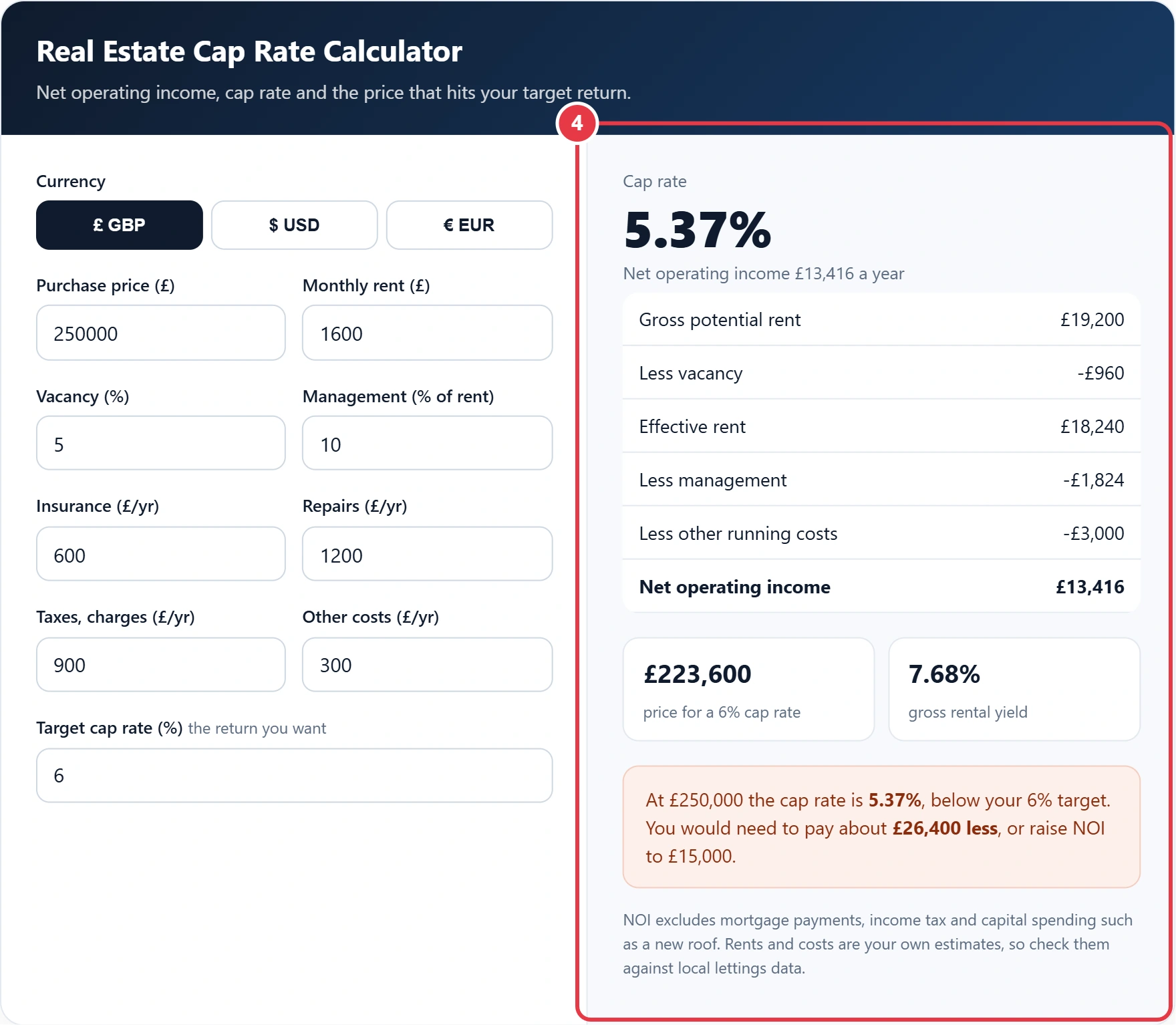
Step 4: Read NOI, Cap Rate and Target Price
The breakdown runs from gross rent to NOI, then shows the cap rate, the gross yield and the most you could pay at your target. To see how a mortgage changes your cash return, the loan calculator works out the monthly repayment on the amount you plan to borrow.
What Is a Good Cap Rate for a Rental Property?
A cap rate of 5% to 8% is a common range for residential rentals, with lower rates in expensive, high demand areas and higher rates where prices are cheaper or the risk is greater. Sophie is looking at a £250,000 flat let at £1,600 a month. After 5% vacancy, a 10% management fee and £3,000 of other costs, her NOI is £13,416, so the cap rate is 5.37%. To reach 6% she would need to pay no more than £223,600.
| Target cap rate | Price for £13,416 NOI |
|---|---|
| 5% | £268,320 |
| 6% | £223,600 |
| 7% | £191,657 |
| 8% | £167,700 |
A small change in cap rate moves value a lot, which is why the net operating income figure needs honest inputs. If you overstate rent by £100 a month, NOI rises by about £1,026 after vacancy and fees, and the price you could justify at 6% jumps by £17,100.
Real Estate Cap Rate Terms Explained
These property investment terms explain the figures behind the real estate cap rate calculator, helping you judge a rental's return and the price worth paying.
- Net operating income
- A property's yearly rent after allowing for empty periods, minus the owner's running costs such as management, insurance, repairs and property taxes. Mortgage costs and income tax are left out, so the figure describes the building rather than the buyer.
- Gross rental yield
- Annual rent before any costs, divided by the purchase price and shown as a percentage. It is quicker to work out than a cap rate but flatters the return, because empty weeks and running costs are ignored completely.
- Vacancy allowance
- A percentage deducted from potential rent to cover empty periods between tenancies and rent that goes unpaid. An allowance of 4% to 8% is a common starting point, although local demand and tenant turnover should guide the figure you use.
- Capital expenditure
- Spending on major improvements or replacements, such as a new roof or boiler, that extends a property's useful life. It is kept out of net operating income, so investors need to budget for it separately when judging real returns.
- Cash-on-cash return
- Annual pre-tax cash flow after mortgage payments, divided by the cash the investor actually put into the deal. Unlike the cap rate it reflects borrowing, so the same property can produce very different results for different buyers.
</>Embed this calculator on your website
Add the free Cap Rate Calculator to your own site or blog. Copy the code below and paste it into an HTML block. It resizes itself and works on phones.
How we checked this tool: the Tools Veria Editorial Team built this tool by hand, checked it against the official rules or published standards where they apply, and tested it against worked examples. Results are estimates for planning, not personal financial or tax advice. Read our editorial policy and disclaimer, or report an error.
Frequently Asked Questions
How do you calculate cap rate?
Divide net operating income by the purchase price and multiply by 100. A property with £13,416 NOI bought for £250,000 has a cap rate of 5.37%.
What is included in net operating income?
NOI is collected rent minus vacancy and running costs: management, insurance, repairs, property taxes, service charges and similar bills. It excludes mortgage payments, income tax and capital improvements.
What is the difference between cap rate and gross yield?
Gross yield divides the full year's rent by the price before any costs, while cap rate uses NOI after vacancy and running costs. £19,200 rent on £250,000 is a 7.68% gross yield but only a 5.37% cap rate.
Is a higher cap rate better?
A higher cap rate means more income for each pound, dollar or euro invested, but it often reflects higher risk, weaker demand or an older building. Compare cap rates only between similar properties in similar areas.
Does cap rate include mortgage costs?
No. Cap rate ignores financing so that properties can be compared on the same basis. Use a cash on cash return or cash flow calculation to see the effect of your mortgage.
How do I find the value of a property from a cap rate?
Divide the NOI by the cap rate as a decimal. With £13,416 NOI and a 6% target, the value is £13,416 ÷ 0.06, which is £223,600.